Apple's continued success is a credit to its top-rated iPhone 13 series. As you may know, Apple was doing well before, and now, with the anticipated release of the iPhone 14 products, they'll see even greater success in the smartphone market. On the other hand, all other companies seem to be doing much worse than Apple.
Wallstreet Analysts have reported that Apple has ranked first in the premium market in the first quarter of 2022 with flying colors. Also, the company ranked second globally in the case of general sales. In the same vein, Reuter has reported two supply chain sources saying that Apple is doing much better in sales than other companies.
One of the sources highlights how shipments for July were a third greater than those of last year. This is a bit unusual considering that in July and August, sales stop because consumers wait for the upcoming products from Apple. These upcoming products are commonly released in September, negatively impacting the previous month's sales. When talking about shipment, iPhone 13 seems to be doing very well in general sales.
One of the reasons there hasn't been a significant impact on sales due to the upcoming release of the iPhone 14 is because Apple hasn't marketed many extraordinary features that may incite users to purchase them. Even if it's titled the iPhone 14, it contains the same features as the iPhone 13, and the consumers know this. iPhone 14's microprocessor, design and camera functionalities are identical to iPhone 13. On the other hand, iPhone 14 Pro is seeing a lot of new features such as a new processor, new design, and improved camera functionality.
Furthermore, Reuters has said that iPhone 13's recent success may very well be attributed to China's increase in demand. As we know, Apple's sales in China were poorly affected by the pandemic. But now, with the lockdowns ending, China is seeing a surge in demand for iPhone and Apple products. This is one of the big reasons why Apple is doing so well in the global smartphone market.
Wall Street analysts have argued that the shipments could be affected, and we might see a slight decline in iPhone 13 shipments. That said, the iPhone would still be doing better than its rival companies.
Read next: Apple Is Successfully Diversifying Its Manufacturing Sites, Importing Products Parts From All Over The World
by Arooj Ahmed via Digital Information World
"Mr Branding" is a blog based on RSS for everything related to website branding and website design, it collects its posts from many sites in order to facilitate the updating to the latest technology.
To suggest any source, please contact me: Taha.baba@consultant.com
Friday, July 15, 2022
Young Kids Are Spending 85 Minutes A Day On YouTube And TikTok, Confirms New Data
The world of social media is really impacting the lives of so many and kids are no exception.
A new study has gone as far as highlighting how much time younger audiences are spending on leading apps like TikTok and YouTube. And it’s safe to say that the findings are alarming.
The report also showed how TikTok has taken a leading edge over archrival YouTube in terms of the leading app that kids and teens spend the most time on for video content.
But this isn’t something new, explained experts. According to them, the findings are typical of a pattern that we’ve seen carry on since the year 2020.
This was the first time that the world witnessed TikTok beat YouTube in terms of viewership and engagement. On average, kids were spending as much as 85 minutes on TikTok while YouTube ranked second with 75 minutes.
Then as days passed by, we saw a mega change in the results, where younger audiences were witnessing around 91 minutes of TikTok in a day and just 56 minutes for YouTube. And these figures were not related to any particular nation, they were global results.
So where are these facts and figures coming from? Well, it’s all thanks to the leading software makers for parental control called Qustodio who aligned the results for TechCrunch recently.
They took into consideration an analysis that comprised around 400,000 families which were proven to have accounts linked to the software. And the company notes how these aren’t just estimates but real averages and hence can’t be taken lightly.
What’s important to understand here is that these are literally averages and hence not all kids are going to be seated to watch 90 minutes of shows on these apps. Hence, we need to realize that the whole purpose of this report is to make users realize that trends are changing.
There will be some days when users watch more online content than others. Similarly, there will be days when the younger lot are going to be altering their preference for apps.
In terms of the big picture, it’s important to realize that YouTube should be concerned that its popularity stands in the face of a constant threat by another leading app- TikTok. Moreover, the future generation who seem to be no longer interested in YouTube, Generation Alpha, and Generation Z, make up a huge part of the audience.
In 2019, YouTube led the pack in terms of viewership but the major shift took place in 2020, and that was when TikTok reigned supreme and continues to stand as the market leader.
This year, the difference in averages between both of these groups is more remarkable than ever. And the report even went into the specifics of certain countries like the US, the United Kingdom, and Spain too.
We know that YouTube isn’t finding this information new and that’s one of the major reasons why leading tech giants like Meta, Snap, and Google are all following TikTok’s footsteps and promoting more short-form content like Reels and Shorts to get more engagement and it’s working.
Read next: Study Reveals That Approximately 21% of Consumers Can’t Remember Their Own Phone Numbers
by Dr. Hura Anwar via Digital Information World
A new study has gone as far as highlighting how much time younger audiences are spending on leading apps like TikTok and YouTube. And it’s safe to say that the findings are alarming.
The report also showed how TikTok has taken a leading edge over archrival YouTube in terms of the leading app that kids and teens spend the most time on for video content.
But this isn’t something new, explained experts. According to them, the findings are typical of a pattern that we’ve seen carry on since the year 2020.
This was the first time that the world witnessed TikTok beat YouTube in terms of viewership and engagement. On average, kids were spending as much as 85 minutes on TikTok while YouTube ranked second with 75 minutes.
Then as days passed by, we saw a mega change in the results, where younger audiences were witnessing around 91 minutes of TikTok in a day and just 56 minutes for YouTube. And these figures were not related to any particular nation, they were global results.
So where are these facts and figures coming from? Well, it’s all thanks to the leading software makers for parental control called Qustodio who aligned the results for TechCrunch recently.
They took into consideration an analysis that comprised around 400,000 families which were proven to have accounts linked to the software. And the company notes how these aren’t just estimates but real averages and hence can’t be taken lightly.
What’s important to understand here is that these are literally averages and hence not all kids are going to be seated to watch 90 minutes of shows on these apps. Hence, we need to realize that the whole purpose of this report is to make users realize that trends are changing.
There will be some days when users watch more online content than others. Similarly, there will be days when the younger lot are going to be altering their preference for apps.
In terms of the big picture, it’s important to realize that YouTube should be concerned that its popularity stands in the face of a constant threat by another leading app- TikTok. Moreover, the future generation who seem to be no longer interested in YouTube, Generation Alpha, and Generation Z, make up a huge part of the audience.
In 2019, YouTube led the pack in terms of viewership but the major shift took place in 2020, and that was when TikTok reigned supreme and continues to stand as the market leader.
This year, the difference in averages between both of these groups is more remarkable than ever. And the report even went into the specifics of certain countries like the US, the United Kingdom, and Spain too.
We know that YouTube isn’t finding this information new and that’s one of the major reasons why leading tech giants like Meta, Snap, and Google are all following TikTok’s footsteps and promoting more short-form content like Reels and Shorts to get more engagement and it’s working.
Read next: Study Reveals That Approximately 21% of Consumers Can’t Remember Their Own Phone Numbers
by Dr. Hura Anwar via Digital Information World
YouTube Is Testing Out New Playlist Features Currently Only Accessible By Premium Members
YouTube is currently testing out new features via which users will be able to rearrange and edit their playlists with much more relative ease.
YouTube’s premium services, other than allowing users to download almost all videos offline, also give members the ability to test experimental features beforehand. Does this make me in any way want to invest in a YouTube Premium account? Not; it wasn’t a good idea when the platform was called YouTube Red, and it isn’t one today. Especially since I’m currently writing about said pay-walled experimental features without showing a nickel, so who got the short end of the stick there? I jest, of course, knock yourself out with the unlimited video downloads. At any rate, Premium is a perfect ecosystem for the platform to exercise recently released features, and test them out for bugs and kinks while simultaneously getting a read on audience reception. All subscribers are essentially just beta testers, and then they get their hands on really good features before the rest of the community does.
I’m going to be honest: I like this new feature. Playlists aren’t by any means difficult to edit and manage, but the task can be arduous at times. I would like to rapidly add, remove, and hide certain videos without going through the rigmarole of tapping at my screen for minutes (I know, it’s almost a non-issue). However, YouTube’s latest solution makes the entire process not just easier, but much more intuitive as well. Users can now add, remove, and hide videos from playlists by just swiping here and there. For instance, if a user suddenly encounters a video in the Recommended section that they’d like to see, all they have to do is swipe the video down to their playlist. One sweep and you’re done!
Likewise, deleting videos isn’t particularly difficult either: just swipe the video out of your collection in one fell swoop. Videos can also be hidden from your playlist (i.e. they won’t be played, but will still be a part of the list) by simply swiping left on the video.
A rather annoying part of playlist management is rearranging the order of videos since there’s no practical way of doing so without tiresome button mashing. With the new experiment feature, a user just has to hold down on the video, and then swipe it to whichever part of the playlist they’d like it to occupy. It’s honestly such a convenience, and I truly hope for the feature to be implemented soon.
Read next: YouTube Finally Answers Its Most Frequently Asked Community Guideline Questions About Appeals
by Arooj Ahmed via Digital Information World
YouTube’s premium services, other than allowing users to download almost all videos offline, also give members the ability to test experimental features beforehand. Does this make me in any way want to invest in a YouTube Premium account? Not; it wasn’t a good idea when the platform was called YouTube Red, and it isn’t one today. Especially since I’m currently writing about said pay-walled experimental features without showing a nickel, so who got the short end of the stick there? I jest, of course, knock yourself out with the unlimited video downloads. At any rate, Premium is a perfect ecosystem for the platform to exercise recently released features, and test them out for bugs and kinks while simultaneously getting a read on audience reception. All subscribers are essentially just beta testers, and then they get their hands on really good features before the rest of the community does.
I’m going to be honest: I like this new feature. Playlists aren’t by any means difficult to edit and manage, but the task can be arduous at times. I would like to rapidly add, remove, and hide certain videos without going through the rigmarole of tapping at my screen for minutes (I know, it’s almost a non-issue). However, YouTube’s latest solution makes the entire process not just easier, but much more intuitive as well. Users can now add, remove, and hide videos from playlists by just swiping here and there. For instance, if a user suddenly encounters a video in the Recommended section that they’d like to see, all they have to do is swipe the video down to their playlist. One sweep and you’re done!
Likewise, deleting videos isn’t particularly difficult either: just swipe the video out of your collection in one fell swoop. Videos can also be hidden from your playlist (i.e. they won’t be played, but will still be a part of the list) by simply swiping left on the video.
A rather annoying part of playlist management is rearranging the order of videos since there’s no practical way of doing so without tiresome button mashing. With the new experiment feature, a user just has to hold down on the video, and then swipe it to whichever part of the playlist they’d like it to occupy. It’s honestly such a convenience, and I truly hope for the feature to be implemented soon.
Read next: YouTube Finally Answers Its Most Frequently Asked Community Guideline Questions About Appeals
by Arooj Ahmed via Digital Information World
A New Malware Is Making Its Rounds Across Android Via Google Play, Infecting Millions Of Individual Users
Yet another malware has been uncovered on Android, making its way through smartphones and other devices via the Google Play store.
Malware has become a lasting nuisance across app stores in general, but they seem to spread via Google Play with some manner of vehement vengeance. Is it because perhaps Google keeps making a big show of issuing stricter guidelines and app store policies, yet fails to truly enforce them in any significant way? No, not at all, it’s just that catching sneaky indie developers working from a laptop is too hard for arguably the biggest tech conglomerate there is. I’d of course be more forgiving of Google, since looking for malware inside the Play store is like finding a needle in a haystack, if not for just how much this particular instance has permeated the Android userbase.
This fun little cyber-gizmo, named Autolycus, has been downloaded by unsuspecting individuals over 3 million times. Well, that number elicits nothing more than the quietest “yikes”, since there’s little else to offer in terms of contribution. Those are numbers the average dev living on two part-time jobs wishes they had. Imagine learning C++ for some complicated project, only for the malware guy to get 3 million downloads first.
Autolycus was first found out by Maxime Ingrano, a researcher at the cybersecurity firm Evina. They identified eight separate applications that were harboring the malware. As a result of her publications, Google took decisive action and quickly removed…six of them. Well, maybe they’re taking their time with the app takedowns and savoring the process. In previous similar examples, Google did remove all harboring entities, but would rarely ever do so in quick succession, taking their time to assess and whatnot. Which makes sense; always better to recheck your homework, especially when someone else does it for you.
So, how harmful is Autolycus and what does it do to your phone? Well, we can answer the first query by answering the second query: the malware is essentially an overenthusiastic door-to-door salesman of sorts. By overenthusiastic, I mean illegal, of course; the malware utilizes personal information that’s already added to one’s phone (specifically credit/debit card information) and uses it to subscribe users to premium services across the internet. Each of the apps containing Autolycus also asked for SMS access, which ensured that any two-factor authentication codes would be acquired and used accordingly.
It’s always best to keep one’s eye out for apps poorly reviewed on Google Play, but many of Autolycos’ apps were well reviewed. Consider investing the extra time in examining individual reviews for bots.
Read next: Remote working is still a big challenge for companies, especially when it comes to cyber security
by Arooj Ahmed via Digital Information World
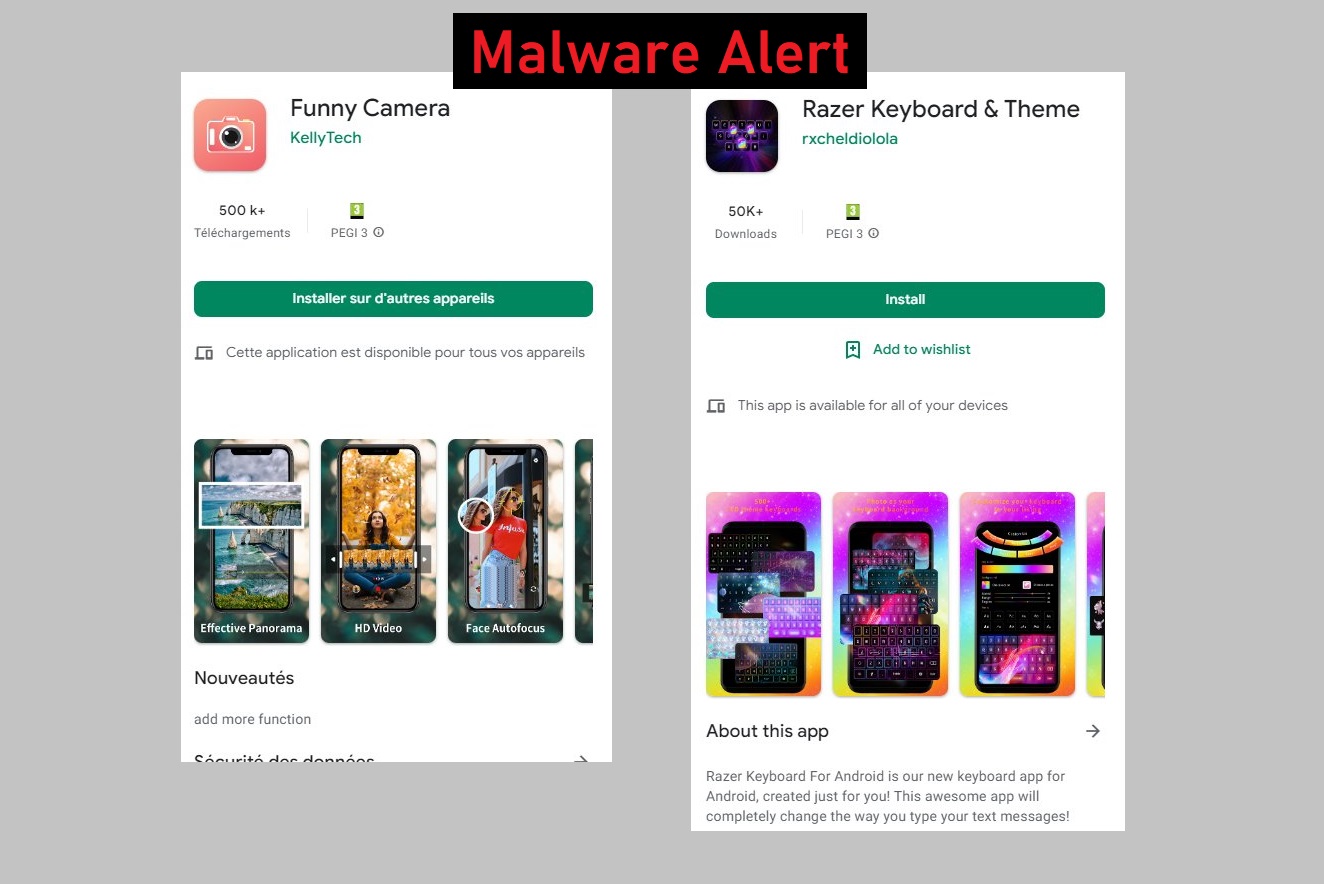
Malware has become a lasting nuisance across app stores in general, but they seem to spread via Google Play with some manner of vehement vengeance. Is it because perhaps Google keeps making a big show of issuing stricter guidelines and app store policies, yet fails to truly enforce them in any significant way? No, not at all, it’s just that catching sneaky indie developers working from a laptop is too hard for arguably the biggest tech conglomerate there is. I’d of course be more forgiving of Google, since looking for malware inside the Play store is like finding a needle in a haystack, if not for just how much this particular instance has permeated the Android userbase.
This fun little cyber-gizmo, named Autolycus, has been downloaded by unsuspecting individuals over 3 million times. Well, that number elicits nothing more than the quietest “yikes”, since there’s little else to offer in terms of contribution. Those are numbers the average dev living on two part-time jobs wishes they had. Imagine learning C++ for some complicated project, only for the malware guy to get 3 million downloads first.
Autolycus was first found out by Maxime Ingrano, a researcher at the cybersecurity firm Evina. They identified eight separate applications that were harboring the malware. As a result of her publications, Google took decisive action and quickly removed…six of them. Well, maybe they’re taking their time with the app takedowns and savoring the process. In previous similar examples, Google did remove all harboring entities, but would rarely ever do so in quick succession, taking their time to assess and whatnot. Which makes sense; always better to recheck your homework, especially when someone else does it for you.
com.razer.keyboards (10k+) https://t.co/dLmVIkvKEh.editor (1M+) ❌
— Maxime Ingrao (@IngraoMaxime) July 13, 2022
com.okcamera.funny (500K+) https://t.co/8fyEMql0bj (1k+) ❌
app.launcher.creative3d (1M+) ❌
com.gif.emoji.keyboard (100K+) ❌https://t.co/W5wjm83pDV (5K+) ❌https://t.co/cju9S26Nny (100K+) ❌
So, how harmful is Autolycus and what does it do to your phone? Well, we can answer the first query by answering the second query: the malware is essentially an overenthusiastic door-to-door salesman of sorts. By overenthusiastic, I mean illegal, of course; the malware utilizes personal information that’s already added to one’s phone (specifically credit/debit card information) and uses it to subscribe users to premium services across the internet. Each of the apps containing Autolycus also asked for SMS access, which ensured that any two-factor authentication codes would be acquired and used accordingly.
It’s always best to keep one’s eye out for apps poorly reviewed on Google Play, but many of Autolycos’ apps were well reviewed. Consider investing the extra time in examining individual reviews for bots.
Read next: Remote working is still a big challenge for companies, especially when it comes to cyber security
by Arooj Ahmed via Digital Information World
Thursday, July 14, 2022
Samsung’s ‘SmartThings Find’ Network Doubles In Size With Over 200 Million ‘Find Nodes’
Despite entering the market recently, Samsung is taking great pride in its SmartThings Find network which has managed to double in size.
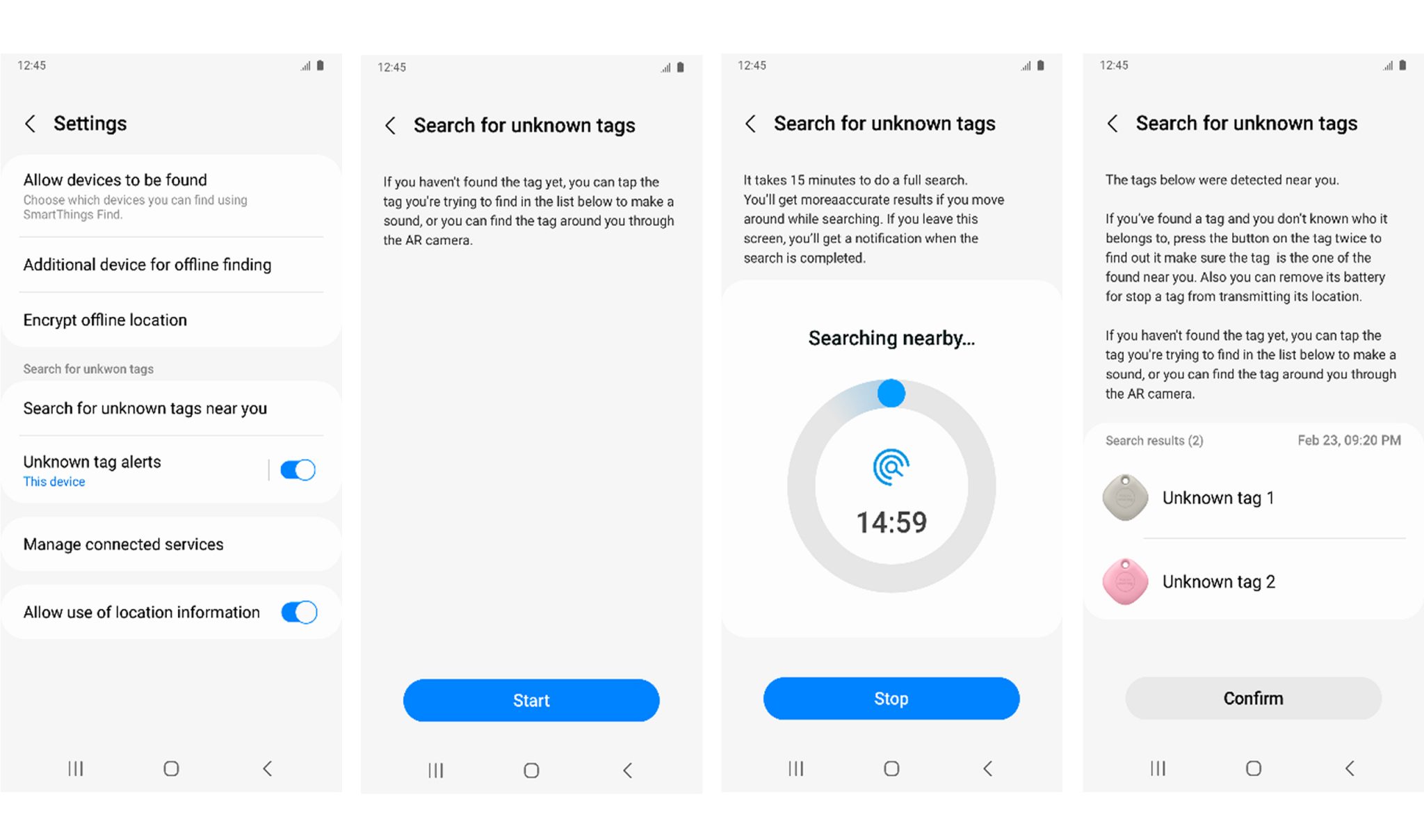
According to the company, the network has amassed more than 200 million find nodes which are designed to assist users in finding any of their lost devices and other Galaxy-related SmartTags.
The company unveiled through a press release during the evening hours how the network has seen an expansion that has more than doubled in comparison to the previous year. Today, there are more than 200 million nodes located in the wilderness.
For those who may not be aware, the ‘find node’ feature is the name allocated for any smartphone or device belonging to Galaxy. These devices have been tuned in a manner that uses SmartThings Find.
This way, the technology assists in relaying information such as the location of the SmartTag attached back to the owner.
Interestingly, the company confirmed that it was able to add a staggering 100 million devices that had been registered just this year and that is clearly a major accomplishment.
Many people look at the feature as one that’s equivalent to Apple’s Air Tag. The useful functionality has been appreciated by many who have used it to find misplaced phones, earbuds, and other high-tech gadgets.
The reviews have been great so far with so many satisfied users grateful that they’ve been able to easily locate any misplaced devices in no time, with its help.
Moreover, the huge increase in nodes is just another way of looking at how much the odds of finding a device in the wild have increased as it gets displayed over a number of registered devices.
In comparison, Apple has never mentioned an exact figure as to how much its ‘Find My’ network has grown or expanded over the years, although it did reveal that it comprised hundreds of millions. But you have to remember that Apple’s feature is much older than Samsung and hence direct comparisons can’t be made.
Read next: According to IDC shipments of personal computers declined by 15.3 percent in the second quarter of 2022, while Lenovo ranks top
by Dr. Hura Anwar via Digital Information World
According to the company, the network has amassed more than 200 million find nodes which are designed to assist users in finding any of their lost devices and other Galaxy-related SmartTags.
The company unveiled through a press release during the evening hours how the network has seen an expansion that has more than doubled in comparison to the previous year. Today, there are more than 200 million nodes located in the wilderness.
For those who may not be aware, the ‘find node’ feature is the name allocated for any smartphone or device belonging to Galaxy. These devices have been tuned in a manner that uses SmartThings Find.
This way, the technology assists in relaying information such as the location of the SmartTag attached back to the owner.
Interestingly, the company confirmed that it was able to add a staggering 100 million devices that had been registered just this year and that is clearly a major accomplishment.
Many people look at the feature as one that’s equivalent to Apple’s Air Tag. The useful functionality has been appreciated by many who have used it to find misplaced phones, earbuds, and other high-tech gadgets.
The reviews have been great so far with so many satisfied users grateful that they’ve been able to easily locate any misplaced devices in no time, with its help.
Moreover, the huge increase in nodes is just another way of looking at how much the odds of finding a device in the wild have increased as it gets displayed over a number of registered devices.
In comparison, Apple has never mentioned an exact figure as to how much its ‘Find My’ network has grown or expanded over the years, although it did reveal that it comprised hundreds of millions. But you have to remember that Apple’s feature is much older than Samsung and hence direct comparisons can’t be made.
Read next: According to IDC shipments of personal computers declined by 15.3 percent in the second quarter of 2022, while Lenovo ranks top
by Dr. Hura Anwar via Digital Information World
Whatsapp new update will enable users to send a voice note on their status
With the new Whatsapp updates coming right and left, many people always wait in anticipation so that they can get their hands on the latest WhatsApp updates about to come. The type of updates under development are making users excited for what's about to come in their WhatsApp app. Google Play Beta...
[ This is a content summary only. Visit our website https://ift.tt/HR39iJy for full links, other content, and more! ]
by Arooj Ahmed via Digital Information World
[ This is a content summary only. Visit our website https://ift.tt/HR39iJy for full links, other content, and more! ]
by Arooj Ahmed via Digital Information World
Facebook Finally Gives Its Smart ‘Ray-Ban Stories’ Glasses A Software Update
Facebook is finally adding a smart touch to its Ray-Ban Stories glasses as the company’s CEO Mark Zuckerberg recently announced a new software update through a post on Wednesday. The renowned pair of shades that debuted in 2021 was in need of an update and despite many calls from users, the...
[ This is a content summary only. Visit our website https://ift.tt/OHesqP0 for full links, other content, and more! ]
by Dr. Hura Anwar via Digital Information World
[ This is a content summary only. Visit our website https://ift.tt/OHesqP0 for full links, other content, and more! ]
by Dr. Hura Anwar via Digital Information World
Subscribe to:
Comments (Atom)


