Sunday, September 4, 2022

WhatsApp Is Working On New Updates And Here’s What You Can Expect

WhatsApp is working on a number of exciting updates and we thought it was time to bring them to you.

The platform is working on a new WhatsApp survey and while it’s still under development, it sounds very interesting. Thanks to Wabetainfo for providing the insider scoop, we’ve learned a few things so far on what to expect.

For starters, the update would be rolling out soon for desktop users, alongside iOS and Android. This update will entail a functionality that asks users for feedback through a survey built into the app. Through the chat, users would be able to tell the platform how they feel about their experience and how it can be better for them.

It’s not up for grabs at the moment but will be a part of the company’s future updates. Also, it’s only going to be limited to a few users and hence would likely show up on special occasions.


The company mentioned how the survey is completely verified and if users take part in the ordeal, their responses would not be affecting their account in any way, shape, or form. The platform wishes to improve its users’ experience across the app and that’s why it plans on gaining feedback to assist with this.

As of now, no details about what the survey would feature are being outlined but it would be rolled out from an official chat sent out by the firm. These would be marked using a green colored tick but the app says that it would never be asking for personal details. Hence, users should steer clear from taking part in such activities.

WhatsApp adds that it never takes part in asking users for their sensitive details like phone numbers, credit card details, and PIN codes. And at any point in time, users may opt to walk out of the chat if they feel like doing so.

Remember, it’s going to be a very exclusive affair so we don’t expect too many users to be getting invitations to participate in this survey. Nevertheless, we’ll keep you updated when it’s launched.

On the other hand, we’ve got news about another update that the popular chat app is working on. The platform is launching admin delete and status updates. The feature is currently in the process of being rolled out to a selected few beta testers at the moment, starting today.

So group admins would be given the chance to eliminate messages from other participants located in the group. How convenient will that be?


If you do wish to check whether or not you can avail the ordeal on your account, simply make an attempt at deleting texts sent out from other participants in a group. Just make sure you’re the admin of the group because it’s for them only.

If you see the terms, ‘delete for everyone’ pop up, then good for you! You’re eligible to use the new feature. Additionally, the features are stated to be rolling out for those with non-beta variants of the app. So they may be able to avail the feature too.

WhatsApp is not stopping there. There is also plenty of news linked to the app putting out the chance to witness status updates directly through a chat list. Previously, this feature was only for a limited number of beta testers. Now, however, the rollout appears to be for a wider audience.

In case you’re not a fan of the thought of viewing status updates through the chat or simply never bother to witness status updates, you can always mute it via the status tab. In this way, you won’t be coming across them on your chat list any longer.

While some features are exclusively for beta testers, others will be rolling out to the masses soon so keep an eye out.

Read next: This New WhatsApp Feature Will Let You Send Messages to Yourself Across Multiple Devices
by Dr. Hura Anwar via Digital Information World

These Android Educational Apps Might Be Violating Your Privacy

Any app that you use would need to collect at least some of your data because of the fact that this is the sort of thing that could potentially end up helping them optimize their services based on your needs. However, some apps take a bit too heavy handed of an approach when it comes to the collection of personal data from their users. This is an especially concerning trend among educational apps since many of them are used by children.

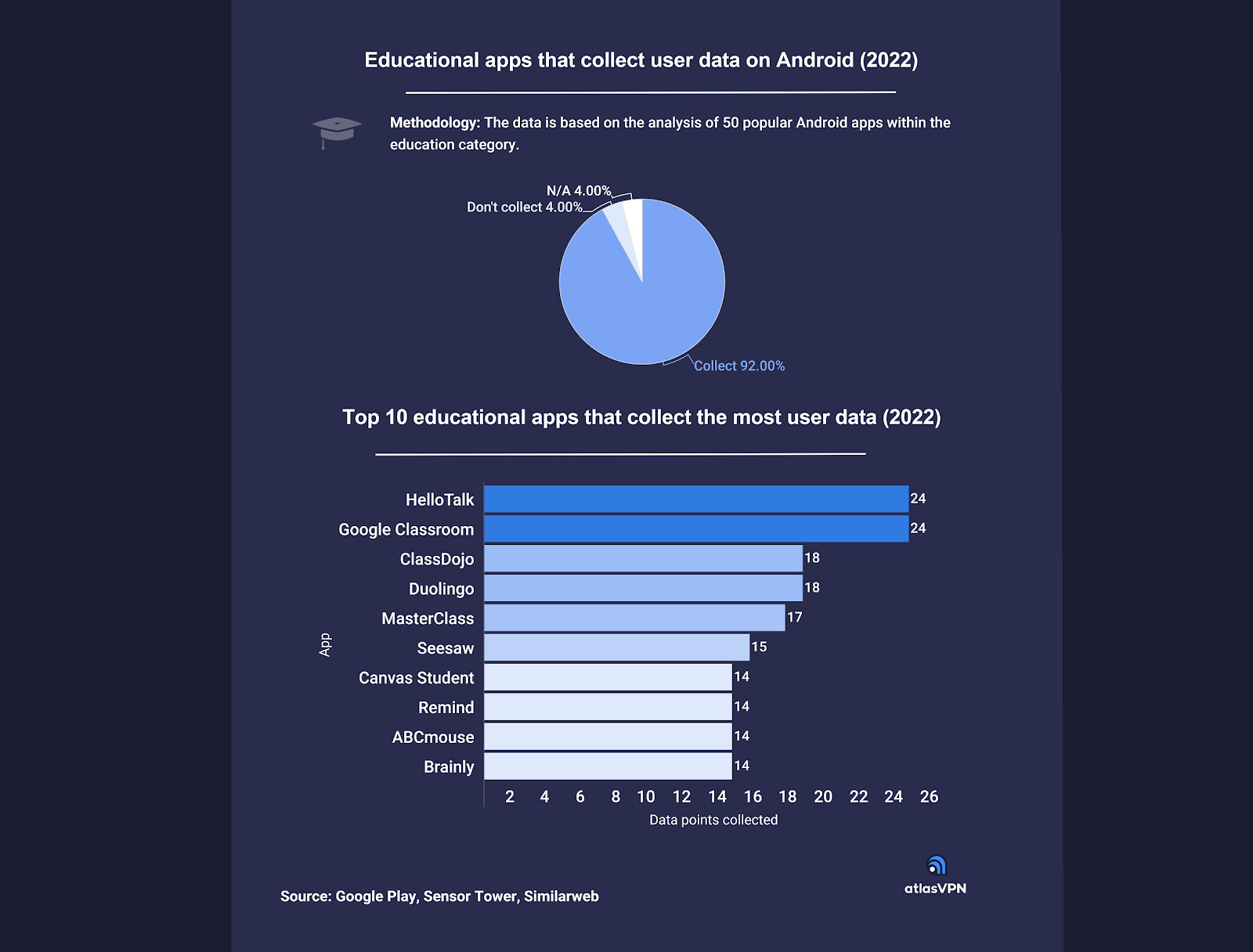
Atlas VPN recently put out a report that details the data collection of various educational apps that are available for Android users. With all of that having been said and now out of the way, it is important to note that 92% of educational apps that are available on the Google Play Store collect data, and the worst offenders are HelloTalk as well as Google’s own Classroom app.

Both HelloTalk and Google Classroom collect around 24 data points from users. Tying for second are ClassDojo along with the popular language learning app Duolingo. These apps collect 18 data points each which puts them firmly in second place with all things having been considered and taken into account.

The third place is currently occupied by MasterClass which collects seventeen data points in total. Following that we have Seesaw in fourth place with this app collecting 15 data points. The final four positions on this list are all occupied by apps that collect fourteen data points, namely Canvas Student, Remind, ABCmouse and Brainly.

Users should note that the more segments that an app collects data for, the more privacy violations it has likely been committing. That is something that can impact user privacy in the long run, but in spite of the fact that this is the case there doesn’t seem to be much being done to mitigate its negative effects.

90% of educational apps collect basic information like email addresses, phone numbers, physical addresses as well as various other data that falls into this category. That makes this the most widely used data segment for educational apps.

The next most widely used data category involves identifiers. These include things like app performance information, crash logs and the like. 88% of apps harvest this data, and 78% also delve into usage and search history along with looking at what other apps a user might have installed. 42% of educational apps look at extremely private data such as the photos that a user might have on their device. Financial data is also mined by around 40% of apps, though this might be because they need to monitor payment methods to ensure that no payments are delayed or missed.

Worryingly, 36% of apps that focus on providing educational content and features also take data from users that can pinpoint their exact location. 30% of educational apps also monitor user audio, 22% check out the text messages that a user might receive on their primary device, and 16% also mine data pertaining to documents on said device. Interestingly, 2% of educational apps also take data that would reveal the web browsing history of users which is an extreme violation of their right to personal privacy.
Read next: Delete these business apps right now if you care about your online privacy
by Zia Muhammad via Digital Information World

A Study By Incogni Reveals How Little Americans Feel Safe When Surfing The Internet

Incogni recently conducted a study that attempted to gauge American sentiments and attitudes towards privacy in the digital age.

To this effect, the security research firm decided to survey 2,310 US citizens from across six individual states (New York, California, Texas, Colorado, Virginia, and Florida), with ages ranging from 18 to over 65. These individuals were then queried with regards to common best practices for online security, and whether or not they were adhered to. Ultimately, while the data ended up being more optimistic than I had personally projected, numbers still fell short of the halfway mark for any of the parameters.

To explain what I mean by this, let’s take an example from the study itself. Citizens were asked whether or not they read privacy policies before accepting them; 38% of the male population stated that they did so, and 40% of the female population concurred. While these figures are higher than what I expected, they’re still not numbers worth bragging about. Of the entire sample population, only 38% had ever requested the removal of personal data from businesses, and of these, an even smaller percentage of 24% were aware of services that could help with the process.

There’s a gap in either knowledge or effort that’s being heavily abused by online businesses and platforms. Sure, policies are easy to read, but they’re intentionally typed out to be exhaustively long and arduous to read. Likewise, businesses also exploit a user’s lack of awareness about how much agency they have over their data. No one’s going to hunt down a business, asking to remove personal data because the average populace isn’t aware of that being an option. Honestly, even if they were, I just know that customer support would keep redirecting requests until the person gets sick.

However, these figures aren’t necessarily indicating a generalized lack of knowledge, just specific gaps and holes. For example, the vast majority of individuals reported being fully aware that their data is being siphoned by online platforms. It’s just that the number of aware individuals plummets when the question of reclaiming said data is posed. 80% of the respondents also expressed their dissatisfaction with the US government, agreeing that not enough was being done by the body to curb invasions of online privacy.

Finally, the research article delves into cybercrime and how often users encounter it. 98% of the respondents have encountered spam emails, with 75% claiming to encounter them with alarming frequency. Other common forms of cybercrime involved Robo-calls, online scams in the form of phishing links and such, and personal data breaches.
Read next: Delete these business apps right now if you care about your online privacy
by Arooj Ahmed via Digital Information World

Twitter Starts Including Unique Account Views in Analytics

Twitter has turned into a central location of the internet, one where millions of users go to stay up to date on current events as and when they occur as well as receive real time updates from their favorite creators, experts and personalities with all things having been considered and taken into account. However, one thing that has been holding Twitter back and preventing it from growing at the same rate as other companies like Facebook is its lack of high quality analytics.

Anyone that is posting on Twitter would want the very best analytics because of the fact that this is the sort of thing that could potentially end up allowing them to better understand who their audience is and whether or not they are able to reach them. With all of that having been said and now out of the way, it is important to note that Twitter is working on introducing an update that would allow users to not just see how many impressions their tweet received, but also how many unique accounts it reached.

This new metric could completely change the way people use Twitter, both from an influencers point of view as well as that of a digital marketer. Hundreds of thousands of impressions should give you a high number of unique accounts as well, and a failure to see comparably high numbers could indicate that many of your impressions are going to waste.

Another possible reason for why Twitter is experimenting with this new metric for analytics is the aspersions that have been cast by Elon Musk. Musk has posited that Twitter is underreporting the number of bots that are on its platform, and analytics like this can make matters clearer than might have been the case otherwise.

Engagement and impressions are important, and this new metric could add an additional dimension for analytics. It will be interesting to see how this impacts the posts that users make, as well as the strategies that digital marketing professionals use to reach the highest possible number of users. Chances are that a lot of change will now occur.


H/T: Nima Owji

Read next: New Report Highlights Dark Side Of Twitter And Why It Fails At Moderating Self-Harm Content
by Zia Muhammad via Digital Information World

Saturday, September 3, 2022

A Study By The Pew Research Center Outlines The General Public’s Fears With Regards To Climate Change

A survey by the Pew Research Center reveals that climate change is considered the most prevalent major threat to our way of life by a majority of individuals across the globe.


Honestly, while I feel like people were already grappling with the potential ramifications that climate change would inflict upon their futures, it was 2020 that made the image click in everyone’s brains. Left mostly alone to our own devices, and with the internet constantly bombarding us with bad news, the oft-faraway concept of global warming became much more real. Just the mere concept that human life on this planet may be doomed much earlier than we’d expect is a heavy thought to process; much more debilitating is the fact that climate change in and of itself is entirely preventable, but can only be stopped in its tracks if politicians across the world restrict corporations from polluting. So, yeah: in short, there’s absolutely nothing that the average individual can do, and we’re all left to nihilistic ruminations about the uncertain future.

I wish I could be more optimistic about the future, but our late-stage capitalistic world hardly sets us up for any amount of hope. I’m not the only person who feels so bleak about the future; the Pew Research Center’s study reveals that a total of 75% of its sample population considers climate change a massive threat. The research’s population size was derived from a total of 19 countries, providing a wide variety of potential opinions. In the USA’s case, the wide variety of opinions was also effectively demarcated by political ideology. Specifically, while 78% of Democratic voters believe climate change to be a real, dangerous threat, only 23% of Republicans share similar sentiments. I’m not particularly surprised by this split, and denying climate change’s real effects isn’t even the most controversial opinion thrown by the voting party. Those are reserved for Sandy Hook (tiny side-note: anyone who isn’t following the trial of Alex Jones with regards to Sandy Hook should do so, it’s a riot).

Europe itself is a major believer in climate change and its ill effects, with opinions on the matter, have solidified over the past decade. Only 48% of all UK citizens in 2013 believed climate change to be a major threat; that number is now at the three-quarters mark. Ultimately, it should be stated that most countries do believe in an optimal outcome if governments band together, with Israel, Japan, and Greece being the only countries sharing my pessimism through a majority of their populations.


Read next: Climate Change is Making Summer Nights Too Hot for Survival, Scientists Say
by Arooj Ahmed via Digital Information World

Apple Search Sees Increased Ad Spend For User Acquisition

User acquisition is a high priority for most brands because of the fact that this is the sort of thing that could potentially end up allowing them to expand their user footprint and ensure future profitability. Marketers specializing in user acquisition often rely on search ads, and it seems like Apple Search is seeing a pretty healthy bump in terms of marketing spends in this regard. This is quite interesting since it shows that Apple’s privacy conscious SKAdNetwork is offering enough value for marketers to invest in it.

A survey that was recently conducted by Digital Turbine recently revealed that around 38% of marketers who are focusing on user acquisition plan to increase their spends on Apple Ads with all things having been considered and taken into account. 61% of marketers in this field have already started using SKAdNetworks, and a huge chunk of them are looking to up the ante with larger marketing budgets for the upcoming year.

27% of the users that responded to this survey also stated that they plan to start using SKAdNetworks during this year for the first time, and Apple’s provision of privacy protecting which does not provide information that can be used to identify users is clearly bearing fruit. Many criticized Apple for making third party tracking next to impossible on iOS devices, but in spite of the fact that this is the case the tech juggernaut is showing that there can be a much better way to advertise to users without compromising their right to privacy.

This data also reveals a lot about where marketers are looking to spend their money. About 46% of budgets allocated for marketing are going towards the production of video content. 18% is being put towards display ads, and 13% towards search ads. This means that search ad giants like Google have a relatively small pie, and they would want to prevent their major competitor Apple from taking the top spot. Video ads are a separate category, so Apple and Google are currently vying for dominance within this 13% which is still quite valuable given the size of the industry.


Read next: Live Video Industry Predicted to Grow to Over $180 Billion By 2028
by Zia Muhammad via Digital Information World

Young People May Follow The News But Aren’t Happy With What They’re Reading, Claims New Study

A new survey is shedding light on the news reading habits/trends of the younger generation and what their take is on the content being published.

According to the poll, most young people in America are definitely following the news of today. However, they may not be enjoying what they’re reading.

The findings came as a part of a new study that was published on Wednesday. This showed how 80% of the younger generation in America receive the news daily. This age group includes those between 16 to 40. The older generation is called the Millennials while the younger lot has been dubbed Gen Z.

The research was carried out by the Media Insight Project and was considered to be a collab between the American Press Institute and the Associated Press- NORC Center.

In this particular poll, we see the research dive deep into understanding how uninterested the younger generation is in news. And this perception has come about thanks to statistics.

Older audiences enjoy news in the form of TV or even newspapers. They’re definitely more engaged than others. However, the latter tends to be criticized a lot and is usually not given credit where it's due.

Gen Z receives most of its news through online sources like social media. And these sources are also varying with each passing day. Remember, Facebook is no longer a dominant player on the news front.

Hence, now it’s a rivalry between both YouTube and Instagram as that’s where most of the news comes from. And then you have TikTok, Twitter, and Snap taking a punch in the race as well, providing a quarter of the news.

Facebook accounts for 40% of the news shared online, which has dropped from 57% as recorded in the past. Meanwhile, around 45% of those surveyed said their news source was also very classic like the TV, radio station, newspaper, and news-based websites as well.


Interestingly, the findings also showed how a quarter of the younger lot pays for around one news product such as a newspaper or a digital magazine. And the same number of people claim donated to around one news-based non-profit organization too.

But out of these respondents, only 33% like what they’re following online. And even a smaller percentage of Gen Z claim they enjoy speaking about trending news these days with others.

So many readers feel worse after glancing over the news as there’s a weariness about the whole situation. But the study also found how 9 in 10 young readers stated the root problem to be misinformation presented online. And a lot of them have been exposed to it.

As far as who is the most likely culprit of so much misinformation spread online, well, no surprises here. Gen Z pointed fingers at social media companies which they claim like authoritative checks to make sure facts coming out are true before they’re published on their platforms.

This just might not make many social media apps happy because they claim to be fighting a war of misinformation and are doing everything in their power to ward it off as well.

So many young readers have grown up in households where politics and news have been at the forefront of discussion and that’s why they’ve had enough of it. So many debates, controversies, and problems arise and many just don’t wish to be associated with it.

A lot of Generation Z readers would much rather watch the news for celebrities, music, movies, entertainment, travel, food, and other light-hearted things. And then there’s a third that follows matters linked to health and fitness, sports, justice, and education. So as you can see, the findings are definitely unique.

Read next: The most hated and annoying mobile apps in the world
by Dr. Hura Anwar via Digital Information World