Wednesday, February 1, 2023

Most SEOs won’t recommend using AI to write their content

Mordy Oberstein, head of the search engine optimization at Wix, conducted a poll on his Twitter account on January 18, 2023. The question was whether SEOs would recommend using artificial intelligence to their clients. Survey results showed that most people would prefer humans to write content instead of AI.

Out of 684 people who took part in this poll, 66.4 percent of them did not approve of AI as a content writer, while the remaining 33.6 percent would recommend AI for the job.

Even tech giant Google is not in favor of Artificial Intelligence writing content and believes that the content goes against the guidelines.

According to an article published by John Mueller, a Search Advocate, content produced by artificial intelligence falls into the spam category. John stated this while addressing a query about the Generative Pre-trained Transformer, an AI bot. While debating about the use of bots, Mueller explained that anything written by the chatbot will fall in the “auto-generated” section, which under Google’s rule book, accounts for actions being taken against it.

He further added that Google needs human assistance to identify content generated by such AI bots. If the webspam team detects any such content, then the required actions will be taken.
Artificial intelligence has become a common tool for some content writers. Instead of spending days completing an article, users are taking assistance from the AI chatbot. While most people would debate whether AI-generated content is perfect, John Mueller had a different response. He believes that an AI-written piece of content is nothing more than just shifting words around and using synonyms. Those who use such tools would edit the content to make it more appealing to humans. Whereas manual writers have different approaches toward their content. Which makes it unique and more appealing.

Mordy Oberstein, after the poll ended, opened his forum for discussion. The forum had a variety of responses regarding the use of AI writers. And while some of them believed that, under certain conditions, AI writers should be preferred, others did not. And some of them believe that both can work simultaneously if a user lets AI write the content and then edits it.


Read next: These Personality Traits Could Make People More Susceptible to Fake News
by Arooj Ahmed via Digital Information World

Trouble For Tech Giants As EU Harshens Customer Data Handling Practices With Strict Compliance Of GDPR

Since May of 2018, we’ve been hearing a lot about the GDPR and how it would really be a game changer for top tech giants in the industry that function in Europe.

Any organization that falls under the likes of the EU and takes care of customer data handling would need to comply with the likes of the GDPR. And in case they don’t, well, they would be required to face serious prosecution that comes with the great burden of financial penalties.

But the task linked to issuing such fines and keeping businesses disciplined has often been put on the shoulders of their respective local governments. This is very true in places like Ireland where firms like Meta are undergoing operations under Ireland’s law. For this reason, what we observe is a massive delay in penalties and processing of financial punishments like fines. And what you get is a bottleneck and a poor means of forcing regulations.

But with the new reports coming forward today, the European Commission claims it’s super keen on changing things for the better. It has made it a big requirement for various regional governments to send forward reports linked to how investigations about GDPR violations are taking place six times each year. Moreover, such reports provide overviews of bigger-scale investigations and those taking place across the border. This entails both timelines and steps of the procedures involved.

The mightiest impact would be in those nations that have big tech giants operating across the border such as France, Ireland, Netherlands, and even Luxembourg. The governments here would be accountable in terms of how they plan to progress with their respective investigations regarding the failure of compliance with the GDPR in place.

Today, the Irish Government argues how it’s so hard to process such huge complaints that they receive on a routine basis. They even mention how such claims tend to become so complex and need a lot of investigation. This is without even considering how there are plenty of cross-border issues that are received on a routine basis.

The EU is very firm on its words and it has punished a lot of tech companies in the past for not abiding by its rules and regulations. Therefore, we can easily see why leading organizations would be looking at this very seriously.


H/T: WashingtonPost

Read next: Business Openings Surpass Pre-Pandemic Highs, Here’s What That Means for Search Ads
by Dr. Hura Anwar via Digital Information World

The 5 best ways to ask for (and get) that big raise you deserve

It's tough to ask for a raise, even when we deserve it.

The reasons why we're so reluctant to demand a higher wage include fear of rejection, self-esteem issues, or feelings of inadequacy. And many of us don't know how - or when - to ask for one.

And that's why NetCredit put together its latest piece of research. It explains everything you need to know about requesting and getting that raise.

How to Ask for a Raise (in Five Different Scenarios)

Here's a breakdown of how you can put those tips into action.

Five reasons why it's OK time to ask for a raise

Asking for a raise is all about timing. And if you want more money, then you need to bring something to the negotiating table that shows your worth or proves you deserve a bigger slice of the money pie.

Here are five common workplace scenarios that are ideal times to talk about a raise…

Scenario one: You're doing more work

This one is pretty obvious. Because if you're doing more work (or work that comes with much greater responsibility), then it's only fair that you get paid more.

But it's not always as simple as that. As we said, asking for a pay bump is about timing.

So don't start talking about a raise a few days after you start your new duties. It screams that you're only doing it for the money. Most companies don't like this. Instead, they value people willing to take on responsibility for responsibility's sake and because they believe in what their company is doing.

Instead, use the first few months as your trial period. Focus on doing your best work, smashing targets, and adding real value. Prove yourself, then ask for that raise.

Most employment experts advise waiting around six months before asking for a meeting about a pay rise.

Scenario two: You're being underpaid

There's an easy way to determine if you're being paid enough - and by enough, we mean in line with the average salary for your job role and responsibilities.

All you need to do is Google it! Sites like Glassdoor, Payscale, Indeed, and Salary.com are ideal resources for seeing how your monthly pay packet compares to your industry peers.

Hard and well-researched data like this is precisely what you need when entering pay negotiations with your company. It puts you in a strong position from the outset. It shows that you're serious, understand your worth, and know there are other companies willing to pay more for what you can do.

Scenario three: You've moved up the career ladder

Don't presume that your next promotion will come with a raise. Because you could be in for an unpleasant surprise. A study by leading recruitment agency Robert Half found that nearly 4 out of 10 promoted people don't receive the automatic pay rise they expected.

But why?

Some take it as a given and don't ask. Others feel too nervous about bringing up the subject. After all, 'talking money' is an uncomfortable experience for many people.

But if you want more money, you need to discuss the prospect of more money.

If you get offered a step up the ladder, request a full breakdown of the remuneration packet, including benefits and add-ons, before agreeing to take it.

And don't feel shy about asking for a little more. As long as your request is reasonable and justifiable, the worst thing your employer can do is say no. If that happens, use it as an opportunity to set a timeline for when you can renegotiate your salary.

For example, you and your supervisor could agree to revisit the subject in six months. It's an excellent compromise for both parties and an even better way to keep you focused on producing your best work.

Scenario four: It's annual review time!

Most annual performance reviews will involve a discussion about pay. But remember, the main focus of the evaluation is your performance. That's why they called annual performance reviews and not annual pay reviews.

If you've performed adequately or a little bit better than adequately, then asking for a pay rise right now might not be the best idea.

Asking for a pay bump based on an average or standard performance shows a lack of self-awareness that your supervisor won't appreciate.

Pay rises are reserved for the stand-out, high-level performers who have gone above and beyond, exceeded expectations, and absolutely crushed their targets.

If you're that person, bring along a list of all your achievements, KPI reports, and sales figures to the meeting. Don't tell your boss you deserve a pay rise; show them the evidence proving that you deserve one.

Scenario five: Closing the gender pay gap

The gender pay gap is real - there's no doubt about that fact. A report by the UK Parliament found that the median pay for employees was 14.9% less for women than for men in 2022.

But not all pay disparities between men and women can be attributed to institutional sexism.

So before you start talking about the gender pay gaps impacting your salary, do all of the necessary research and due diligence.

Again, this is one of those scenarios where facts and data are your best (and most persuasive) friends.

You need to consider skill sets, knowledge, experience, number of hours worked, overtime, performance bonuses, and levels of responsibility. If all those align with someone of the other sex getting paid more than you, then get in there and demand (politely, of course) that raise. Because you deserve it.

What to do if you don't get that raise

The conversation about a potential raise might not go how you want it to. As such, it's important to prepare yourself for a negative outcome and, more importantly, react positively.

Here are a few do's and don'ts to consider

Make sure you...
  • Stay positive
  • Set future targets to help you achieve your goals
  • Consider other roles at other companies
  • Ask for constructive feedback
And don't...
  • Let your standards or output fall
  • Take it personally
  • Sulk, complain, or feel resentful. You’re better than that!
You know what you're worth. And these tips will ensure your pay packet reflects it!

How to ask for a pay rise in 5 common scenarios (step-by-step guide)

Read next: Uncovering the Hidden Poverty: A Charted Look at the World's Working Poor by Country
by Web Desk via Digital Information World

Twitter Takes Emoji Responses in DMs to the Next Level with Vast Choices

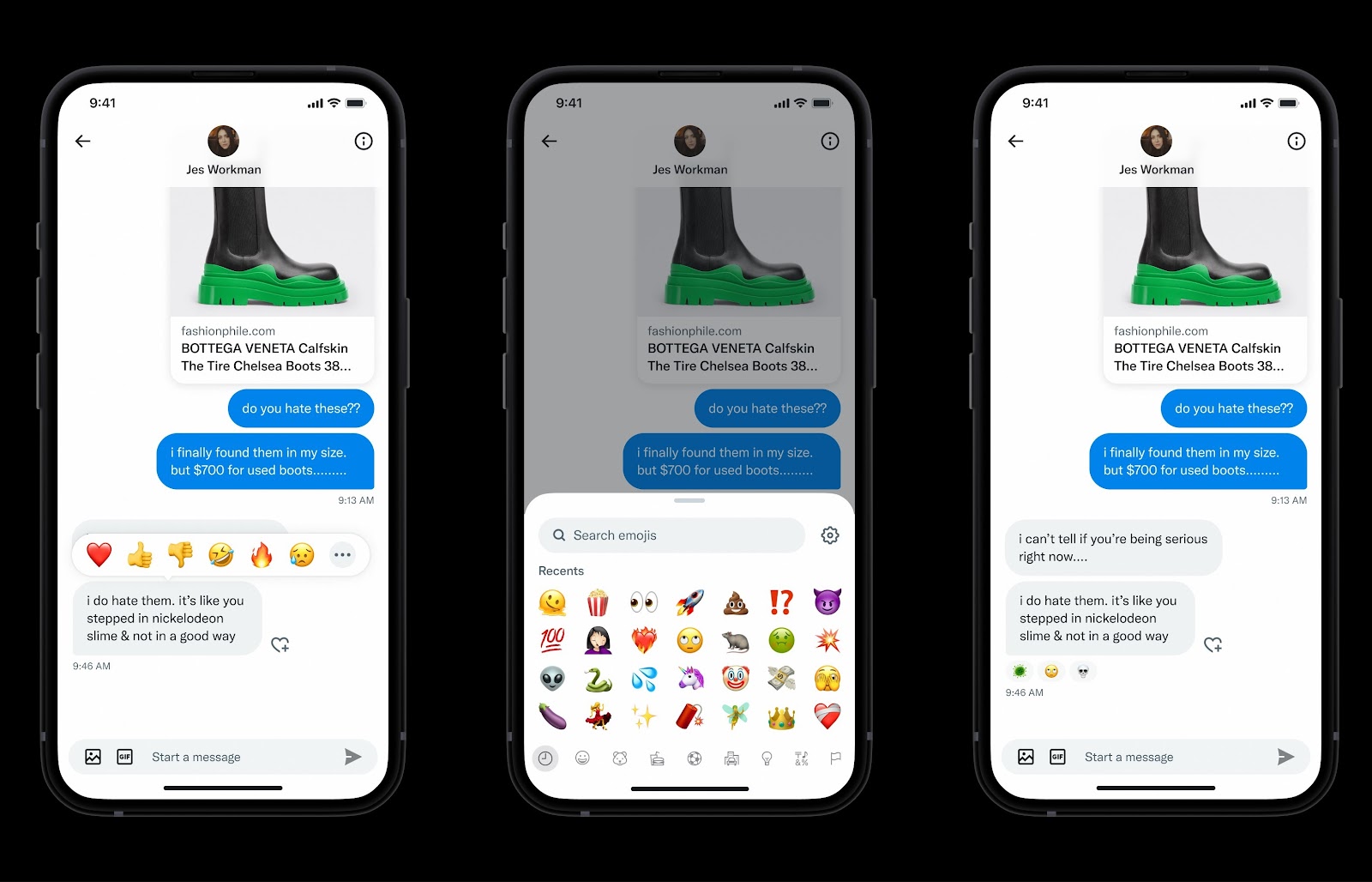
Twitter is testing a variety of emoji reaction choices in Direct Messages (DMs). This new feature will allow users to react to messages in DMs with a wider range of emojis, beyond the current heart and thumbs up.

Twitter first introduced emoji reactions in DMs in 2020, giving users the ability to express their emotions in a more playful and fun way. The platform has since become increasingly focused on improving the user experience in DMs and has been experimenting with several new features.

The expanded emoji reactions are part of Twitter's ongoing efforts to make DMs a more engaging and interactive space. By offering a wider range of emojis, users will be able to better express their emotions and react to messages in a more meaningful way. The expanded emoji reactions will allow users to express a wider range of emotions, such as sadness, anger, or surprise, which will make the overall experience of using DMs more personal and engaging.

The feature is currently being tested with a small group of users, and Twitter is seeking feedback from this group to see how they are using the expanded emoji reactions and how they can be improved. Twitter is also evaluating how the feature performs in terms of user engagement and overall satisfaction.

Twitter has always been known for its simplicity and ease of use, and the company is committed to preserving these qualities in DMs. The expanded emoji reactions are designed to enhance the user experience without adding any additional complexity to the platform. The expanded emoji reactions are intuitive and easy to use, and users will be able to access them directly from the chat screen.

Besides this, Twitter's major targets are set to close to one billion users per month. Currently, the platform is home to only 253 million active users. To host a good number of users, Twitter is constantly working on several updates such as updated bookmarks, tweet sight counts, and some new algorithms. With these new updates and features, the founder has high hopes of climbing +200% within several months.

In conclusion, Twitter's expanded emoji reactions in DMs are a positive step forward for the platform. It will allow users to express their emotions in a more meaningful way, and it will make DMs more fun and engaging. The feature is currently being tested with a small group of users, and Twitter is seeking feedback to see how it can be improved. Keep an eye out for the expanded emoji reactions in DMs, as they are sure to become a popular feature among Twitter users.
Read next: Twitter Moves Ahead With Major Plans To Transform Itself Into A Payment Platform
by Arooj Ahmed via Digital Information World

Tuesday, January 31, 2023

The most loved (and hated) cryptocurrency in every country

Cryptocurrencies have been gaining more and more popularity in recent years, with many people investing in different types of digital currencies.

But not all cryptocurrencies are created equal. And they’re certainly not thought of as equal.

Some are widely loved by investors and enthusiasts, while others are met with a fair amount of scepticism and criticism.

But which of those cryptos do people love the most? And which digital tokens do they absolutely hate?

Those are the two questions that inspired the latest study from the crypto experts at CoinKickoff. And they found the answers by turning to that great arbiter of 21st-century public opinion - Twitter.

The CoinKickoff team ran nearly 1 million tweets mentioning the 100 largest cryptocurrencies by market cap through the AI-powered sentiment tracking software HuggingFace.

Then they translated all that data into several global maps showing the most loved and hated crypto in every country.

Let's take a look at the results.

The most loved cryptocurrencies

Ethereum and Solana tie for first place. They ranked as the most loved coins in 10 countries. The love for Ethereum and Solana is particularly strong in Sweden, Chile, and Costa Rica.

Cardona and Tezos are the most loved cryptos in six countries, putting them in joint third place.

Elrond makes a surprise appearance. Elrond is a cryptocurrency and blockchain platform designed to handle high volumes of transactions. It's one of the more complicated smart contract platforms, requiring deep technical expertise to appreciate. Still, it managed to come out on top in 5 countries. They include Bangladesh and Australia.

Bad news for Bitcoin

Bitcoin is the original cryptocurrency and remains the largest by market cap.

And - at least in crypto terms - it has a strong track record of stability and growth. Back in 2011, you could have picked up a whole Bitcoin for just $1. And despite an 80% drop in value since the 2022 high, that $1 would still be worth over $20,000. Not a bad investment.

Bitcoin is also on the verge of mainstream adoption. Companies such as PayPal and Square have started allowing their customers to buy and sell Bitcoin on their platforms, while institutional investors such as Goldman Sachs and BlackRock have started offering investment products tied to the price of Bitcoin.

Another factor driving mainstream adoption is the growing number of merchants and businesses accepting Bitcoin as payment. This includes everything from small online retailers to large brick-and-mortar stores, as well as a wide range of service providers such as law firms, accountants, and real estate agents.

The increasing regulatory clarity and support of governments and central banks towards Bitcoin and other cryptocurrencies are also contributing to its mainstream adoption.

But despite its strong fundamentals, Bitcoin still sits at the top of CoinKickoff's most hated crypto list.

According to Twitter sentiment, Bitcoin is the most hated crypto in 16 countries, including Finland, Vietnam, Finland, and Uzbekistan,

Crypto users in Qatar appear to have the biggest issue with Bitcoin. More than 1 in 5 (20.4%) of Bitcoin-related tweets coming out of this Gulf State contain what Bitcoin enthusiasts call fear, uncertainty, and doubt - a.k.a - the FUD. That's the highest percentage of negative tweets from anywhere in the world.

The world's most hated cryptos

Axie Infinity is the second most hated crypto. According to the CoinKickoff data, it's hated more than any other crypto in seven countries, including Saudi Arabia and Turkey.

Axie Infinity is a blockchain-based game that allows players to breed, raise, and battle fantasy creatures called "Axies." Players can also earn cryptocurrency by participating in the game's economy, such as by breeding rare Axies or farming in-game assets.

But why do so many people hate Axie? Well, it's probably down to the price - with an emphasis on the down part. Investors who bought in during the crypto summer of 2022 have seen the value of their coins drop by 1300%. Ouch.

The network also suffered a major cyber attack in 2022, with hackers stealing more than $620million.

Uniswap, XRP, and Apecoin share third place on the most hated list. They're hated in six countries each.

Crypto sentiment in the USA

Around 20% of adults in the USA own cryptocurrency.

And if this study is anything to go by, we can bet that many of them hold a little bit of Stellar. Almost 70% (68.72%) of US-geotagged tweets mentioning Stellar were analyzed as positive by HuggingFace.

Stellar Lumens (XLM) is a digital asset and cryptocurrency that facilitates transactions on the Stellar network. The Stellar network is an open-source, decentralized payment protocol that allows for fast and cheap cross-border transactions.

The Stellar network uses its native digital asset, XLM, as a bridge currency to facilitate transactions between different fiat currencies and cryptocurrencies. The Stellar network also allows for creating and issuing custom tokens, making it useful for various use cases such as remittances, micropayments, and mobile money.

When it comes to negative crypto sentiment in the USA, Axie Infinity makes another unwanted appearance. Just under 1 in 3 (32.34%) of US tweets mentioning the coin were less than flattering; that makes Axie Infinity the USA's most hated crypto.

What does the study tell us about the future of crypto?

It is worth noting that the data from CoinKickoff is based on a survey of a relatively small sample of individuals and should be taken with a grain of salt.

Additionally, the crypto market is highly dynamic, and the sentiment towards a particular cryptocurrency can change quickly depending on the market conditions or recent news.

Future investing in crypto

Despite the scepticism and criticism that some cryptocurrencies face, it’s clear that digital currencies are here to stay. Bitcoin and Ethereum, in particular, have established themselves as major players in the crypto market, and are likely to continue to be popular among investors and enthusiasts.

However, it is important for investors to do their own research and to be aware of the risks and controversies associated with certain digital currencies before making any investment decisions.
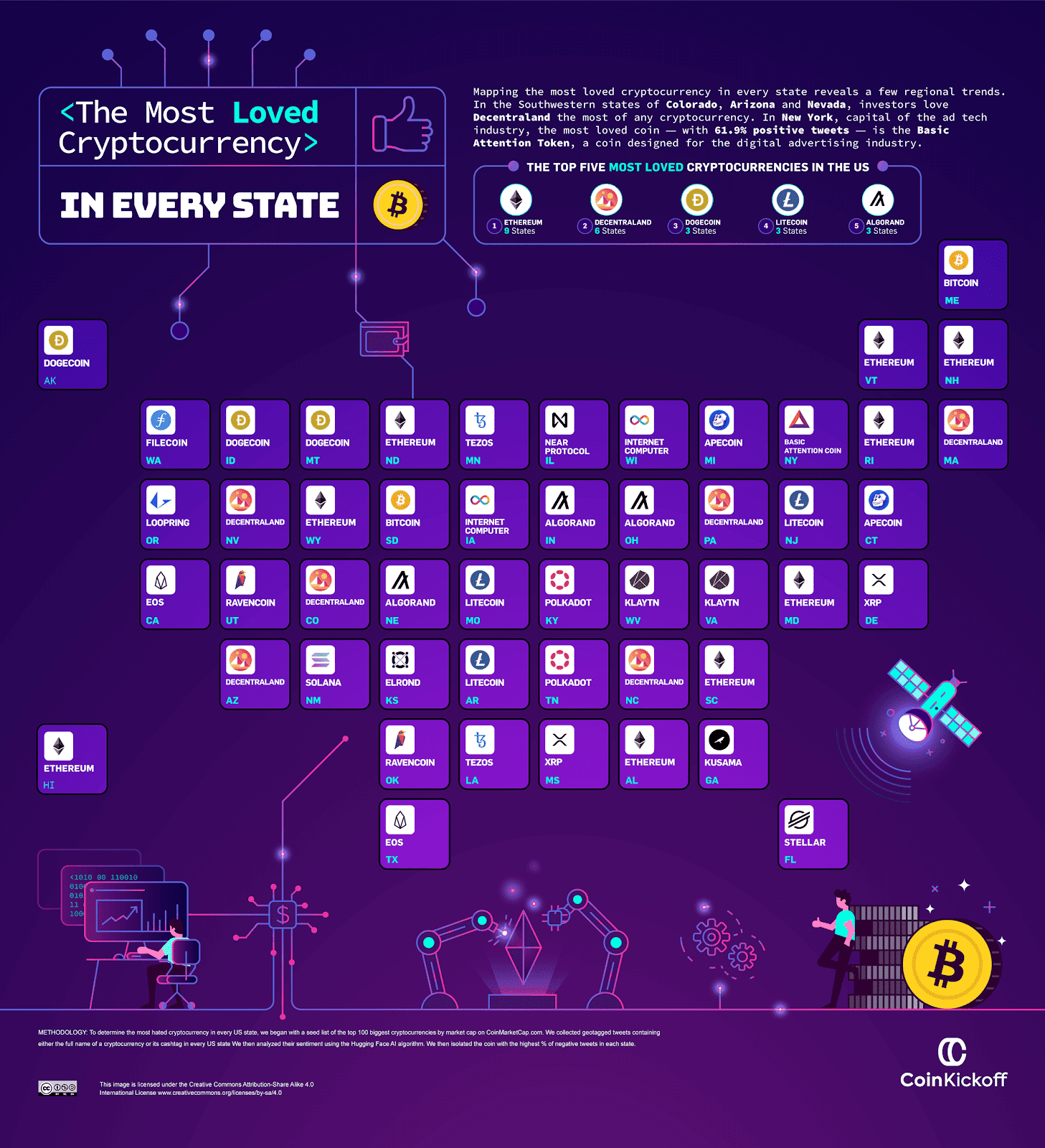
The past decade has been transformational for cryptocurrency - shifting it from an experimental concept to a mainstream alternative for traditional investments. But this doesn’t mean that the feeling towards crypto is always positive. In fact, despite its widespread popularity, Bitcoin is among the world’s most hated cryptocurrencies. So what are each country's most loved and hated cryptocurrencies?
Read next: Bill Gates Admits ‘Being Rich’ Can Make You Out Of Touch Despite Supporting The Billionaire Status
by Web Desk via Digital Information World

Is Instagram Over? Only 10% of the World’s Most Popular Influencers Use Instagram as Their Main Platform, Study Reveals

For decades, influential celebrities have been employed by businesses as part of a bigger promotional strategy. However, there has been a shift in recent years, with corporations wanting to collaborate with more social media influencers to attract an audience. But why and when did this become the era of the influencer?

Television was, for a long time, the main form of entertainment as well as the most widely used platform for the dissemination of marketing and advertising messages. Until YouTube was established in 2005.

One of the Internet's fastest-growing websites, YouTube quickly eclipsed Facebook with its estimated 2 billion active users per month. YouTube was first made available as a platform for sharing videos with people across the world, making it the first website where users could find online material produced by other people who shared their interests.

The influencer craze started in 2009, just 4 years after YouTube's debut, with the likes of Zoella, Alfie Deyes, Tanya Burr, and Caspar Lee sweeping the world and igniting the movement.

Social media platforms have expanded in accessibility for users as the Internet has grown. It should therefore come as no surprise that influencer culture has expanded to each of them, resulting in the success of today's most well-known influencers using a variety of online channels.

In an effort to determine which social media platforms have produced the largest full-time creators of all time, Higher Visibility has examined the influencers with the highest follower counts on each of the most well-known influencer-led social media platforms and tracked back to where they started their influencer journey.

Here are some key insights from the report:
  • A mere 10% of the world’s most popular creators use Instagram as their main social media platform.
  • 65% of the world’s biggest online creators leverage TikTok as their main platform as of 2023.
  • Of the top-performing creators of 2023, 35% started their careers on YouTube.
  • 10% of the world’s most popular creators began their careers on Vine.
  • 80% of popular creators who began their careers on YouTube have stayed on the same platform .
  • Though Instagram is seen as an ‘influencer platform’, just 10% of the most popular creators in 2023 currently use it as their main platform.
  • Vine has created more popular full-time creators than Instagram.
The Platforms Creating the Biggest Full-Time Content Creators

Higher Visibility initially wanted to learn which of today's influencers had the most followers in order to determine which social media platform was producing the most full-time creators and influencers.

The winner was Khabane Lame, a social media star who became well-known in 2020 after quitting his job as a factory worker due to the coronavirus outbreak and starting to post videos on TikTok under the moniker "Khaby Lame." Using the app's stitch feature, Lame made popular responses to "life hack" videos. He rose to the position of the most-followed creator on TikTok on June 22, 2022.

Charli D'Amelio, a fellow TikToker, gained popularity on the video-sharing app and currently has 149,200,000 followers.

Overall, of all of the platforms studied, TikTok came in first place for the highest amount of followers on average across the top 10 performers on the app. Organic reach for brands on TikTok is reported to be 118%, and when compared to the likes of Instagram which is reported at 13.51%, the difference is astronomical. When taking this into consideration, how much of an impact does the ‘virality’ of content on TikTok combined with organic reach have on the success rate of full-time creators on the platform?

If we look more closely at particular platforms, we can see that many of the creators in the top 10 on TikTok really started their careers on the same app.

Even though TikTok only debuted in 2017, the app reportedly attracted its one billionth user just four years after becoming global. It had previously taken Facebook and Instagram over a decade to collect the amount of a user base as TikTok did, so it is not surprising that the number of creators on this app is also increasing quickly.

Following in third place is Vine, despite shutting down in 2016 after 3 years in circulation the platform still played host to some of today’s most well-known creators. The majority of which have found further success on Instagram.

Although Vine was a short-form video-based platform, it’s interesting to note that many of the most popular personalities now utilize Instagram as their main platform.

YouTube was among the first mainstream platforms created that enabled users across the world to create online video content, and though many feel that YouTube creator culture is declining, our research finds that it is a platform that attracts long-term, loyal subscribers. However, has the time to create a successful career on YouTube passed if you didn’t build your main audience on the platform, to begin with? Though some have moved to TikTok, the majority of full-time creators on YouTube have found less success on alternate platforms.

The majority of popular YouTube creators in 2023 began their careers on YouTube. So, is it more difficult to build a following outside of YouTube once your influencer career has started there, and is it best to gain fans on YouTube from the start if you want to have a great career there?

Instagram places last with the lowest amount of average followers among the top 10 creators on the app. It was said in 2019 that the Instagram aesthetic was ‘over’, with users on the lookout for more real-life, relatable content on other platforms instead of the glossy, idealised lifestyles promoted through carefully curated feeds on the picture-sharing platform. We can see from this study that although this platform may once have been the go-to app for influencer culture times are, without a doubt, changing.

Instagram is frequently considered an "influencers platform." In fact, according to recent research, as of 2022, the app would still account for 94 per cent of influencer marketing initiatives.

Instagram was the only social media network examined during the study where all of its top creators found their initial success on a single platform and stayed. The average number of followers held by users who were successful on the app, at 22,170,000, was the lowest of any app in the study.

This begs the question; does obtaining followers on other platforms become more difficult if you are successful on Instagram? And although TikTok's growth rate vastly outpaces Instagram's, does gaining Instagram followers present a chance to forge deeper connections with loyal fans?


TikTok ranked #1 overall among the platforms examined for having the greatest average number of followers among the top 10 influencers on the app. When compared to platforms like Instagram, which has a reported organic reach of 13.51 per cent, TikTok's reported organic reach for brands is 118 per cent. What effect, if any, does TikTok's "virality" and organic reach have on the success rate of the platform's full-time creators when this is taken into account?

Although many believe that YouTube's creator culture is waning, Higher Visibility’s research shows that it is a platform that draws devoted, long-term followers. YouTube was one of the first widely used platforms that allowed users all over the world to create online video content. If you didn't first establish your primary following on YouTube, has the window of opportunity for building a successful career on the site closed? Although some YouTube full-time creators have switched to TikTok, they have generally had less success there.

The third-place finisher is Vine, which hosted some of the most well-known artists of the modern era even after it shut down in 2016 after three years of operation.

Instagram comes in last with the fewest followers on average. The glamorous, idealised lives offered through carefully curated feeds on the picture-sharing platform were reported to be "over" in 2019, with people searching for more realistic, real-life content on other platforms. This report demonstrates that, even if this platform may have once been the preferred tool for influencer culture, times are unquestionably changing.

Read next: What’s the Most Toxic Platform on the Internet?

by Web Desk via Digital Information World

Identity Theft Incidents Increased by over 41% in 2022

The Identity Theft Resource Center just released its annual report, and the findings in this report do not bode well for the future of personal data security in the US. According to this report, 422 million people ended up being the victim of data theft, and this led to many further issues including identity theft with all things having been considered and taken into account.

With all of that having been said and now out of the way, it is important to note that this represents a 41.5% increase from the numbers that were seen last year. That’s despite a downward trend being noted for most of the year, but in December it was revealed that the personal data of 220 million Twitter users was available on the Dark Web which made the numbers much higher than might have been the case otherwise.

Twitter ended up representing the single biggest data leak of 2022, but in spite of the fact that this is the case there were many other companies that were responsible for something similar. Neopets, AT&T, Cash App as well as Beetle Eye all contributed to this trend, with these five companies representing the least secure platforms as far as user data is concerned.

This data includes things like social security numbers, full names and many other types of information that can lead to identity theft and fraud. Companies need to be more transparent about data leaks because of the fact that this is the sort of thing that could potentially end up helping the people who have had their data stolen to take the necessary steps to protect themselves.

34% of data breach reports contained precise details about what was leaked during the theft. That means that 2 out of every 3 data breaches have taken information that has not yet been made clear to the public. Transparency is key here, and until major tech corporations are able to take responsibility for all that they are doing, it’s fairly like that these incidents will keep occurring. Threat actors will be able to operate in secret which can make their actions all the more harmful.


Read next: What’s the Best Threat Protection Against Ransomware?
by Zia Muhammad via Digital Information World