Friday, February 3, 2023

Retail media is gaining ground as a new marketing strategy

Retail media is gaining ground as a new marketing strategy, as brands increasingly shift their shopper, trade, and brand marketing budget to this channel.

A new report by ANA discovered that marketers are conflicted when it comes to advertising on Retail Marketing Networks (RMN). However, these mixed feelings do not affect the popularity of this marketing medium. Using RMN to reach the correct kind of audience seems like a good deal. So why are marketers hesitant?

The survey for this report was conducted in two parts. The first one included a poll taken by 138 members out of whom 80 utilize RMN. The second part of the survey included a follow-up where insights were gathered about their perspectives toward RMN.

As a result, it was found that two-thirds of the respondents use RMN simply to drive sales. Only 12% of the respondents use the medium to gain brand recognition. The audience around RMN has only one purpose - buying.


Retail industry leaders have identified a new and potentially lucrative source of revenue through RMNs. By offering advertisers access to their audiences and website traffic, retailers can create high-margin revenue streams. They can also increase their overall operating margins, which can range from 50% to 70%.

This shift towards RMNs has proven to be a game-changer for retailers with historically low single-digit margins. They are now able to monetize their shopper touchpoints, interactions, and intelligence. The result is a significant increase in their economic potential and a new avenue for growth.

The secret behind the growth of RMN is simple - the Covid-19 pandemic. Since the pandemic caused a shift in consumer shopping habits, it led to a significant increase in online traffic and transactions for retailers.

Retailers are leveraging these new channels to reach and engage with consumers in innovative ways, remain competitive, and meet changing consumer needs in the evolving retail landscape.

It seems like the downfall of the third-party cookie kingdom is also adding to the shift in brands focusing on building their first-party platforms. And who owns the first-party data forte? RMNs.

While RMN is the upcoming trend, brands need to approach retail media with a strategic mindset and partner with retailers that align with their values and target audience. Brands must also consider privacy concerns and ensure that their use of customer data is transparent and in compliance with all relevant regulations.

The report also highlighted some of the shortcomings of the trending medium. These include the lack of standardization and not being fully optimized to deliver KPIs. While some brands believe that RMNs are bound to cause brand values to decline, most brands are optimistic about the growth of this powerful marketing tool.

Overall, the trend towards RMNs is a promising development for both retailers and advertisers, as it offers a new way to unlock economic potential and drive growth in the rapidly evolving retail and marketing landscapes respectively.

Read next: Influencer marketing budget is set to go up in 2023
by Arooj Ahmed via Digital Information World

Thursday, February 2, 2023

Creator Insider answers hot FAQs about YouTube's Partner Program contract terms

Creator Insider, an informal YouTube channel that highlights any latest development the platform has to offer to content creators, is back with another video. This time, the channel answered some frequently asked questions regarding the YPP contract.

The YouTube Partner Program is meant to provide creators with more access to resources and monetization features. It will enable the sharing of revenue generated from advertisements shown during the videos. While the platform established clear eligibility criteria to become a part of the program, there were still several queries that were answered by Conor through Creator Insider.


Starting with the first question, if a creator accidentally dismisses the YPP contract notification, how can it be accepted? To this, Conor clarified that by visiting the Earn tab and tapping the Get Started button, the contract will start.

Next up, if a user only accepts some terms initially and wants to accept more, this can also be fixed from the earn tab. From the “ways to earn” option, tap “get started” and accept more terms. Another similar question is what happens when someone mistakenly leaves the YPP during their acceptance term. The user can simply visit the “Earn” tab and apply to YPP again.

Another frequently asked question is about multiple modules. To this, Conor clarified that the addition of multiple modules to YPP is for future modifications regarding monetization instead of renewing the whole agreement. Next up for those who couldn’t become a part of YPP, they asked on what basis short views would be accumulated for YPP eligibility. To clear up this confusion, Creator Insider explained that through the “Earn” tab, creators can track the activity of their channel. If the activity follows the eligibility criteria, then the creator can apply for the YPP contract.

Another common question was: if a creator has already been paid with short-term funds, will they automatically become a party to the contract? The answer to this question is no; to become part of the YPP contract, it has to be applied. And lastly, does Short count toward the 4000 watch hours of eligibility? The answer to this question is also no. Combined activity across formats is not how the eligibility criteria are considered.


Read next: Influencer marketing budget is set to go up in 2023
by Arooj Ahmed via Digital Information World

Even If Smartphone Shipment Is Declining Since 2022, Its Camera Resolution Keeps on Improving

According to Counterpoint Smartphone Camera Tracker report, OEMs are still working on upgrading the camera quality of smartphones even after the decline of smartphone shipments in 2022. There are many tricks and techniques in the smartphone market which can turn the camera resolution to a higher level. Smartphone OEMs have been using the already existing cameras to advance the microchip sets within the camera. Many new software algorithms are also being introduced in the cameras to improve their functioning. OEMs are not using macro cameras and depth to improve the camera quality, rather they are focusing on improving the core camera functions. This means that the cameras with 8MP and low resolutions are no longer in the race.

Even amidst the smartphone shipment crisis in 2022, Apple seemed to sell more smartphones as compared to Android. So smartphones with 10MP-12MP resolutions had an increase in market share. But this resolution isn't going to get so far in 2023 because the iPhone 14 pro model will be 48MP. Smartphones with 13MP-32MP resolutions experienced a huge decline as smartphones with even higher resolutions were getting popular in the market. However, the share of 42MP-48MP was seen declining in the market because many smartphones continue upgrading to 50 MP resolution. But this will go to reverse as the new iPhone model is going to arrive in the market.

50MP has been getting popular since its release in 2022, and smartphones with this camera resolution do not have high prices either. OEMs have been using 50MP large-pixel cameras for smartphones because it gives high-resolution and high-quality pictures. 50MP is mostly in mid to high-end smartphones. In 2022, 50MP smartphones will have more than 260 million units in their total sales.

64MP smartphones are slowly migrating towards large 50MP, that's why the sale for 60MP and 64MP smartphones is declining. 100MP is also going at a steady pace since its release but its prices are high and are being sold to mid to high-end segments. But still, 100MP is being loved by many and there's no chance that it will revert to 60MP or less.


Read next: New Survey Proves Trust In Twitter Is Declining Among Democrats While Rising Among Republicans
by Arooj Ahmed via Digital Information World

What Trends Are In Store For The Digital World In 2023? This New Report Has The Answer

For the past year, we’ve seen a lot of fluctuations taking place in the digital world. Behaviors have altered, some for the worst and others for the good. But what does that mean for 2023?

To help give more insight, we’re glancing over a new report that shares what trends are leading the way and how they’ll impact 2023. So let’s take a look!

For starters, let’s glance over the trending headlines linked to the current global tech world.

Current population statistics prove how the population stands at roughly 8 billion individuals and around 57% of the world’s population lives in urbanized districts. Out of this, around 5 billion make use of cell phones since the year 2023 began, accounting for 68% of the world’s total population.

Moving on to internet users, there are roughly 5 billion of them situated in different locations around the globe. This means a good 64% of the global population stays connected online. And this itself has seen a growth of 2% in the past year.

But at the same time, certain delays in the world of reporting prove how real growth is bigger than what this figure is suggesting.

Today, the world of social media attracts roughly 5 billion people, which is just a little less than 60% of the world’s total population. And the figures keep increasing as we speak.

And let’s not forget how certain delays in data reports would suggest how the value is more than this. Hence, such headlines are clear proof to us and so many others of what’s happening around the globe.

But we really need to dig deep to realize how people are evolving with plenty of data on display. Let’s now switch on to overviews of the world’s internet usage.

These are some key indicators of how the internet is being adopted and used by global users.

Today, the figure has risen to 5.16, a great rise from figures calculated last year in October. The number of people using the internet has grown by around 90 million in the past year. This makes the YoY growth a little less than 2%. And when you come to think of it, the growth was not as dynamic as that in 2010.

So the growth is definitely slow, but not a huge surprise as so many people are online. Figures predict that by the end of this year, we should be seeing the majority of the world go online by this year’s end.

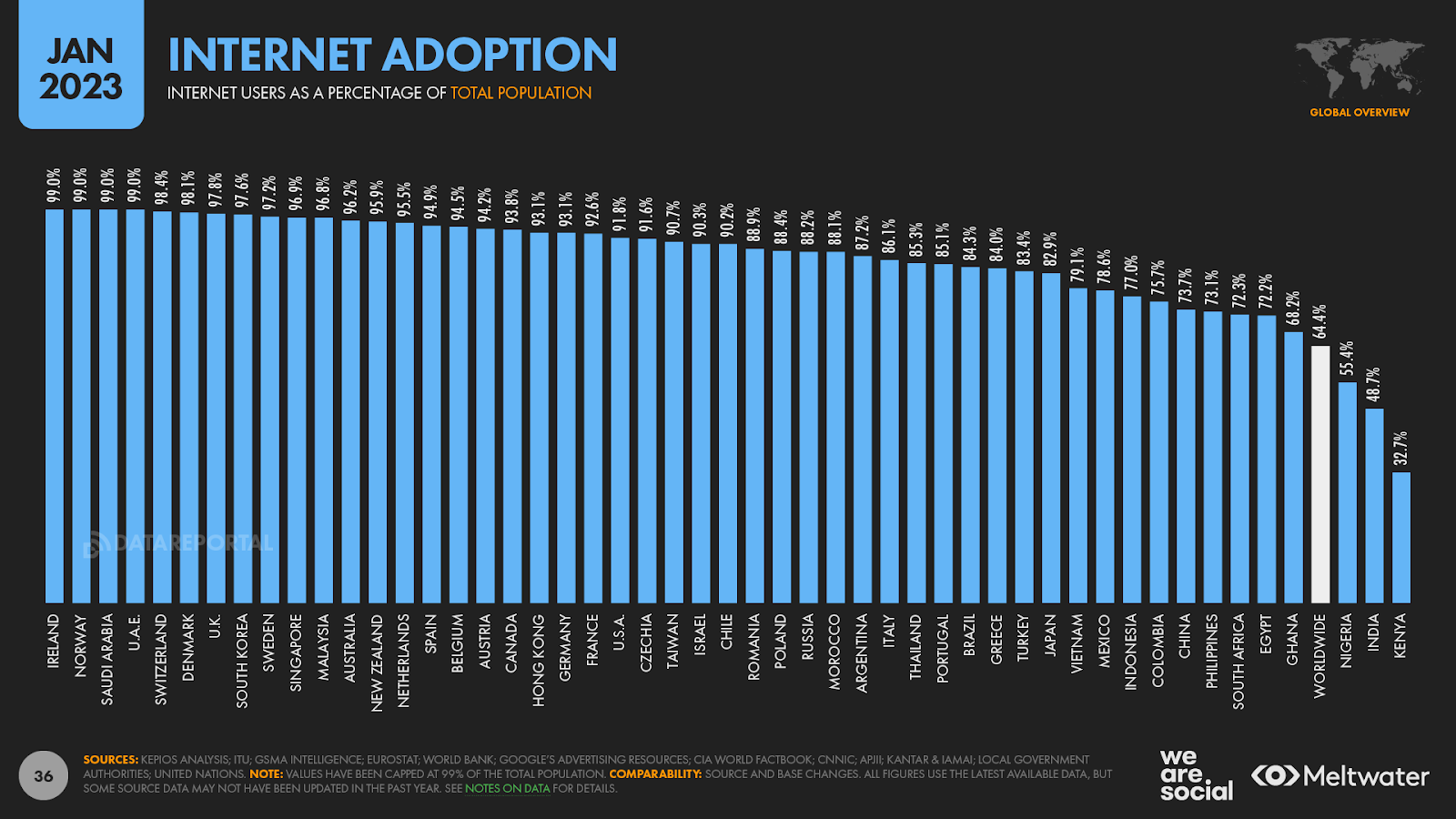
When looking at statistics from around the globe, digital use is very variable. Toward the top of the list, we’ve got the likes of 99% adoption rates for the web in around 8 different nations. Meanwhile, 55 different countries are enjoying internet adoption that’s greater than 90%.

What is surprising to a few people is how people are adopting the internet at a faster pace in places like Europe and the UK as compared to nations in North America. Analysis proves how 92% of the global population in the US is situated online and that ranks the nation at position number 45 on the world map.

North America only accounts for the likes of 6% of the global population for internet usage, contrary to many people’s beliefs. Hence, you might feel that digital trends in the US are barely a true representation of the digital habits observed around the globe.

This is why experts suggest paying closer attention to the likes of data on a local country level to better gauge what is taking place and how you can reach out and engage better with your market’s audience.
Read next: This Data From Fiverr Suggests a Massive Increase in Freelancers in 2023
by Dr. Hura Anwar via Digital Information World

This New Google Maps Feature Might Help EV Owners Plan Their Trips

Electric vehicles are widely thought to be the next big trend in the automotive industry, but in spite of the fact that this is the case they are still at the very start of their market journey. This means that finding charging stations for EVs can still be a bit of a concern for consumers, and they have to put more thought into planning out their trips than might have been the case otherwise.

With all of that having been said and now out of the way, it is important to note that Google Maps might be bringing a new update to its Android app that will make things a lot easier for EV owners around the world, as per 9to5G. This is a part of their Android Automotive push, of which Google Maps is a pretty integral part.

One crucial thing to note here is that this functionality will now be expanded to EV users who aren’t using Android Automotive as of right now. The way this works is that they will be able to plan their trips by making it so that they know about all of the recharging stations that they would come across along the way.

Updates like this are useful because of the fact that this is the sort of thing that could potentially end up allowing EV users to get to their destinations without worrying about finding charging stations. Automatic route planning will also be on the cards, so this is clearly a step in the right direction with all things having been considered and taken into account.

Whether or not this updated Google Maps app will include other types of functionality from Android Automotive remains to be seen. Features like estimated battery life are quite essential to people who drive around in EVs, and chances are that Google would want to help them out with that.

This could put Google front and center in the EV revolution, despite not offering such cars themselves. We might see more EV users turning to Android due to the nature of this update and how convenient it can make everything.


Read next: Google Adds Exciting New Package Tracking Feature In Gmail So Users Can Track Deliveries
by Zia Muhammad via Digital Information World

Wednesday, February 1, 2023

Predicting The Ageing Of Lithium-Ion Batteries Using AI May Prolong Their Lifespan, New Study Claims

There’s nothing worse than your lithium-ion battery dying without providing a signal that informs the user of what went wrong.

Therefore, we thought it would be interesting to see how such cells are turning into an integral component during the rise of electric mobility, despite such characteristics. And it’s all thanks to researchers who are now working to predict their aging with the help of AI-powered technology as a means to prolong their lifespan.

These cells are very successful in terms of their function. But their major downfall is a decrease in function with time due to degradation. And that is not only restricted to aging but also due to everyday tasks like charging and discharging which many experts deem cycling aging.

Batteries also tend to degrade when users are not making use of them. This process is better known as calendar aging and it takes place during storage or when cells aren’t getting used properly. This is based on three factors that include the resting temperature, rest time duration, and also the resting state of charging.

Knowing that most electric vehicles would spend most of their time in a parked position, estimating their capacity degradation through such means is essential. It’s how users can get a better idea of the battery life and make way for different mechanisms that circumvent the whole idea.

Therefore, so many researchers are busy setting out advanced machine algorithms that correctly estimate the process of calendar aging for these cells.

The news comes after research was published by the European Union’s Horizon program in 2020 where scientists took on new steps by comparing accuracy from two new algorithms on a wider spectrum of commercial chemistries for lithium-ion cells.

This drew attention to aging data from around six different types of chemistries linked to batteries. The latter was aged in the likes of temperature chambers using voltages of various kinds. And to further protect them from the likes of aging, the team was seen investigating the efficiency linked to machine learning algorithms.

But the real question has to do with how such algorithms really end up working in today’s time. It ends up rolling out reliable results but they vary by a huge amount in terms of their operations.

One example is the XGBoost which is supervised through the likes of machine learning that is used for matters like regression or even classification issues.

Then we’ve got the likes of ANN which is adaptive through artificial means and makes use of base elements dubbed connections and neurons. It alters global inputs in a manner that gives rise to predicted outputs.

To better understand the performance here, researchers are using different metrics to determine the severity of errors between the likes of values both measures and predicted. So the smaller the value, the greater the precision or accuracy.

In conclusion, we witnessed testing proving how XGBoost could be used in a successful manner to forecast the calendar aging of batter chemistries with very little error. But algorithms like ANN were not as great and could only produce satisfactory results for certain batteries and thier respective chemistries.


Read next: Toyota Wins the Battle of Being the Longest Lasting Car - Concerning Miles
by Dr. Hura Anwar via Digital Information World

Influencer marketing budget is set to go up in 2023

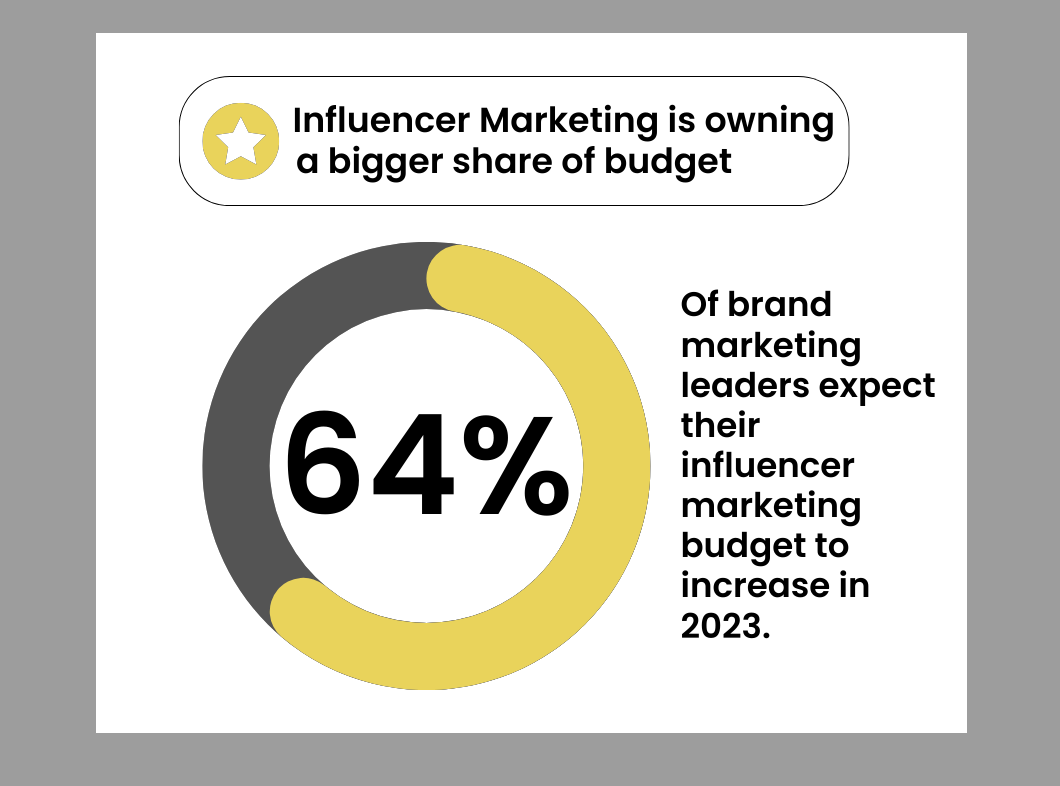
The latest survey conducted by Open Influence shows that the ongoing year will be the year of influencer marketing. Out of 150 marketing leaders who took part in the survey, 64 percent of them revealed that marketers are planning to increase the budget.


Using influencers to market products is now being followed by several brands. Lately, these brands have started to spend almost a million dollars on such promotions. Almost seventy-seven percent of the brands aim to hold a long-term contract with content creators and influencers, as it helps the brand form a stronger link with its customers.

While 40 percent of marketers believe that the whole hiring procedure is easy, some brand marketers find it difficult as most of the time, the influencer they are looking for is not available. To counter it and stabilize the return on investment, paid advertisements are also being used on social platforms.

Meta’s Instagram and ByteDance’s TikTok are the two largest influencer marketing applications. While Instagram is ahead of TikTok, apparently the short video platform is growing at a much faster pace. When it comes to the most used platform for influencer marketing, Instagram is leading the chart with 76 percent, followed by another Meta-owned platform, Facebook, with 67 percent, and then TikTok at third with 59 percent.
In terms of the common content platform, Open Influence’s data shows that short videos are doing pretty well in 2023 for brand promotion, with over 57 percent, followed by picture media at 47 percent, and then long videos at 37 percent.

The influencer who will be contacted by the brand for promotion is shortlisted mainly because of their follower count. Influencers and creators with the largest number of followers are likely to be reached out to by most brands. However, follower count is not the only factor; to find the targeted audience, relatable influencers are hired, followed by aspirational ones.

As it has already been revealed that 2023 will be the year of influencer marketing, it can be expected that brands will be experimenting with new ways to promote their products through such marketing strategies.


Read next: LexisNexis shared the list of companies with the most AI patents
by Arooj Ahmed via Digital Information World