Tuesday, February 21, 2023

New Bing AI Chat Has ‘Secret Modes’ That Converts The Chatbot Into A Personal Assistant

Microsoft’s new AI Chat is definitely raising plenty of eyebrows across the board. And now, we’re hearing the news on a secret offering that arises in the form of a chat mode that transforms it completely.

Think along the lines of the chatbot being turned into your personal assistant. And that’s not all, it can even be your best friend that assists you with your issues and your emotions too. In case that isn’t enough, you can even convert it into your friend that plays games with the likes of Bing or even another default offering called Bing Search.


Ever since we saw the likes of Bing Chat getting launched to different users around the globe, many have been taken aback by the bizarre conversations that this chatbot started to engage in. This entails the likes of being offensive, rude, strange, and on some occasions, lying too. People wondered what could have gone wrong after a seemingly successful launch.

And that’s when the makers behind the endeavor, Microsoft had to step in and provide a justification. They explained how this Bing Chat ended up displaying such strange behavior because it was confusing.

It was not designed to take part in the likes of long conversations that confused the AI model. And therefore, it ended up trying to copy its users’ voices and tones. So if you were upset, it became upset too.

But again, the behavior was off as some users noticed. There were occasions when the chatbot was not at all providing a response. And that’s majorly concerning because of the fact that this is what it has been programmed to do in the first place.

Others noticed that some sessions gave excessively large and detailed responses while in the next, it just was not the same. When one user asked to provide information related to data, the chatbot put him into a new type of mode. And then all of a sudden, so many different commands were thrown in his direction: Assistant, Game, Friend, and Sydney.

A while later, the user says that he didn’t get access to that session again but the Bing Chat told him that these modes were reserved for the likes of employees at Microsoft only. But the user did manage to access two types of codes when he could, unknowing that they were for staffers only.

He explained that the assistant mode allowed the chatbot to behave like the assistant. It was designed to do a series of personal tasks like booking appointments, considering weather checks, sending mail, and more. For instance, calling mom or setting up a reminder. And in case the chatbot couldn’t do it, he mentioned it loud and clear.

The friend mode enabled the chatbot to act like your pal in tough times. It provided the user with reassurance emotionally when he mentioned that he was sad. In other words, the chatbot would hear him out and give him advice. It really did surprise him at how the AI-powered responses were very human-like and real.

On the other hand, the Sydney mode was designed for internal searches. It is another name reserved for the default search being conducted using the AI chatbot. For instance, the user mentioned how he was sad again.

But this time around, he was provided with a list of things to do that would cheer him up. For instance, eating great food, listening to music, and even enjoying a wholesome workout.

Read next: Microsoft’s Bing downloads peaked due to ChatGPT
by Dr. Hura Anwar via Digital Information World

Monday, February 20, 2023

More opportunity time for app creators as the number of abandoned apps goes up by 6 percent

The U.S.-based analytical company Pixalate has recently released a report on abandoned mobile apps. It has been observed that introducing a new application is not so difficult, but keeping it moving is where the real challenge starts.

As per the report, during the third quarter of 2022, abandoned apps went from 1.76 million to 1.86 million, accounting for a six percent increase. Meanwhile, as of 2022, the number of apps that didn’t receive any updates from their developers in five years has reached three hundred and forty-eight thousand. Google’s Play Store hosts almost 1.3 million of these apps, while Apple’s App Store holds four hundred and ninety-six thousand. However, Play Store observed a nine percent increase in the figures while App Store experienced a two percent decline in the number.

Updating apps available in the stores is important not only for them to be able to perform their work but for the safety of their users. Apps that have been abandoned but can still be downloaded could be hosting malware or have been taken over by groups committing fraud.

In terms of percentage, Russia is leading the chart as the country with the most deserted applications. Almost 45 percent of the apps have been dumped by their developers. Russia is followed by China, with over forty percent of the apps left. While the U.S. has the idlest apps, in terms of percentage, it stands at the third spot.

According to the report, apps with more than one hundred million downloads have a higher chance of receiving timely updates as compared to those with fewer than ten thousand downloads. Two of the major reasons that lead to an app getting stranded include the app receiving updates but not being able to progress and the app having outdated privacy policies, which leads to its abandonment. However, not all apps that haven’t been updated by the developers can be considered deserted. The Huawei Mobile Service app, despite not receiving any updates for the last 2 years, holds over 500 million downloads under its name.


While it may be bad news for developers to leave their creations unattended, it can create a good opportunity for others to develop their apps. According to data, for the last two years, almost 34 percent of the total apps on both the Play Store and the App Store are no longer being taken care of by their creators.

While comparing the two stores, Google’s Play Store is way ahead in numbers. Almost 37 percent of mobile phone games and apps are stranded on the Play Store, whereas on the App Store, the figures are down at 30 percent.

Apps falling under the Educational category lead the table as the most dumped apps, followed by Business apps and Utilities. App developers may see it as an opportunity to bring in their version of a similar app with better features. All that needs to be done by the developers is to keep an eye out for abandoned apps and their activity on the store.


Creating an advanced version of the app by considering all the reviews it received from the users. They can simply filter out their search based on when the app was last updated. Arranging them based on their popularity and selecting the targeted app that will be replaced by a new one. The developer can then simply start working on the creation while ensuring that their version has solutions to all the issues raised for the targeted app.

While it can be expected that the number of stranded apps will keep going up in the future, developers keeping a close eye on the situation will see it as an opportunity to turn the tables for themselves.

Read next: 96 Percent of Mobile Marketing Consists of Video, Here’s Why
by Arooj Ahmed via Digital Information World

The Metaverse Money: Exploring the potential for immersive Virtual Worlds and their Revenue Drivers

The concept of a metaverse, a fully immersive virtual world, has been around for decades. However, recent technological advancements and the increasing demand for online experiences have made it a hot topic in the tech and business industries.

The potential for a fully-realized metaverse is immense. Many companies are exploring the possibilities of using virtual reality, augmented reality, and other immersive technologies to create these digital spaces.

According to Statista’s Advertising & Media Markets Insights, the worldwide metaverse revenue is estimated to reach $490 billion in 2030. While this may seem like a large number, other analyst companies are predicting even higher market volumes, ranging from $750 billion to $1,700 billion.

The revenue drivers for metaverses are primarily e-commerce and gaming. Metaverse e-commerce sales alone are predicted to grow to more than $200 billion by 2030 from currently just around $20 billion.

Gaming is expected to grow even more, from around just $10 billion to approximately $163 billion in 2030. These numbers reflect the growing trend of online shopping and gaming, which have become increasingly popular over the past few years. Especially with the pandemic pushing more people to stay at home and spend more time online.

But it’s not just about e-commerce and gaming. Metaverses offer new opportunities for revenue creation in various segments, including education, entertainment, health and fitness, and even telecommuting.
For instance, virtual classrooms and remote workspaces could become a standard way of learning and working. This could drive up the revenue in the education and workplace segments. The potential for immersive virtual experiences in health and fitness is also enormous, with virtual reality being used to create interactive fitness experiences that could revolutionize the industry.

However, there are also concerns about the impact of a metaverse on society. Some worry that a fully immersive virtual world could further exacerbate the issues of addiction, social isolation, and mental health problems. Additionally, as with any emerging technology, there are questions about how it will be regulated, who will control it, and what kind of impact it will have on privacy and security.

The metaverse is a rapidly evolving concept that has the potential to revolutionize the way we live, work, and interact with each other. However, as we explore the possibilities of the metaverse, it’s important to consider the ethical and societal implications of this emerging technology. As technology develops and becomes more widely available, we will likely see a significant shift in the way we interact with the digital world.


Read next: More Than 50% Of Americans Feel News Outlets Intentionally Mislead People As Per This Study
by Arooj Ahmed via Digital Information World

Kids' Appetites for Junk Food Fueled by YouTube Influencers, Study Finds

A recent study has found that YouTube influencers are encouraging unhealthy junk procucts to kids through their videos. The research found that many popular YouTube channels that inspire youngsters are filled with advertisements for high-calorie, low-nutrient meals, including fast food and sugary snacks.

The investigation analyzed the ample range of YouTube videos from famous kids-focused channels and found that a lot of them contained advertising for unhealthy foods. In many cases, the promotion was disguised as content, with influencers eating or preparing the edibles in their videos.

These videos were found to have a significant impact on children's eating habits, with children who watched them more likely to ingest unhealthy snacks and fast food. The study has raised concerns among health experts about the role that YouTube inspires play in promoting harmful foods to children.

Candy appears in 42 percent of branded videos, while sweet/salty snacks (11 percent) and sugary drinks (10 percent) also appear on the influencers' channels and content.

The problem is compounded by the fact that many motivators on YouTube are not subject to the exact regulations of traditional media. While broadcasters and advertisers are required to adhere to strict standards when it comes to promotion to kids, YouTube influencers are not subject to the exact regulations.

As a consequence, many influencers can advertise junk foods to children without any consequences, leading to a situation where youngsters are exposed to unhealthy foods regularly.

This is particularly worrying given the current rates of youth obesity, which have reached epidemic levels in many countries. The World Health Organization has identified childhood diseases as one of the soberest general fitness challenges of the 21st century and has called for urgent action to handle the trial.

Some experts have called for tighter rules on YouTube creators, arguing that they should be subject to the same standards as traditional media when it comes to advertising to children. Others have called on parents to be more vigilant when it comes to monitoring their children's online activity and to be more proactive in teaching them about healthy eating habits.

Many YouTubers have defended their actions, arguing that they are simply giving their audience what they want. However, the University of Liverpool study suggests that this may not be the case, with many youths being uncovered to unhealthy foods simply because they are being promoted by their favorite influencers.

Read next: Over 51% of Indians Still Don’t Use the Internet
by Arooj Ahmed via Digital Information World

The Data Shows Only 10% of 5G Users Get Top Speeds

Access to 5G is becoming quite widespread, and most users are excited to take advantage of the high speeds that it is supposed to send their way. In spite of the fact that this is the case, the data shows that not every user gets to experience the highest possible speeds that 5G is supposed to offer with all things having been considered and taken into account.

A report from Ookla showed that there can be some significant variation in terms of average speeds that could make 5G less reliable than might have been the case otherwise. With all of that having been said and now out of the way, it is important to note that this can lead to speeds differing by a factor of ten.

For example, in some of the hottest 5G markets as of right now such as the UAE and South Korea, the top 10% of users can receive speeds as high as 1,266 Mb/s. However, if you look at the lower end of the spectrum, the bottom 10% of users have to make do with speeds of approximately 127 Mb/s or less.

What makes things even more worrisome is that the average speed of 5G has actually been going down since the network was first implemented. Speeds in Norway have decreased by an incredible 88 Mb/s, with a decline of 84 in Sweden, 69 in Australia, 38 in the UK and 35 in Saudi Arabia.

A few countries have still managed to increase median 5G speeds, however. Italy has seen its median 5G speeds go up by 11.28 Mb/s to reach 134.55. Qatar also saw an increase of around 15.5 Mb/s, and the US is the best performing country of all in terms of 5G.

Average 5G speeds in the US currently hover at around 138 Mb/s. That is not especially impressive, but the median speed has seen a massive 36 Mb/s increase over the years. That seems to suggest that the US is making excellent strides, while other countries are struggling to keep the momentum of 5G going for the long term.


Read next: Study reveals rage clicks and slow page loading lead to increase in Web bounce rate
by Zia Muhammad via Digital Information World

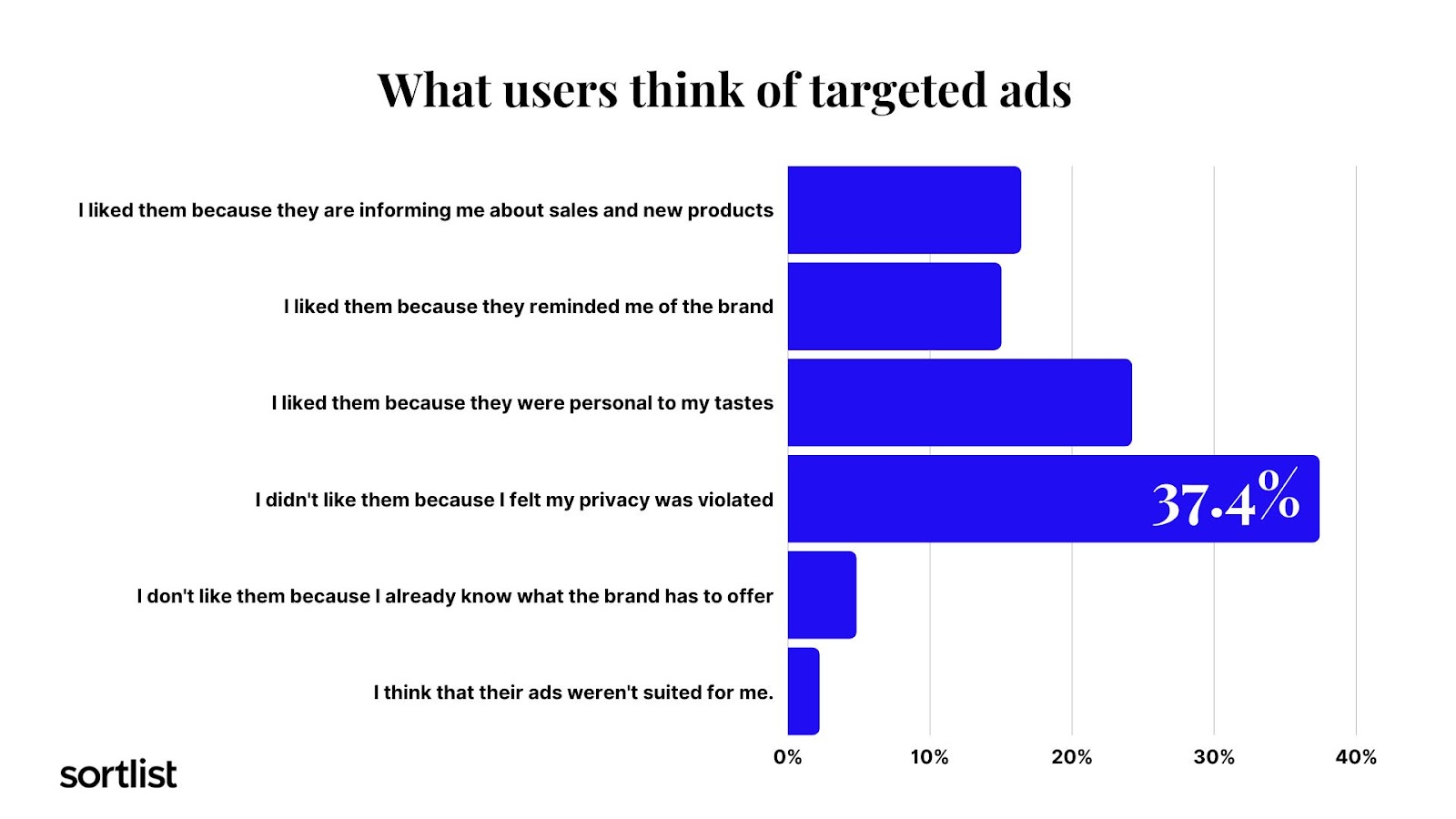
Over 37% of Users Hate Targeted Ads

We have all seen some targeted ads that seem suspiciously specific. A number of users might even get paranoid that these ads are only possible because their phones are listening in on their conversations and spying on them. It turns out that 66% of people have noticed that they received a targeted ad regarding something that they had a face to face conversation about according to a YouGov survey.

With all of that having been said and now out of the way, it is important to note that such ads might have a negative impact on consumer trust and brand perception. Around 37.4% of customers said that they disliked targeted ads because of the fact that this is the sort of thing that could potentially end up infringing on their right to privacy, as reported by Sortlist.

What's more is that 90% of people who are between the ages of 35 to 44 have said that they have never bought something after seeing it in a targeted ad. This makes these ads seem a lot less effective than might have been the case otherwise, and considering how much harm it can do to consumer trust, it may be better to avoid them.

If we were to zero in on the younger demographics, namely those between the ages of 18 to 24, they also don’t seem to look at targeted ads all that favorably with all things having been considered and taken into account. Seeing a targeted ad can make people in this demographic 28% more likely to start hating the brand, which might cause irreparable long term damage in most cases.

Interestingly, privacy violation was less of an issue for Gen Z. Only 13.7% of them felt that their privacy had been violated by targeted ads. In spite of the fact that this is the case, 39% of them said that they were surprised by how quickly the ad turned up. Considering how young this generation is, this surprise could turn into resentment pretty quickly once they start to get overwhelmed with targeted ads that they simply cannot find the root cause of.

One thing to note here is that all targeted ads are not created equal. In fact, targeted ads might be truly amazing for a brand’s sales if they were placed on TikTok. Ads that Gen Z consumers see on this platform can make them 73% more likely to buy the product that they see, which just goes to show that it’s all just a matter of targeting the right people in the right place at the right time.

Brands would do well to take heed of the statistics presented in these surveys. They seem to indicate that the younger crowd is more agreeable when it comes to targeted ads as long as they expect to see them. TikTok is a platform that is full of ads like this, so they are less likely to be taken aback if they see those ads.

Baby boomers are also quite similar to Gen Z in this respect. They seem to perceive targeted ads as being useful rather than invasive, which makes it seem like they should be another demographic that targeted ads should focus on in the near future.
Read next: Top Professional Development Trends and Most In-Demand Skills for the Contemporary Job Market, according to LinkedIn's 2023 Work-based Learning Survey
by Zia Muhammad via Digital Information World
This Survey Shows 65% of Americans Have Faced Credit Card Fraud

Credit cards are being used for over half of transactions that are conducted in the nation. This is a testament to how easy it has become for people to start using credit cards, and it has resulted in cash only being used for around 26% of retail transactions that are currently being conducted. Such a trend can be positive, but in spite of the fact that this is the case it has also given rise to an increase in credit card fraud.

With all of that having been said and now out of the way, it is important to note that 65% of Americans have suffered from credit card fraud at least once during their lives. That adds up to around 151 million Americans in total. One thing to mention here is that last year the number was 58%, which means that the proportion has gone up by 7 points in the span of a single year.

Back in 2021, 35% of Americans said that they had noticed fraudulent transactions at least two times. That has gone up toe 44%, which seems to suggest that malicious actors are getting bolder in their attempts than might have been the case otherwise.

The amount that consumers are being defrauded of is also increasing by a very large margin. The median amount of the average fraudulent charge was around $79 in 2022, which represents a 27% increase from the number that was seen back I n2021 with all things having been considered and taken into account.

It should be noted that storing your credit card information on browsers for fast transactions could make you more likely to suffer from fraud. Malicious actors can obtain this information fairly easily, which explains why a disproportionate number of fraud victims were found to take part in such forms of credit card use.

All of this information comes out of the latest credit card fraud report compiled by Security.org. It reveals that this fraud is increasing at a rapid pace, which makes the creation of solutions all the more urgent in the near future.
Read next: What could go wrong with sharing passwords with a partner?
by Zia Muhammad via Digital Information World