Instagram is introducing a bunch of new features to the platform, having to do with ad enhancements, post scheduling, and a new method of monetizing posts.
Overall, all three of these features seem to be geared towards individual influencers and brands managing their income streams and online presence on Instagram. The platform’s proving to be continually lucrative for such ventures, with its relatively successful outreach to younger generations (relative, of course, to Facebook and Twitter, otherwise TikTok has this particular race in the bag). Naturally, the platform wants to capitalize on that further and has continually introduced a bunch of updates, features, and programs to bolster along the creator influx. For example, there was the introduction of branded stores to the platform, which allowed individual accounts to sell their personal branded merchandise via Instagram. There’s also the series of creator programs that Instagram did to promote Reels, paying creators mixed amounts of money for creating content using the new format. Instagram wants its creators and celebrities to stay comfy with the platform and rake in more of that sweet ad revenue.
The first feature we’re discussing is called ads enhancements, and before I delve right into all of this addition, I’ll credit serial social media leaker Alessandro Paluzzi for the findings. With that out of the way, let’s talk ad enhancements. These are new additions to Instagram via which the platform wants to help creators out with reaching audiences. Specifically, with certain groups, the platform will display the user or brand’s information along with recent images in the form of cards at the end of Stories ads. Furthermore, Instagram will also automatically crop ads and reposition captions to fit the recommended aspect ratio for Stories better. While the former seems like a useful feature, many users might balk at the latter: who wants AI to crop and reposition photos when they can do it themselves? At any rate, if the feature doesn’t pan out for certain users, they can always turn it off via Ad Preview settings.
The second feature on our list is Instagram granting users the ability to schedule posts directly via the application, which is an incredibly useful addition. Honestly, back in my days working as a social media handler for certain organizations, I used to hope and pray for scheduling to hit Instagram, even if it ultimately never did. Well, the platform wanted me outside of the social media game before introducing this feature; even now, it’s currently just being issued as a beta feature to certain business accounts. Alright Instagram, you win this time.
Finally, Instagram decided to take a leaf from Twitch’s book, which is running short of pages with YouTube and Facebook doing the same. That’s right, Instagram is adding mega likes, stars, and charms to its platform. These are essentially the equivalent of users sending tips as a form of appreciation and are most commonly encountered on gaming and live streaming platforms. With Instagram Live, against all odds, taking off with the community, the platform thought it wise to include such a feature for the benefit of creators.
Read next: Most Video Uploads Will Now Become Reels On Instagram As Meta Launches New Tools For Reels Creativity
by Arooj Ahmed via Digital Information World
"Mr Branding" is a blog based on RSS for everything related to website branding and website design, it collects its posts from many sites in order to facilitate the updating to the latest technology.
To suggest any source, please contact me: Taha.baba@consultant.com
Sunday, July 24, 2022
TikTok Is Seeking Expansion Into The World Of News And Search, New Reports Reveal
Just when you thought TikTok was the world’s most entertaining app comes a series of new reports that paint a whole new picture about how fans are turning to the app for other purposes too.
Think along the lines of finding reliable sources for news and also conducting searches on the app as well. Clearly, these are a whole new set of trends when we talk about users of today who once logged in solely to entertain themselves.
TikTok’s influence entering these various themes is not only shocking for some but it’s being welcomed by others who feel the young generation is more curious than ever when it comes to diversity being offered in their footsteps.
New reports have proved with a statistical analysis how younger audiences tune in to carry out searches and to keep themselves aware of the news headlining the world today. But there is a slight cause of alarm for some who feel the app has connections to China’s Government.
During this year’s Fortune Brainstorm Tech program, we saw the SVP of Google come forward and make a clear point about younger audiences resorting to TikTok and Instagram for search-related queries, instead of the usual Google apps that are designed for discovery purposes.
Raghavan highlighted how the figures reached a staggering 40% and entailed so many young individuals who would even go as far as searching trending places for lunch on Instagram instead of heading on over to Google maps to make their final decision.
But to be honest, we’re not too surprised by that finding as the majority of people tuning into social media apps are the younger lot. However, we won’t lie. Seeing the name TikTok pop up for search queries is definitely something new. After all, very few people, if any, associate such behavior with an app like that.
And if that wasn’t a little shocking, let’s take a look at Instagram which has gone as far as putting out a range of listing tools for brands within its map feature to get better aligned with such a trend.
Recently, we saw a communications organization from the UK mention in its new report how TikTok has turned into the country’s fastest-growing entity for news for adults. Additionally, there was chat about how young teens adore Instagram as their go-to source for news, closely followed up by apps such as TikTok and then YouTube trailing behind.
So, as you can see, it’s not just the world of TikTok that’s hustling and bustling in terms of entertainment. It’s doing wonders with the world of news. Taking into consideration the fact that so many young audiences spend so much time scrolling through the app’s For You Feed, this was bound to occur. But the news does come with a number of warning bells.
The huge impact that the app is having on audiences worldwide isn’t going unnoticed as regulatory bodies are keeping a close eye on the platform.
This past month, one FCC Commissioner was seen calling out tech giants Apple and Google to ban the app from being available across the app stores. This was linked to a series of reports on how TikTok shares users’ data from the US to those databases located in China. Hence, it was being called out as a surveillance tool.
This left TikTok with no choice but to alter its privacy policies and to convince fellow stakeholders that it was not doing any of the aforementioned that was causing great concern in the US. After all, the app was already tainted by former US President Donald Trump for behaving like a spy.
There were other accusations about how the app tends to grab a hold of too much user data, resulting in a closer watch by countries and their respective regulatory bodies.
This is compounded by the fact that we’ve heard more reports about China advancing forward with its unique international agenda and that would definitely mouth great worry about apps hailing from the country.
Just the thought of more and more users staying in touch with TikTok for news reasons might strike as a source of concern from a political point of view and that means more assessments being seen. So as you can see, TikTok has many of its own problems.
Read next: 70% of Gen Z Are Unhappy With Their Social Media Purchase Journey
by Dr. Hura Anwar via Digital Information World
Think along the lines of finding reliable sources for news and also conducting searches on the app as well. Clearly, these are a whole new set of trends when we talk about users of today who once logged in solely to entertain themselves.
TikTok’s influence entering these various themes is not only shocking for some but it’s being welcomed by others who feel the young generation is more curious than ever when it comes to diversity being offered in their footsteps.
New reports have proved with a statistical analysis how younger audiences tune in to carry out searches and to keep themselves aware of the news headlining the world today. But there is a slight cause of alarm for some who feel the app has connections to China’s Government.
During this year’s Fortune Brainstorm Tech program, we saw the SVP of Google come forward and make a clear point about younger audiences resorting to TikTok and Instagram for search-related queries, instead of the usual Google apps that are designed for discovery purposes.
Raghavan highlighted how the figures reached a staggering 40% and entailed so many young individuals who would even go as far as searching trending places for lunch on Instagram instead of heading on over to Google maps to make their final decision.
But to be honest, we’re not too surprised by that finding as the majority of people tuning into social media apps are the younger lot. However, we won’t lie. Seeing the name TikTok pop up for search queries is definitely something new. After all, very few people, if any, associate such behavior with an app like that.
And if that wasn’t a little shocking, let’s take a look at Instagram which has gone as far as putting out a range of listing tools for brands within its map feature to get better aligned with such a trend.
Recently, we saw a communications organization from the UK mention in its new report how TikTok has turned into the country’s fastest-growing entity for news for adults. Additionally, there was chat about how young teens adore Instagram as their go-to source for news, closely followed up by apps such as TikTok and then YouTube trailing behind.
So, as you can see, it’s not just the world of TikTok that’s hustling and bustling in terms of entertainment. It’s doing wonders with the world of news. Taking into consideration the fact that so many young audiences spend so much time scrolling through the app’s For You Feed, this was bound to occur. But the news does come with a number of warning bells.
The huge impact that the app is having on audiences worldwide isn’t going unnoticed as regulatory bodies are keeping a close eye on the platform.
This past month, one FCC Commissioner was seen calling out tech giants Apple and Google to ban the app from being available across the app stores. This was linked to a series of reports on how TikTok shares users’ data from the US to those databases located in China. Hence, it was being called out as a surveillance tool.
This left TikTok with no choice but to alter its privacy policies and to convince fellow stakeholders that it was not doing any of the aforementioned that was causing great concern in the US. After all, the app was already tainted by former US President Donald Trump for behaving like a spy.
There were other accusations about how the app tends to grab a hold of too much user data, resulting in a closer watch by countries and their respective regulatory bodies.
This is compounded by the fact that we’ve heard more reports about China advancing forward with its unique international agenda and that would definitely mouth great worry about apps hailing from the country.
Just the thought of more and more users staying in touch with TikTok for news reasons might strike as a source of concern from a political point of view and that means more assessments being seen. So as you can see, TikTok has many of its own problems.
Read next: 70% of Gen Z Are Unhappy With Their Social Media Purchase Journey
by Dr. Hura Anwar via Digital Information World
People Also Ask Feature Makes Comeback on Google Search After 50% Drop
Google has been trying to diversify its search engine offerings for quite some time now because of the fact that this is the sort of thing that could potentially end up keeping users on their site instead of navigating away. The search engine giant has included a few cards in its SERP, with one of the most prominent of the lot being the People Also Ask section.
This section is meant to encourage further research by showing relevant queries that the searcher might have in mind, but in spite of the fact that this is the case researchers noted that it was being displayed 50% less often than previously. For about ten days in July between the 8th and the 18th, People Also Ask was displayed in less than 30% of search results as opposed to the 60% that was seen in the weeks and months prior.
With all of that having been said and now out of the way, it is important to note that this feature seems to be making a comeback. According to RankRanger, this information card is now appearing at normal levels, more specifically 60%. This sudden drop doesn’t have an explanation as of yet, and many assumed that Google was going to do away with it and replace it with something new. We now know that this is not the case with all things having been considered and taken into account.
The inexplicable drop in People Also Ask cards in Google’s SERP may have just been the tech giant’s attempts to reshuffle its features. Google has been doing a lot of experiments with its search engine to try to improve its efficacy, and it will be interesting to see if it yields any unique results in the near future.
Google has been coming under fire for anti-competitive practices, so the search engine giant might be mulling a reduction in the information cards that it displays lest it gets targeted by regulatory authorities once again. However, the return of People Also Ask casts doubts on this notion at least for the time being.
Read next: Google is now adding a new feature that will allow users to create automated responses for FAQs on their profile
by Zia Muhammad via Digital Information World
This section is meant to encourage further research by showing relevant queries that the searcher might have in mind, but in spite of the fact that this is the case researchers noted that it was being displayed 50% less often than previously. For about ten days in July between the 8th and the 18th, People Also Ask was displayed in less than 30% of search results as opposed to the 60% that was seen in the weeks and months prior.
With all of that having been said and now out of the way, it is important to note that this feature seems to be making a comeback. According to RankRanger, this information card is now appearing at normal levels, more specifically 60%. This sudden drop doesn’t have an explanation as of yet, and many assumed that Google was going to do away with it and replace it with something new. We now know that this is not the case with all things having been considered and taken into account.
The inexplicable drop in People Also Ask cards in Google’s SERP may have just been the tech giant’s attempts to reshuffle its features. Google has been doing a lot of experiments with its search engine to try to improve its efficacy, and it will be interesting to see if it yields any unique results in the near future.
Google has been coming under fire for anti-competitive practices, so the search engine giant might be mulling a reduction in the information cards that it displays lest it gets targeted by regulatory authorities once again. However, the return of People Also Ask casts doubts on this notion at least for the time being.
Read next: Google is now adding a new feature that will allow users to create automated responses for FAQs on their profile
by Zia Muhammad via Digital Information World
What Country’s Citizens Use Neighbor’s WiFi the Most? The Answer Might Surprise You
Internet access is no longer a luxury that few can afford, with many relying on it to get work done especially in the era of working from home. Borrowing your neighbor’s WiFi might seem unethical, but there are some countries that see surprisingly high levels of such activities which makes sense if they lack suitable internet connections. Statista recently put out some data that revealed which countries see the highest rates of WiFi borrowing from their neighbors.
With all of that having been said and now out of the way, it is important to note that citizens of the Netherlands are far more likely to use their neighbor’s wireless internet connection. Around 16% of Dutch respondents said that they use their neighbor’s WiFi regularly which is more than twice the percentage that was seen in other countries. Austria and Germany are tied for second place on this list, with 7% of respondents in both countries saying that they use neighboring houses WiFi connections to access the internet.
Interestingly, the Netherlands also has the lowest rate of people who had access to high speed broadband internet with only 40% saying that they had it. That explains the high rate of WiFi stealing because of the fact that this is the sort of thing that could potentially end up making it difficult for them to get work done. In spite of the fact that this is the case, the US also has a comparable rate of broadband adoption with just 43%, and its WiFi stealing percentages were quite low at just 3%.
The countries with the lowest rate of borrowing neighbor’s WiFi were the UK and China, both of which had just 2% of respondents saying that they did this. WiFi borrowing is clearly more prevalent in Europe, with French respondents also saying that they borrowed WiFi 6% of the time. 5% of Spanish respondents also said the same, so there is clearly a trend in Europe regarding using neighborhood WiFi connections. There is no real harm done in this trend, but it is an interesting one to note nonetheless.
Read next: Robocalls Targeting Consumers Cross 24 Billion in H1 2022
by Zia Muhammad via Digital Information World
With all of that having been said and now out of the way, it is important to note that citizens of the Netherlands are far more likely to use their neighbor’s wireless internet connection. Around 16% of Dutch respondents said that they use their neighbor’s WiFi regularly which is more than twice the percentage that was seen in other countries. Austria and Germany are tied for second place on this list, with 7% of respondents in both countries saying that they use neighboring houses WiFi connections to access the internet.
Interestingly, the Netherlands also has the lowest rate of people who had access to high speed broadband internet with only 40% saying that they had it. That explains the high rate of WiFi stealing because of the fact that this is the sort of thing that could potentially end up making it difficult for them to get work done. In spite of the fact that this is the case, the US also has a comparable rate of broadband adoption with just 43%, and its WiFi stealing percentages were quite low at just 3%.
The countries with the lowest rate of borrowing neighbor’s WiFi were the UK and China, both of which had just 2% of respondents saying that they did this. WiFi borrowing is clearly more prevalent in Europe, with French respondents also saying that they borrowed WiFi 6% of the time. 5% of Spanish respondents also said the same, so there is clearly a trend in Europe regarding using neighborhood WiFi connections. There is no real harm done in this trend, but it is an interesting one to note nonetheless.
Read next: Robocalls Targeting Consumers Cross 24 Billion in H1 2022
by Zia Muhammad via Digital Information World
Saturday, July 23, 2022
Baby Boomers Increasingly Prefer Wearable Tech Over Smartphones and Tablets
Baby boomers are often seen as the least tech savvy of all generations, but in spite of the fact that this is the case the recent and ongoing pandemic has forced them to brush up on their tech skills. A report released by Insider Intelligence (AKA eMarketer) predicts that smartphone and tablet use among baby boomers will slowly decline over the next few years, but surprisingly wearable tech will see much more widespread adoption rates with all things having been considered and taken into account.
While the number of baby boomers who use smartphones will decrease from 50.3 million to just 47.4 million by 2026, wearables will see an increase from 13.5 million to 16.3 million in the same period. A common justification for this projected increase in baby boomer usage is because of the fact that this is the sort of thing that could potentially end up helping them keep track of their health data.
With all of that having been said and now out of the way, it is important to note that this isn’t the only thing that is driving increasing usage of wearable tech among baby boomers. Wearable tech might also be a more convenient technological solution for a generation of senior citizens who are prone to misplacing their belongings. It is projected that smartphones, tablets and even smart TVs will see decreasing usership among this demographic as they increasingly start to favor wearable tech which is surprising due to the assumption that new innovations in tech will only be adopted by the younger demographics such as Millennials and Gen Z.
Smartphones and other types of tech devices require some finger dexterity to operate properly, and wearables might offer a more convenient solution. Baby boomers might also be given wearables by their family members so that they can get checked up on, so we might start to see big tech companies targeting the elderly more frequently. That will indicate a massive shift in their priorities since they have historically preferred marketing to younger people who are better able to understand the innovations and how to use them properly.
Read next: The Powerful Role Of Today’s Media: Positive Impacts Overshadowed By Dangerous Practices
by Zia Muhammad via Digital Information World
While the number of baby boomers who use smartphones will decrease from 50.3 million to just 47.4 million by 2026, wearables will see an increase from 13.5 million to 16.3 million in the same period. A common justification for this projected increase in baby boomer usage is because of the fact that this is the sort of thing that could potentially end up helping them keep track of their health data.
With all of that having been said and now out of the way, it is important to note that this isn’t the only thing that is driving increasing usage of wearable tech among baby boomers. Wearable tech might also be a more convenient technological solution for a generation of senior citizens who are prone to misplacing their belongings. It is projected that smartphones, tablets and even smart TVs will see decreasing usership among this demographic as they increasingly start to favor wearable tech which is surprising due to the assumption that new innovations in tech will only be adopted by the younger demographics such as Millennials and Gen Z.
Smartphones and other types of tech devices require some finger dexterity to operate properly, and wearables might offer a more convenient solution. Baby boomers might also be given wearables by their family members so that they can get checked up on, so we might start to see big tech companies targeting the elderly more frequently. That will indicate a massive shift in their priorities since they have historically preferred marketing to younger people who are better able to understand the innovations and how to use them properly.
Read next: The Powerful Role Of Today’s Media: Positive Impacts Overshadowed By Dangerous Practices
by Zia Muhammad via Digital Information World
Twitter Is Adding New Status Tags To Its Tweets, Borrowing From The Likes Of Facebook And Instagram
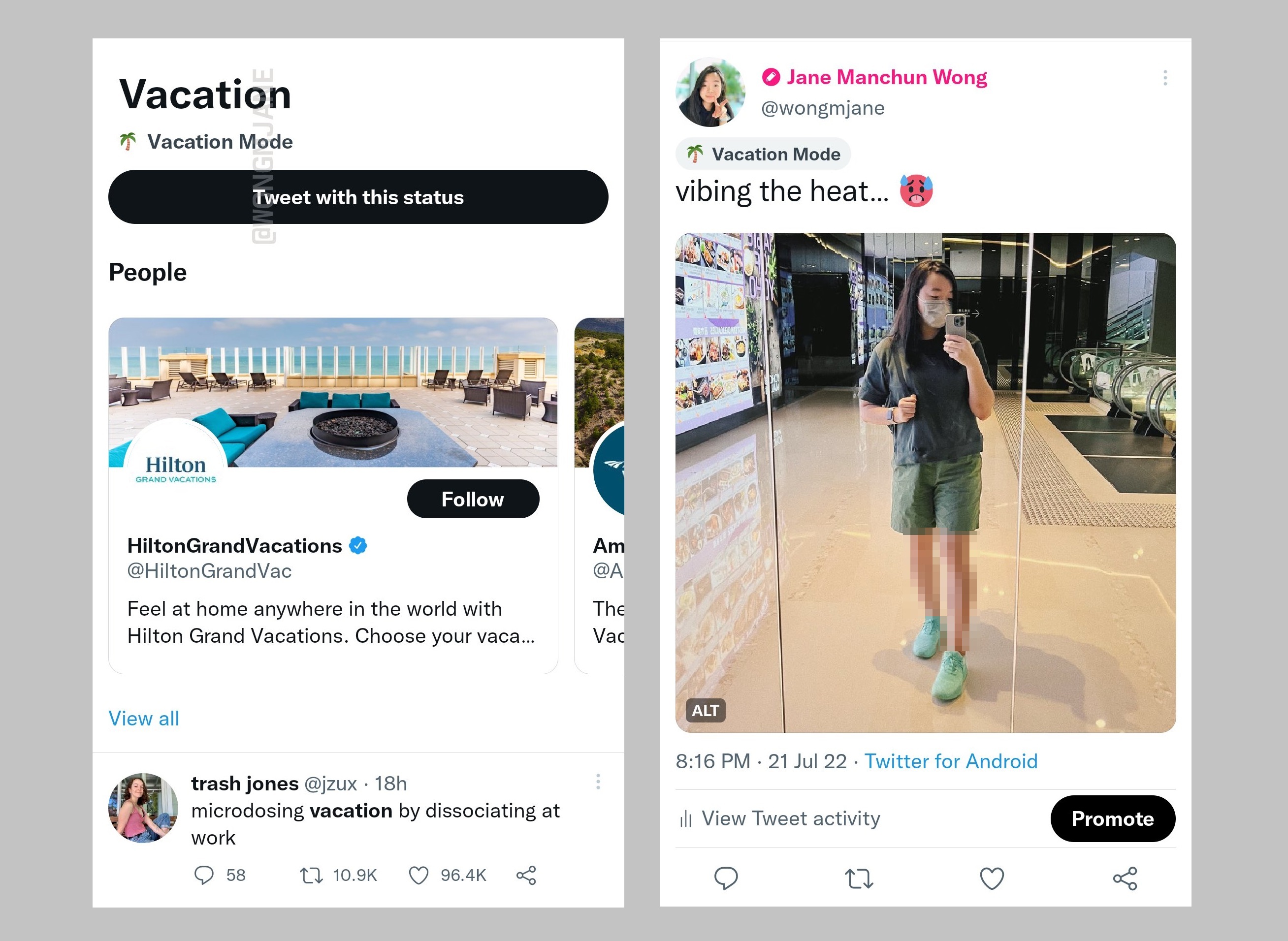
Twitter has made changes to its upcoming status feature, introducing emojis and new tags to the mix for users to employ and enjoy as they wish.
Twitter has been fiddling around with the status feature for quite a while; the feature was initially previewed all the way back in 2018 (which was four years ago, I can almost hear my bones creak with age), and was part of Twitter’s attempt to connect with new social media audiences. I could see that working, sure; if other social media platforms had already done the idea first, then Twitter jumping onto the all-too late bandwagon is exactly what will save the platform. The social media site is of course in no immediate danger of bankruptcy or any such qualms, but there definitely seems to be a cultural shift occurring. Platforms such as TikTok and the added success of Instagram Reels and YouTube Shorts have proven that the upcoming generations continue to respond to visual short-form media above all else.
Twitter’s short-form text derived medium is not only not short-form visual media, it’s not even visual media. While I’m not here to make some dense generalization about how the younger generations don’t read books like the older ones do, Twitter’s restrictions to being a word-oriented platform is definitely limiting. Even as the platform continues to expand to other ventures, introducing videos, threaded replies and so forth, it can’t hope to emulate the success of other social media platforms that built their entire brand upon such features.
At any rate, Twitter’s still going to march onwards, because copying prior features is much easier than making up new trends of your own. The new status features are something you’ve already encountered on Facebook: they’re essentially tags that are displayed right above a post, usually next to or just below a user’s name, and they consist of some fun exclamation with a relevant emoji. Think of the Feeling Excited or Feeling Sad tags that show up on the social network: that’s exactly what Twitter’s trying to aim for. Jane Manchun Wong, social media extraordinaire and serial leaker, took to her reverse engineering tricks and managed to identify many of the upcoming tags.
These consist of “A Thread”, accompanied by a spool of thread as an emoji. These are for, well, threads, which are often started with the opening line of “a thread” in current vernacular. There’s Spoiler Alert with a warning sign, Need Advice with a Magic 8 Ball (which I actually find kind of clever), AMA with a mic, Shower Thoughts with, well, a shower, Hot Take with a red pepper, Vacation Mode with a palm tree, and finally Unpopular Opinion with a mushroom. I’m going to leave that last one up to interpretation, see what answers we get in the comment section.
Read next: Birdwatch Is Elevating Contributions Provided By Users Whose Notes Are Deemed Helpful By Others
by Arooj Ahmed via Digital Information World
Twitter has been fiddling around with the status feature for quite a while; the feature was initially previewed all the way back in 2018 (which was four years ago, I can almost hear my bones creak with age), and was part of Twitter’s attempt to connect with new social media audiences. I could see that working, sure; if other social media platforms had already done the idea first, then Twitter jumping onto the all-too late bandwagon is exactly what will save the platform. The social media site is of course in no immediate danger of bankruptcy or any such qualms, but there definitely seems to be a cultural shift occurring. Platforms such as TikTok and the added success of Instagram Reels and YouTube Shorts have proven that the upcoming generations continue to respond to visual short-form media above all else.
Twitter’s short-form text derived medium is not only not short-form visual media, it’s not even visual media. While I’m not here to make some dense generalization about how the younger generations don’t read books like the older ones do, Twitter’s restrictions to being a word-oriented platform is definitely limiting. Even as the platform continues to expand to other ventures, introducing videos, threaded replies and so forth, it can’t hope to emulate the success of other social media platforms that built their entire brand upon such features.
At any rate, Twitter’s still going to march onwards, because copying prior features is much easier than making up new trends of your own. The new status features are something you’ve already encountered on Facebook: they’re essentially tags that are displayed right above a post, usually next to or just below a user’s name, and they consist of some fun exclamation with a relevant emoji. Think of the Feeling Excited or Feeling Sad tags that show up on the social network: that’s exactly what Twitter’s trying to aim for. Jane Manchun Wong, social media extraordinaire and serial leaker, took to her reverse engineering tricks and managed to identify many of the upcoming tags.
These consist of “A Thread”, accompanied by a spool of thread as an emoji. These are for, well, threads, which are often started with the opening line of “a thread” in current vernacular. There’s Spoiler Alert with a warning sign, Need Advice with a Magic 8 Ball (which I actually find kind of clever), AMA with a mic, Shower Thoughts with, well, a shower, Hot Take with a red pepper, Vacation Mode with a palm tree, and finally Unpopular Opinion with a mushroom. I’m going to leave that last one up to interpretation, see what answers we get in the comment section.
Read next: Birdwatch Is Elevating Contributions Provided By Users Whose Notes Are Deemed Helpful By Others
by Arooj Ahmed via Digital Information World
Friday, July 22, 2022
YouTube creates a new monetization feature; creators can earn simply by tagging products
As age advances, platforms look for more and more ways to turn everything digital. This means creating more opportunities for creators to earn online. Hence the world is moving towards monetization and YouTube is not behind. Its most recent venture, tagging products directly, is working out well but is it as original as it sounds?
After Instagram’s strategy to directly tag products in posts for the creators to earn off it, YouTube has decided to adopt the same strategy. The platform is looking to promote third-party product tags in the videos/ shorts.
YouTube plans to create an opportunity where viewers will not have to leave the platform to shop and can browse products and buy without leaving the app.
Although the platform is going to incorporate third-party products, it is not too keen to add any third-party apps to the process. It has been revealed that only a few chosen creators will get to add the product tags in their video clips. These creators will be paid directly by YouTube.
As for the payment, YouTube was careful with what to share. What we did get to know was that creators will get a fixed deal on these product placements. For instance, a creator might get $60 for their product tags while they also receive $0.06 every time someone clicks the product they are tagging. However, YouTube was quick to emphasize that there is no commission system, unlike Instagram's deal.
According to previous reports, this feature is out since April however it is only being brought to the light now since YouTube is inviting more and more creators to test it out. The reason behind the slow process is to gradually introduce the initiative to new users. This will help users get familiar instead of just blasting out something new. It is also a great idea to test out user reactions and how creators respond to this deal.
Coming back to the main question, we know for sure that this was an original idea and not Instagram's copy. Both the ideas were launched back in April. Instagram quickly incorporated it at a much larger scale while YouTube has been taking the process slowly. We do understand why there is a difference in the timeline. Since tags on posts are much easier to manage than those in videos, YouTube has to be more careful.
H/T: BI
Read next: YouTube Is Introducing New Text Markups For Video Descriptions, And Is Allowing Creator To Award Community Members With Viewership Badges
by Arooj Ahmed via Digital Information World
After Instagram’s strategy to directly tag products in posts for the creators to earn off it, YouTube has decided to adopt the same strategy. The platform is looking to promote third-party product tags in the videos/ shorts.
YouTube plans to create an opportunity where viewers will not have to leave the platform to shop and can browse products and buy without leaving the app.
Although the platform is going to incorporate third-party products, it is not too keen to add any third-party apps to the process. It has been revealed that only a few chosen creators will get to add the product tags in their video clips. These creators will be paid directly by YouTube.
As for the payment, YouTube was careful with what to share. What we did get to know was that creators will get a fixed deal on these product placements. For instance, a creator might get $60 for their product tags while they also receive $0.06 every time someone clicks the product they are tagging. However, YouTube was quick to emphasize that there is no commission system, unlike Instagram's deal.
According to previous reports, this feature is out since April however it is only being brought to the light now since YouTube is inviting more and more creators to test it out. The reason behind the slow process is to gradually introduce the initiative to new users. This will help users get familiar instead of just blasting out something new. It is also a great idea to test out user reactions and how creators respond to this deal.
Coming back to the main question, we know for sure that this was an original idea and not Instagram's copy. Both the ideas were launched back in April. Instagram quickly incorporated it at a much larger scale while YouTube has been taking the process slowly. We do understand why there is a difference in the timeline. Since tags on posts are much easier to manage than those in videos, YouTube has to be more careful.
H/T: BI
Read next: YouTube Is Introducing New Text Markups For Video Descriptions, And Is Allowing Creator To Award Community Members With Viewership Badges
by Arooj Ahmed via Digital Information World
Subscribe to:
Comments (Atom)