A new YouTube Creator Insider video delves into more descriptive description boxes on videos, a new experiment with data stories, updates to Studio Mobile, and the addition of stickers.
Honestly, you’d probably be better off giving the actual Creator Insider video linked below a watch as well. They’re very well made, concise, and sum up important points in a neat, digestible content package. I honestly love the initiative, and it helps the average audience familiarize themselves with YouTube’s staff as well. Devs are no longer unknowns hunched over computers: they have faces and names to them. With all that aside, let’s take a look at the first feature being discussed, which is the addition of more descriptions to a video’s description boxes. More specifically, information about locations in the video will now be added to the box via Google Maps.
This feature was initially limited to select restaurants and cafes and was only available across the mobile version of YouTube. The feature has now expanded to include a variety of other locations as well, specifically the categories of travel locations, recreational facilities, and businesses. Of course, such locations are also initially limited as well, with more and more being added to the mix as the feature expands. It’s also still not available across desktops, limiting creators to their mobile phones and tablets. However, it should also be specified that with such an experimental feature, maybe creators either don’t like the suggested locations to be added, or they’d like to edit in more. For this, automatic additions can be turned off via settings, and other changes can be made during the editing process of a video.
Next, we have a new experiment that YouTube’s holding for creators on the platforms, specifically with regards to the data stories feature. Data stories are essentially accumulations of certain insights and stats that might be useful to a budding YouTuber, and they’re capped off by suggestions about what a channel should do to grow more. Of course, YouTube’s algorithm has been a decisively strong magnet of criticism, and such suggestions coming from an AI might come off as judgmental at the least, and frankly unhelpful at most. Therefore, YouTube is going to test it out with a limited pool of content creators, gauge their reactions, and proceed accordingly.
New updates to Studio Mobile make it so that users can now change a channel’s name, banner, avatar, and description. This is honestly a feature that might make the Studio Mobile app fully viable; however, the Creator Insider video was clear on the fact that this feature will roll out slowly, and will take the entirety of August. Finally, limited creators with access to iOS will be able to send stickers in response to their fans and community whenever they’re live streaming.

Read next: YouTube is releasing a feature that will allow users to zoom into a video but it will only be available for premium users
by Arooj Ahmed via Digital Information World
"Mr Branding" is a blog based on RSS for everything related to website branding and website design, it collects its posts from many sites in order to facilitate the updating to the latest technology.
To suggest any source, please contact me: Taha.baba@consultant.com
Thursday, August 11, 2022
Hate Groups Inspired By Donald Trump Are Consistently Using Social Media Platforms For Coordinated, Oft-Violent Protests
Recent hate groups forming in Germany and the USA around the banner of Trump’s vitriol have brought into question the influence that platforms such as Telegram play in their spread.
As annoying (or heck, seething even) it is to admit this, Donald Trump’s presidency has been a significant sociological event with a direct impact on politics at large, while also radicalizing a severe portion of the population. I find no joy in crediting Trump with anything positive or negative. It’d honestly be for the best if we just forgot about his involvement in world affairs entirely. However, even after the man has stepped down from his position as the President of the USA, his effects linger on among thousands of individuals across the world. Sure, maybe taxes were a tad bit better (emphasis on the tad), but what we got in exchange was the further privatization of healthcare and the emboldening of white supremacists in America. Moreover, similar groups have managed to surface elsewhere, with Germany being a recent example. Anti-vaxxers in the country have been consistently rallying around the symbol that Trump represents to them: a voice that enables their damaging behavior.
Much akin to the Capitol Riots, these groups attempted to storm the parliament building, with banners imploring Trump to “Make Germany Great Again” (ugh) being flown with pride. All because someone refuses to get a shot that’ll make them less of a threat to others. What have white people found oppressive this time, you ask? Allow me to reach for this random word generator; oh, here we go! It’s…wearing a mask in public since that’s equivalent to the novel 1984. Huh. Yeah, sure, that tracks: go home minorities being subjected to police brutality, profiling, lynching, and all other forms of oppression major and minor. You just don’t get it.
While my words may come off as belittling towards white individuals, that isn’t what I’m shooting for here. Plenty of Republicans are from minority groups, and plenty of white people have major areas of overlap with other disenfranchised circles. The point is that despite such similarities, it really can be easier to be white in the USA and Europe than it can be anything else. Ahmaud Arbery’s death is still fresh to many of us, and the relevant law agencies spent three months covering for his killers. It took massive rallying over social media and protests across the streets to bring true justice. The sort that Emmet Till and Breonna Taylor didn’t get.
Platforms such as Telegram and Facebook have become increasingly dangerous because they allow for a massive amount of coordinated violence to be planned unnoticed. The US Capitol Riots were mostly planned over Facebook, and all Meta did in response was blame other, smaller social media platforms. The recent Germany riots were majorly planned over Telegram: a platform that actively preaches its privacy guidelines. Honestly, the last one still makes sense, what with the privacy gimmick and all. Facebook, and Meta at large, have no such qualms or hang-ups and yet still fail at the most basic of moderation.
H/T: DD
Read next: Fake Followers And Social Media, How Authentic Are The World’s Biggest Influencers?
by Arooj Ahmed via Digital Information World
As annoying (or heck, seething even) it is to admit this, Donald Trump’s presidency has been a significant sociological event with a direct impact on politics at large, while also radicalizing a severe portion of the population. I find no joy in crediting Trump with anything positive or negative. It’d honestly be for the best if we just forgot about his involvement in world affairs entirely. However, even after the man has stepped down from his position as the President of the USA, his effects linger on among thousands of individuals across the world. Sure, maybe taxes were a tad bit better (emphasis on the tad), but what we got in exchange was the further privatization of healthcare and the emboldening of white supremacists in America. Moreover, similar groups have managed to surface elsewhere, with Germany being a recent example. Anti-vaxxers in the country have been consistently rallying around the symbol that Trump represents to them: a voice that enables their damaging behavior.
Much akin to the Capitol Riots, these groups attempted to storm the parliament building, with banners imploring Trump to “Make Germany Great Again” (ugh) being flown with pride. All because someone refuses to get a shot that’ll make them less of a threat to others. What have white people found oppressive this time, you ask? Allow me to reach for this random word generator; oh, here we go! It’s…wearing a mask in public since that’s equivalent to the novel 1984. Huh. Yeah, sure, that tracks: go home minorities being subjected to police brutality, profiling, lynching, and all other forms of oppression major and minor. You just don’t get it.
While my words may come off as belittling towards white individuals, that isn’t what I’m shooting for here. Plenty of Republicans are from minority groups, and plenty of white people have major areas of overlap with other disenfranchised circles. The point is that despite such similarities, it really can be easier to be white in the USA and Europe than it can be anything else. Ahmaud Arbery’s death is still fresh to many of us, and the relevant law agencies spent three months covering for his killers. It took massive rallying over social media and protests across the streets to bring true justice. The sort that Emmet Till and Breonna Taylor didn’t get.
Platforms such as Telegram and Facebook have become increasingly dangerous because they allow for a massive amount of coordinated violence to be planned unnoticed. The US Capitol Riots were mostly planned over Facebook, and all Meta did in response was blame other, smaller social media platforms. The recent Germany riots were majorly planned over Telegram: a platform that actively preaches its privacy guidelines. Honestly, the last one still makes sense, what with the privacy gimmick and all. Facebook, and Meta at large, have no such qualms or hang-ups and yet still fail at the most basic of moderation.
H/T: DD
Read next: Fake Followers And Social Media, How Authentic Are The World’s Biggest Influencers?
by Arooj Ahmed via Digital Information World
Instagram To Soon Allow Users To Schedule Posts & Reels Directly Through The App
While the feature has long been a part of Instagram’s Creator Studio, we’re hearing about the possible launch of a new scheduling tool.
The company is very keen to add more convenience for users through a tool by which they can schedule all of their posts, including Reels, directly through the app.
The news comes to us thanks to an avid social media app researcher Alessandro Paluzzi who has tweeted about the new tool that will further improve users’ scheduling process on Instagram.
This means you can now post Stories, pictures, videos, and Reels at fixed times, whenever you find it most convenient.
When you actually come to think of it from the aspect of functionality, we don’t see it to be a huge upgrade. And that’s because if users really wanted to do it, they could have since the tool was present in the Creator Studio for the past 2 years.
Likewise, we saw Meta make another new announcement regarding an innovative Reels API. This will enable Reels scheduling through tools provided by third parties. Hence, this paves the way for a new possibility through which your various forms of Instagram content can be scheduled in a plethora of ways.
We see the tool being a revolutionary and very welcoming endeavor. It’s also going to be a big deal for those working as social media managers who are constantly on the move and need to make content through Instagram's tools.
We feel the ability to make such scheduling a reality can really allow users to stay at the top of their game, instead of relying on a single app and allowing for scheduling through another. Also, this rids the hesitation associated with non-native tools that offer limitations.
For now, we’re going to wait for the actual launch and the feedback received by users on this one so stay tuned!
Read next: Instagram Reels Trends and Performance Insights For 2022
by Dr. Hura Anwar via Digital Information World
The company is very keen to add more convenience for users through a tool by which they can schedule all of their posts, including Reels, directly through the app.
The news comes to us thanks to an avid social media app researcher Alessandro Paluzzi who has tweeted about the new tool that will further improve users’ scheduling process on Instagram.
This means you can now post Stories, pictures, videos, and Reels at fixed times, whenever you find it most convenient.
When you actually come to think of it from the aspect of functionality, we don’t see it to be a huge upgrade. And that’s because if users really wanted to do it, they could have since the tool was present in the Creator Studio for the past 2 years.
Likewise, we saw Meta make another new announcement regarding an innovative Reels API. This will enable Reels scheduling through tools provided by third parties. Hence, this paves the way for a new possibility through which your various forms of Instagram content can be scheduled in a plethora of ways.
We see the tool being a revolutionary and very welcoming endeavor. It’s also going to be a big deal for those working as social media managers who are constantly on the move and need to make content through Instagram's tools.
We feel the ability to make such scheduling a reality can really allow users to stay at the top of their game, instead of relying on a single app and allowing for scheduling through another. Also, this rids the hesitation associated with non-native tools that offer limitations.
For now, we’re going to wait for the actual launch and the feedback received by users on this one so stay tuned!
Read next: Instagram Reels Trends and Performance Insights For 2022
by Dr. Hura Anwar via Digital Information World
Wednesday, August 10, 2022
New Study Proves How Small Businesses Are Suffering Thanks To Apple’s App Tracking Transparency
Apple really shocked the digital world when it introduced stringent measures to help keep tabs on apps tracking its users without taking their consent.
The leading iPhone maker introduced its app tracking transparency policy last year and that meant only if people chose to give their consent, companies could strategically target them for their advertising gains.
But as you can expect, the masses refused to give permission, forcing some of the biggest names in the tech world to incur significant losses. We saw the likes of Meta, Snap, TikTok, and more come forward with their complaints.
However, the drama doesn’t just end there. A new report is highlighting how Apple’s new privacy changes haven’t only affected large enterprises but so many small-scale organizations as well.
Yes, the report is shunning its focus on the big players of the tech market and instead, putting small-scale organizations into the limelight and how they’ve been forced to suffer deleterious consequences thanks to Apple’s new privacy policy.
The report comes to us by the Financial Times, which makes claims after Varos carried out a new analysis of nearly 1300 firms. This proved how the expenses related to getting on board with new clients through advertising online have been much higher in 2022 when compared to that in 2021.
Small businesses are calling the price hike brutal and one that they’re having trouble coping with. On the other hand, the report also proved how businesses that don’t directly rely on advertising linked to third-party tracking systems were doing so much better than the rest.
In fact, the likes of Google Search and even Amazon failed to feel the pressure of Apple’s privacy changes because they simply don’t rely on it. Hence, they actually witnessed a boom during Q2 of this year.
Moreover, it’s interesting to note how Apple’s own personal ad business was seen blooming and stealing market share, thanks to its own changes.
Apple has fiercely fought with all critics that accuse the company of monopoly and introducing such changes for its own gains. The iPhone maker was recently caught mentioning in its defense that people’s data solely belonged to them and not to others.
For this reason, anyone that chooses to gain benefits from it must first take their consent into consideration. After all, it’s their right and one that can’t be compromised.
Read next: Google Steps Up The Pressure On Apple To Correct It's Texting by Adopting RCS Messaging
by Dr. Hura Anwar via Digital Information World
The leading iPhone maker introduced its app tracking transparency policy last year and that meant only if people chose to give their consent, companies could strategically target them for their advertising gains.
But as you can expect, the masses refused to give permission, forcing some of the biggest names in the tech world to incur significant losses. We saw the likes of Meta, Snap, TikTok, and more come forward with their complaints.
However, the drama doesn’t just end there. A new report is highlighting how Apple’s new privacy changes haven’t only affected large enterprises but so many small-scale organizations as well.
Yes, the report is shunning its focus on the big players of the tech market and instead, putting small-scale organizations into the limelight and how they’ve been forced to suffer deleterious consequences thanks to Apple’s new privacy policy.
The report comes to us by the Financial Times, which makes claims after Varos carried out a new analysis of nearly 1300 firms. This proved how the expenses related to getting on board with new clients through advertising online have been much higher in 2022 when compared to that in 2021.
Small businesses are calling the price hike brutal and one that they’re having trouble coping with. On the other hand, the report also proved how businesses that don’t directly rely on advertising linked to third-party tracking systems were doing so much better than the rest.
In fact, the likes of Google Search and even Amazon failed to feel the pressure of Apple’s privacy changes because they simply don’t rely on it. Hence, they actually witnessed a boom during Q2 of this year.
Moreover, it’s interesting to note how Apple’s own personal ad business was seen blooming and stealing market share, thanks to its own changes.
Apple has fiercely fought with all critics that accuse the company of monopoly and introducing such changes for its own gains. The iPhone maker was recently caught mentioning in its defense that people’s data solely belonged to them and not to others.
For this reason, anyone that chooses to gain benefits from it must first take their consent into consideration. After all, it’s their right and one that can’t be compromised.
Read next: Google Steps Up The Pressure On Apple To Correct It's Texting by Adopting RCS Messaging
by Dr. Hura Anwar via Digital Information World
Pinterest’s New Board Sticker Is Designed To Drive Traffic From Users’ Idea Pins
Pinterest definitely appears to be on a roll as the company was recently seen adding another innovative means through which users can help drive in more traffic for the app.
The new update comprises the launch of a method that drives traffic from users’ Idea Pins, which is another name given to the app’s Stories option. Hence, you can best envision it as a sticker feature that allows users to highlight specific boards through their Idea Pins seen on the Pinterest app.
Thanks to marketing analyst and renowned creator Lindsey Gamble, we’ve got some more information on what users can expect with the new Pinterest feature. She put up displays of the board sticker which has already been rolled out for quite a few users. And in case you still haven’t been able to get your hands on it, well, stay tuned.
The tool is available for use inside the app’s Sticker Tray that’s located within the creative flow process for Idea Pins. To avail, simply click on it and you’ll soon be able to select from several boards in existence through which you can directly link.
This is all thanks to different display layouts that are seen access the board sticker, that users would be allowed to include into their frame. With the new sticker at hand, users will get the option to link directly to any topic board that they love. This will help in putting content that they love on display through the app, not to mention the great amount of traffic being referred to, thanks to the direct linking feature.
On average, each creator gets around 5 board stickers to include per picture. And that’s around 20 board stickers as a whole inside their Idea Pin. This way, no one is bound to use just one sole sticker for their whole frame, which we find to be a creative and great idea.
After doing so, creators will get the chance to go on tagging any board that’s on public display which they manage. However, boards that have limited access, or should we say those that are private won’t be allowed to be linked such as those designed by others app users.
We feel this is a wonderful way to put particular products on display, especially with the help of direct links that relate back to bigger Pin displays. What better to highlight a user’s offerings than this?
For now, it’s not available to all users but it’s definitely on its way. And with the holiday season fast approaching, we feel there couldn’t be any other perfect time for a launch than this.
Read next: Pinterest Showed No Growth In Active Users And Lower Revenue Intake During Q2 Of 2022
by Dr. Hura Anwar via Digital Information World
The new update comprises the launch of a method that drives traffic from users’ Idea Pins, which is another name given to the app’s Stories option. Hence, you can best envision it as a sticker feature that allows users to highlight specific boards through their Idea Pins seen on the Pinterest app.
Thanks to marketing analyst and renowned creator Lindsey Gamble, we’ve got some more information on what users can expect with the new Pinterest feature. She put up displays of the board sticker which has already been rolled out for quite a few users. And in case you still haven’t been able to get your hands on it, well, stay tuned.
More on 'Board Stickers'
— Lindsey Gamble (@LindseyGamble_) August 8, 2022
- Creators can add up to 5 board stickers per page & 20 board stickers max in an Idea Pin
- Creators can tag any public board they own (they cannot tag private boards or other creators' boards)
- Board stickers are currently only available on iOS pic.twitter.com/OdGBePJihu
The tool is available for use inside the app’s Sticker Tray that’s located within the creative flow process for Idea Pins. To avail, simply click on it and you’ll soon be able to select from several boards in existence through which you can directly link.
This is all thanks to different display layouts that are seen access the board sticker, that users would be allowed to include into their frame. With the new sticker at hand, users will get the option to link directly to any topic board that they love. This will help in putting content that they love on display through the app, not to mention the great amount of traffic being referred to, thanks to the direct linking feature.
On average, each creator gets around 5 board stickers to include per picture. And that’s around 20 board stickers as a whole inside their Idea Pin. This way, no one is bound to use just one sole sticker for their whole frame, which we find to be a creative and great idea.
After doing so, creators will get the chance to go on tagging any board that’s on public display which they manage. However, boards that have limited access, or should we say those that are private won’t be allowed to be linked such as those designed by others app users.
We feel this is a wonderful way to put particular products on display, especially with the help of direct links that relate back to bigger Pin displays. What better to highlight a user’s offerings than this?
For now, it’s not available to all users but it’s definitely on its way. And with the holiday season fast approaching, we feel there couldn’t be any other perfect time for a launch than this.
Read next: Pinterest Showed No Growth In Active Users And Lower Revenue Intake During Q2 Of 2022
by Dr. Hura Anwar via Digital Information World
New WhatsApp Features Are Just A Few Weeks Away To Become A Part Of This App
WhatsApp is introducing its new features and users are going to love them. The first feature is the deletion of messages. This feature is not new but now WhatsApp is giving its users 48 hours to delete a message. That means the users can delete a message that they send within 48 hours. Although this feature is not new, initially the duration for deleting a message was less. This duration used to frustrate the users to no end but now Whatsapp has listened to the user's demands and is now introducing a feature that will be a favorite.
This deletion feature was just available for one hour but now you can use it for up to 2 days. Using it is very easy too. You just have to hold onto the message you want to delete. An option will come on your screen. You have to tap on 'Delete for everyone and the message will be deleted if only less than 48 hours have passed after you have sent that message.
If you do not have this feature, you have to check if you are using the latest version of Whatsapp. If not, then you can update your app by going to the app store.
Another feature that is under development is the communities tab on the desktop, as spotted by Wabetainfo. WhatsApp Beta for Android is all set to release this feature after it announced hiding phone numbers in Whatsapp communities. WhatsApp has not shared many details about this feature but what we can know is that a communities tab will be available on the desktop of the WhatsApp app, along with the tabs for status, new messages, and calls. You will also have a search header at the top of the desktop. This new feature will change the whole layout of the WhatsApp desktop and make it brand new.
We do not know when this feature will be up for public use. Only WhatsApp beta testers have a hold on this feature. But whenever this feature is ready to use, we know that it is going to bring a nice change to the app.
Read next: WhatsApp Has Once Again Added Some New Features In WhatsApp Beta For Android 2.22.17.23 and 2.22.17.24
by Arooj Ahmed via Digital Information World
This deletion feature was just available for one hour but now you can use it for up to 2 days. Using it is very easy too. You just have to hold onto the message you want to delete. An option will come on your screen. You have to tap on 'Delete for everyone and the message will be deleted if only less than 48 hours have passed after you have sent that message.
If you do not have this feature, you have to check if you are using the latest version of Whatsapp. If not, then you can update your app by going to the app store.
Another feature that is under development is the communities tab on the desktop, as spotted by Wabetainfo. WhatsApp Beta for Android is all set to release this feature after it announced hiding phone numbers in Whatsapp communities. WhatsApp has not shared many details about this feature but what we can know is that a communities tab will be available on the desktop of the WhatsApp app, along with the tabs for status, new messages, and calls. You will also have a search header at the top of the desktop. This new feature will change the whole layout of the WhatsApp desktop and make it brand new.
We do not know when this feature will be up for public use. Only WhatsApp beta testers have a hold on this feature. But whenever this feature is ready to use, we know that it is going to bring a nice change to the app.
Read next: WhatsApp Has Once Again Added Some New Features In WhatsApp Beta For Android 2.22.17.23 and 2.22.17.24
by Arooj Ahmed via Digital Information World
Snapchat Announces New Updates Including Product Stickers And Planned Advances For The Metaverse Shift
Snapchat is following in the lead of many other apps that are trying to make the most of the current economic uncertainty that has affected the digital world adversely. By this, we mean shifts to greater revenue generation through venturing into the realm of eCommerce.
The company is currently busy taking part in a series of tests that would help determine the outcome of an in-stream commerce initiative. This comes at a time when Snap has outlined how its shift into the eCommerce world is slow but steady.
These new tests will entail purchasing and displaying products in a manner that’s never been observed on the app yet. And to make sure things go right according to plan, well, the experiments have begun.
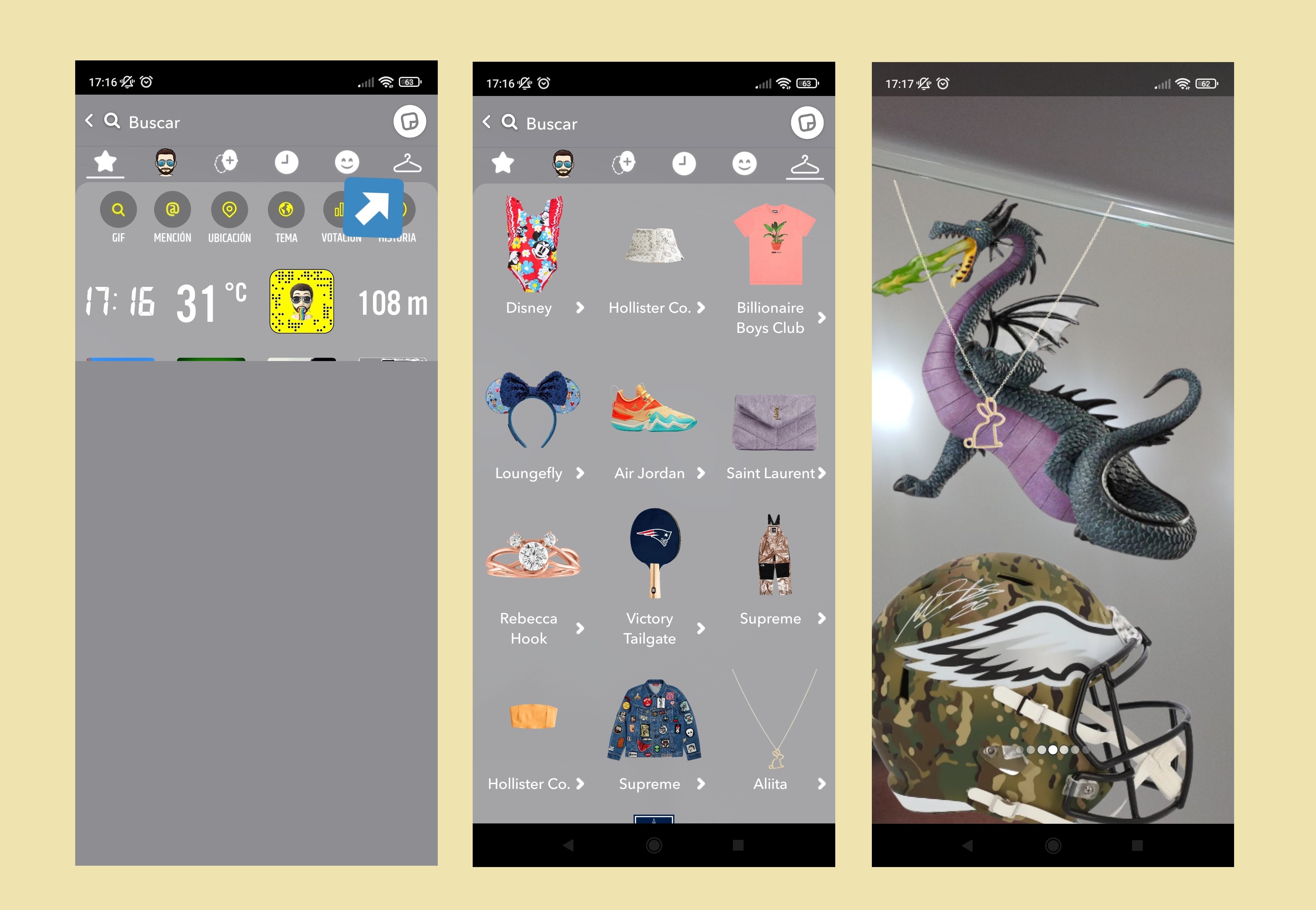
The company is testing Snap Product Stickers that serve as guides for users, linking them directly to pages where they can make an immediate purchase, as spotted by @peplm.
In April of this year, we heard about the app going public with its plans for new tools that allow for better product discovery and put due emphasis on shopping and related eCommerce tools.
There was talk about the tool called Dress Up that was very similar in design to Instagram’s famous shop tab. The only difference was that you’ll get an AR kick with a range of products that can be relayed into the real world.
This way, you can actually check to see how a particular product appears in your home, right before you end up making a purchase. Now, the product stickers are another way to see how the Dress Up tool works in its entirety, including ways to include digital items into your content as well.
Most of the stickers on demand have been related to clothing stores and accessory brands. All you need to do is click on the product and include them in a Snap frame. After tapping on it, you can learn so much about it or simply go on to make purchases as well.
As of now, it’s on offer to many users but that will hopefully be changing soon as the app has plans to expand to the masses.
Next up, Snapchat is working on making new advances in the world of virtual creation. This appears to be a part of the company’s plans to accelerate into the Metaverse, with many tech experts calling it a true changer.
The platform went public today with one of its recently published research papers. This shed light on a brand new way to produce three-dimensional assets through images and video footage of certain objects arising from sources like Google.
Snap hopes the new update would eliminate the need for pictures to get photographed and made up inside classic film studios. This is a difficult move when it comes to capturing 3D objects in today’s time.
Now, Snap hopes creators would be able to make the most of AR and VR technology, where they can simply look for items on the Google search bar, and pick out relevant pictures that are captured from various angles.
Any gaps left to be filled would be done so by the system, without the need of carrying out scanning and allowing for 3D creation with ease.
Snap mentioned through one of its recent blog posts how it plans on getting on board with the project that would enable AR and VR creators and developers to digitize anything they see in this world, provided relevant images are found online.
We see the initiative as a major move on Snapchat’s part in regards to its high ambitions for AR and a possible shift to the Metaverse with the best digital translation.
The ideas will be presented in a paper this week at Vancouver’s SIGGRAPH 2022.
Read next: Snapchat Is Launching A New Supervision Tool That Allows Parents To Keep Tabs On Their Kids
by Dr. Hura Anwar via Digital Information World
The company is currently busy taking part in a series of tests that would help determine the outcome of an in-stream commerce initiative. This comes at a time when Snap has outlined how its shift into the eCommerce world is slow but steady.
These new tests will entail purchasing and displaying products in a manner that’s never been observed on the app yet. And to make sure things go right according to plan, well, the experiments have begun.
The company is testing Snap Product Stickers that serve as guides for users, linking them directly to pages where they can make an immediate purchase, as spotted by @peplm.
In April of this year, we heard about the app going public with its plans for new tools that allow for better product discovery and put due emphasis on shopping and related eCommerce tools.
There was talk about the tool called Dress Up that was very similar in design to Instagram’s famous shop tab. The only difference was that you’ll get an AR kick with a range of products that can be relayed into the real world.
This way, you can actually check to see how a particular product appears in your home, right before you end up making a purchase. Now, the product stickers are another way to see how the Dress Up tool works in its entirety, including ways to include digital items into your content as well.
Most of the stickers on demand have been related to clothing stores and accessory brands. All you need to do is click on the product and include them in a Snap frame. After tapping on it, you can learn so much about it or simply go on to make purchases as well.
As of now, it’s on offer to many users but that will hopefully be changing soon as the app has plans to expand to the masses.
Next up, Snapchat is working on making new advances in the world of virtual creation. This appears to be a part of the company’s plans to accelerate into the Metaverse, with many tech experts calling it a true changer.
The platform went public today with one of its recently published research papers. This shed light on a brand new way to produce three-dimensional assets through images and video footage of certain objects arising from sources like Google.
Snap hopes the new update would eliminate the need for pictures to get photographed and made up inside classic film studios. This is a difficult move when it comes to capturing 3D objects in today’s time.
Now, Snap hopes creators would be able to make the most of AR and VR technology, where they can simply look for items on the Google search bar, and pick out relevant pictures that are captured from various angles.
Any gaps left to be filled would be done so by the system, without the need of carrying out scanning and allowing for 3D creation with ease.
Snap mentioned through one of its recent blog posts how it plans on getting on board with the project that would enable AR and VR creators and developers to digitize anything they see in this world, provided relevant images are found online.
We see the initiative as a major move on Snapchat’s part in regards to its high ambitions for AR and a possible shift to the Metaverse with the best digital translation.
The ideas will be presented in a paper this week at Vancouver’s SIGGRAPH 2022.
Read next: Snapchat Is Launching A New Supervision Tool That Allows Parents To Keep Tabs On Their Kids
by Dr. Hura Anwar via Digital Information World
Subscribe to:
Posts (Atom)