Sunday, August 14, 2022

Black Hat 2022 Security Researchers Reveal Hidden Loopholes In Tracking Devices

Security researchers at this year’s Black Hat conference revealed a new cybersecurity threat that relies on UWB technology to expose tracking systems.

The Black Hat is a cybersecurity conference that’s essentially just Comic-Con for individuals or groups interested in cybercrime and its prevention against it. Such groups typically consist of corporations, governmental agencies, small businesses, security researchers, hackers, and even the occasional individual who’s interested in the entire rigmarole of online safety. If I’m going to be fully honest, it’s a very important rigmarole to familiarize oneself with as well, considering just how much of our information is online nowadays. GPS systems, social security numbers, credit or debit card information, the list is exhausting. Black Hat’s also an interesting convention to frequent if an individual is looking to get into the business of cybersecurity; it’s a meeting of the top dogs in the business, all discussing research they’ve conducted and what the industry’s current landscape looks like. I’d be interested in attending myself if I had any level of familiarity with cybersecurity work.

At any rate, many bad actors and cybercriminals online have taken to infiltrating physical devices in the hopes of extracting information. Social media accounts are no longer the score: they’re shooting for Apple Air Tags, vehicular GPS, home AI systems, and so forth. Such devices aren’t necessarily as well guarded as laptops with anti-virus and anti-malware software, and can often provide immense rewards in turn. With online criminals becoming smarter by the day, learning from past mistakes, and figuring out newer, fresher loopholes, it’s important to both stay vigilant and keep our lines of defense sharp as well.

Let’s talk about this recent cybersecurity expose. Tracking systems built on UWB (ultra-wideband) radio technology are currently at risk. These systems rely on RTLS (real-time locating systems) and are often utilized in the creation of tracking tags and chips. They can relay location data with exceeding accuracy and are thus often used to keep a track of items or individuals. Apple’s Air Tags work much in the same way.

So, a cybersecurity breach in such systems means that many individuals might have been harmed, yes? Well, no; as a matter of fact, these security breaches were conducted by our very own researchers, in an attempt to preemptively locate security deficits and correct them beforehand. Tech corporations often hand out bounties for the discovery of such loopholes as well, so here’s to hoping the team got a bonus off of Apple.


H/T: PCMag.

Read next: Report shows 1 in 3 organizations now reply weekly ransomware attacks
by Arooj Ahmed via Digital Information World

Camera quality is one of the most important things to consider while buying a phone, but pixel size is not as important to it

When choosing a phone, the phone’s camera quality and its photographic abilities are one of the key priorities for a majority of consumers, and they are right in their thinking. The camera is the most important feature of a phone after its battery life on the consumer’s list of must-haves. In this technological era, cameras have advanced so greatly that most of the phones on the market belonging to big companies come with a variety of features that are borrowed from a professional camera such as phase-detect autofocus and optical image stabilization. With android phones, this has been made possible with the Snapdragon processors.

Qualcomm’s Snapdragon mobile platform has a noteworthy amount of silicon resources that are made and put there specifically to process images and videos. Without this processor, maybe your phone’s camera quality might be very different or your videos and photos would not even be the same.

According to Qualcomm’s insights out of the total respondents that were surveyed 44% said that camera quality was the most critical for them, so it got 4th place. But, when the users with phones that cost $1000+ were surveyed they said that camera quality took 2nd place for them after Battery life.

Most consumers believe that pixel size and sensor quality are the defining qualities of the camera and its outcome. But, that isn’t exactly the case as they are more irrelevant than people believe. The thing is that most phones cannot quarter large sensors because of physical measurements and the pixel size can only get so high before the image quality degenerates.

Smaller pixels gather more light than large pixels, which can have an undesirable impact on the image quality, especially in lighting conditions that are hard to work with.


H/T: Forbes

Read next: Back to School Season Marred By Massive Uptick in Education Sector Cyberattacks
by Arooj Ahmed via Digital Information World

Saturday, August 13, 2022

Snap And GWI Conducted A Study To Determine How Snapchat’s Community Interacts With Other Social Media Platforms

Snap teamed up with GlobalWebIndex to determine how the Snapchat community interacts with the platform as compared to communities from Facebook, Twitter, etc.

A total of 20,000 Snapchatters were surveyed to conduct this study, and their social media usage was mapped out across 2021. A variety of age groups were also taken into consideration, with gen Z, millennials, gen X, and baby boomers all being a part of the research. The goal was to gauge just how unique Snapchat’s audience was in terms of platform usage. Snapchat is already a very unique social media site, especially when compared to the likes of Facebook, Instagram, or Twitter. Posts are entirely composed of image-related content, much of which cannot be found on an organized timeline. Instead, users have to catch up with their friends via Stories, a concept that was later emulated by literally every other popular social media platform.

While chatting exists on Snapchat and is utilized frequently enough, most users communicate via maintaining streaks of “snaps” that they send to each other daily. It’s a sort of interaction that other social media platforms haven’t really emulated successfully, or even attempted to in some cases. Snapchat is its interesting amalgamation of concepts and yet manages to hold its head high amongst heavy-hitters that precede it by literal decades.

Amongst daily Snapchat users, 67% of individuals aged 16 and above don’t use Twitter daily; 53% share the same sentiment towards YouTube; 51% share this pattern about TikTok; and 41% have a similar predilection towards Facebook. I’m honestly surprised that users above the age of 16 even use Facebook that much, but the platform still is popular amongst generations older than gen Z. The research even further establishes as much: when age groups are narrowed down to 16 through 24, Facebook and Twitter daily usage plummets. 70% of daily Snapchat users don’t use Twitter daily, and numbers are accordingly 63% for Facebook, 48% for YouTube, and 42% for TikTok. Seems like some stereotypes are derived from a small amount of truth.

Snapchat has recently exceeded 600 million users globally and continues to be a massively popular social media platform. Whether it be the platform’s unique access, its incorporation of AR technology in fun ways, or simply its connection with younger generations via the usage of visual media, Snap’s doing rather well for itself.


Read next: TikTok Accounts Crossing The ‘One Million Followers’ Mark Have Declined 41% From Last Year
by Arooj Ahmed via Digital Information World

300 Current Employees Of TikTok And ByteDance Worked For Chinese State Media, Confirms LinkedIn Data

Researchers are making some rather shocking revelations after hundreds of profiles were analyzed on the LinkedIn platform related to TikTok and ByteDance employees.

According to the new report that was recently published by Forbes, researchers claims that at least 300 people currently working for TikTok and its parent firm were associated with publications linked to Chinese state media.

And if that wasn’t a tough pill to swallow, well, there are findings that show how some of them are still continuing to do the same.

The reason why the issue is so concerning has to do with the simple fact that the US has already raised the alarm regarding TikTok and how a report says it shared data belonging to American citizens with China’s government. And now, seeing this is definitely not going to put people at ease.

The study went on to highlight how around 23 of the profiles shown had been created by directors currently working for ByteDance. They were believed to be involved in management, overviewing partnerships with brands, and also public affairs, not to mention the red flags of media cooperation.

At the moment, 15 of the profiles examined are still working for the country’s state media despite holding positions in ByteDance too. Some of the organizations that were recently delineated included the likes of China Radio, China Global TV, and Xinhua News.

On the other hand, around 50 of the profiles seen had employees that worked for TikTok or still doing so. And one of those happened to be a manager for the app’s content strategy. That person used to be a chief reporter for Xinhua News.

Forbes has confirmed the news of the profiles and their affiliations with China’s propaganda industry, raising the alarm bells for various reasons.

For those who may not be aware, China has been busy investing a lot of funds into its propaganda industry so as to spread misinformation regarding the country’s communist party. And that comes with news about how so many of the country’s media outlets continue to add a strong presence across apps like Facebook, Twitter, and even Instagram. But when it came down to TikTok, they rather hush about it.

Also, TikTok works quite differently than the other apps outlined. It isn’t busy calling out accounts that are controlled by Chinese media outlets. Instead, it doesn’t even label them at all.

But we did hear about a few reports in March of this year regarding how it had made plans to call out some entities with accounts on the app using labels. But a further review by Forbes confirmed how that is yet to be the case.

For now, we know that neither TikTok nor Byte Dance have gone about denying any claims made by LinkedIn regarding the 300 employees. Also, none of the media outlets from China that were named in this report are yet to respond to comment requests too.

But considering the fact that so many users love spending their time across this platform than others is definitely worrisome and needs to be investigated further.


Read next: TikTok’s New ‘About This Ad’ Tool Gives Users Insight On How Their Data Is Being Used For Ad Targeting
by Dr. Hura Anwar via Digital Information World

From Now On Google Lens Will Be Used On Google Images On The Web

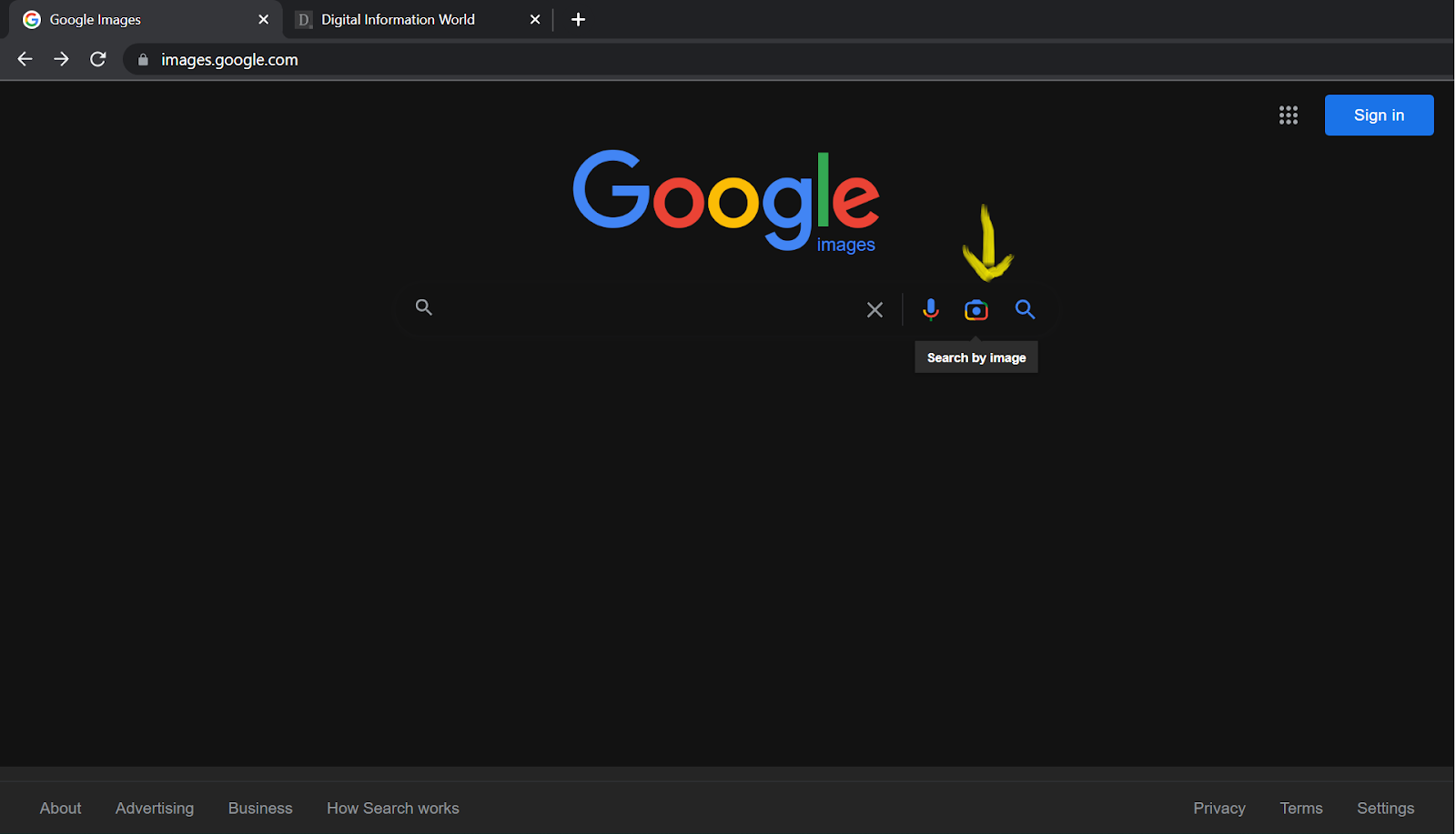
On the Google Images Search Website, Google Lens has become the main searching tool on the desktop. It has already become a part of Android and Chrome and now Google Lens is a major help in searching for different images on Google Images. From now on, when you open the Google Images website (images.google.com), you will be able to see Google Lens right above the regular search and voice search.

For anyone wondering, Google Lens is an app where you can search for different things on Google using pictures and videos. This feature helps when you do not know how to describe a thing in words.

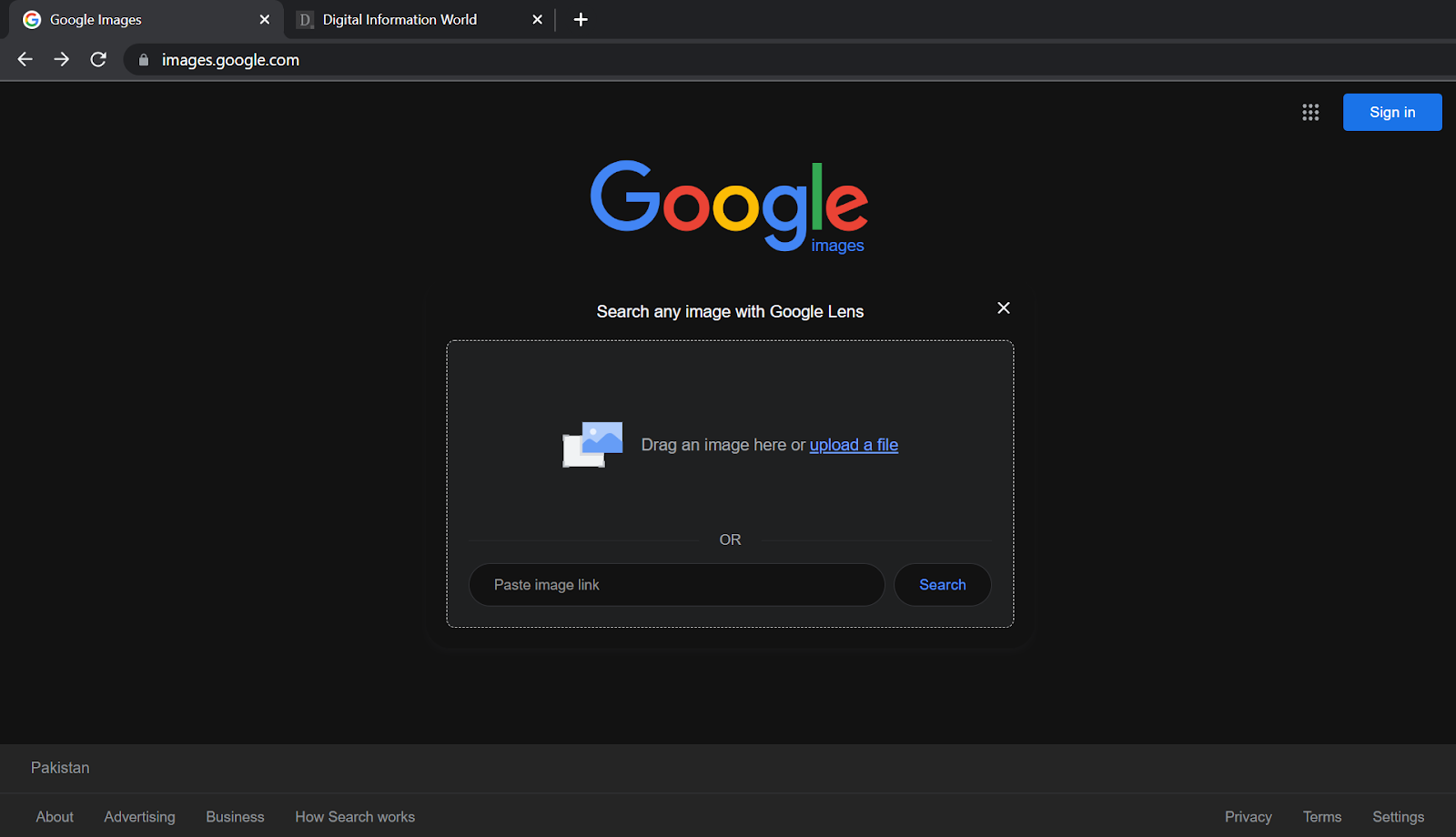
Initially, this type of search had a camera button but now the space has been taken up by Google Lens. By using it, you can drag an image to the box in the middle of the web or you can also open your device files to search for a picture. This redesigning has caused a major difference between previous and latest Google Lens searches and by using it, you can search for whatever visuals you want.

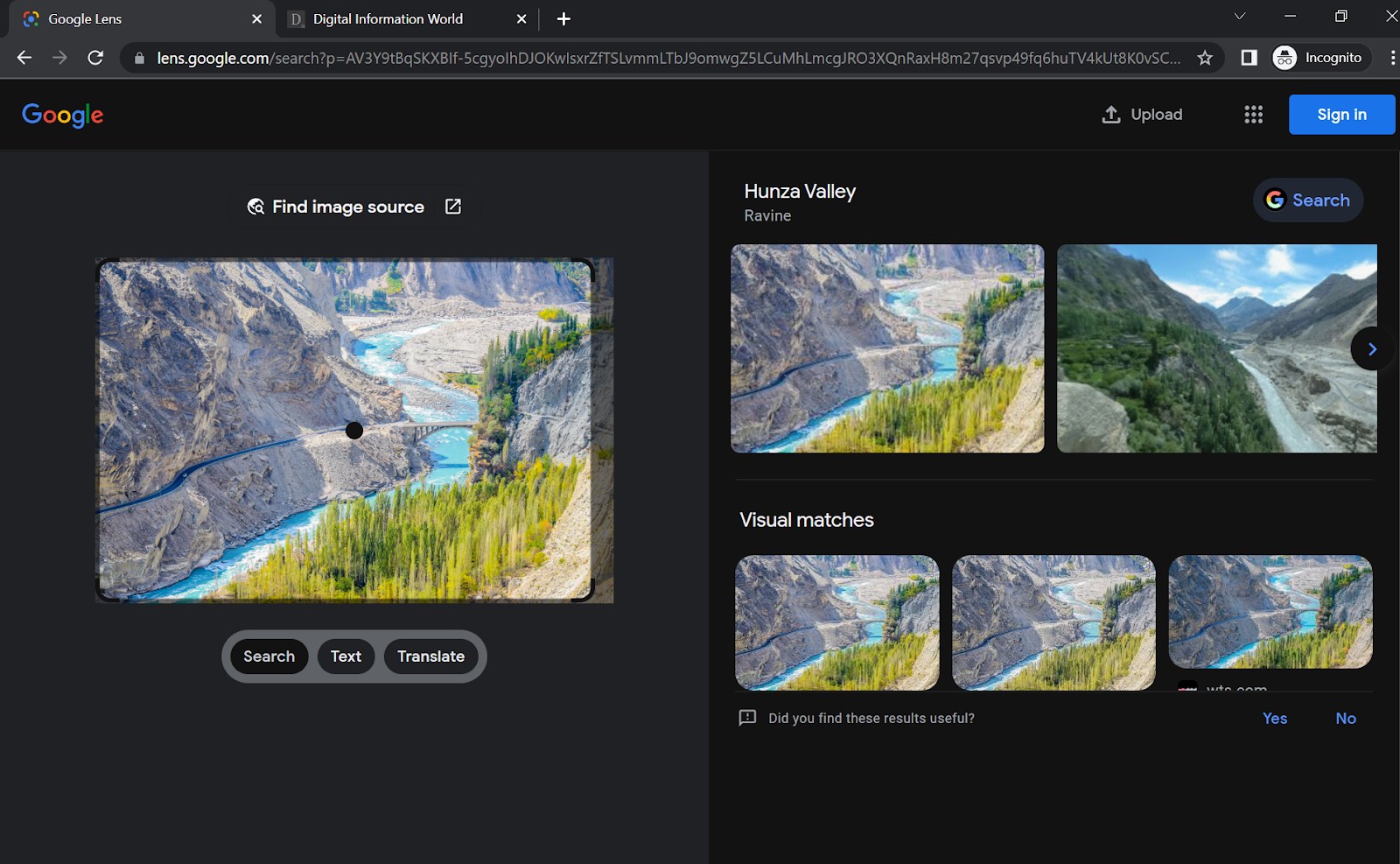
Another way you can use it is by pasting the URL of the image. It will directly take you to the google lens web (lens.google.com).

If you do not want to use this, you can also use the old google images web easily. All you have to do is search for the visuals you want on the search bar and it will take you to all possible options available. Visually similar images will also be presented before your eyes. Google Lens is Google's finest creation and it is good to see that Google hasn't left it alone and is prioritizing it just like other tools.

Google Lens on Google Images was being tested at the start of this year and it was about time that it officially became part of the web. Now, it is being widely used by many people. Just like chrome, you can right-click on the images and you will get the option to search images in Google, Android, Google Photos, menu, and share sheet.

Read next: Google Says Its New AI Model Is Producing Reliable Snippets For Users’ Searches
by Arooj Ahmed via Digital Information World
FEC Gives Gmail Green Light To Stop Marking Election Campaign Emails As Spam

With the American midterm elections coming up this November, it looks like the digital world is making way for a bucket load of changes.

Recently, we heard of Twitter gearing up and polishing its efforts aimed to rid misinformation across its apps. Now, we’re listening to news about the FEC giving Gmail the authority to stop marking election campaign emails as spam.

We feel the news just might make Republicans feel all the more grateful as it could give them a better shot at marketing, not to mention the struggles they’re forced to deal with due to failing fundraising.

The approval came on Thursday when the FEC immediately said yes to Google’s proposal to help prevent emails from receiving spam marks.

The news about Google’s new plan was first revealed thanks to Axios last month. The deal was designed to target a number of candidates, committees belonging to political parties, and also leading members of political action groups.

This way, their emails would bypass the platform’s detection systems. In reality, Google didn’t really need approval from the FEC in this regard. But it did try its level best to play it safe. After all, who wants to risk breaching terms outlined by the FEC?

Hence, you can see the green light as a confirmation that things are definitely legal and Gmail is on the right track.

Meanwhile, as a few eyebrows were raised against Google’s move regarding how it could be unfair to allow such a ruling, well, the FEC had the right response prepared. They wanted to make sure people knew that they had a really hard time understanding how this could potentially provide a unique benefit for the respective political groups and committees involved.

Google made the decision to announce its plans for this particular matter after one study revealed how unfair it was to see Gmail flagging all campaign emails belonging to the Republicans as spam. And most of them were linked to the purpose of fundraising.

The decision was seen as a huge unfair moment as the same wasn’t done for Democrats and as you can expect, it really infuriated the Republican side.

After that, a private meeting was called which involved the CLO of Google, Kent Walker. He was invited to the discussion at Capitol Hill to shed light on what was going on.

Google has called this move a pilot decision and based on the results and feedback obtained, they hope to move forward with it.

But at that time, Google was seen battling out accusations made in the study by commenting on how the sample size obtained was just too small. Also, it failed to take into consideration any email tools used that had been given as a part of the service.

Whatever Google tried to say and prove, they just couldn’t manage to convince the Republicans and in the end, they had to give up. And the fact that another survey proved how the funding for the GOP dropped to new lows, it was time for Google to come up with answers or face the consequences.


Read next: Amazon Continues to Dominate Ecommerce With 61% of Product Searches
by Dr. Hura Anwar via Digital Information World

Friday, August 12, 2022

These Simple Tips Can Help You Spot a Deepfake Instantly

Machine learning and artificial intelligence are among the most innovative forms of the tech that the industry is currently working on, but in spite of the fact that this is the case they also create some problems such as in the case of deepfakes. Deepfakes are AI generated videos that can initially seem indistinguishable from the real thing. Their existence is concerning because of the fact that this is the sort of thing that could potentially end up making it difficult to parse misinformation and fake news.

With all of that having been said and now out of the way, it is important to note that AI company Metaphysic has revealed some cracks in the perfection of deepfakes. Some deepfake tech is capable of generating the face of a celebrity on top of your own during a video call, but something as simple as turning sideways might be enough to break the illusion.


Another piece of information that can help users to spot deepfakes is by asking the other person to put their hand in front of their face. This will once again distort the image, thereby revealing it to be AI generated with all things having been considered and taken into account.

Many scammers have been using deepfakes to pose as interview candidates over Zoom calls, and this information might help interviewers uncover which of their interviewees are legitimate. This technique is suitable for DeepFaceLab, which is an open source tool that many fakers are using to change up their appearances. DeepFaceLive is another software that operates in real time, and it has been used to create facsimiles of celebrities for pornography and the like as well.

This tech is already quite impressive, but this research reveals that it still has quite a long way to go before it becomes foolproof. When that happens, tech leaders will have to figure out how to mitigate the potential harm that the technology can cause. Misinformation is already rampant on social media, and things like deepfakes will only make matters worse and create an untrustworthy environment for the average internet user.


Read next: Fake Followers on Social Media, How Authentic Are The World’s Biggest Influencers?
by Zia Muhammad via Digital Information World