The tech industry managed to get through the coronavirus pandemic intact, even while other economic sectors saw massive declines due to the lockdowns caused by the pandemic. In spite of the fact that this is the case, it seems that the current geopolitical and economic situation around the world is taking a lot of the wind out of the industry’s sails. A recent report revealed that Snap Inc. is planning to lay off a lot of staff, and they are not alone in that respect.
The second quarter of 2022 has brought widespread layoffs in the industry because of the fact that this is the sort of thing that could potentially end up keeping companies afloat during the uncertain economic climate. With all of that having been said and now out of the way, it is important to note that Snapchat is not the only company that has been faced with a less than stellar business outlook in the coming year.
The number of tech companies who are laying employees off skyrocketed by 850% in the second quarter of 2022 with all things having been considered and taken into account. 170 tech companies are planning to lay employees off during this period, which is several times higher than the 20 that were doing the same in the first quarter of this year.
Even companies like TikTok which have seen massive growth have had to lay off many of their employees due to a lean financial period that is coming up. Twitter has also had a rough time, spurred in no small part by the attempted hostile takeover by Elon Musk which dragged down the company’s average stock price.
Crypto scams and widespread fraud are also causing a lot of issues in the tech industry, and we might see an extended period of financial strife for all of these firms. It will be interesting to see what the industry looks like next year, because the current outlook does not seem promising and these corporations will have their work cut out for them if they want to continue to thrive.
Read next: Snap And GWI Conducted A Study To Determine How Snapchat’s Community Interacts With Other Social Media Platforms
by Zia Muhammad via Digital Information World
"Mr Branding" is a blog based on RSS for everything related to website branding and website design, it collects its posts from many sites in order to facilitate the updating to the latest technology.
To suggest any source, please contact me: Taha.baba@consultant.com
Sunday, August 14, 2022
Apple Wanted A Share Of Facebook’s Ad Revenue Before Holding Back Its Ad Sales
Apple and Facebook aren’t the best of friends as you can imagine but past history is uncovering some interesting secrets about the duo’s business relationship.
Apple had once informed Meta’s Facebook about how it deserved a share of the company’s ad revenue. Moreover, the leading iPhone maker was seen referring to it as a type of in-app purchase that it claims needed to be shared with the company.
Obviously, Meta disagreed and began to argue in detail about how that was wrong and unfair. And this report was confirmed by The Wall Street Journal too.
Apple carried on arguing about how the ads being discussed were more or less boosted posts where users spend their own funds to have their content promoted and received by different audiences. And for that reason, they needed a chunk of the profits because it was their App Store.
Thankfully, Meta managed to convince the tech giant of how ads are something that Apple can’t steal a share from and they ended up winning the argument. Still, the way Apple was in discussion with Meta’s company and how it talked about ways of making more money through the App Store is definitely eye-opening.
But wait, the drama doesn’t end there. Apple did not only want a share of Facebook’s boosted sales in the past. Tumblr’s CEO claims that the company was seen rejecting its offer of new boost-like functionalities. As soon as the features were converted to in-app purchases, Apple suddenly flipped 360 degrees and spoke about how they were now interested.
This meant Apple would be receiving a 30% cut and they couldn’t be happier.
Meanwhile, it was also observed how both Apple and Meta ended up having chats linked to a possible subscription plan on Facebook too. This would end up removing ads across the app, which would also benefit Apple along the way.
In case you’re wondering how, well, Apple would be capable of earning revenue via subscriptions bought through the Facebook app. But things didn’t go as planned and both firms failed to reach an agreement on the ideas put forward.
WSJ says the conversations date back nearly six years back, occurring between the 2016 to 2018 timeframe.
Both companies are yet to respond to any requests for comments which does make sense. They are literally polar opposites of one another in terms of ads. Moreover, Apple’s recent ATT policy has drastically affected Facebook negatively too.
Remember, Facebook puts great emphasis on ads for its successful business as that’s where most of the revenue arises from.
Did you know that Apple introducing its stringent ask the apps not to track policy resulted in the Meta-owned firm losing a mega $10 billion as far as ad revenue was concerned in 2021?
There are some news reports stating how Meta’s board members even thought about putting an end to third-party-related data in 2018. But at that time, Mark Zuckerberg didn’t feel the need to pull through with the move.
Read next: Apple Ramps Up Its iPhone Production By Asking Suppliers To Make 90 Million iPhone 14 Devices
by Dr. Hura Anwar via Digital Information World
Apple had once informed Meta’s Facebook about how it deserved a share of the company’s ad revenue. Moreover, the leading iPhone maker was seen referring to it as a type of in-app purchase that it claims needed to be shared with the company.
Obviously, Meta disagreed and began to argue in detail about how that was wrong and unfair. And this report was confirmed by The Wall Street Journal too.
Apple carried on arguing about how the ads being discussed were more or less boosted posts where users spend their own funds to have their content promoted and received by different audiences. And for that reason, they needed a chunk of the profits because it was their App Store.
Thankfully, Meta managed to convince the tech giant of how ads are something that Apple can’t steal a share from and they ended up winning the argument. Still, the way Apple was in discussion with Meta’s company and how it talked about ways of making more money through the App Store is definitely eye-opening.
But wait, the drama doesn’t end there. Apple did not only want a share of Facebook’s boosted sales in the past. Tumblr’s CEO claims that the company was seen rejecting its offer of new boost-like functionalities. As soon as the features were converted to in-app purchases, Apple suddenly flipped 360 degrees and spoke about how they were now interested.
This meant Apple would be receiving a 30% cut and they couldn’t be happier.
Meanwhile, it was also observed how both Apple and Meta ended up having chats linked to a possible subscription plan on Facebook too. This would end up removing ads across the app, which would also benefit Apple along the way.
In case you’re wondering how, well, Apple would be capable of earning revenue via subscriptions bought through the Facebook app. But things didn’t go as planned and both firms failed to reach an agreement on the ideas put forward.
WSJ says the conversations date back nearly six years back, occurring between the 2016 to 2018 timeframe.
Both companies are yet to respond to any requests for comments which does make sense. They are literally polar opposites of one another in terms of ads. Moreover, Apple’s recent ATT policy has drastically affected Facebook negatively too.
Remember, Facebook puts great emphasis on ads for its successful business as that’s where most of the revenue arises from.
Did you know that Apple introducing its stringent ask the apps not to track policy resulted in the Meta-owned firm losing a mega $10 billion as far as ad revenue was concerned in 2021?
There are some news reports stating how Meta’s board members even thought about putting an end to third-party-related data in 2018. But at that time, Mark Zuckerberg didn’t feel the need to pull through with the move.
Read next: Apple Ramps Up Its iPhone Production By Asking Suppliers To Make 90 Million iPhone 14 Devices
by Dr. Hura Anwar via Digital Information World
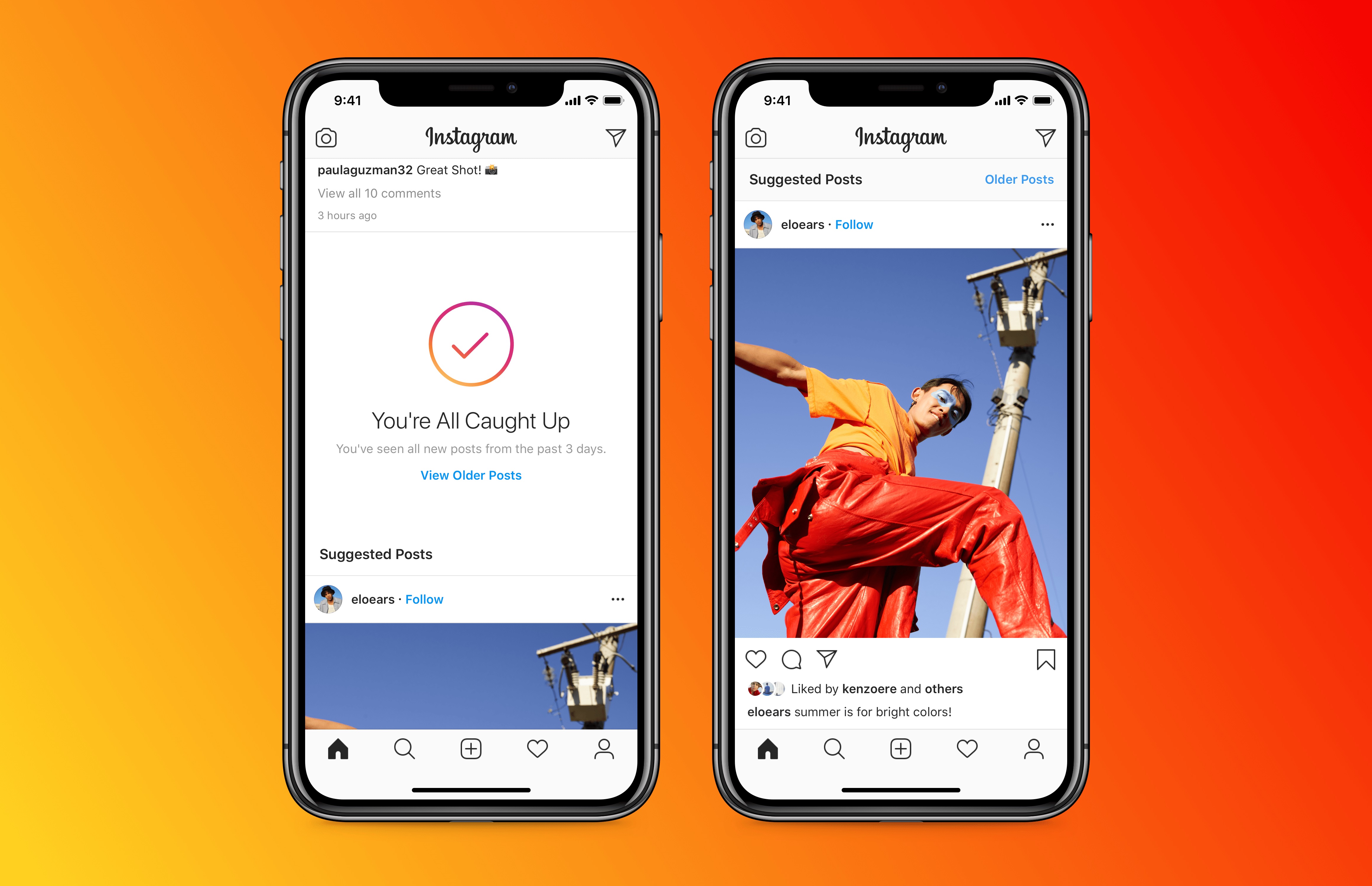
Instagram Publishes New Review Showing How It Ranks Content For ‘Suggested Posts’
If you happen to be wondering how Instagram’s algorithm really works and why certain posts seem to be making it more on your feed than others, well, you’re in luck.
The popular social media app is sharing valuable insights with users that describe this, including ways to better optimize its approach to content on the app.
The new review was published by Instagram today, including complete know-how of how content gets ranked on the app and eventually gets shared as ‘Suggested Posts’.
In case you didn’t know, this has been a trending element recently, especially after many users were highly disappointed with the way their accounts were now behaving.
Many lashed out at CEO Adam Mosseri while others started a new petition that called for the app to revert back to itself and stop copying the likes of archrivals such as TikTok.
This was definitely a key focus that many had hoped for because seeing the AI tools at work is definitely a fascinating affair, even though it’s not considered to be everyone’s best friend these days.
Also, if you don’t see too many recommendations on your feed right now, well, let’s just say that enjoy while it lasts because Instagram is definitely going to be ramping that up soon.
For starters, the review comes to us from Instagram’s team of renowned engineers. They’ve shown us some key aims of what users can expect from the system.
Firstly, Instagram says that users do half the work for the rest of us by spending plenty of their time on the app. This crafts the ultimate feed for users, adding an array of recommendations based on the content they love.
Those who continually stay engaged through the app will carry on finding their best sources of interest. And yes, Instagram steps in to help fine-tune this degree of personalization a little bit.
Now, the problem lies in the simple fact that users actually want an automated system in the first place or not. Do we really need someone else to do the work for us? And most importantly, do humans really have to rely on AI features to gain better engagement?
Instagram has revealed that recommendations seen across the app continually fall into two separate categories. The first is related to Connected while the second has to do with Unconnected. And as you can guess, the latter is more related to Instagram’s systems finding things that best highlight users’ interests.
Obviously, the results are derived from the way users act on the app and the biggest ones of them all include liking and then following a particular post.
There’s another trick that Instagram uses to get the best engagement. That’s related to taking into consideration the things that are liked by those you follow. Remember, these little details have to do more with the exploration part of the app.
Meanwhile, in the home feed, things are more related to showing users content that they love to follow or have subscribed for. This way, the feed gets all the more familiar to them and they love it.
Now, Instagram says that the end goal is to make users feel like they’re at home when seeing their recommendations on the app. If done correctly, only things users like should appear across the app as suggestions.
Keeping that aside, the app is also focusing more on Video-based content like Reels because let’s face it, it’s getting the most views.
Instagram says its ranking models make sure content selected for users’ home feed is as similar to that which they love. The idea is to add that fresh feeling you get when seeing posts from people you love. This combined with great plenty of content styles really goes a long way.
The key point is that Instagram wants users to love the insight the app is providing them because it's based on their own actions.
Read next: Cyberbullying on the Rise on Social Media According to This Report
by Dr. Hura Anwar via Digital Information World
The popular social media app is sharing valuable insights with users that describe this, including ways to better optimize its approach to content on the app.
The new review was published by Instagram today, including complete know-how of how content gets ranked on the app and eventually gets shared as ‘Suggested Posts’.
In case you didn’t know, this has been a trending element recently, especially after many users were highly disappointed with the way their accounts were now behaving.
Many lashed out at CEO Adam Mosseri while others started a new petition that called for the app to revert back to itself and stop copying the likes of archrivals such as TikTok.
This was definitely a key focus that many had hoped for because seeing the AI tools at work is definitely a fascinating affair, even though it’s not considered to be everyone’s best friend these days.
Also, if you don’t see too many recommendations on your feed right now, well, let’s just say that enjoy while it lasts because Instagram is definitely going to be ramping that up soon.
For starters, the review comes to us from Instagram’s team of renowned engineers. They’ve shown us some key aims of what users can expect from the system.
Firstly, Instagram says that users do half the work for the rest of us by spending plenty of their time on the app. This crafts the ultimate feed for users, adding an array of recommendations based on the content they love.
Those who continually stay engaged through the app will carry on finding their best sources of interest. And yes, Instagram steps in to help fine-tune this degree of personalization a little bit.
Now, the problem lies in the simple fact that users actually want an automated system in the first place or not. Do we really need someone else to do the work for us? And most importantly, do humans really have to rely on AI features to gain better engagement?
Instagram has revealed that recommendations seen across the app continually fall into two separate categories. The first is related to Connected while the second has to do with Unconnected. And as you can guess, the latter is more related to Instagram’s systems finding things that best highlight users’ interests.
Obviously, the results are derived from the way users act on the app and the biggest ones of them all include liking and then following a particular post.
There’s another trick that Instagram uses to get the best engagement. That’s related to taking into consideration the things that are liked by those you follow. Remember, these little details have to do more with the exploration part of the app.
Meanwhile, in the home feed, things are more related to showing users content that they love to follow or have subscribed for. This way, the feed gets all the more familiar to them and they love it.
Now, Instagram says that the end goal is to make users feel like they’re at home when seeing their recommendations on the app. If done correctly, only things users like should appear across the app as suggestions.
Keeping that aside, the app is also focusing more on Video-based content like Reels because let’s face it, it’s getting the most views.
Instagram says its ranking models make sure content selected for users’ home feed is as similar to that which they love. The idea is to add that fresh feeling you get when seeing posts from people you love. This combined with great plenty of content styles really goes a long way.
The key point is that Instagram wants users to love the insight the app is providing them because it's based on their own actions.
Read next: Cyberbullying on the Rise on Social Media According to This Report
by Dr. Hura Anwar via Digital Information World
Apple Ramps Up Its iPhone Production By Asking Suppliers To Make 90 Million iPhone 14 Devices
In the recent past, we’ve seen quite a few analysts discuss their reservations regarding the demand for iPhones, considering the global economic uncertainty.
But despite the rate of inflation boggling many of us down, leading iPhone maker Apple is in no mood of slowing down its production of iPhone 14 units.
A recent report by Bloomberg was seen shedding light on Apple’s decision to really ramp up the production of its devices. And by that, we mean requesting suppliers to produce at least 90 million units for iPhone 14.
Interestingly, Apple is staying true to its tradition of doing just that as last year, the company also asked its respective suppliers to produce the same number of units for the iPhone 13. So as you can see, nothing has really changed, other than the model of the device of course.
This is a clear indication of how Apple doesn’t see any demand for the iPhone 14 dropping this year, with great expectations for sales to match those observed in 2021.
In the years before 2021, Apple was seen ordering production of nearly 75 million units and with time, the production gradually increased. So it appears the tech giant doesn’t want to go backward.
As far as the rest of 2022 is concerned, Apple wishes to produce nearly 220 million units by the year-end.
Bloomberg mentioned in its recent reporting how Apple is relying greatly on its very influential clientele, not to mention the decrease in competition as worldwide electronics witness a massive downturn.
It’s shocking to say the least, as many tech giants including those linked to the smartphone market have predicted downward spiraling projections this year. But when it comes down to the famous Cupertino firm, it’s not slowing down one bit and has high hopes attached.
But if you managed to take a look at the earnings results produced by Apple during Q3, you would have noticed how the firm revealed that iPhone sales could be strong despite the growing economic downturn. After all, Apple does know more than most of us regarding whether or not the move would be a strong one or not.
As far as the latest iPhone 14 is concerned, well, it’s going to be launched this year in September. They are currently four different variants in the lineup. And the anticipation for the final reveal is very real.
Read next: New Study Proves How Small Businesses Are Suffering Thanks To Apple’s App Tracking Transparency
by Dr. Hura Anwar via Digital Information World
But despite the rate of inflation boggling many of us down, leading iPhone maker Apple is in no mood of slowing down its production of iPhone 14 units.
A recent report by Bloomberg was seen shedding light on Apple’s decision to really ramp up the production of its devices. And by that, we mean requesting suppliers to produce at least 90 million units for iPhone 14.
Interestingly, Apple is staying true to its tradition of doing just that as last year, the company also asked its respective suppliers to produce the same number of units for the iPhone 13. So as you can see, nothing has really changed, other than the model of the device of course.
This is a clear indication of how Apple doesn’t see any demand for the iPhone 14 dropping this year, with great expectations for sales to match those observed in 2021.
In the years before 2021, Apple was seen ordering production of nearly 75 million units and with time, the production gradually increased. So it appears the tech giant doesn’t want to go backward.
As far as the rest of 2022 is concerned, Apple wishes to produce nearly 220 million units by the year-end.
Bloomberg mentioned in its recent reporting how Apple is relying greatly on its very influential clientele, not to mention the decrease in competition as worldwide electronics witness a massive downturn.
It’s shocking to say the least, as many tech giants including those linked to the smartphone market have predicted downward spiraling projections this year. But when it comes down to the famous Cupertino firm, it’s not slowing down one bit and has high hopes attached.
But if you managed to take a look at the earnings results produced by Apple during Q3, you would have noticed how the firm revealed that iPhone sales could be strong despite the growing economic downturn. After all, Apple does know more than most of us regarding whether or not the move would be a strong one or not.
As far as the latest iPhone 14 is concerned, well, it’s going to be launched this year in September. They are currently four different variants in the lineup. And the anticipation for the final reveal is very real.
Read next: New Study Proves How Small Businesses Are Suffering Thanks To Apple’s App Tracking Transparency
by Dr. Hura Anwar via Digital Information World
Black Hat 2022 Security Researchers Reveal Hidden Loopholes In Tracking Devices
Security researchers at this year’s Black Hat conference revealed a new cybersecurity threat that relies on UWB technology to expose tracking systems.
The Black Hat is a cybersecurity conference that’s essentially just Comic-Con for individuals or groups interested in cybercrime and its prevention against it. Such groups typically consist of corporations, governmental agencies, small businesses, security researchers, hackers, and even the occasional individual who’s interested in the entire rigmarole of online safety. If I’m going to be fully honest, it’s a very important rigmarole to familiarize oneself with as well, considering just how much of our information is online nowadays. GPS systems, social security numbers, credit or debit card information, the list is exhausting. Black Hat’s also an interesting convention to frequent if an individual is looking to get into the business of cybersecurity; it’s a meeting of the top dogs in the business, all discussing research they’ve conducted and what the industry’s current landscape looks like. I’d be interested in attending myself if I had any level of familiarity with cybersecurity work.
At any rate, many bad actors and cybercriminals online have taken to infiltrating physical devices in the hopes of extracting information. Social media accounts are no longer the score: they’re shooting for Apple Air Tags, vehicular GPS, home AI systems, and so forth. Such devices aren’t necessarily as well guarded as laptops with anti-virus and anti-malware software, and can often provide immense rewards in turn. With online criminals becoming smarter by the day, learning from past mistakes, and figuring out newer, fresher loopholes, it’s important to both stay vigilant and keep our lines of defense sharp as well.
Let’s talk about this recent cybersecurity expose. Tracking systems built on UWB (ultra-wideband) radio technology are currently at risk. These systems rely on RTLS (real-time locating systems) and are often utilized in the creation of tracking tags and chips. They can relay location data with exceeding accuracy and are thus often used to keep a track of items or individuals. Apple’s Air Tags work much in the same way.
So, a cybersecurity breach in such systems means that many individuals might have been harmed, yes? Well, no; as a matter of fact, these security breaches were conducted by our very own researchers, in an attempt to preemptively locate security deficits and correct them beforehand. Tech corporations often hand out bounties for the discovery of such loopholes as well, so here’s to hoping the team got a bonus off of Apple.
H/T: PCMag.
Read next: Report shows 1 in 3 organizations now reply weekly ransomware attacks
by Arooj Ahmed via Digital Information World
The Black Hat is a cybersecurity conference that’s essentially just Comic-Con for individuals or groups interested in cybercrime and its prevention against it. Such groups typically consist of corporations, governmental agencies, small businesses, security researchers, hackers, and even the occasional individual who’s interested in the entire rigmarole of online safety. If I’m going to be fully honest, it’s a very important rigmarole to familiarize oneself with as well, considering just how much of our information is online nowadays. GPS systems, social security numbers, credit or debit card information, the list is exhausting. Black Hat’s also an interesting convention to frequent if an individual is looking to get into the business of cybersecurity; it’s a meeting of the top dogs in the business, all discussing research they’ve conducted and what the industry’s current landscape looks like. I’d be interested in attending myself if I had any level of familiarity with cybersecurity work.
At any rate, many bad actors and cybercriminals online have taken to infiltrating physical devices in the hopes of extracting information. Social media accounts are no longer the score: they’re shooting for Apple Air Tags, vehicular GPS, home AI systems, and so forth. Such devices aren’t necessarily as well guarded as laptops with anti-virus and anti-malware software, and can often provide immense rewards in turn. With online criminals becoming smarter by the day, learning from past mistakes, and figuring out newer, fresher loopholes, it’s important to both stay vigilant and keep our lines of defense sharp as well.
Let’s talk about this recent cybersecurity expose. Tracking systems built on UWB (ultra-wideband) radio technology are currently at risk. These systems rely on RTLS (real-time locating systems) and are often utilized in the creation of tracking tags and chips. They can relay location data with exceeding accuracy and are thus often used to keep a track of items or individuals. Apple’s Air Tags work much in the same way.
So, a cybersecurity breach in such systems means that many individuals might have been harmed, yes? Well, no; as a matter of fact, these security breaches were conducted by our very own researchers, in an attempt to preemptively locate security deficits and correct them beforehand. Tech corporations often hand out bounties for the discovery of such loopholes as well, so here’s to hoping the team got a bonus off of Apple.
H/T: PCMag.
Read next: Report shows 1 in 3 organizations now reply weekly ransomware attacks
by Arooj Ahmed via Digital Information World
Camera quality is one of the most important things to consider while buying a phone, but pixel size is not as important to it
When choosing a phone, the phone’s camera quality and its photographic abilities are one of the key priorities for a majority of consumers, and they are right in their thinking. The camera is the most important feature of a phone after its battery life on the consumer’s list of must-haves. In this technological era, cameras have advanced so greatly that most of the phones on the market belonging to big companies come with a variety of features that are borrowed from a professional camera such as phase-detect autofocus and optical image stabilization. With android phones, this has been made possible with the Snapdragon processors.
Qualcomm’s Snapdragon mobile platform has a noteworthy amount of silicon resources that are made and put there specifically to process images and videos. Without this processor, maybe your phone’s camera quality might be very different or your videos and photos would not even be the same.
According to Qualcomm’s insights out of the total respondents that were surveyed 44% said that camera quality was the most critical for them, so it got 4th place. But, when the users with phones that cost $1000+ were surveyed they said that camera quality took 2nd place for them after Battery life.
Most consumers believe that pixel size and sensor quality are the defining qualities of the camera and its outcome. But, that isn’t exactly the case as they are more irrelevant than people believe. The thing is that most phones cannot quarter large sensors because of physical measurements and the pixel size can only get so high before the image quality degenerates.
Smaller pixels gather more light than large pixels, which can have an undesirable impact on the image quality, especially in lighting conditions that are hard to work with.
H/T: Forbes
Read next: Back to School Season Marred By Massive Uptick in Education Sector Cyberattacks
by Arooj Ahmed via Digital Information World
Qualcomm’s Snapdragon mobile platform has a noteworthy amount of silicon resources that are made and put there specifically to process images and videos. Without this processor, maybe your phone’s camera quality might be very different or your videos and photos would not even be the same.
According to Qualcomm’s insights out of the total respondents that were surveyed 44% said that camera quality was the most critical for them, so it got 4th place. But, when the users with phones that cost $1000+ were surveyed they said that camera quality took 2nd place for them after Battery life.
Most consumers believe that pixel size and sensor quality are the defining qualities of the camera and its outcome. But, that isn’t exactly the case as they are more irrelevant than people believe. The thing is that most phones cannot quarter large sensors because of physical measurements and the pixel size can only get so high before the image quality degenerates.
Smaller pixels gather more light than large pixels, which can have an undesirable impact on the image quality, especially in lighting conditions that are hard to work with.
H/T: Forbes
Read next: Back to School Season Marred By Massive Uptick in Education Sector Cyberattacks
by Arooj Ahmed via Digital Information World
Saturday, August 13, 2022
Snap And GWI Conducted A Study To Determine How Snapchat’s Community Interacts With Other Social Media Platforms
Snap teamed up with GlobalWebIndex to determine how the Snapchat community interacts with the platform as compared to communities from Facebook, Twitter, etc.
A total of 20,000 Snapchatters were surveyed to conduct this study, and their social media usage was mapped out across 2021. A variety of age groups were also taken into consideration, with gen Z, millennials, gen X, and baby boomers all being a part of the research. The goal was to gauge just how unique Snapchat’s audience was in terms of platform usage. Snapchat is already a very unique social media site, especially when compared to the likes of Facebook, Instagram, or Twitter. Posts are entirely composed of image-related content, much of which cannot be found on an organized timeline. Instead, users have to catch up with their friends via Stories, a concept that was later emulated by literally every other popular social media platform.
While chatting exists on Snapchat and is utilized frequently enough, most users communicate via maintaining streaks of “snaps” that they send to each other daily. It’s a sort of interaction that other social media platforms haven’t really emulated successfully, or even attempted to in some cases. Snapchat is its interesting amalgamation of concepts and yet manages to hold its head high amongst heavy-hitters that precede it by literal decades.
Amongst daily Snapchat users, 67% of individuals aged 16 and above don’t use Twitter daily; 53% share the same sentiment towards YouTube; 51% share this pattern about TikTok; and 41% have a similar predilection towards Facebook. I’m honestly surprised that users above the age of 16 even use Facebook that much, but the platform still is popular amongst generations older than gen Z. The research even further establishes as much: when age groups are narrowed down to 16 through 24, Facebook and Twitter daily usage plummets. 70% of daily Snapchat users don’t use Twitter daily, and numbers are accordingly 63% for Facebook, 48% for YouTube, and 42% for TikTok. Seems like some stereotypes are derived from a small amount of truth.
Snapchat has recently exceeded 600 million users globally and continues to be a massively popular social media platform. Whether it be the platform’s unique access, its incorporation of AR technology in fun ways, or simply its connection with younger generations via the usage of visual media, Snap’s doing rather well for itself.
Read next: TikTok Accounts Crossing The ‘One Million Followers’ Mark Have Declined 41% From Last Year
by Arooj Ahmed via Digital Information World
A total of 20,000 Snapchatters were surveyed to conduct this study, and their social media usage was mapped out across 2021. A variety of age groups were also taken into consideration, with gen Z, millennials, gen X, and baby boomers all being a part of the research. The goal was to gauge just how unique Snapchat’s audience was in terms of platform usage. Snapchat is already a very unique social media site, especially when compared to the likes of Facebook, Instagram, or Twitter. Posts are entirely composed of image-related content, much of which cannot be found on an organized timeline. Instead, users have to catch up with their friends via Stories, a concept that was later emulated by literally every other popular social media platform.
While chatting exists on Snapchat and is utilized frequently enough, most users communicate via maintaining streaks of “snaps” that they send to each other daily. It’s a sort of interaction that other social media platforms haven’t really emulated successfully, or even attempted to in some cases. Snapchat is its interesting amalgamation of concepts and yet manages to hold its head high amongst heavy-hitters that precede it by literal decades.
Amongst daily Snapchat users, 67% of individuals aged 16 and above don’t use Twitter daily; 53% share the same sentiment towards YouTube; 51% share this pattern about TikTok; and 41% have a similar predilection towards Facebook. I’m honestly surprised that users above the age of 16 even use Facebook that much, but the platform still is popular amongst generations older than gen Z. The research even further establishes as much: when age groups are narrowed down to 16 through 24, Facebook and Twitter daily usage plummets. 70% of daily Snapchat users don’t use Twitter daily, and numbers are accordingly 63% for Facebook, 48% for YouTube, and 42% for TikTok. Seems like some stereotypes are derived from a small amount of truth.
Snapchat has recently exceeded 600 million users globally and continues to be a massively popular social media platform. Whether it be the platform’s unique access, its incorporation of AR technology in fun ways, or simply its connection with younger generations via the usage of visual media, Snap’s doing rather well for itself.
Read next: TikTok Accounts Crossing The ‘One Million Followers’ Mark Have Declined 41% From Last Year
by Arooj Ahmed via Digital Information World
Subscribe to:
Comments (Atom)