The start of August saw Google coming forward and unveiling its distribution numbers for Android. And according to the latest statistics, Android 12 is currently running on 13.3% of devices, just ahead of the new launch of version 13.
But right before the update came in front of us all on August 4, Google was last seen providing us a glance of the figures on May 9, of last year. At that time, we didn’t have Android 12 listed as a part of the distribution numbers. Now, we’re seeing the current inclusion arise, even before we’ve got news of the launch of Android 13.
But during that month, we observed how Android 12 and any version above stood at 6.6%. However, it wasn’t listed in an explicit manner across the Android Studio.
Thanks to 9to5Google, we’re getting an up-close and personal view of how Google presented the numbers on a monthly basis. And the representation was definitely spot on as the same data was utilized here.
In May, the chart revealed 93.3% and the rest was based on the assumption that it belonged to Android 12 but that’s still unclear. But another confusion lies with how Google didn’t clearly note down Android 12, around three months back.
Using that simple logic, the total entries in this particular pie chart is around 99% but the rest of the 2% may be related to Android 12L. In case you didn’t know, that has a totally different API level, thanks to the tablet with foldable features. But most of it has to do with devices produced by Google, including the Pixel 3a and newer versions.
At the moment, Android 11 can be seen at 27%, increasing from figures of 23% in May. And today, this version is the most utilized by users around the world. Next in line comes Android 10 with 22% and after this is Android 9 pie. This currently stands at 14.5%. Despite being four years old, it’s still proving to be tough competition against other more stable variants.
The methodology used to get these results by Google may not have changed over the years. It is the same data that gets released each month, taken from all Android devices that got access to the Google Play Store. And the fact that it’s standing true to the same method for data collection is really applaudable.
Google isn’t offering updates on this data through its official web pages so if you want to witness it, you can go to the Android Studio.
Read next: Google Is Planning To Add New Features For Gaming Enthusiasts On Its Search Engine
by Dr. Hura Anwar via Digital Information World
"Mr Branding" is a blog based on RSS for everything related to website branding and website design, it collects its posts from many sites in order to facilitate the updating to the latest technology.
To suggest any source, please contact me: Taha.baba@consultant.com
Monday, August 15, 2022
Twitter May Have Been Through A Lot But Its In-App Revenue For July Did Better Than Expected
We all know about the drama related to Twitter and Elon Musk that is known to affect the platform in more ways than one.
Twitter certainly went through a rollercoaster of experiences in July when the world’s richest person decided to back out on a $44 billion acquisition deal that he put so much effort into securing. On that note, Twitter has dragged the Tesla and SpaceX CEO to court.
But despite all of its woes and worries seen over time, Twitter actually didn’t do too bad in terms of its in-app revenue last month. To say the least, it actually outdid people’s expectations of the app.
While many expected July to be one of the worst months for Twitter, considering all the drama that occurred, well, it wasn’t. The in-app revenue didn’t fall, contrary to many beliefs. In fact, it actually rose from that observed in the previous month.
Twitter managed to make a net revenue worth $462,000 from all of its Android and iOS applications for July. Yes, we know what you’re thinking. That is just a little higher than what we saw in June, which was about $439K. But remember one thing, we’re talking about net revenue in this case and that is what is left after cuts have been allotted to both Apple and Google.
While the increment may be tiny but when you look at the bigger picture, it’s actually larger than what we saw during the period between May to June. Remember, many tech analysts felt that the tide was just not in favor of Twitter after it made a marginal increase in June of this year. But it’s safe to say, the app really pulled through with a bang, proving that it still has what it takes to grow.
Also, the revenue for the app in general since the year’s start has also doubled. So that’s another sign that the platform isn’t planning on giving up anytime soon.
H/T: AF
Read next: TikTok Crowned Most Downloaded App In July While Tinder Secures Top Spot For Highest Earnings
by Dr. Hura Anwar via Digital Information World
Twitter certainly went through a rollercoaster of experiences in July when the world’s richest person decided to back out on a $44 billion acquisition deal that he put so much effort into securing. On that note, Twitter has dragged the Tesla and SpaceX CEO to court.
But despite all of its woes and worries seen over time, Twitter actually didn’t do too bad in terms of its in-app revenue last month. To say the least, it actually outdid people’s expectations of the app.
While many expected July to be one of the worst months for Twitter, considering all the drama that occurred, well, it wasn’t. The in-app revenue didn’t fall, contrary to many beliefs. In fact, it actually rose from that observed in the previous month.
Twitter managed to make a net revenue worth $462,000 from all of its Android and iOS applications for July. Yes, we know what you’re thinking. That is just a little higher than what we saw in June, which was about $439K. But remember one thing, we’re talking about net revenue in this case and that is what is left after cuts have been allotted to both Apple and Google.
While the increment may be tiny but when you look at the bigger picture, it’s actually larger than what we saw during the period between May to June. Remember, many tech analysts felt that the tide was just not in favor of Twitter after it made a marginal increase in June of this year. But it’s safe to say, the app really pulled through with a bang, proving that it still has what it takes to grow.
Also, the revenue for the app in general since the year’s start has also doubled. So that’s another sign that the platform isn’t planning on giving up anytime soon.
H/T: AF
Read next: TikTok Crowned Most Downloaded App In July While Tinder Secures Top Spot For Highest Earnings
by Dr. Hura Anwar via Digital Information World
Sunday, August 14, 2022
People have started cutting down on expenses they don’t need and you might be surprised to learn that it isn’t because of inflation
Inflation is one of the biggest problems in the world with the majority of it affecting third-world countries. But, that certainly does not mean that first-world countries are not at all affected by it. inflation is at an all-time high in the United States too.
According to new data released on Friday by Commerce Signals which is a TransUnion Company, they analyzed how inflation can and does affect the spending of the people.
People generally send in two groups discretionary and non-discretionary items. Discretionary items are the things that one buys with the amount of money that has been left after spending on non-discretionary items like utilities or groceries. So, in other words, discretionary items are non-necessary items like entertainment, etc., and non-discretionary items are the necessities of life.
According to the data, due to the current inflation people have started cutting back on things such as electronics and subscriptions. The data showed that there had been only a 13% increase in the amount of money spent on discretionary items in July, in contrast with a 16% increase in the amount of money being spent on non-discretionary items.
However, while many people believe that all these decreases in consumer spending are because of Inflation, but that is not the case at all as the two are related but not the cause of each other. According to Nick Mangiapane who is the CMO at Commerce Signals, purchases at food and grocery stores have gone up by 13%. Out of that 13%, 10% are from increased transactions, and only 3.5% is from the actual price of the item.
In simpler words, Commerce Signal’s data says that the amount of food purchases has only risen by 3.5% but, the data released by the federal government says that it rose by 13%, which leads us to the conclusion that people are trading down. An example can be that when looking for food to take out, people are choosing Hamburgers instead of steaks.
What exactly does trading down mean you might be asking? Well, trading down means to replace a product just because the first one was too expensive. So, it means that consumers are replacing the products they use with cheaper versions of them.
The good news is that while people have started becoming a bit choosy about the products they use and their brands, consumer spending is not declining at all. If this continues the more high-end brands might be in profit more than their middle counterparts.
H/T: MarketingDaily
Read next: Camera quality is one of the most important things to consider while buying a phone, but pixel size is not as important to it
by Arooj Ahmed via Digital Information World
According to new data released on Friday by Commerce Signals which is a TransUnion Company, they analyzed how inflation can and does affect the spending of the people.
People generally send in two groups discretionary and non-discretionary items. Discretionary items are the things that one buys with the amount of money that has been left after spending on non-discretionary items like utilities or groceries. So, in other words, discretionary items are non-necessary items like entertainment, etc., and non-discretionary items are the necessities of life.
According to the data, due to the current inflation people have started cutting back on things such as electronics and subscriptions. The data showed that there had been only a 13% increase in the amount of money spent on discretionary items in July, in contrast with a 16% increase in the amount of money being spent on non-discretionary items.
However, while many people believe that all these decreases in consumer spending are because of Inflation, but that is not the case at all as the two are related but not the cause of each other. According to Nick Mangiapane who is the CMO at Commerce Signals, purchases at food and grocery stores have gone up by 13%. Out of that 13%, 10% are from increased transactions, and only 3.5% is from the actual price of the item.
In simpler words, Commerce Signal’s data says that the amount of food purchases has only risen by 3.5% but, the data released by the federal government says that it rose by 13%, which leads us to the conclusion that people are trading down. An example can be that when looking for food to take out, people are choosing Hamburgers instead of steaks.
What exactly does trading down mean you might be asking? Well, trading down means to replace a product just because the first one was too expensive. So, it means that consumers are replacing the products they use with cheaper versions of them.
The good news is that while people have started becoming a bit choosy about the products they use and their brands, consumer spending is not declining at all. If this continues the more high-end brands might be in profit more than their middle counterparts.
H/T: MarketingDaily
Read next: Camera quality is one of the most important things to consider while buying a phone, but pixel size is not as important to it
by Arooj Ahmed via Digital Information World
Tech Industry Wracked With Layoffs Due to Global Economic and Geopolitical Situation
The tech industry managed to get through the coronavirus pandemic intact, even while other economic sectors saw massive declines due to the lockdowns caused by the pandemic. In spite of the fact that this is the case, it seems that the current geopolitical and economic situation around the world is taking a lot of the wind out of the industry’s sails. A recent report revealed that Snap Inc. is planning to lay off a lot of staff, and they are not alone in that respect.
The second quarter of 2022 has brought widespread layoffs in the industry because of the fact that this is the sort of thing that could potentially end up keeping companies afloat during the uncertain economic climate. With all of that having been said and now out of the way, it is important to note that Snapchat is not the only company that has been faced with a less than stellar business outlook in the coming year.
The number of tech companies who are laying employees off skyrocketed by 850% in the second quarter of 2022 with all things having been considered and taken into account. 170 tech companies are planning to lay employees off during this period, which is several times higher than the 20 that were doing the same in the first quarter of this year.
Even companies like TikTok which have seen massive growth have had to lay off many of their employees due to a lean financial period that is coming up. Twitter has also had a rough time, spurred in no small part by the attempted hostile takeover by Elon Musk which dragged down the company’s average stock price.
Crypto scams and widespread fraud are also causing a lot of issues in the tech industry, and we might see an extended period of financial strife for all of these firms. It will be interesting to see what the industry looks like next year, because the current outlook does not seem promising and these corporations will have their work cut out for them if they want to continue to thrive.
Read next: Snap And GWI Conducted A Study To Determine How Snapchat’s Community Interacts With Other Social Media Platforms
by Zia Muhammad via Digital Information World
The second quarter of 2022 has brought widespread layoffs in the industry because of the fact that this is the sort of thing that could potentially end up keeping companies afloat during the uncertain economic climate. With all of that having been said and now out of the way, it is important to note that Snapchat is not the only company that has been faced with a less than stellar business outlook in the coming year.
The number of tech companies who are laying employees off skyrocketed by 850% in the second quarter of 2022 with all things having been considered and taken into account. 170 tech companies are planning to lay employees off during this period, which is several times higher than the 20 that were doing the same in the first quarter of this year.
Even companies like TikTok which have seen massive growth have had to lay off many of their employees due to a lean financial period that is coming up. Twitter has also had a rough time, spurred in no small part by the attempted hostile takeover by Elon Musk which dragged down the company’s average stock price.
Crypto scams and widespread fraud are also causing a lot of issues in the tech industry, and we might see an extended period of financial strife for all of these firms. It will be interesting to see what the industry looks like next year, because the current outlook does not seem promising and these corporations will have their work cut out for them if they want to continue to thrive.
Read next: Snap And GWI Conducted A Study To Determine How Snapchat’s Community Interacts With Other Social Media Platforms
by Zia Muhammad via Digital Information World
Apple Wanted A Share Of Facebook’s Ad Revenue Before Holding Back Its Ad Sales
Apple and Facebook aren’t the best of friends as you can imagine but past history is uncovering some interesting secrets about the duo’s business relationship.
Apple had once informed Meta’s Facebook about how it deserved a share of the company’s ad revenue. Moreover, the leading iPhone maker was seen referring to it as a type of in-app purchase that it claims needed to be shared with the company.
Obviously, Meta disagreed and began to argue in detail about how that was wrong and unfair. And this report was confirmed by The Wall Street Journal too.
Apple carried on arguing about how the ads being discussed were more or less boosted posts where users spend their own funds to have their content promoted and received by different audiences. And for that reason, they needed a chunk of the profits because it was their App Store.
Thankfully, Meta managed to convince the tech giant of how ads are something that Apple can’t steal a share from and they ended up winning the argument. Still, the way Apple was in discussion with Meta’s company and how it talked about ways of making more money through the App Store is definitely eye-opening.
But wait, the drama doesn’t end there. Apple did not only want a share of Facebook’s boosted sales in the past. Tumblr’s CEO claims that the company was seen rejecting its offer of new boost-like functionalities. As soon as the features were converted to in-app purchases, Apple suddenly flipped 360 degrees and spoke about how they were now interested.
This meant Apple would be receiving a 30% cut and they couldn’t be happier.
Meanwhile, it was also observed how both Apple and Meta ended up having chats linked to a possible subscription plan on Facebook too. This would end up removing ads across the app, which would also benefit Apple along the way.
In case you’re wondering how, well, Apple would be capable of earning revenue via subscriptions bought through the Facebook app. But things didn’t go as planned and both firms failed to reach an agreement on the ideas put forward.
WSJ says the conversations date back nearly six years back, occurring between the 2016 to 2018 timeframe.
Both companies are yet to respond to any requests for comments which does make sense. They are literally polar opposites of one another in terms of ads. Moreover, Apple’s recent ATT policy has drastically affected Facebook negatively too.
Remember, Facebook puts great emphasis on ads for its successful business as that’s where most of the revenue arises from.
Did you know that Apple introducing its stringent ask the apps not to track policy resulted in the Meta-owned firm losing a mega $10 billion as far as ad revenue was concerned in 2021?
There are some news reports stating how Meta’s board members even thought about putting an end to third-party-related data in 2018. But at that time, Mark Zuckerberg didn’t feel the need to pull through with the move.
Read next: Apple Ramps Up Its iPhone Production By Asking Suppliers To Make 90 Million iPhone 14 Devices
by Dr. Hura Anwar via Digital Information World
Apple had once informed Meta’s Facebook about how it deserved a share of the company’s ad revenue. Moreover, the leading iPhone maker was seen referring to it as a type of in-app purchase that it claims needed to be shared with the company.
Obviously, Meta disagreed and began to argue in detail about how that was wrong and unfair. And this report was confirmed by The Wall Street Journal too.
Apple carried on arguing about how the ads being discussed were more or less boosted posts where users spend their own funds to have their content promoted and received by different audiences. And for that reason, they needed a chunk of the profits because it was their App Store.
Thankfully, Meta managed to convince the tech giant of how ads are something that Apple can’t steal a share from and they ended up winning the argument. Still, the way Apple was in discussion with Meta’s company and how it talked about ways of making more money through the App Store is definitely eye-opening.
But wait, the drama doesn’t end there. Apple did not only want a share of Facebook’s boosted sales in the past. Tumblr’s CEO claims that the company was seen rejecting its offer of new boost-like functionalities. As soon as the features were converted to in-app purchases, Apple suddenly flipped 360 degrees and spoke about how they were now interested.
This meant Apple would be receiving a 30% cut and they couldn’t be happier.
Meanwhile, it was also observed how both Apple and Meta ended up having chats linked to a possible subscription plan on Facebook too. This would end up removing ads across the app, which would also benefit Apple along the way.
In case you’re wondering how, well, Apple would be capable of earning revenue via subscriptions bought through the Facebook app. But things didn’t go as planned and both firms failed to reach an agreement on the ideas put forward.
WSJ says the conversations date back nearly six years back, occurring between the 2016 to 2018 timeframe.
Both companies are yet to respond to any requests for comments which does make sense. They are literally polar opposites of one another in terms of ads. Moreover, Apple’s recent ATT policy has drastically affected Facebook negatively too.
Remember, Facebook puts great emphasis on ads for its successful business as that’s where most of the revenue arises from.
Did you know that Apple introducing its stringent ask the apps not to track policy resulted in the Meta-owned firm losing a mega $10 billion as far as ad revenue was concerned in 2021?
There are some news reports stating how Meta’s board members even thought about putting an end to third-party-related data in 2018. But at that time, Mark Zuckerberg didn’t feel the need to pull through with the move.
Read next: Apple Ramps Up Its iPhone Production By Asking Suppliers To Make 90 Million iPhone 14 Devices
by Dr. Hura Anwar via Digital Information World
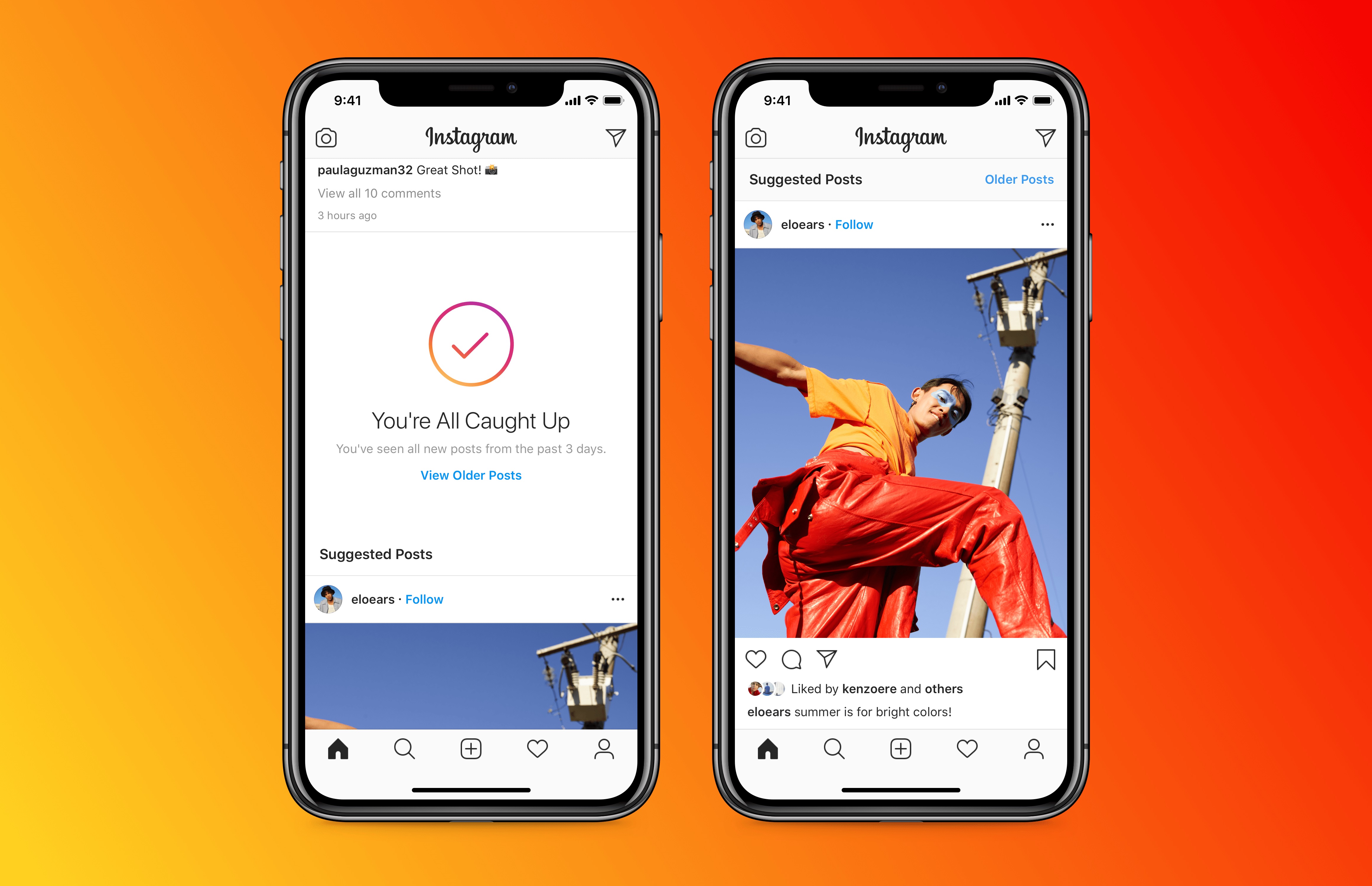
Instagram Publishes New Review Showing How It Ranks Content For ‘Suggested Posts’
If you happen to be wondering how Instagram’s algorithm really works and why certain posts seem to be making it more on your feed than others, well, you’re in luck.
The popular social media app is sharing valuable insights with users that describe this, including ways to better optimize its approach to content on the app.
The new review was published by Instagram today, including complete know-how of how content gets ranked on the app and eventually gets shared as ‘Suggested Posts’.
In case you didn’t know, this has been a trending element recently, especially after many users were highly disappointed with the way their accounts were now behaving.
Many lashed out at CEO Adam Mosseri while others started a new petition that called for the app to revert back to itself and stop copying the likes of archrivals such as TikTok.
This was definitely a key focus that many had hoped for because seeing the AI tools at work is definitely a fascinating affair, even though it’s not considered to be everyone’s best friend these days.
Also, if you don’t see too many recommendations on your feed right now, well, let’s just say that enjoy while it lasts because Instagram is definitely going to be ramping that up soon.
For starters, the review comes to us from Instagram’s team of renowned engineers. They’ve shown us some key aims of what users can expect from the system.
Firstly, Instagram says that users do half the work for the rest of us by spending plenty of their time on the app. This crafts the ultimate feed for users, adding an array of recommendations based on the content they love.
Those who continually stay engaged through the app will carry on finding their best sources of interest. And yes, Instagram steps in to help fine-tune this degree of personalization a little bit.
Now, the problem lies in the simple fact that users actually want an automated system in the first place or not. Do we really need someone else to do the work for us? And most importantly, do humans really have to rely on AI features to gain better engagement?
Instagram has revealed that recommendations seen across the app continually fall into two separate categories. The first is related to Connected while the second has to do with Unconnected. And as you can guess, the latter is more related to Instagram’s systems finding things that best highlight users’ interests.
Obviously, the results are derived from the way users act on the app and the biggest ones of them all include liking and then following a particular post.
There’s another trick that Instagram uses to get the best engagement. That’s related to taking into consideration the things that are liked by those you follow. Remember, these little details have to do more with the exploration part of the app.
Meanwhile, in the home feed, things are more related to showing users content that they love to follow or have subscribed for. This way, the feed gets all the more familiar to them and they love it.
Now, Instagram says that the end goal is to make users feel like they’re at home when seeing their recommendations on the app. If done correctly, only things users like should appear across the app as suggestions.
Keeping that aside, the app is also focusing more on Video-based content like Reels because let’s face it, it’s getting the most views.
Instagram says its ranking models make sure content selected for users’ home feed is as similar to that which they love. The idea is to add that fresh feeling you get when seeing posts from people you love. This combined with great plenty of content styles really goes a long way.
The key point is that Instagram wants users to love the insight the app is providing them because it's based on their own actions.
Read next: Cyberbullying on the Rise on Social Media According to This Report
by Dr. Hura Anwar via Digital Information World
The popular social media app is sharing valuable insights with users that describe this, including ways to better optimize its approach to content on the app.
The new review was published by Instagram today, including complete know-how of how content gets ranked on the app and eventually gets shared as ‘Suggested Posts’.
In case you didn’t know, this has been a trending element recently, especially after many users were highly disappointed with the way their accounts were now behaving.
Many lashed out at CEO Adam Mosseri while others started a new petition that called for the app to revert back to itself and stop copying the likes of archrivals such as TikTok.
This was definitely a key focus that many had hoped for because seeing the AI tools at work is definitely a fascinating affair, even though it’s not considered to be everyone’s best friend these days.
Also, if you don’t see too many recommendations on your feed right now, well, let’s just say that enjoy while it lasts because Instagram is definitely going to be ramping that up soon.
For starters, the review comes to us from Instagram’s team of renowned engineers. They’ve shown us some key aims of what users can expect from the system.
Firstly, Instagram says that users do half the work for the rest of us by spending plenty of their time on the app. This crafts the ultimate feed for users, adding an array of recommendations based on the content they love.
Those who continually stay engaged through the app will carry on finding their best sources of interest. And yes, Instagram steps in to help fine-tune this degree of personalization a little bit.
Now, the problem lies in the simple fact that users actually want an automated system in the first place or not. Do we really need someone else to do the work for us? And most importantly, do humans really have to rely on AI features to gain better engagement?
Instagram has revealed that recommendations seen across the app continually fall into two separate categories. The first is related to Connected while the second has to do with Unconnected. And as you can guess, the latter is more related to Instagram’s systems finding things that best highlight users’ interests.
Obviously, the results are derived from the way users act on the app and the biggest ones of them all include liking and then following a particular post.
There’s another trick that Instagram uses to get the best engagement. That’s related to taking into consideration the things that are liked by those you follow. Remember, these little details have to do more with the exploration part of the app.
Meanwhile, in the home feed, things are more related to showing users content that they love to follow or have subscribed for. This way, the feed gets all the more familiar to them and they love it.
Now, Instagram says that the end goal is to make users feel like they’re at home when seeing their recommendations on the app. If done correctly, only things users like should appear across the app as suggestions.
Keeping that aside, the app is also focusing more on Video-based content like Reels because let’s face it, it’s getting the most views.
Instagram says its ranking models make sure content selected for users’ home feed is as similar to that which they love. The idea is to add that fresh feeling you get when seeing posts from people you love. This combined with great plenty of content styles really goes a long way.
The key point is that Instagram wants users to love the insight the app is providing them because it's based on their own actions.
Read next: Cyberbullying on the Rise on Social Media According to This Report
by Dr. Hura Anwar via Digital Information World
Apple Ramps Up Its iPhone Production By Asking Suppliers To Make 90 Million iPhone 14 Devices
In the recent past, we’ve seen quite a few analysts discuss their reservations regarding the demand for iPhones, considering the global economic uncertainty.
But despite the rate of inflation boggling many of us down, leading iPhone maker Apple is in no mood of slowing down its production of iPhone 14 units.
A recent report by Bloomberg was seen shedding light on Apple’s decision to really ramp up the production of its devices. And by that, we mean requesting suppliers to produce at least 90 million units for iPhone 14.
Interestingly, Apple is staying true to its tradition of doing just that as last year, the company also asked its respective suppliers to produce the same number of units for the iPhone 13. So as you can see, nothing has really changed, other than the model of the device of course.
This is a clear indication of how Apple doesn’t see any demand for the iPhone 14 dropping this year, with great expectations for sales to match those observed in 2021.
In the years before 2021, Apple was seen ordering production of nearly 75 million units and with time, the production gradually increased. So it appears the tech giant doesn’t want to go backward.
As far as the rest of 2022 is concerned, Apple wishes to produce nearly 220 million units by the year-end.
Bloomberg mentioned in its recent reporting how Apple is relying greatly on its very influential clientele, not to mention the decrease in competition as worldwide electronics witness a massive downturn.
It’s shocking to say the least, as many tech giants including those linked to the smartphone market have predicted downward spiraling projections this year. But when it comes down to the famous Cupertino firm, it’s not slowing down one bit and has high hopes attached.
But if you managed to take a look at the earnings results produced by Apple during Q3, you would have noticed how the firm revealed that iPhone sales could be strong despite the growing economic downturn. After all, Apple does know more than most of us regarding whether or not the move would be a strong one or not.
As far as the latest iPhone 14 is concerned, well, it’s going to be launched this year in September. They are currently four different variants in the lineup. And the anticipation for the final reveal is very real.
Read next: New Study Proves How Small Businesses Are Suffering Thanks To Apple’s App Tracking Transparency
by Dr. Hura Anwar via Digital Information World
But despite the rate of inflation boggling many of us down, leading iPhone maker Apple is in no mood of slowing down its production of iPhone 14 units.
A recent report by Bloomberg was seen shedding light on Apple’s decision to really ramp up the production of its devices. And by that, we mean requesting suppliers to produce at least 90 million units for iPhone 14.
Interestingly, Apple is staying true to its tradition of doing just that as last year, the company also asked its respective suppliers to produce the same number of units for the iPhone 13. So as you can see, nothing has really changed, other than the model of the device of course.
This is a clear indication of how Apple doesn’t see any demand for the iPhone 14 dropping this year, with great expectations for sales to match those observed in 2021.
In the years before 2021, Apple was seen ordering production of nearly 75 million units and with time, the production gradually increased. So it appears the tech giant doesn’t want to go backward.
As far as the rest of 2022 is concerned, Apple wishes to produce nearly 220 million units by the year-end.
Bloomberg mentioned in its recent reporting how Apple is relying greatly on its very influential clientele, not to mention the decrease in competition as worldwide electronics witness a massive downturn.
It’s shocking to say the least, as many tech giants including those linked to the smartphone market have predicted downward spiraling projections this year. But when it comes down to the famous Cupertino firm, it’s not slowing down one bit and has high hopes attached.
But if you managed to take a look at the earnings results produced by Apple during Q3, you would have noticed how the firm revealed that iPhone sales could be strong despite the growing economic downturn. After all, Apple does know more than most of us regarding whether or not the move would be a strong one or not.
As far as the latest iPhone 14 is concerned, well, it’s going to be launched this year in September. They are currently four different variants in the lineup. And the anticipation for the final reveal is very real.
Read next: New Study Proves How Small Businesses Are Suffering Thanks To Apple’s App Tracking Transparency
by Dr. Hura Anwar via Digital Information World
Subscribe to:
Comments (Atom)


