Thursday, September 1, 2022

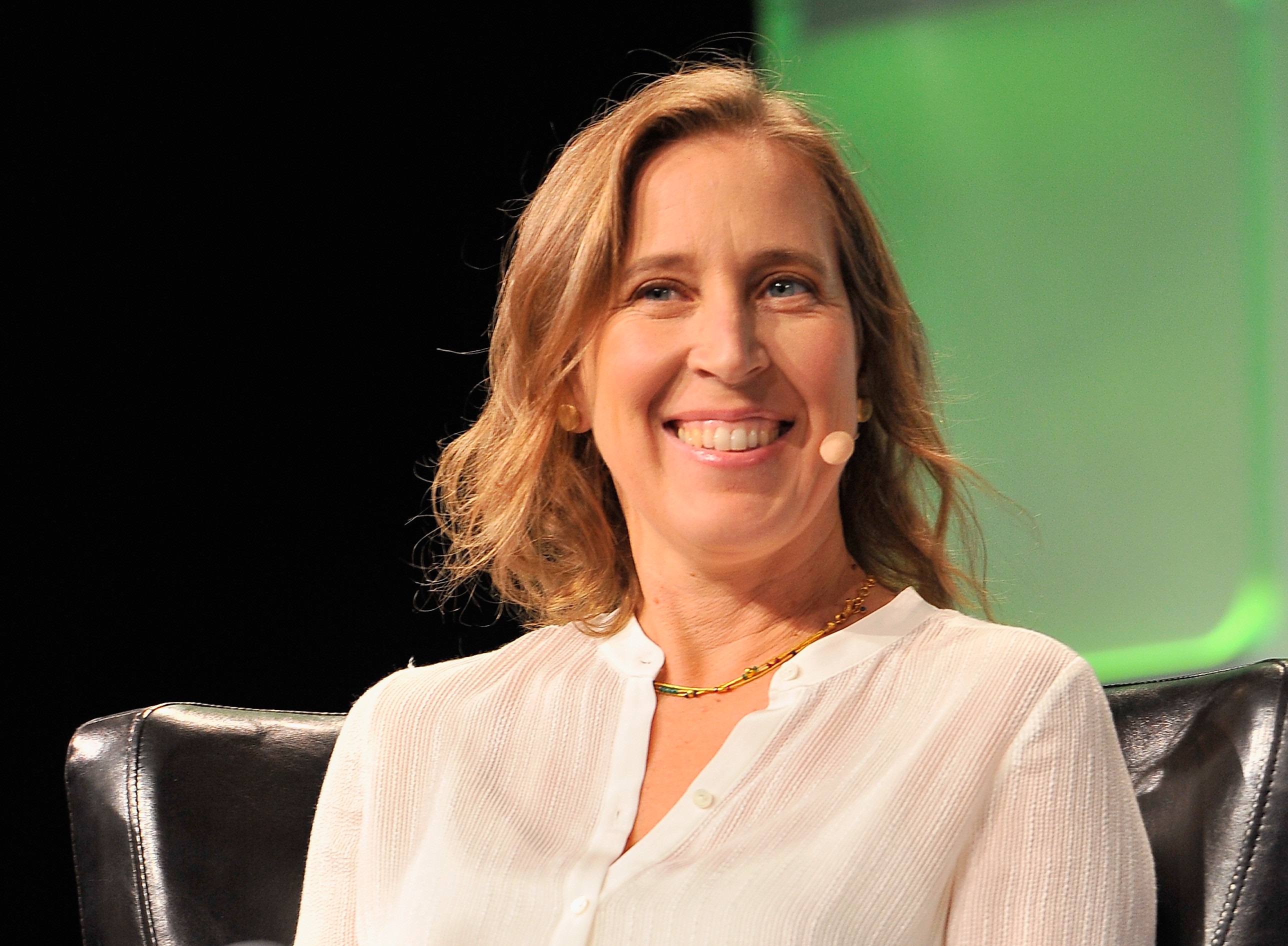
Susan Wojcicki Reveals She Was Approached By Tesla To Become Elon Musk’s Second In Command

YouTube CEO Susan Wojcicki, as per a book titled "Like, Comment, Subscribe: Inside YouTube's Chaotic Rise to World Domination" by Mark Bergen, was in talk with Tesla to become the company’s COO back in 2014.

Some super-rich people wanted another super-rich person for their corporation, but the latter rich person decided that they wanted to stay loyal to the current overlords than jump ship. There, that’s the entire story, everyone can head home now. I think the vibe that I’m attempting to emulate here is less disdain over another boring corporate story (although some of that’s here), and more annoyance over dealing with such an uninteresting story. Although other people can find this interesting, I don’t have a monopoly over what commands another’s attention, I don’t care for such stories. However, the job’s been assigned, and I’ll trudge through this article as effectively as I can. Let’s get down to brass tacks, and discuss Susan Wojcicki’s attitude towards being offered a job at Tesla.

Wojcicki isn’t exactly the most beloved figure within the YouTube space, but if I’m being honest, she’s not the worst either. Her current tenure as CEO of YouTube has been marked by attempts towards marketing the platform as more advertiser-friendly; i.e. the promotion of content that is safe, wholesome, and attracts kids. Many people have (rightfully so) criticized her for YouTube’s poorly defined policies; videos with “edgy” content get regularly demonetized, but Logan Paul makes a video disrespecting suicide and serious ramifications only follow after severe public outrage. Ultimately, she’s just another corporate person, looking to make money by appealing to middle America or whatever the new buzzword is for a general audience.

Her position as YouTube CEO was also more than guaranteed, considering just how long Wojcicki has worked with Google. She’s been with the company since its inception, with Google’s first offices being set up in her parent's garage. She was also responsible for the purchase of YouTube and was the first product manager for AdSense; making her the CEO of YouTube was a no-brainer at this point. However, things would have looked much different if Susan Wojcicki had taken up a job offer from Tesla back in 2014.

This was a transitional period for Google and Alphabet as a whole. Larry Page was leaving the company and handing over the reins to Sundar Pichai. This in and of itself was surprising to many people who worked at the company, since they expected Wojcicki to herself be next in line. Tesla approached the product manager at around this time with an offer to become the company’s COO; a position as Elon Musk’s right-hand woman. However, she ultimately expressed loyalty to the company at its core and was soon promoted to YouTube CEO. All’s well that ends well, I guess; then again, whatever route Susan Wojcicki took, she was going to fail upwards.

Photo: TechCrunch

Read next: The Business Apps That Collect The Most and Least Data
by Arooj Ahmed via Digital Information World

Delete these business apps right now if you care about your online privacy

Let's be honest: no one - or almost no one - reads the privacy statement when downloading the most popular and useful business apps. Who's got time for that? And the stuff in there is all meaningless jargon, right?

Not quite.

Tucked away in these terms and conditions, you'll find an explanation of what these apps do with your data. And some of them do a lot more with it than others.

But don't panic. There's no need to read all the privacy statements of the apps on your phone. Because OnDeck has done it for you. And they put all their findings into several charts ranking the most and least data-hungry business apps.

You’ll find a summary of the results below.

But first, let's look at why apps collect your data and what they do once they have it.

Why do apps collect your data?

Apps collect your personal data for several reasons. They can use it to improve and update their services or recommend other products that might interest you.

In many cases, data collection is essential. Some apps wouldn't work without it. After all, how can Google Maps point you in the right direction if it doesn't know where you are at that moment?

And yes, apps do sell and share your personal data to marketers, research organizations, and cold-calling firms that are borderline scammers.

So is data collection a good thing or a bad thing?

Data collection is like any other tool. It all depends on the intent. Think about a hammer. You can use it to build a house or smash all your neighbor's windows.

Many data collection practices are benign. Some are even beneficial.

But data collection still gets a bad rap, and it's easy to see why. Some of the biggest (and most trusted) companies in the world have been caught up in data collection scandals.
During the 2010s, personal data belonging to millions of Facebook users was collected without their consent by British consulting firm Cambridge Analytica. It was predominately used to influence voter behavior in elections and referendums, including the 2016 US presidential race and the UK's Brexit referendum.

Not good (unless you’re the owner of Cambridge Analytica.)

Some of the scandals are even worse, and a few are downright disturbing. Facebook was (once again) busted for using people's data and profile information to see how it could manipulate their emotions.

And there are those rumors. For years, there have been whispers that all the major tech companies have secret deals to give intelligence services access to your data. And it's naive to dismiss this as just another 'conspiracy theory.'

Over 80% of Palantir's (a major data analytics firm) contracts are with US governmental departments, including the CIA and the NSA - who, thanks to whistleblower Edward Snowden, admitted they'd been illegally spying on US citizens for years.

Which apps should you delete first?

You're probably scrolling through your phone, wondering what apps to ditch first. It would take hours - or maybe days - to go through all the privacy statements. And even then, you'd probably give up halfway through. They're not the most exciting reads in the world.

Thankfully, OnDeck has done the hard work for you already.

The business apps that collect the most data

If you want to keep your info private, then - surprise, surprise - uninstall Facebook Messenger right now. If you use this communication app to talk with colleagues or arrange lunch meetings, you're giving Facebook unlimited access to 32 segments of personal data. They include location, browsing history, financial info, sensitive info, and even data on your health and wellbeing.

Instagram is the next app that has to go. Instagram is great for marketing, but it also has a huge appetite for your data. It collects just as many data segments as Facebook.

PayPal is another big culprit. The finance and accounting business app starts scooping up 26 pieces of data as soon as you download it.

Privacy-focused business people should be wary of content and file management tool Google Drive. It collects your contact info, info on recent purchases, search history, and 15 other personal data segments.

What types of business apps collect the most data?

Marketing is about knowing what people want and when they want it. So it's no shock that marketing apps are the hungriest types of business apps. On average, they collect 16.5 data segments.

Finance and accounting apps come next (14 segments), followed by communication apps (11.3), and website and e-commerce apps (9.5 segments.)

At the other end of the scale, business intelligence apps are the least data-hungry apps in the OnDeck study. According to OnDeck’s research, business intelligence apps collect less than 5 (4.5) different pieces of personal data.

Some have rejected data collection altogether

The app for business intelligence and cloud-based services provider MicroStrategy collects zero data from its users. The firm's Privacy Policy statement opens with this reassuring line: "We are not in the business of selling Personal Information about you to advertisers or spammers."

Business apps that respect your privacy

Microstrategy isn’t the only business app that respects its user's privacy.

Video conference app Webex Meeting doesn't want your data. Three other business communication apps don't believe in data collection. They are CallRail, Acefone, and 3XC.

Commander One and eFileCabinet might not have the same functionality as Google Drive. But they should be among the first alternatives for business professionals who’ve dumped Google Drive due to privacy concerns. Neither Commander One nor eFileCabinet is interested in a single piece of your private information.

It's time to take back control. See a full breakdown of all the results in the infographics below. Then decide which apps to keep and which apps to delete.
New study finds today’s most invasive business apps
Read next: According to new data your home device might know you better than your family
by Web Desk via Digital Information World
Wednesday, August 31, 2022

Shoppers Don’t Trust Crypto as Small Business Payment Method, Study Finds

As businesses continue recovering from the pandemic's economic consequences, many are promoting the multiple payment methods they offer. Providing more flexibility for consumers encourages a smoother checkout experience. And with so many payment methods being used in the digital space today, many shoppers will prefer some over others. That’s why offering multiple payment options is vital for staying current and keeping people’s business.

Choosing the best payment methods to accept is especially crucial for small businesses. Unfortunately, accepting digital payment methods can significantly cut into their profits. Some companies must charge extra fees at checkout to cover the costs, which might be bad for business. How do small businesses feel about modern payment methods, and are customers willing to pay extra fees to use them? And how do shoppers feel about using cryptocurrency? A new study from Clarify Capital sheds light on the digital era's most popular and trusted payment methods.

The study first explored the most reliable forms of payment according to shoppers and small business owners. Visa and Mastercard were the top two most trusted payment methods, while well-established PayPal ranked third, and newcomer, Zelle, came in last place. The top spots indicated that people still prefer credit cards in the age of digital payments. PayPal’s high ranking is likely due to its brand name recognition, which can play a major part in consumers’ willingness to trust a brand. Some other big brands that have entered the merchant space as viable methods of payment include Apple, Google, and Amazon.

As cryptocurrency continues to rise in popularity, it’s becoming a more common payment method among consumers. While it has its pros and cons, many consider crypto to be a more secure payment method than credit and debit cards. Crypto transactions don’t require third-party verification, and the blockchain general ledger verifies and records each transaction – both of which decrease the possibility of a data breach. On the merchant side, accepting cryptocurrency can reduce transaction fees, and the finality of a crypto payment protects sellers and helps them better manage their cash flow.

While these findings are encouraging, do people feel comfortable using crypto to pay for goods and services? According to the Clarify Capital study, the answer to this question is a resounding “no” – crypto was the least trusted payment method among the consumers surveyed. However, 65% of them also said that businesses offering crypto as a payment method would make them more loyal to that store or brand. It’s an interesting juxtaposition. Whether the hesitancy around cryptocurrency stems from a lack of knowledge or apprehension because of its newness, consumers are having a hard time accepting the concept as part of their daily life.

When it comes to the payment methods that consumers do trust, the big question is whether or not they’re willing to pay more to use them. The study showed that while 60% of small businesses paid fees to offer certain payment platforms, 22% relied on consumers to cover the costs, and 17% split the cost between themselves and their customers.

It’s understandable that most businesses would cover the costs of accepting certain payment methods, considering 34% of respondents would feel negatively toward a company that charged them a fee to process their payment. Despite this finding, some consumers were willing to pay extra to use their payment method of choice: 21% said they’d shell out a little extra to use Amazon Pay, while 20% said they’d do so to use Google Pay.

Consumers have varying payment preferences, but can some payment options actually attract business? Forty-six percent of those surveyed said they’d be most likely to shop at a small business that accepted Visa, while 44% said they’d shop where PayPal was an option. Forty-one percent said Mastercard, 39% said Amazon Pay, and 34% said cryptocurrency – which was significantly more than Venmo (26%), despite its popularity for making digital payments. Perhaps that’s because people more often use Venmo to send and receive money between friends than to pay merchants.

The average amounts spent using newer digital payment methods (ones other than the traditional credit card or cash) varied widely. On average, those who used Google Pay spent $459 per month, while those who used Amazon Pay spent $412. Apple Pay users spent an average of $223 per month, while for those who use PayPal, it was $212. The number dropped to $206 for Venmo and $185 for Cash App. Could there be a reason behind these rates of use?

Beyond brand recognition, the overall experience is what often leads users back to digital apps and platforms, making user experience a key factor for merchants to consider when choosing which payment methods to offer. With so much shopping done online these days, people are used to a quick and streamlined checkout process, so it’s more important than ever to ensure a simple and easy checkout experience. This study revealed some of the pitfalls that might cause businesses to lose sales at this stage.

When study respondents were asked what might cause them to abandon their online shopping cart, 51% said it would be surprise costs and charges, while 48% said they’d most likely be deterred by security concerns. Other top deal breakers were asking for too much information and having to navigate multiple checkout pages. Less concerning were things like an online shop either not being mobile-friendly (29%) or not having an autofill option (20%), but these could still tip the scales for some shoppers. On the flip side, 76% of consumers said that having a one-click payment option would increase their chance of completing a purchase. On average, consumers spend $369 per month through one-click purchases.

The Clarify Capital study indicated that amidst a sea of payment options, Americans still seem to prefer their Visas and Mastercards. While digital payment methods are certainly the way of the future, there’s still a long way to go before consumers widely trust some of the newer payment platforms. Still, small businesses would benefit from offering multiple options as long as they don’t burden their customers with extra fees. And while most consumers aren’t quite ready to do their shopping with crypto, small businesses will also want to consider accepting this increasingly common form of currency at some point. As long as it’s easy to use, it's only a matter of time before people become more amenable to using crypto and other digital payment methods.
Read next: Digital Marketers Received a 23% Pay Bump in 3 Years
by Web Desk via Digital Information World

Google Search Tests Out New Label for Short Articles

Many users who are entering keywords into Google’s powerful search engine want to find short articles because of the fact that this is the sort of thing that could potentially end up allowing them to digest all of the required information in the shortest amount of time possible. Google is well aware of that, which is why the search engine giant is experimenting with a new label that can earmark short reads for its users, spotted by Brodieclark.

This new label is called “Quick Read”, and with all of that having been said and now out of the way it is important to note that only some users have mentioned seeing it in their Google SERP. The purpose of this label is to indicate to users that an article can be read in under 5 minutes. Some users also noted different version of the label, including one such as “<5 Min Read”, so Google is clearly trying a few things out to see what sticks once all has been said and is now out of the way.


While there is no way of knowing whether or not this feature would be part of Google’s next update, if it gets rolled out we might see an even greater wave of short form content. Short form content is already taking the internet by storm, and the prospect of receiving a label that would draw user attention would sweeten the deal further with all things having been considered and taken into account.

We might start seeing a lot more short form content, and Google has been giving this type of content higher rankings on its SERP for quite some time now. One thing to note here is that this test has been conducted both for web users as well as mobile users which makes it more likely that the beta test would turn into a permanent feature.

It will be interesting to see how this feature changes the landscape of SEO, as well as the content industry in general. Google is a powerful force within the world of the internet, so this change could be quite influential.

Read next: New Warning For Malware Campaign Disguised As Google Translate On The Rise
by Zia Muhammad via Digital Information World

Google Is Ready To Shake Things Up In The World Of Android VPN With Major Rule Changes

Google will reportedly be introducing some major rule changes in the world of Android VPN.

The tech giant confirmed today that the changes will be implemented soon and it will begin with the blocking of VPN apps present on the Google Play Store that interfere with ads.

Google’s policy for developers that came to light in July of this year mentioned that from the start of November, only certain VPN applications that utilize VPNService would be allowed to move forward.

This service is designed to assist apps in providing virtual private networks. Hence, only such apps can be trusted to make the most secure device-level tunnels across remote servers.

Google also delineated how permissible VPN applications wouldn’t be allowed to collect users’ personal information without being open about the method and taking users’ consent on the matter.

At the same time, the search engine giant says they shouldn’t manipulate the traffic coming forward or interfere with advertisements too. And that’s because that sort of behavior could have serious repercussions on monetization for other services.

During the earlier part of 2022, Google mentioned how it would be introducing some great changes across its Play Store. This includes the likes of putting forward some major restrictions across different VPN apps.

This is available for download across various Android smartphones. But now, new reports have spoken about how The Register unveiled some major concerns pertaining to an ad-blocking application from Sweden called Blokada. The latter argues that the new rules would hinder its workings by interfering with its software design.

At the same time, a spokesperson for DuckDuckGo revealed how the new policy change wouldn’t have any major effect on their workings but the team is still in the process of conducting a thorough review.

But we’d just like to inform you that Google is not the only one tightening up VPN rules on apps. Apple’s current policy also forces apps to make use of an API called NEVPNManager.


Read next: New Warning For Malware Campaign Disguised As Google Translate On The Rise
by Dr. Hura Anwar via Digital Information World

WhatsApp is releasing one new feature each for both android and iOS

When the covid-19 pandemic hit 3 years ago, it forced everyone into their homes. Then came WhatsApp, the saving grace of socialites disguised as a chatting app. The app was created by Brian Acton and Jan Koum, the app was also later bought by Meta Inc.

The app recently released that it has one new update each for both the Android and iOS versions of the chatting app.

The Android update is probably the more useful of the two as it is that feature that will let users report a problem whenever they would be facing any problems while using WhatsApp.

As we all know, technology is not always perfect and sometimes flaws can come through on any platform and Whatsapp is no different, that’s why the messaging app is working on a bug reporting feature. This feature will let users report any sort of problem that they might be having with their usage of the app like the app stops working or messages can’t be seen.

According to a screenshot posted by WABetaInfo, reporting a bug in the app is not at all hard. Just go to settings, click on the report bug and fill in the given box. You can also include screenshots but those are optional and users are advised to check that if they are posting screenshots, they don’t contain any personal or sensitive data.


Moving on to the iOS part, WhatsApp has released an update that allows users to delete messages for everyone for an extended period.

Previously there was a time limit on when users could delete messages for everyone but now the time limit is still there but the timings have been stretched to 2 days and 12 hours. After that amount of time, nobody can delete any messages sent in any group or chat.

At first, this update was available to beta users only but after being mentioned in the official catalog it seems that this update has become official and will be available for everyone soon. It should be noted that this feature was announced by WhatsApp 3 weeks ago but is noted in the catalog that makes it official.

WhatsApp has always managed to come up with great features and we are sincerely hoping that these two will not disappoint.

Read next: Meta’s Dreams Of Turning WhatsApp Into A ‘Super App’ Are Coming True In India
by Arooj Ahmed via Digital Information World

University Teachers: Types of Professors You Meet at the University

In a three-year or master's course of study, we will meet a series of mythological beings with superb names: university teachers.

These fantastic creatures that roam the Middle-earth of education, often left in a panic in the wastelands of university bureaucracy, are the ones who have the delicate task of transmitting knowledge to unsuspecting students.

The university professors are our interface with the university (in addition to the fantastic secretariats and their very listless staff). The joys and sorrows of the students, responsible for their exam marks, or rather for the judgment and evaluation of the student's preparation, are often plagued by a disease that makes them particularly bad: being in love with themselves.

Joking aside, having a good university study method is essential to have excellent preparation and amaze the professor during the exam.

In this way, the student is prepared and wins his grades, without having to adopt the excuse of having bad teachers. One way to do that, obviously, is to approach writing professionals with a “write my college paper” request.

The Overly Pedantic One

The professor specifies immediately recognizes himself. Usually, early, he arrives with his 24-hour style briefcase, or with his backpack. He puts it on the desk, opens it, and takes out the pc or notepad.

He sits down, connects it to the projector, checks that everything is working, and places the screen on the first slide. Then he remains seated, checks a few emails on his cell phone, and watches the classroom fill up.

There is nothing superfluous on the desk, speak in a relatively calm tone and often the slides are detailed. Although detailed, he still manages to make them usable and does not mechanically read them, if he can add some of his own.

Normally the precise professor is a man, in principle, fewer teachers have this type of behavior.

At the exam he is basically a little stupid professor. He doesn't like giving very high grades and the tasks or questions are quite complex. But he doesn't enjoy putting low grades or failing for sheer pleasure. He is methodical, uses logic, and wants to see the real preparation of the students. So, both exams and assignments are important – for the latter, you can always order essay paper.

The Dreamer

Unlike the pedantic, the doting professor is one of those professors who are in the clouds.

Tend to be good, you can find the doting enthusiast of his subject, with creative slides and engaging speeches, or the one who tends to be more listless.


The doting is sometimes early, sometimes late. In these cases, she arrives in the classroom in a hurry, perhaps with her dress a bit ruffled. He connects to the PC, but the slides do not start, and punctually calls a volunteer student to help him.

During the explanations, he sometimes gets lost inside talks, starts question and answer sessions, and doesn't finish the lesson plan at the end.

This type of professor is well distributed between men and women.

He tends to turn a blind eye to the exam and often scores high.

The One Who Forces Jokes

Here is another one of those that we can count among the professors.

That's right, those who make constant jokes, and who try to be nice are really not that great teachers.

Among the variety of university professors, I would say that it is one of the most at risk of criticality.

Let's put it this way: he arrives at class, makes jokes about the subject and maybe they are also nice. Then he makes jokes about the students, maybe those who are playing the game and showing up. Usually, these students intervene more in class and interact more.

And they have a fast track to the exam. The others? Who doesn't lend themselves to the game?

Either he remains anonymous and is evaluated for what he is, or for some reason he goes to hell with the teacher and becomes targeted by his low grades or his jokes.

This is a purely male category; the teachers usually do not make the forced funny guy.

The Enthusiast

A noteworthy college professor, the enthusiast is the best blessing a college student can receive. This category of university teachers has 2 fundamental characteristics:

He is truly passionate about his subject.

These are university professors who believe in the mission of teaching. And you can see it from how they involve you in class. Often the slides are simple, they stand up, they explain, and they have the ability to harpoon your concentration.

And they are basically good. They can ask complex questions during exams, but unless you get big blunders, grades are never low and they tend to almost never get angry, yet they get the respect of the class and during class, there is no fly.

We would like more like them. Students can usually just delegate all their assignments to MasterPapers and just come to the professor’s lectures just to listen in.

College Professors: Are They Really Like That?

And here we are at the end of our article on university teachers.

Are all university professors as we have described them in this article?

No, generalizing often means trivializing, but it's perfect for having a laugh together

We have seen together 4 of the most represented categories, but we are sure that this classification is not entirely complete.

There are fantastic professors, bastard professors, professors close to retirement with old habits, and young professors who innovate.

With any professors that you have, you still have to know how to write excellent papers - A Step-By-Step Guide To Writing College Papers Like A Pro.

Bio:
Barbara Miller is so good that she normally has 4-6 orders to choose from on a daily basis. Constantly in high demand, Mrs. Miller, nevertheless, does everything that is in her power to make every customer satisfied with the service. “Perhaps the best writer I’ve ever had, top work...” - we couldn’t have said it better ourselves! It’s our great honor to have Barbar on the team and it’s our goal to make her stay with Master Papers for as long as possible.
by Web Desk via Digital Information World