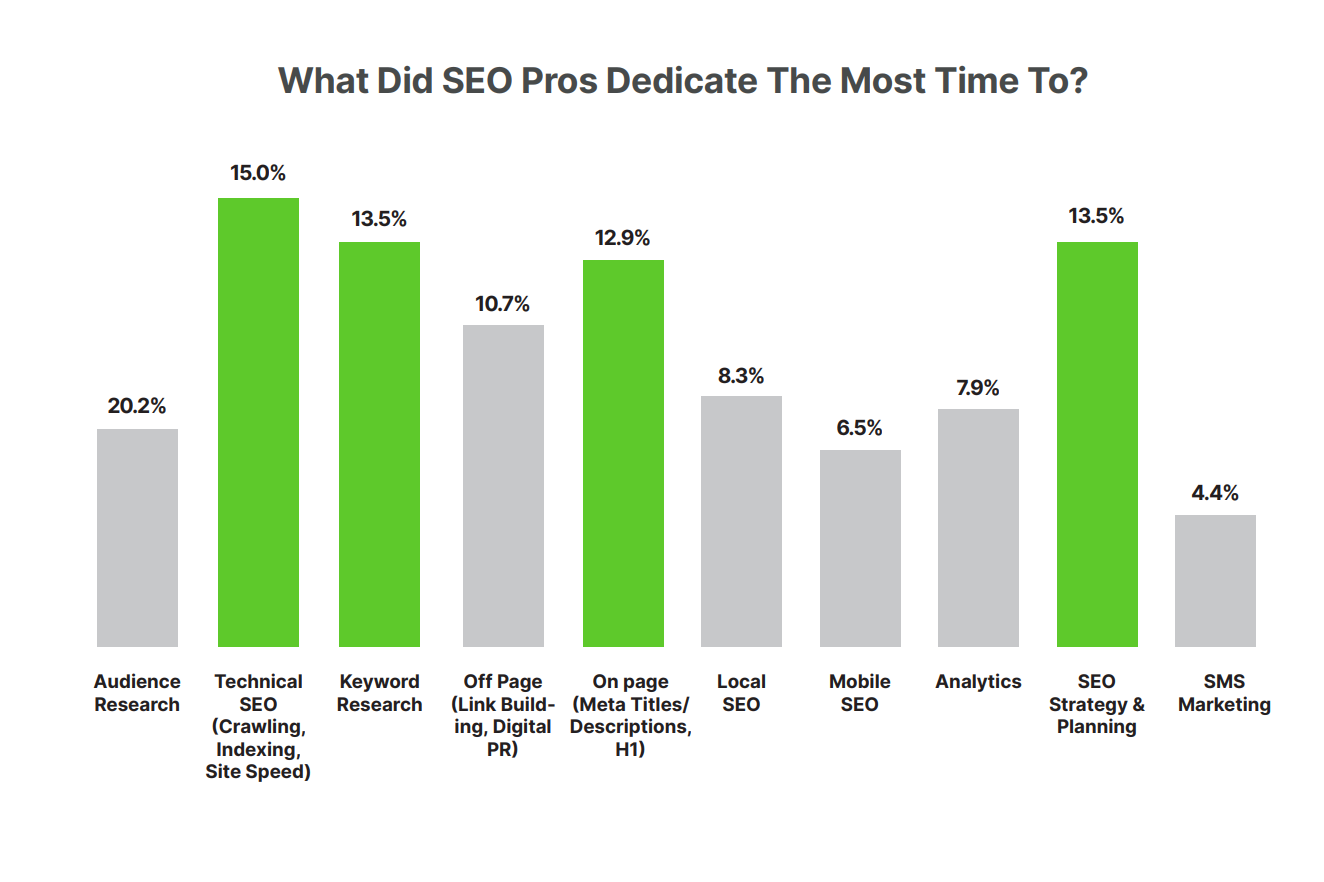
Coming up with a marketing strategy for the next year can be challenging due to the various moving parts that are going to be at play. In spite of the fact that this is the case, marketers can manage to develop an effective strategy by predicting the problems that might set them back over the course of the subsequent year. Search Engine Journal just put out their State of SEO report, and the findings from this report can help SEO experts to uncover the best practices for 2023.
With all of that having been said and now out of the way, it is important to note that this report included a survey which showed what problems SEO professionals themselves say that they are facing. The most pertinent problem of all might be a lack of resources, with 14.9% of the SEO professionals that responded to this survey stating that it was a major issue.
12.3% also cited problems with strategies and 11.9% highlighted the difficulties they are experiencing with scaling. 11.2% still think that the pandemic is having an adverse effect and 10.7% are having trouble aligning their goals with that of other departments within the organization.
Interestingly, budget cuts, which were the biggest problem cited by SEO professionals back in 2021, fell to sixth place this year with all things having been considered and taken into account. That suggests that budgets are becoming higher than might have been the case otherwise, although some resources are clearly unrelated to budgets because SEO professionals are still saying they don’t have enough of them.
Another aspect of this report that is important to highlight is the section where survey respondents were asked about major industry shifts and threats to their profession. Machine Learning and AI came out on top because of the fact that this is the sort of thing that could potentially end up making their jobs obsolete whilst providing lower quality results. 18.7% of survey respondents selected this option, and almost as many, or 18% to be precise, said that Google Updates might make the industry look entirely different in the near future.
The deprecation of third party cookies is also continuing to cause seismic shifts in the industry. 13.9% of survey respondents said that the lack of third party tracking is posing a significant challenge to them, with 12.9% citing Google’s Zero Click Pages. 11.5% also said that there was more competition for talent in the industry which may end up harming it in the long run.
The emergence of AI can be a particularly pertinent factor in the future of SEO. While it might not be able to replace human SEO professionals entirely, it will automate several processes and make them a lot easier to do. Alternatively, some might try to automate the entire SEO process which could lead to industry wide layoffs. The SEO industry appears to be in a constant state of flux, and 2023 is not shaping up to be any different. Decisions made by major players impact people that are even tangentially related to those industries, and that can be seen in Apple’s deprecating of third party cookies which SEO professionals are still sore over.
Read next: The Longer And Wordier Reviews Stay At The Top of Google Results For A Long Time
by Zia Muhammad via Digital Information World
"Mr Branding" is a blog based on RSS for everything related to website branding and website design, it collects its posts from many sites in order to facilitate the updating to the latest technology.
To suggest any source, please contact me: Taha.baba@consultant.com
Tuesday, December 6, 2022
37% of Women Still Don’t Have Internet Access in 2022
It is hard to conceive of a world without internet, but in spite of the fact that this is the case there are still billions of people all around the world who don’t have access to it. The International Telecommunication Union (ITU) projects that there are still 2.7 billion people who don’t have a reliable internet connection, and it turns out that women are a lot more affected by this with all things having been considered and taken into account.
According to the findings that this organization put out, about 31% of men don’t have internet access. With all of that having been said and now out of the way, it is important to note that this number is much higher for women, hovering at around the 37% mark. That means that there are 259 million more women than men who are unable to use the internet, and that might be making the gender gap larger than might have been the case otherwise.
The difference is much starker in developing countries. In Africa, for example, just 34% of women have internet access compared to 45% of men that have it. The gap is even larger in the Arab world, with a ten point difference being noted between the 75% of men who have a reliable internet connection and just 65% of women who can say the same.
On average, 21% of women are able to use the internet in low income countries. This seems to suggest that certain higher income countries in Africa might be skewing the numbers, and there might be whole areas where women are restricted from the wealth of information that only the internet can provide.
Women make up half of the global population, yet they are 18% more likely to not have internet access. That is dangerous because of the fact that this is the sort of thing that could potentially end up widening the already broad gender gap and making it increasingly difficult for women to achieve an equal and level playing field that can help them get on par with the men they are competing with.
Read next: Research highlights the most commonly shared life events across TikTok and Instagram
by Zia Muhammad via Digital Information World
According to the findings that this organization put out, about 31% of men don’t have internet access. With all of that having been said and now out of the way, it is important to note that this number is much higher for women, hovering at around the 37% mark. That means that there are 259 million more women than men who are unable to use the internet, and that might be making the gender gap larger than might have been the case otherwise.
The difference is much starker in developing countries. In Africa, for example, just 34% of women have internet access compared to 45% of men that have it. The gap is even larger in the Arab world, with a ten point difference being noted between the 75% of men who have a reliable internet connection and just 65% of women who can say the same.
On average, 21% of women are able to use the internet in low income countries. This seems to suggest that certain higher income countries in Africa might be skewing the numbers, and there might be whole areas where women are restricted from the wealth of information that only the internet can provide.
Women make up half of the global population, yet they are 18% more likely to not have internet access. That is dangerous because of the fact that this is the sort of thing that could potentially end up widening the already broad gender gap and making it increasingly difficult for women to achieve an equal and level playing field that can help them get on par with the men they are competing with.
Read next: Research highlights the most commonly shared life events across TikTok and Instagram
by Zia Muhammad via Digital Information World
Monday, December 5, 2022
44% of Malware Gets Delivered Through ZIP and RAR Files
Microsoft Office files have been the most popular mode of delivery for malware for quite some time now, but there has been a shift of late that has put more of a focus on ZIP and RAR files as well as other archive file format. While 32% of malware is still being delivered through Word and Excel files, ZIP and RAR files have seen an 11 point increase and are now being used in 44% of malware delivery cases.
The attacks are usually initiated with a string of malicious HTML that redirects unsuspecting users to a document viewing page. The HTML also helps these cyber attackers to bypass email filters more easily than might have been the case otherwise. When the user is taken to the document viewer, which looks strikingly similar to Adobe and is thus more likely to be trusted, they are then told to download a ZIP file. They are given a password to enter into the ZIP file to unlock its contents.
With all of that having been said and now out of the way, it is important to note that this is when the malware gets deployed onto the unwary user’s system. Such file formats make it really simple for malicious actors to encrypt their malware, and it also makes it a lot more difficult to detect with all things having been considered and taken into account.
Additionally, the payload does not have to be restricted to malware. It can also contain spyware, ransomware or anything else in that category. Users need to be careful while clicking links because of the fact that this is the sort of thing that could potentially end up putting their safety at risk even if they are unaware. About 18 billion malicious links have been clicked on by HP users alone, and that reveals just how dire this problem has become.
There must be a concerted effort to train these users about the risks of email sent malware. The problem with continue to grow if these steps are not taken, and that could result in staggering economic losses.
H/T: HP Wolf Security
Read next: Microsoft Edge Reaches 11 Percent of Browser Market
by Zia Muhammad via Digital Information World
The attacks are usually initiated with a string of malicious HTML that redirects unsuspecting users to a document viewing page. The HTML also helps these cyber attackers to bypass email filters more easily than might have been the case otherwise. When the user is taken to the document viewer, which looks strikingly similar to Adobe and is thus more likely to be trusted, they are then told to download a ZIP file. They are given a password to enter into the ZIP file to unlock its contents.
With all of that having been said and now out of the way, it is important to note that this is when the malware gets deployed onto the unwary user’s system. Such file formats make it really simple for malicious actors to encrypt their malware, and it also makes it a lot more difficult to detect with all things having been considered and taken into account.
Additionally, the payload does not have to be restricted to malware. It can also contain spyware, ransomware or anything else in that category. Users need to be careful while clicking links because of the fact that this is the sort of thing that could potentially end up putting their safety at risk even if they are unaware. About 18 billion malicious links have been clicked on by HP users alone, and that reveals just how dire this problem has become.
There must be a concerted effort to train these users about the risks of email sent malware. The problem with continue to grow if these steps are not taken, and that could result in staggering economic losses.
H/T: HP Wolf Security
Read next: Microsoft Edge Reaches 11 Percent of Browser Market
by Zia Muhammad via Digital Information World

Twitter is Working on Making Sure That a Human is Behind an Account Before Giving Access to Some Special Features
Twitter is always working to make the app safe and secure for users. Recently, Elon Musk announced that Twitter has started working to decrease the bots on the app. There are many bots on Twitter that handle most of the verified accounts. But due to this, most users are not able to enjoy the app fully. So now Twitter is reportedly testing a feature that will make sure that there is a human behind an account (that it find dubious) before allowing the person to use all the features on the app.
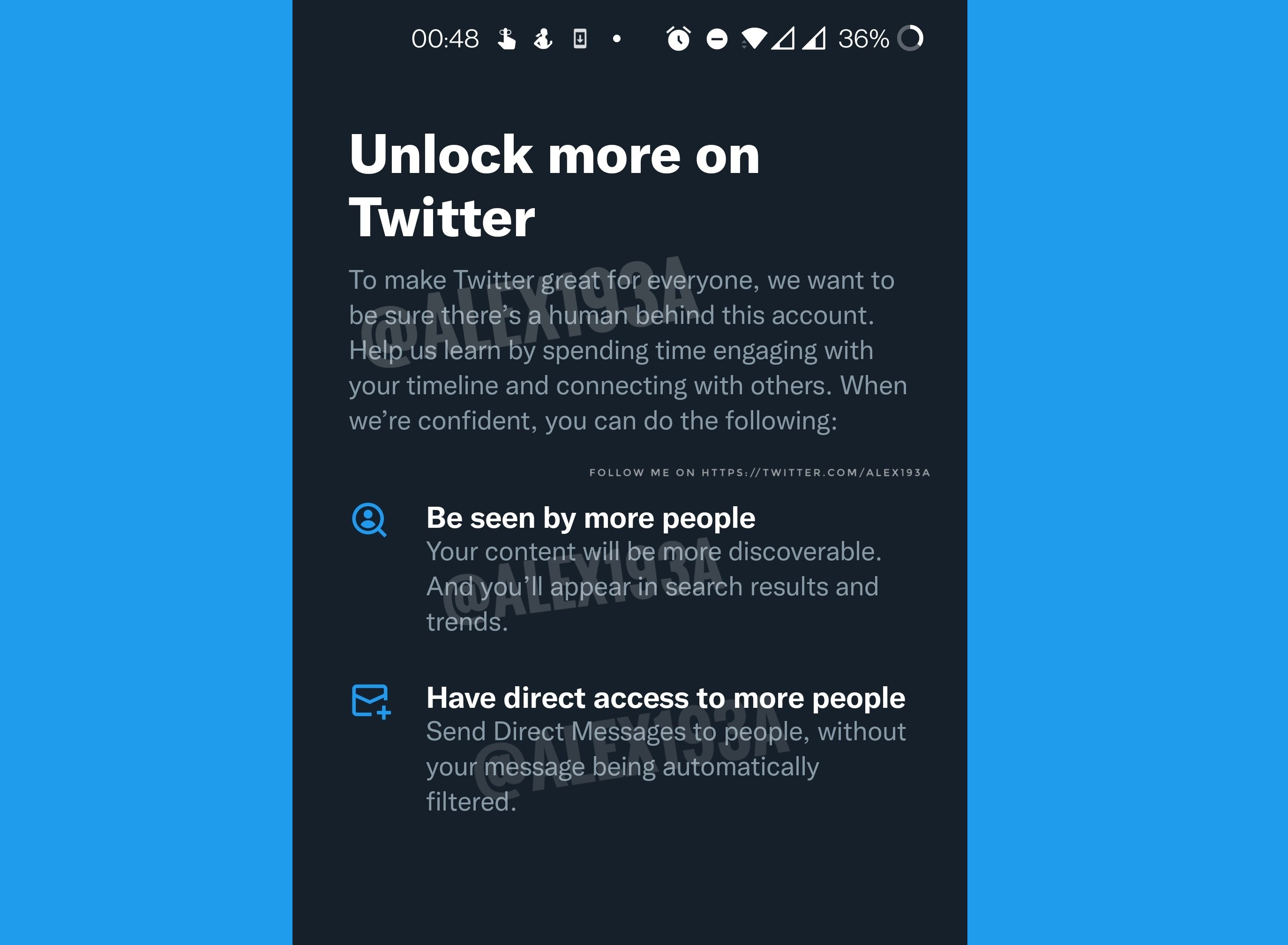
Twitter is introducing new features on the app so it was about time that Twitter started restricting the growth of bots on the app. To verify you're a human, you will have to interact more with other accounts on Twitter. You will have to tweet more, reply to some tweets and overall perform human functions for Twitter's algorithm to figure out your behavior. Twitter hasn't told us explicitly about how the verification method is going to be. But when you will be more engaging with your timeline and connect with other accounts, Twitter will closely monitor your activities. When Twitter is confident that you are a human, you will be able to access the other features.
When you get yourself verified that you are a human on Twitter, your content will be more accessable. This means you will appear more on the homepage and your content will be easily seen in search results and trends. Another feature that you will get after your verification is making your direct messages unfiltered. This means that when you send a message to an account on Twitter, your message will not be filtered automatically.
Many Twitter users are extremely happy about this feature. Some say that they had been waiting for this type of feature for a long time and, that Twitter has done something good for once. This will help the app to get rid of bots.
Read next: Twitter Is Adding A Verified Phone Number Check Mark In The Profile Info Section
by Arooj Ahmed via Digital Information World
Twitter is introducing new features on the app so it was about time that Twitter started restricting the growth of bots on the app. To verify you're a human, you will have to interact more with other accounts on Twitter. You will have to tweet more, reply to some tweets and overall perform human functions for Twitter's algorithm to figure out your behavior. Twitter hasn't told us explicitly about how the verification method is going to be. But when you will be more engaging with your timeline and connect with other accounts, Twitter will closely monitor your activities. When Twitter is confident that you are a human, you will be able to access the other features.
When you get yourself verified that you are a human on Twitter, your content will be more accessable. This means you will appear more on the homepage and your content will be easily seen in search results and trends. Another feature that you will get after your verification is making your direct messages unfiltered. This means that when you send a message to an account on Twitter, your message will not be filtered automatically.
Many Twitter users are extremely happy about this feature. Some say that they had been waiting for this type of feature for a long time and, that Twitter has done something good for once. This will help the app to get rid of bots.
Read next: Twitter Is Adding A Verified Phone Number Check Mark In The Profile Info Section
by Arooj Ahmed via Digital Information World
New Law May Soon Force Google And Meta To Pay Local Media Outlets For News Published
Authorities in New Zealand have announced today that they’re on the verge of introducing a new law regarding local news publishing on leading digital platforms.
The government went on to detail how big tech giants like Google and Meta would be forced to pay the country’s media firms for any local news published through such feeds.
The statements were published today by New Zealand’s Minister for broadcasting Willie Jackson. He outlined through a message released on Sunday that the new law would come into play in a manner that’s similar to legislation passed in nations like Canada and Australia.
He also detailed how he hoped this would serve as the ideal incentive for such digital platforms which would reach deals alongside local media outlets. As it is, New Zealand’s media industry, particularly firms hailing from tiny regional newspapers has been struggling financially.
For that reason, it’s crucial that those individuals that are struggling start to benefit from such endeavors by actually making an attempt to pay for such content.
The final decision will be taken through a vote in the parliament where the current ruling party would be expected to give it the green signal.
A similar law came about in Australia in the year 2021. This is what gave the government the authority to make tech giants conduct negotiations regarding content deals seen in various media outlets. Meanwhile, a review had been published in the previous week related to the Australian government’s decision. This is where they arose to the conclusion that it really worked in their favor.
Hence, we’re going to have to wait and see if the same takes place in countries like New Zealand.
Read next: Account Takeover Attacks Increased by 131% in H1 2022
by Dr. Hura Anwar via Digital Information World
The government went on to detail how big tech giants like Google and Meta would be forced to pay the country’s media firms for any local news published through such feeds.
The statements were published today by New Zealand’s Minister for broadcasting Willie Jackson. He outlined through a message released on Sunday that the new law would come into play in a manner that’s similar to legislation passed in nations like Canada and Australia.
He also detailed how he hoped this would serve as the ideal incentive for such digital platforms which would reach deals alongside local media outlets. As it is, New Zealand’s media industry, particularly firms hailing from tiny regional newspapers has been struggling financially.
For that reason, it’s crucial that those individuals that are struggling start to benefit from such endeavors by actually making an attempt to pay for such content.
The final decision will be taken through a vote in the parliament where the current ruling party would be expected to give it the green signal.
A similar law came about in Australia in the year 2021. This is what gave the government the authority to make tech giants conduct negotiations regarding content deals seen in various media outlets. Meanwhile, a review had been published in the previous week related to the Australian government’s decision. This is where they arose to the conclusion that it really worked in their favor.
Hence, we’re going to have to wait and see if the same takes place in countries like New Zealand.
Read next: Account Takeover Attacks Increased by 131% in H1 2022
by Dr. Hura Anwar via Digital Information World
Many Twitter Users, Including Journalists, Feel Stuck on Twitter Despite Elon's New and Problematic Policies
After Elon Musk took over Twitter, that place has become a forever warzone. With new policies implemented every other day, it feels like Twitter isn't the best place for many people now. Elon has openly shared his thoughts towards mainstream media and how much disliking he has towards them. Elon has said that he wants to take away the verified ticks of many well-known journalists and major media accounts like The New York Times and CNN while many of the suspended accounts are getting back on the app. These accounts are back to spending false news and hate speech on Twitter.
Due to all of this, many well-known journalists are concerned about their future on the app while some of them are also shifting platforms and going to Mastodon and Post. Since Twitter came into being, Journalists have been a force on it. Journalists are the ones who spread reliable news on the app which ignites discussions from other people on the app. This news ranges from politics to sports and entertainment to current affairs. The relationship between journalists is the one that tells a new user how consistent and reliable an app is.
Now that Elon is transparent about his view about journalists, why are journalists still on the app? A reporter, Jacob Silverman who has written for news outlets like the New Republic and Washington Post says that he feels like he is stuck. The reporter says that much of the crypto stuff happens on Twitter and you can also get news about it easily on it. So that's how many people find him for the job. He says that many other reporters like him feel the same. Moreover, he said that his relationship with the app seems self-indulgent and torturous. But he says that there is no way out of Twitter for him now.
Silverman said that Twitter is and will be a platform where powerful people can address the general public easily and vice versa. It seems like Musk is addicted to Twitter just like anyone else. Some journalists haven't quit Twitter but they have started writing less on Twitter and more on other apps. Taylor Lorenz says that as a journalist she shifted to other apps like Instagram and TikTok because people are interested in these apps now. She also says that Twitter is more exposed to harassment than any other app. She has 300,000 followers on Twitter but she experienced many hateful comments and even stalkers on the platform.
Musk has also fired several employees so there is no way Taylor Lorenz can talk to someone so they can work on preventing harassment on Twitter. No one wants to work under Elon Musk. Some people are not even leaving Twitter officially. Many news reporters and journalists have started posting and engaging less on the app. It is like a silent announcement that they are done with Twitter.
Many users were anticipating the end of Twitter because there was not much force to handle the functions. But it didn't happen so users didn't leave. Twitter has many influential politicians, journalists, and celebrities on the app but as days are passing, Twitter is becoming more buggy. The alternatives are not equal to Twitter and have many gaps in their technicalities. Now, there are only two ways to use Twitter. Use it as it is or leave the app as soon as you can. But users are hesitant to leave it because it is the fastest source to get information and news from relevant sources. Now Twitter is becoming less welcoming for new as well as old users because of Elon Musk.
Read next: 20% of Remote Workers Still Use Their Own Equipment, Here’s Why That’s Bad
by Arooj Ahmed via Digital Information World
Due to all of this, many well-known journalists are concerned about their future on the app while some of them are also shifting platforms and going to Mastodon and Post. Since Twitter came into being, Journalists have been a force on it. Journalists are the ones who spread reliable news on the app which ignites discussions from other people on the app. This news ranges from politics to sports and entertainment to current affairs. The relationship between journalists is the one that tells a new user how consistent and reliable an app is.
Now that Elon is transparent about his view about journalists, why are journalists still on the app? A reporter, Jacob Silverman who has written for news outlets like the New Republic and Washington Post says that he feels like he is stuck. The reporter says that much of the crypto stuff happens on Twitter and you can also get news about it easily on it. So that's how many people find him for the job. He says that many other reporters like him feel the same. Moreover, he said that his relationship with the app seems self-indulgent and torturous. But he says that there is no way out of Twitter for him now.
Silverman said that Twitter is and will be a platform where powerful people can address the general public easily and vice versa. It seems like Musk is addicted to Twitter just like anyone else. Some journalists haven't quit Twitter but they have started writing less on Twitter and more on other apps. Taylor Lorenz says that as a journalist she shifted to other apps like Instagram and TikTok because people are interested in these apps now. She also says that Twitter is more exposed to harassment than any other app. She has 300,000 followers on Twitter but she experienced many hateful comments and even stalkers on the platform.
Musk has also fired several employees so there is no way Taylor Lorenz can talk to someone so they can work on preventing harassment on Twitter. No one wants to work under Elon Musk. Some people are not even leaving Twitter officially. Many news reporters and journalists have started posting and engaging less on the app. It is like a silent announcement that they are done with Twitter.
Many users were anticipating the end of Twitter because there was not much force to handle the functions. But it didn't happen so users didn't leave. Twitter has many influential politicians, journalists, and celebrities on the app but as days are passing, Twitter is becoming more buggy. The alternatives are not equal to Twitter and have many gaps in their technicalities. Now, there are only two ways to use Twitter. Use it as it is or leave the app as soon as you can. But users are hesitant to leave it because it is the fastest source to get information and news from relevant sources. Now Twitter is becoming less welcoming for new as well as old users because of Elon Musk.
Read next: 20% of Remote Workers Still Use Their Own Equipment, Here’s Why That’s Bad
by Arooj Ahmed via Digital Information World
United States Is Facing Massive Downfall in Personal Computer Shipments
In the third quarter compared to the previous year, Computer exports in the United States decreased by 12.1 percent. The leading producers are Dell, Hewlett Packard, Apple, and Acer; both Apple and Acer experienced significant growth during the time span of these producers. According to Canalys, computers have seen a 1 percent growth while laptops experienced a 14 percent loss. Lower sales from the consumers and academic areas, along with more cautious business expenditures, were the main causes of the dramatic decline in laptop export volume.
The U.S. Personal Computer market growth accelerates to zero, with shipments down 4% quarter-on-quarter and 11% year-on-year. All markets experienced deep contraction. However, commercial device units grew – which had previously been suffering from a severe impact from saturation in the education and consumer segments.
Personal Computer manufacturers struggled mightily in the 3rd period, and the 4th quarter's outlook doesn't appear to be much improved. The American festive season should boost sales a little, but generally, Canalys predicts that now the marketplace will continue to fall. Individuals are reducing back on their purchases of gadgets as a result of rising prices.
Canalys believes that in the next four to five years it will become easier to build new networks in emerging markets. The demand for education will begin retrieving gradually in the upcoming year and Pickings expects changes in product configurations to be more important in determining future shipment volume.
Despite some growth during Q3 2018, the PC market declined slightly from its performance in Q2. Units shipped and revenue was down every year, as expected given the last 6 quarters’ data was also weaker than expected. As can be seen below, sales were off 22% year on year and shipments declined 20% in comparison to Q3 2017. Apple and Acer were the main 2 organizations to experience favorable growth in Q3 during the year. Dell, though, was able to maintain its top position. It had a market position of 26.1 percent, down from 27.6 percent the year back.
Other than stating that there would be "additional challenges," Canalys did not go into much detail regarding future economic growth for PCs. From an economic standpoint, the Fed Reserve is continuing to raise loan rates, which may result in additional mass layoffs and higher mortgage payments, further reducing expendable cash. The duration of the recovery period will determine when customer need for computers will start to increase.
Read next: Microsoft Windows 10 Market Share Dips by 1.5% as Windows 11 Rises
by Arooj Ahmed via Digital Information World
The U.S. Personal Computer market growth accelerates to zero, with shipments down 4% quarter-on-quarter and 11% year-on-year. All markets experienced deep contraction. However, commercial device units grew – which had previously been suffering from a severe impact from saturation in the education and consumer segments.
Personal Computer manufacturers struggled mightily in the 3rd period, and the 4th quarter's outlook doesn't appear to be much improved. The American festive season should boost sales a little, but generally, Canalys predicts that now the marketplace will continue to fall. Individuals are reducing back on their purchases of gadgets as a result of rising prices.
Canalys believes that in the next four to five years it will become easier to build new networks in emerging markets. The demand for education will begin retrieving gradually in the upcoming year and Pickings expects changes in product configurations to be more important in determining future shipment volume.
Despite some growth during Q3 2018, the PC market declined slightly from its performance in Q2. Units shipped and revenue was down every year, as expected given the last 6 quarters’ data was also weaker than expected. As can be seen below, sales were off 22% year on year and shipments declined 20% in comparison to Q3 2017. Apple and Acer were the main 2 organizations to experience favorable growth in Q3 during the year. Dell, though, was able to maintain its top position. It had a market position of 26.1 percent, down from 27.6 percent the year back.
Other than stating that there would be "additional challenges," Canalys did not go into much detail regarding future economic growth for PCs. From an economic standpoint, the Fed Reserve is continuing to raise loan rates, which may result in additional mass layoffs and higher mortgage payments, further reducing expendable cash. The duration of the recovery period will determine when customer need for computers will start to increase.
Read next: Microsoft Windows 10 Market Share Dips by 1.5% as Windows 11 Rises
by Arooj Ahmed via Digital Information World
Subscribe to:
Comments (Atom)