Tuesday, December 6, 2022

Facebook May Soon Become News-Free In The US As Meta Threatens To Pull The Plug

Meta is very keen on making its leading app Facebook news free as the company announced today that it could soon be pulling the plug.

The tech giant sent out threats related to the app in the US as it is very unhappy with the new law that gives local media outlets more power to take a share of news content shared on the app’s feeds.

The news comes after such a law had been passed in nations like Australia which led to a temporary suspension of the sort in the previous year.

Moreover, Meta could be seen mentioning and boasting how it is doing a great job at enhancing traffic toward various struggling media outlets.

It hopes publishers start to understand how content is placed on this app since it provides them with all sorts of benefits.

The current law in discussion at this moment is called the JCPA was first outlined by Minnesota’s Congress and had even received plenty of bipartisan support along the way.

This ends up providing publishers and some broadcasters with some intense powers to create deals with various social media apps to attain bigger shares of advertising revenue.

Remember, media firms are not backing down with their own claims against Meta. They feel the latter manages to churn out huge sums of revenue through news content that’s shared on the app.

During stressful times like the Pandemic, so many local news firms really struggled as tech giants such as Meta benefited from huge gains in profits. But Meta argues how such a narrative could be wrong and hence mentioned that Meta diverts traffic toward the right sources.

Meanwhile, we’ve got Meta’s spokesperson mentioning how Congress manages to pass out a journalism bill as an integral component of the legislation linked to national security. And hence that would be forced when considering the removal of news content from the app as a whole.

Then we’ve got Meta sending out arguments related to how news sharing through its platform on Facebook only gives it a fraction of the revenue.

When something similar was passed in countries like Australia last year, it was shocking to see Meta respond by shutting down Facebook in the country to deal with the matter. But when there was immense criticism around the globe regarding such behavior, it was left with no choice but to get back on board.


Read next: New Law May Soon Force Google And Meta To Pay Local Media Outlets For News Published
by Dr. Hura Anwar via Digital Information World

Google Owns 30% of All Online Third Party Trackers

By this point everyone is familiar with the reality that any website they end up visiting is likely going to be tracking them to one extent or another. In spite of the fact that this is the case, most users are not aware of just how many trackers the average website might have. New research from Nord VPN has revealed that the average website can have as many as 48 trackers that are used to harvest sensitive user data, and social media sites are even worse.

Social media websites were found to have an astonishing 160 trackers embedded into their code, whereas health websites came in at a distant second with 46. This seems to suggest that the average would be a lot lower if social media sites were taken out of the equation. The number of trackers on websites has skyrocketed as of late, and that does not bode well for the future of online privacy.

With all of that having been said and now out of the way, it is important to note that 30% of all trackers were found to belong to Google. Another 11% were being used by Facebook, with Adobe responsible for an additional 7%. This reveals that the same old players are continuing to use trackers to keep track of the activities of users online.

Such widespread collection of data can be harmful because of the fact that this is the sort of thing that could potentially end up compiling into one place where malicious actors can get their hands on it. Users must be educated about the sheer amount of trackers that they will be confronted with so that they can take the appropriate privacy precautions.

Any site that you visit will be trying to collect some data from you. Using a VPN can help to mask your identity, which makes them useful online tools for users with all things having been considered and taken into account. If you have noticed unusually personalized ads online, chances are that you went to a website that has an inordinate amount of cookies or third party trackers.


Read next: 72% of Online Trackers Come From Google Alone, New Study Shows
by Zia Muhammad via Digital Information World

What Are the Biggest SEO Challenges in 2023? This Survey Reveals the Answers

Coming up with a marketing strategy for the next year can be challenging due to the various moving parts that are going to be at play. In spite of the fact that this is the case, marketers can manage to develop an effective strategy by predicting the problems that might set them back over the course of the subsequent year. Search Engine Journal just put out their State of SEO report, and the findings from this report can help SEO experts to uncover the best practices for 2023.

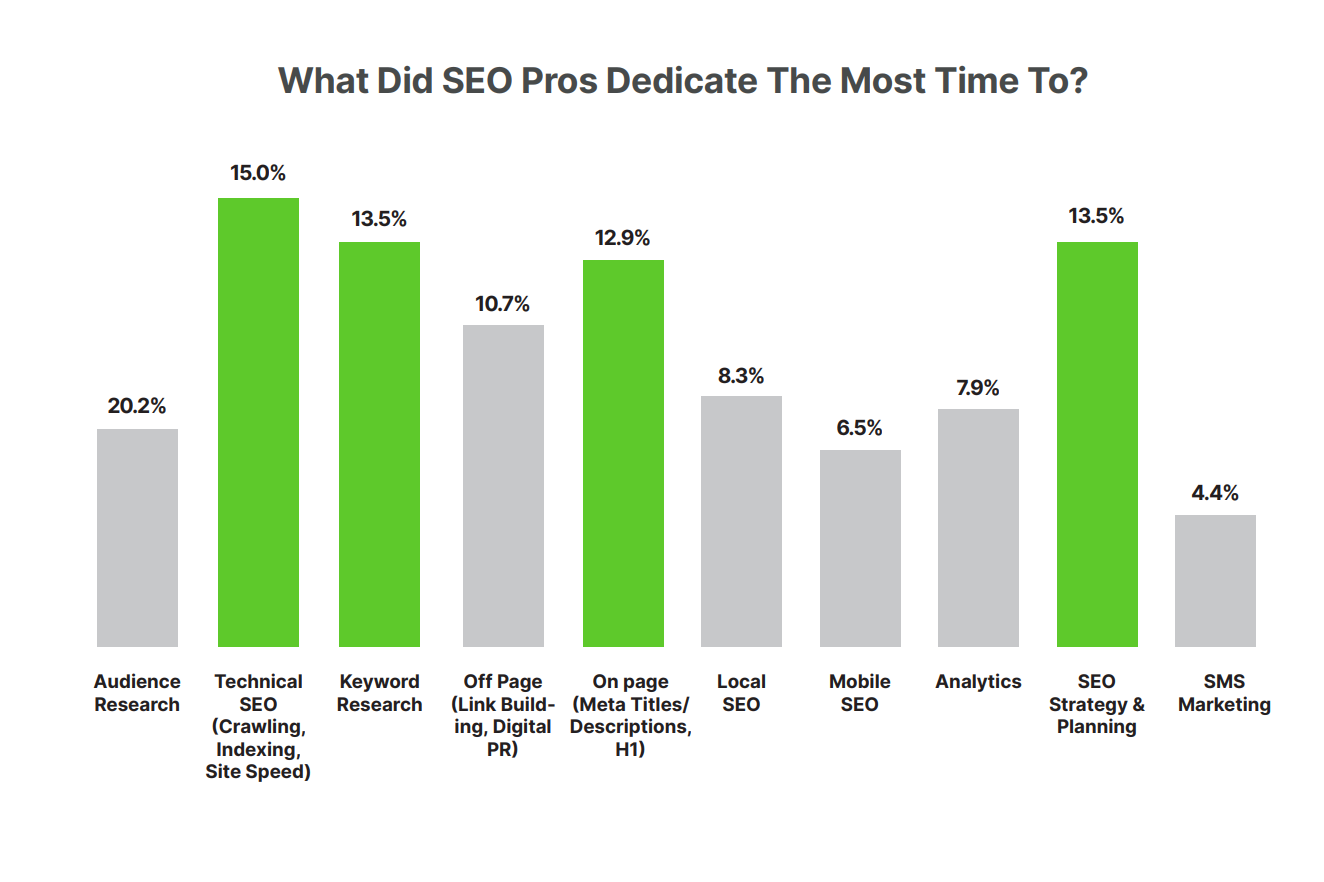
With all of that having been said and now out of the way, it is important to note that this report included a survey which showed what problems SEO professionals themselves say that they are facing. The most pertinent problem of all might be a lack of resources, with 14.9% of the SEO professionals that responded to this survey stating that it was a major issue.

12.3% also cited problems with strategies and 11.9% highlighted the difficulties they are experiencing with scaling. 11.2% still think that the pandemic is having an adverse effect and 10.7% are having trouble aligning their goals with that of other departments within the organization.

Interestingly, budget cuts, which were the biggest problem cited by SEO professionals back in 2021, fell to sixth place this year with all things having been considered and taken into account. That suggests that budgets are becoming higher than might have been the case otherwise, although some resources are clearly unrelated to budgets because SEO professionals are still saying they don’t have enough of them.

Another aspect of this report that is important to highlight is the section where survey respondents were asked about major industry shifts and threats to their profession. Machine Learning and AI came out on top because of the fact that this is the sort of thing that could potentially end up making their jobs obsolete whilst providing lower quality results. 18.7% of survey respondents selected this option, and almost as many, or 18% to be precise, said that Google Updates might make the industry look entirely different in the near future.

The deprecation of third party cookies is also continuing to cause seismic shifts in the industry. 13.9% of survey respondents said that the lack of third party tracking is posing a significant challenge to them, with 12.9% citing Google’s Zero Click Pages. 11.5% also said that there was more competition for talent in the industry which may end up harming it in the long run.

The emergence of AI can be a particularly pertinent factor in the future of SEO. While it might not be able to replace human SEO professionals entirely, it will automate several processes and make them a lot easier to do. Alternatively, some might try to automate the entire SEO process which could lead to industry wide layoffs. The SEO industry appears to be in a constant state of flux, and 2023 is not shaping up to be any different. Decisions made by major players impact people that are even tangentially related to those industries, and that can be seen in Apple’s deprecating of third party cookies which SEO professionals are still sore over.


Read next: The Longer And Wordier Reviews Stay At The Top of Google Results For A Long Time
by Zia Muhammad via Digital Information World

37% of Women Still Don’t Have Internet Access in 2022

It is hard to conceive of a world without internet, but in spite of the fact that this is the case there are still billions of people all around the world who don’t have access to it. The International Telecommunication Union (ITU) projects that there are still 2.7 billion people who don’t have a reliable internet connection, and it turns out that women are a lot more affected by this with all things having been considered and taken into account.

According to the findings that this organization put out, about 31% of men don’t have internet access. With all of that having been said and now out of the way, it is important to note that this number is much higher for women, hovering at around the 37% mark. That means that there are 259 million more women than men who are unable to use the internet, and that might be making the gender gap larger than might have been the case otherwise.


The difference is much starker in developing countries. In Africa, for example, just 34% of women have internet access compared to 45% of men that have it. The gap is even larger in the Arab world, with a ten point difference being noted between the 75% of men who have a reliable internet connection and just 65% of women who can say the same.

On average, 21% of women are able to use the internet in low income countries. This seems to suggest that certain higher income countries in Africa might be skewing the numbers, and there might be whole areas where women are restricted from the wealth of information that only the internet can provide.

Women make up half of the global population, yet they are 18% more likely to not have internet access. That is dangerous because of the fact that this is the sort of thing that could potentially end up widening the already broad gender gap and making it increasingly difficult for women to achieve an equal and level playing field that can help them get on par with the men they are competing with.

Read next: Research highlights the most commonly shared life events across TikTok and Instagram
by Zia Muhammad via Digital Information World

Monday, December 5, 2022

44% of Malware Gets Delivered Through ZIP and RAR Files

Microsoft Office files have been the most popular mode of delivery for malware for quite some time now, but there has been a shift of late that has put more of a focus on ZIP and RAR files as well as other archive file format. While 32% of malware is still being delivered through Word and Excel files, ZIP and RAR files have seen an 11 point increase and are now being used in 44% of malware delivery cases.

The attacks are usually initiated with a string of malicious HTML that redirects unsuspecting users to a document viewing page. The HTML also helps these cyber attackers to bypass email filters more easily than might have been the case otherwise. When the user is taken to the document viewer, which looks strikingly similar to Adobe and is thus more likely to be trusted, they are then told to download a ZIP file. They are given a password to enter into the ZIP file to unlock its contents.


With all of that having been said and now out of the way, it is important to note that this is when the malware gets deployed onto the unwary user’s system. Such file formats make it really simple for malicious actors to encrypt their malware, and it also makes it a lot more difficult to detect with all things having been considered and taken into account.

Additionally, the payload does not have to be restricted to malware. It can also contain spyware, ransomware or anything else in that category. Users need to be careful while clicking links because of the fact that this is the sort of thing that could potentially end up putting their safety at risk even if they are unaware. About 18 billion malicious links have been clicked on by HP users alone, and that reveals just how dire this problem has become.

There must be a concerted effort to train these users about the risks of email sent malware. The problem with continue to grow if these steps are not taken, and that could result in staggering economic losses.

H/T: HP Wolf Security

Read next: Microsoft Edge Reaches 11 Percent of Browser Market
by Zia Muhammad via Digital Information World

Twitter is Working on Making Sure That a Human is Behind an Account Before Giving Access to Some Special Features

Twitter is always working to make the app safe and secure for users. Recently, Elon Musk announced that Twitter has started working to decrease the bots on the app. There are many bots on Twitter that handle most of the verified accounts. But due to this, most users are not able to enjoy the app fully. So now Twitter is reportedly testing a feature that will make sure that there is a human behind an account (that it find dubious) before allowing the person to use all the features on the app.

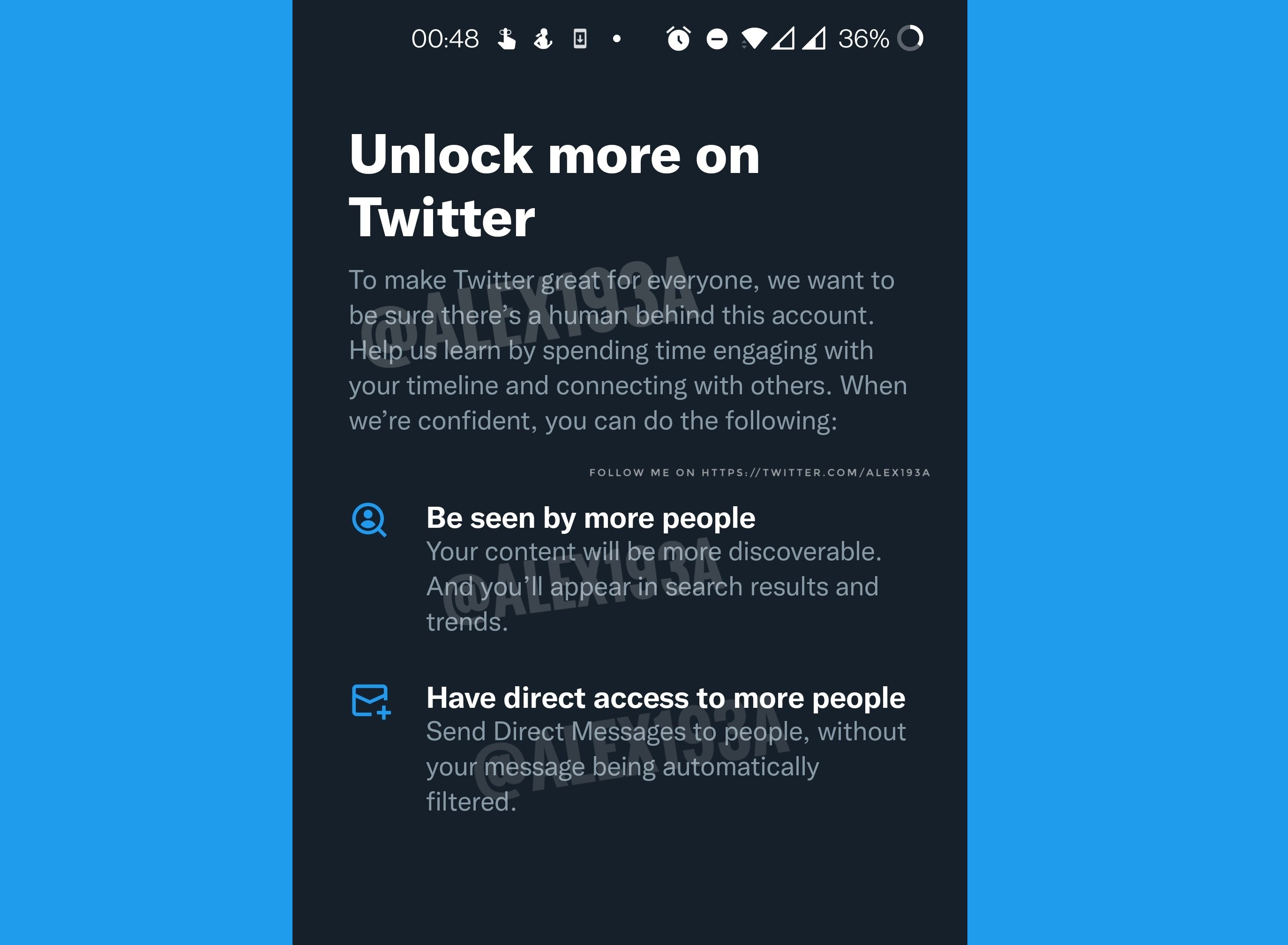
Twitter is introducing new features on the app so it was about time that Twitter started restricting the growth of bots on the app. To verify you're a human, you will have to interact more with other accounts on Twitter. You will have to tweet more, reply to some tweets and overall perform human functions for Twitter's algorithm to figure out your behavior. Twitter hasn't told us explicitly about how the verification method is going to be. But when you will be more engaging with your timeline and connect with other accounts, Twitter will closely monitor your activities. When Twitter is confident that you are a human, you will be able to access the other features.

When you get yourself verified that you are a human on Twitter, your content will be more accessable. This means you will appear more on the homepage and your content will be easily seen in search results and trends. Another feature that you will get after your verification is making your direct messages unfiltered. This means that when you send a message to an account on Twitter, your message will not be filtered automatically.

Many Twitter users are extremely happy about this feature. Some say that they had been waiting for this type of feature for a long time and, that Twitter has done something good for once. This will help the app to get rid of bots.


Read next: Twitter Is Adding A Verified Phone Number Check Mark In The Profile Info Section
by Arooj Ahmed via Digital Information World

New Law May Soon Force Google And Meta To Pay Local Media Outlets For News Published

Authorities in New Zealand have announced today that they’re on the verge of introducing a new law regarding local news publishing on leading digital platforms.

The government went on to detail how big tech giants like Google and Meta would be forced to pay the country’s media firms for any local news published through such feeds.

The statements were published today by New Zealand’s Minister for broadcasting Willie Jackson. He outlined through a message released on Sunday that the new law would come into play in a manner that’s similar to legislation passed in nations like Canada and Australia.

He also detailed how he hoped this would serve as the ideal incentive for such digital platforms which would reach deals alongside local media outlets. As it is, New Zealand’s media industry, particularly firms hailing from tiny regional newspapers has been struggling financially.

For that reason, it’s crucial that those individuals that are struggling start to benefit from such endeavors by actually making an attempt to pay for such content.

The final decision will be taken through a vote in the parliament where the current ruling party would be expected to give it the green signal.

A similar law came about in Australia in the year 2021. This is what gave the government the authority to make tech giants conduct negotiations regarding content deals seen in various media outlets. Meanwhile, a review had been published in the previous week related to the Australian government’s decision. This is where they arose to the conclusion that it really worked in their favor.

Hence, we’re going to have to wait and see if the same takes place in countries like New Zealand.


Read next: Account Takeover Attacks Increased by 131% in H1 2022
by Dr. Hura Anwar via Digital Information World