Wednesday, December 14, 2022

Find out what the real experts think about mental health content posted on TikTok

Easy and affordable access to mental health support is crucial. Nearly 20% of adults in the US are now living with a mental health issue, with many more going undiagnosed.

The 21st-century mental health crisis is real. Many people are desperate for help, guidance, and someone to talk to.

But for any support to be effective, it has to be administered by a licensed and trained professional who knows what they're doing. 'Help' or 'advice' from an amateur, albeit a well-meaning amateur, will probably be a waste of time and money. It might even be counterproductive, leaving the patient feeling worse than before.

With so many people turning to TikTok for mental health advice, the big question is obvious - how reliable and accurate is mental health advice on TikTok?

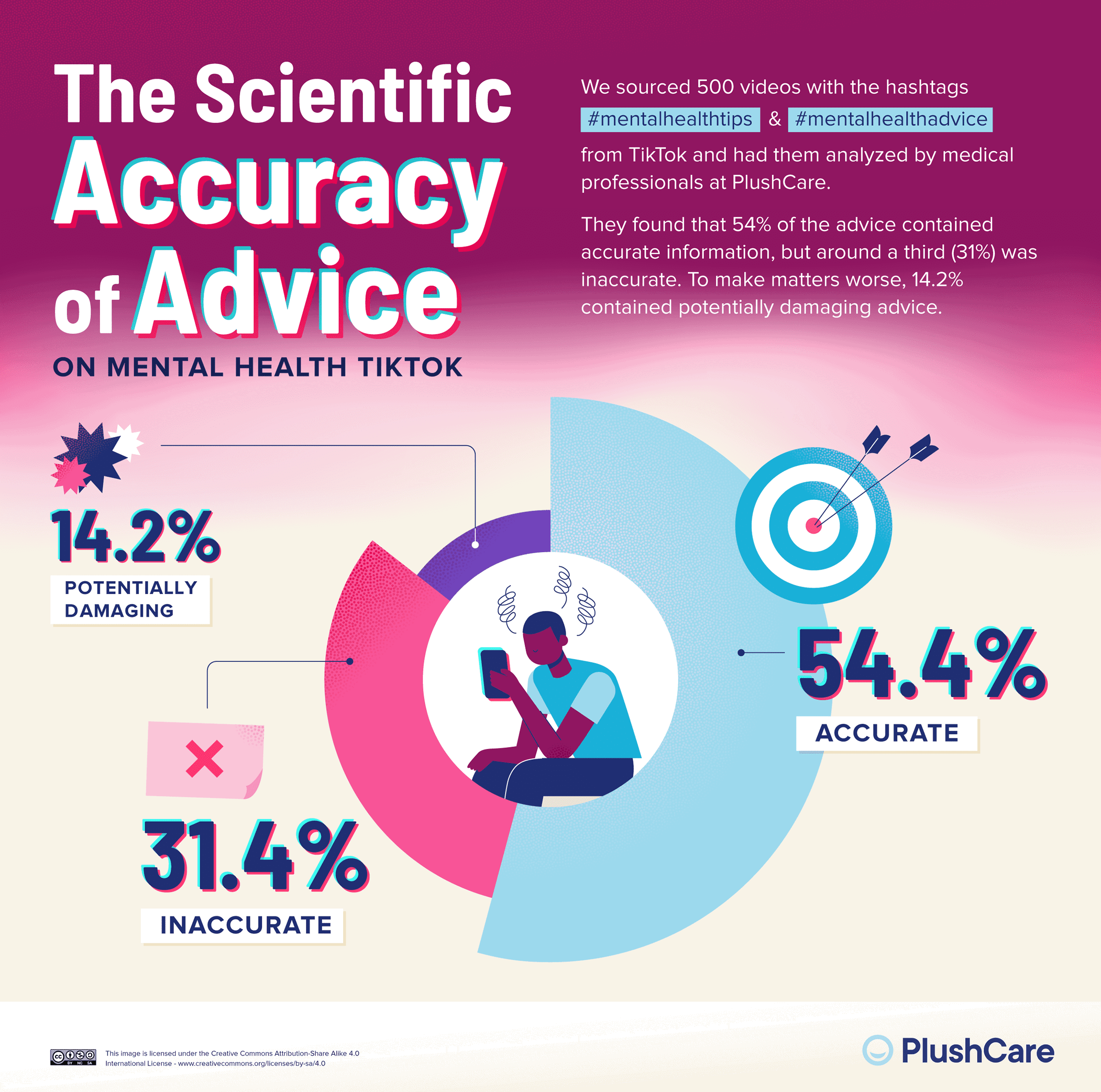
PlushCare thought this was a question demanding an answer. So the online health provider asked its team of mental health professionals to analyze 500 TikTok videos on mental health issues.

Here’s a look at what they thought of them…

The quality of TikTok mental health content

According to the data collected and analyzed by PlushCare, more than 80% of mental health content on TikTok contains misleading information.

Doctors are ringing alarm bells around town against the bucketload of mental health videos being promoted on the app.

The news comes to us thanks to startling findings seen by PlushCare which is a leading healthcare firm. Moreover, the study was seen extracting and even transcribing up to 500 different TikTok videos that come under the hashtag of mental health and mental health tips too. This enmassed nearly 25 million views and the network comprised so many doctor reviews.

It gets worse. PlushCare also found that:
  • 31.4% of mental health TikTok content contains inaccurate advice
  • 14.2% of relevant content includes potentially damaging advice
  • Only 1% of all mental health content distributed via TikTok comes with a disclaimer.
Some of the most concerning examples include untrained content creators suggesting medications and treatments, as well as encouraging viewers to self-diagnose by Google searching their symptoms.

How many people use TikTok for mental health advice?

A session with a fully-qualified psychotherapist costs somewhere between $100 and $200. On average, people need 10 - 20 sessions to reach their goals, although those living with deep-rooted trauma often require longer-term work that can last for years.

High-quality therapy is super-expensive. And that explains why so many people consume so much free mental health content on TikTok.

The 500 videos analyzed by PlushCare clocked up almost 25 million views. And the content creator accounts that made these videos have more than 40 million followers.

In other words, a lot of people (including many in a vulnerable or impressionable state) are consuming mental health advice deemed inaccurate and harmful by trained medical professionals.

The most misrepresented medical conditions

According to several major medical organizations - including the American Psychiatric Association - attention deficit hyperactivity disorder (ADHD) is a neurodevelopmental disorder characterized by excessive inattention, hyperactivity, and compulsive behavior.

Doctors claim it’s appalling to see so many young individuals leaning more and more toward the world of social media and apps for free mental health advice. They feel it’s so much more convenient and cost-effective to make use of this as compared to booking an appointment with a therapist which could cost you a staggering $100 to $200.

Critics say the condition is overdiagnosed, especially among boys and young men, while some voices within the mental health community reject ADHD as a disorder.

Either way, ADHD is a controversial topic. Moreover, ADHD requires a series of complicated tests and ongoing evaluations before an accurate diagnosis is possible.

Anyone with serious concerns about ADHD should speak to a trained professional in person.

But many are still researching (and even self-diagnosing) ADHD via TikTok. And the content they're consuming is - to put it mildly - not good.

100%(!) of ADHD content posted on TikTok contained misleading advice, according to the real experts brought in by PlushCare.

TikTok content on bipolar disorder and depression is also full of misleading information. PlushCare found that more than 9 in 10 videos covering both topics contained information that was not medically accurate.

And the TikTokers producing content on anxiety aren't doing much better; Just under 9 out of 10 (89.6%) of the videos they make got the thumbs down from mental health professionals.

The least accurate mental health advice on TikTok

It's great that we're paying more attention to our mental health. But now that mental health issues are in the spotlight, there's a tendency (in some circles) to overemphasize terms and conditions - and often in an inappropriate context.

Trauma is the perfect example. Trauma is an emotional response to an overwhelming event, like an accident or crime. Short and long-term symptoms include exhaustion, confusion, sadness, anxiety, agitation, numbness, dissociation, and blunted emotions.

Some people live with undiagnosed trauma for years, even decades, which has a devastating effect on their well-being.

Trauma is not a word or condition to be treated lightly. It shouldn't be used as a label to explain natural feelings and responses to every uncomfortable situation. Feeling 'bad' about something doesn't mean we're traumatized.

Worryingly, trauma is the most misrepresented condition within all mental health content posted on TikTok. More than half of the content (58.33%) of trauma content on TikTok is inaccurate. And 8.33% is potentially harmful.
This free advice is not something new. It’s been trending online since the start of the pandemic and the study shows how the term mental health grew by a staggering 81% since then. The results seen over here are beyond terrifying and the major concern here has to do with providing some misleading facts to the public. Doctors claim that nearly 84% of the videos are filled with misinformation.

One particular area that was concerning had to do with trauma where just 33% of such content was accurate. These findings are quite logical because trauma is a very variable category. It alters from one person to another. And the fact that we’re talking about an app like TikTok where people try to amplify the message in the greatest manner imaginable is definitely not the right app for such endeavors. 91% of the content on the app related to mental health had people giving advice that was not suitable in any way, shape, or form. And that has to say a lot.

Another interesting point of this study had to do with content linked to ADHD. It was really misleading but at the same time, it also had a lot of accurate facts too that were amalgamated in it. So you really don’t know who or what to believe at the end of it all.

Study: How accurate is mental health advice on TikTok? Medical professionals find out
Final thoughts

Less than 10% of TikTok mental health content creators have relevant medical qualifications and credentials. The other 90% are 'self-taught,' which essentially means they read stuff on Google.

Don't trust these amateurs with your mental health!

Always speak to a professional.

Read next: Toxic Social Media Comments Grab More Attention Than Positive Ones According to Eye Tracking Study
by Irfan Ahmad via Digital Information World

Tuesday, December 13, 2022

Social media no longer focuses on "social" and is being inclined towards entertainment

Lately, it has been observed that social networks are no longer being used for what they were intended for and are becoming more of an amusement hub. As it appears, the developers of such applications are also going with the flow by changing the algorithm based on the user’s preferences.

According to Nick Cicero, the VP of strategy at the video optimization service provider company Conviva, social media platforms have now reached a point where the content being posted is more important than maintaining social connections.

Based on the latest study by research firm Omdia, ByteDance’s famous short video platform, TikTok, has taken over the online streaming application, Netflix, by emerging as the 2nd most talked-about application among users below the age of 35. Another big achievement was also secured by TikTok in 2022 after the application became the most famous spot for content watching. Back in 2021, TikTok was just a few seconds short in mean watch time in comparison to Facebook.

Maria Rua Aquete, head director of the research company, said that for those advertising agencies who are looking forward to staying connected with their young users, TikTok’s influence in their lives must not be left unattended.

Currently, the short video app hosts over eighty million monthly users. Out of this number of people, eighty percent of the audience from the United States lie in the range of sixteen to 34 years of age. Hence, the site is inviting marketing brands to include TikTok in their marketing plans.

However, the query remains whether TikTok is still a social platform or a source of relaxation.

The creative head of 160over90, Leroyson Figueira, answered this question by stating that lately every other new digital application or site is termed a "social networking site," whereas it should be given a thought as to whether it fulfills the definition. Furthermore, Figueira added that TikTok is not like its competitor applications, such as Meta owned apps; in fact, the short video platform is more like a television house or Netflix. While other platforms count TikTok among social media applications, the app itself believes it to be more of a relaxation tool.

The business leader of the app, Blake Chandlee, said that other applications move their algorithm along with the social graph, whereas TikTok doesn’t follow this trend.

After watching the unmatched achievements of TikTok, other rivals such as Instagram and Snapchat started to roll out short video features of their own, focusing more on entertainment than making connections.

A survey conducted 12 years ago had already shown that people considered social apps to be a pleasure source and that these applications were a better source of relaxation in comparison to television shows or listening to music.

Dara Denney, performance manager at Thesis, expressed that while TikTok appears to be more reachable when it comes to finding people with the same interests and making them follow their favorite creators as well, on the other hand, Meta’s Facebook is a platform on which the advertisements appear to be more targeted and engaging instead of other users.

Cicero differentiated between being a public figure and a content maker. According to Cicero, influencers are more like public figures having a bond with their followers, while content uploaders don’t have to be fake; instead, it is more transparent about their lives, and the difference is quite visible for everyone to see.

On the one hand, marketing agencies focus mainly on entertaining users while attracting them to a brand. On the other hand, people look up to TikTok not only for entertainment but for their personal growth as well.

TikTok is focusing on bringing people with similar interests together to form a community, while other similar sites are only using their platform as an entertainment medium.


Read next: The World’s Biggest Social Media and Messaging Apps Visualized
by Arooj Ahmed via Digital Information World

Annual Social Media Report Unravels The Biggest Trends Of Brands On Instagram And TikTok

The Battenhall team is at it again. They’ve recently launched this year’s social media report and the 10th edition is looking bigger and brighter for brands scattered across Instagram and TikTok.

The report is a great way to witness how the world of social media continues to evolve as we speak and how trends keep on fluctuating with each passing day.

This year, great emphasis was placed on those social media apps that users adored and couldn’t stop themselves from posting on.

There were so many ways through which creators and brands on the app chose to reinvent themselves and cause a huge change that continues to linger today.

Looking at the posting frequency for apps like TikTok as well as the levels of engagement on the platform for various brands, it’s quite obvious to notice a clear transition from posts that are super polished to those that depict that real feeling with Gen Z in control.

If we had to pick one thing that unites all of these brands as one, it would be engagement. Content that is labeled as successful is one that’s entertaining. It could be videos, images, or written words too. And this particular study took nearly 7,500 types of content from social media into consideration.

For TikTok, it was the likes of Entertainment, Sports, and Fashion that had users in a whirlwind. They just couldn’t get over it with posts flooding the apps left and right. Next up, the world of Corporate, Gaming, and Food and Drink took center stage, with travel ranking nearby too. The tailenders including the likes of tech and transport just barely made it through the list for leading categories.


Moving on to which types of content reigned supreme on the Instagram app, the findings definitely varied across the board depending on the mode of content published like pictures, video, and carousel.

Since Instagram is now mostly pictures and videos, there was a nice blend to appreciate here. People adore their food and drink on the app and that’s why it took the lead with 56% of posts getting published. This was followed by transport at 53% and finance at 39%. Sports and fashion came in third with 29% of pictures while Tourism lagged behind at 23%. It was very interesting to see the likes of entertainment posts get only 17% of coverage through pictures on the app.

But when looking at videos, the statistics were completely different. The stats for tech that scored just 6% for picture posts on the app had the greatest posts for video content, coming in at a staggering 72%. This was closely followed by Tourism at 71% and B2B at 68%. Gaming and entertainment took the next few spots at 63% and 61% respectively.

Let’s not forget to mention how the tables have really turned on the app when looking at last year. Videos made up just 32% of content formats last year and now, it’s the most popular format for publishing in 2022, making up 56% of all posts.

So if we had to summarize the main findings from this social media report, we would have to say the use of videos has surged to an all-new high but still pictures aren’t disappearing just yet. They still make up 30% of posts on apps like Instagram.

Next, timing is crucial. TikTok content of more than 30 seconds gets more engagement and we must point out the significance of hashtags here too as they do amazing at getting reach.

Post captions that are short also assist with engagement as proven by TikTok and Instagram posts with less than 100 characters. Also, every app is different. Users log into TikTok for recommendations so you’ll see themes like B2B, tourism, finance, and entertainment doing better here than Instagram.

Last but not least, Carousels have a greater chance for success on Instagram. Users adore swiping and these end up getting the most likes across the board than others. You might want to take that into consideration with your future posts.

Remember, engagement in the world of social media is literally everything. And it's no huge surprise that TikTok beat out Instagram when stats were broken up in terms of engagement received versus the number of followers. Clearly, there is a massive surge in short-form video content and that's why more and more apps are making sure that content is promoted the most.


Read next: Social Media: The Good, the Bad, and the Productivity Killer
by Dr. Hura Anwar via Digital Information World

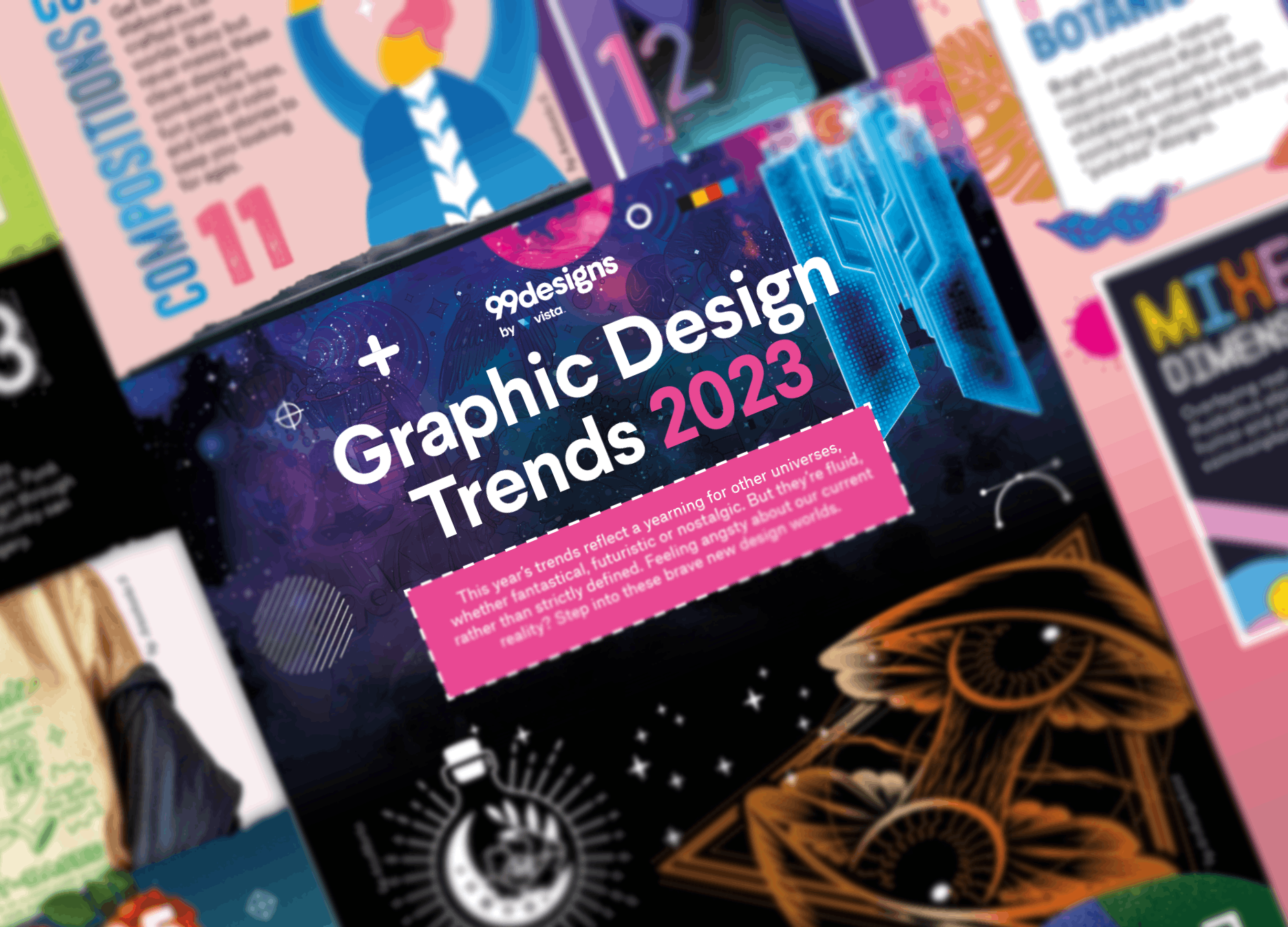
Graphic Design Trends That Will Be Everywhere in 2023

For anyone ending the year seeking creative rejuvenation, look no further than the graphic design trends set to dominate visual branding over the next 12 months.

We tapped into the insights of the global community of professional freelance creators working on 99designs by Vista to gather their predictions around what we should expect to see in 2023.

Looking at these trends holistically, it’s clear how design has been impacted by the unmet expectations held for 2022. Designers and consumers had high hopes for a year filled with adventure and freedom, but for many these were overshadowed by unwelcome and challenging global events.


For some, design creates the opportunity to counteract negativity by exploring light-hearted styles threaded through with escapism. Others favor capturing today’s challenging global climate with a grittier realism. Suffice it to say that businesses looking to refresh their brand in a trend forward way in 2023 have an eclectic set of styles and options to choose from.

Exploration of other worlds

Unsurprisingly, when life continues to feel like a rollercoaster ride, we are seeing creatives turn to ethereal elements to find peace, comfort and refuge. Infusing the trend of mysticism in branding through the use of zodiac symbols and astrological imagery like moons and stars is enabling designers to create a sense of serenity. Delicate lines and muted colors often complement this style, creating designs that are gentle and calm.

Similarly pleasant energy is found through a fresh approach to surrealism in 2023. Surrealism, which seeks to capture the magic of the unconscious and unconventional, has been popular for a long time, but in the year ahead expect to see it coupled with 80s airbrush techniques. Characterized by intense saturated colors, floating objects and a soft glow, this design trend feels dream-like and approachable all at the same time.

On the darker end of this otherworldly exploration is the trend of experimental escapism, strongly influenced by recent technological advancements. With the progression of artificial intelligence (AI), especially AI art, as well as the Metaverse, designers in 2023 are inspired to push their own boundaries of creativity, leading us into unknown worlds of mesmerizing and unimaginable landscapes.

Reviving counter- and sub-cultures

Designers, like much of the world, are fed up with a myriad of systemic global issues and in 2023 they are channeling past movements to communicate their opposition. In many ways, it’s no surprise that punk revival is a trend coming back into the mainstream spotlight. This anti-establishment style breaks the rules of traditional design, making use of chaotic collages, hand-lettering, newspaper typefaces and distorted imagery. While messy and jumbled, its energy is honest and forthright – and something that many can relate to.

Less rebellious but still here to make a statement is the trend of acid graphics. Defined by bright colors, warped typography and chrome textures, this aesthetic has ties to 90s goth subculture that steered away from conventional design. With digital tools offering design templates that are easy to use and follow all design norms, it makes sense that graphic designers are working to prove that branding, if done right, doesn’t need to follow any rules.

New textures adding depth to design

Designers are constantly exploring and experimenting with fresh shapes and textures to keep things interesting. In 2023, we anticipate more and more designs hitting the scene that digitally capture the effect of the risograph, a type of print technology invented in 1986 with a distinctive aesthetic. The style is about highly saturated colors, fluid abstract shapes and grainy textures that give depth to simple visuals.

Similarly dynamic, abstract gradients are predicted to play a significant role in the year ahead. While gradients are nothing new, they are taking new forms in abstract and oblong shapes: with frothy smooth curves, this style feels fluid and soothing. At a time when things often feel uncertain, it’s nice to have a trend that feels reliable and familiar.

A blurring of boundaries

Design has never been about staying in a single lane, and in 2023, this is truer than ever. Through 90s space psychedelia, designers are all about pairing the future and the past. Blending 90s retro styles like Memphis design and sci-fi elements like androids and spaceships with neon vibrant colors, this aesthetic suggests a sense of optimism for the future by putting a nostalgic spin on the high-tech world of tomorrow.

On top of a time warp, designers are also playing with the dichotomy between physical and digital spaces. This mixed dimension trend is all about adding doses of cheery color and cartoonish illustrations to real-life photography. Rather than taking away from the real life imagery, the blending of these styles actually emphasizes the power and impact that imagination and art can have in the world.

Finding delight in details

Nature’s influence always shines through via one graphic design trend and this year it’s in folk botanical. This style is about displaying natural patterns in a less polished way, with hand-made textures, doodles and unexpected color combinations. This approach works well in making digital work feel more natural and perfectly imperfect.

Alongside this nature-focused trend, we’ll see all sorts of stories being told through complex compositions. Consisting of multiple illustrations in one scene, this aesthetic is like walking into a room and creating a snapshot of everything happening at one moment in time. Despite having several elements, this style tends to feel quite minimal - engaging but not overwhelming.

In 2023, many designers are also turning to minimal line art to create vintage cartoon style illustrations that make a fun and light-hearted impression. Thanks to the simplicity of the line drawings, designers tend to complete the look with splashes of bright colors and playful bubble fonts.

There’s no denying that 2023 is going to be filled with an eclectic mix of graphic design styles, mirroring the issues and attitudes in the world around us. What we are really seeing is the evolution of whatever reality we want to be a part of. Whether that’s a trip to the 90s or to the depths of outer space, creatives are here to make it happen.

12 inspiring graphic design trends for 2023

Written by Caitlin Collins, Head of Brand Marketing & Comms at 99designs by Vista

Read next: Customers Want More Advanced Imagery On Online Products As Many Online Shoppers Are Not Satisfied With the Images of Products on Websites
by Web Desk via Digital Information World

China Lays Out Strict Measures To Keep AI-Produced Deepfakes Under Control

Beijing has put forward an array of strict measures through its Cyberspace Administration that would help curb the growing trend of deep fakes.

The country has been battling with AI-generated matter for a while now and now that’s why officials have prohibited the creation of such endeavors related to humans without first taking permission from the CAC.

These rules and regulations would put an end to all things that would be deemed a threat to the country’s national interest and socialist values. This includes using deepfakes to try and trick or slander other people in day-to-day dealings.

So why is this subject so controversial is a question that is on so many people’s minds. Well, the answer is pretty straightforward. Deepfakes make use of AI technology to produce real video content featuring humans saying things and doing things that they didn’t actually end up doing.

This form of technology has the capability to mislead so many audiences which causes issues for individuals located in such video content. In the same way, we’ve seen deepfakes spark a massive outcry in nations other than China due to such concerns.

During the early part of 2022, we saw the European Union introduce a new set of rules and regulations to curb such matters involving deepfakes that would fight against the matters linked to fake news on various social media apps.

Such regulations may appear to be great but they are suggestive of an important factor. That’s linked to China expecting the matter to arise in the future too as it’s allowed for use across different apps related to chatbots that get designated with labels like digital creations.

These rules were sent out by the CAC and they go on to address the matter of deepfakes through online publishers. Such publishers could take into account matters like China’s other regulations linked to acceptable content seen online while using deepfakes in publications.

All of these new laws would be applying to the likes of deep synthesis service providers that utilize platforms related to the world of deep learning or VR to edit content published online. Such requirements entail the requirement for making accurate and revised models as well as algorithms. This makes sure all data collected is secure.

In the same way, such rules would make sure users are registered and entail the usage of real names to prevent certain individuals from using the technology for incorrect reasons. We should be seeing such laws go into effect as early as January 10 of next year.

Illustration by pikisuperstar / freepik

Read next: The countries most and least prepared for the cashless economies of the future
by Dr. Hura Anwar via Digital Information World

Twitter Makes Major Changes Including Color-Coded Ticks For Different Accounts As Its Controversial Subscription Kicks In

The relaunch of Twitter Blue has begun and that has arrived with a range of color-coded checkmarks for different entities.

It’s blue ticks for Business and gold for various company accounts as the firm claims it’s on a mission to rid the controversy that arose for multiple profiles in the recent past.


But many aren’t surprised that the hue Blue is used for the business tier. This would enable firms to purchase verification badges that employees can add to profiles to eliminate any further confusion. It's similar to reaffirming that corporate entity.

There is also news, thanks to social media expert Jane Manchun Wong about such blue business profiles attaining the square profile picture status as well.

Meanwhile, a lot of confusion arises on the exact pricing for this Blue Subscription status as that’s one dilemma that many hope to solve soon and as soon as we get an update, we’d be posting it.

What we do know is that users of iOS would have to pay $11 a month while those of Android may be paying $8.

On the other hand, billionaire Elon Musk says he is working on completely shunning the Twitter legacy verifications. And the change is expected to roll out in just a few months.

The Twitter CEO mentioned the news through a recent tweet that was put forward through his account. Similarly, he outlined how the previous mentions made in the past didn’t make much sense and it was just a moment that’s beyond comical.

The news comes as the app rolls out its controversial blue subscription again amid a very dicey first attempt. And after attaining that blue tick, users did get pop-ups that went on to state a very interesting fact.

The account notified the account holder that this was a legacy verified account. Similarly, it spoke about whether it could or couldn’t be notable. And that’s exactly where such news arises from.

It’s quite clear how the platform is still on a mission to figure out the real way to generate revenue through such streams and also is doing its absolute best to not repeat mistakes made in the past. And that’s by adding an entire range of means to help authenticate verification of users across the board.

Now, to complete the entire verification process, users would require phone numbers while purchasing their blue Twitter accounts. This was highlighted during the recent launch over the weekend.

The company adds that those profiles who are yet to add their phone numbers for verification would be needing to do so soon as prompts others to make similar changes when buying subscription plans.

Twitter also mentioned that those accounts that were not active in the past month or have ended up making some serious amendments like changes to profile images, usernames, and more in the past week would not be given the green signal to sign on to the app.

We see this as being the latest edition of requirements needed to sign up as the relaunch of Blue Subscriptions kicks in.

Last but not least, we’ve got some news on the follow-up mention by Musk regarding the introduction of longer tweets for the app.

The Twitter Chief did announce how keen he was to give users the chance to share posts of longer lengths. This could be texts or video formats, either of which is now going to be allowed.

Therefore, the app is introducing mock-ups on this front. It’s like Musk exploring his desire to add features to the app that are quite similar to YouTube.

So do keep a lookout for posts exceeding the 4000-character limit and we’ll be doing the same.

Read next: The richest YouTube content creator from every country in the world
by Dr. Hura Anwar via Digital Information World

The most dangerous pieces of software to search for and download

Malware attacks are on the rise. They’ve increased by more than 200% since we started working remotely.

There are plenty of ways to sneak malware onto our devices. But one of the common methods is hiding malware links within the URLs of the most searched for and downloaded pieces of software.

This worrying fact inspired the latest research from online privacy expert Surfshark. The VPN provider analyzed data from Sucuri Malware Detection Tool to create several tables highlighting the most dangerous software to search and download.

Here's a breakdown of all the results:

The most dangerous software

Avid is the most dangerous piece of software to search for; 64.04% of its search results may contain malicious malware.


Substance 3D Painter, a software for video game and film production, is the second most dangerous software to Google. Clicking on any URLs 'linking' to the Adobe application means you have a 57.32% chance of exposing your device to a cyberattack.

Most dangerous browser software

Many internet users are turning their back on Google in favor of alternative browsers and search engines that promote privacy.

Hackers know this. And they're exploiting this new trend by infecting alternative browser links with malware.


If you're looking for a new search engine, be extremely careful when clicking any links mentioning Vivaldi Browser. Vivaldi is everything that Google isn't. Vivaldi is privacy based, politically neutral, and thinks people's rights are more important than profits. But, according to the data from Surfshark, nearly 4 out of 10 (39.53%) of its links will leave you wishing you'd stayed with Google.
Then again, Google isn't that much safer, as far as the potential for malware attacks goes. Surfshark researchers found that 29.87% of Google Chrome URLs have been compromised with malware.

Creative software riddled with malware

Creative software is not cheap. The best pieces of editing and animation software like Avid can cost around $500 per year.

That’s a lot of money if you're a freelancer living from invoice to invoice.


So it's no surprise that many freelancers try to cut costs by turning to Torrents to download the software they need to create work that wows clients.

This explains why so many creative software URLs are riddled with malware. 64.04% of Avid Software URLs contain malicious links - the highest of any software included in the study.

Creatives should also click with (extreme) caution when looking for free versions of V-Ray (53.76%) and vector graphics editor software CorelDRAW (49.47%.)

Dangerous crypto wallet to search for online

Crypto and Bitcoin have the potential to revolutionize the future of money and finance for the better.

But right now, this emerging (and largely unregulated) industry is still full of scammers, fraudsters, and outright criminals (yes, Samuel Bankman-Fried, we're talking about you.)

URLs linking to popular crypto wallets are a common delivery method for malware.


If you want to keep your crypto stack safe, take care when Googling anything to do with Lumi Wallet. Lumi Wallet is a secure and anonymous crypto wallet that lets you buy, sell, and exchange more than 1200 coins - proving you click on a safe link.

According to Surfshark, only around half of all Lumi Wallet URLs are 100% safe and secure. There's a good chance that the remaining half are trojan horses for malware attacks.

Small business software most likely to contain malware

Finding the right small business software is super important for entrepreneurs and freelancers. It makes everything so much easier. The best applications streamline invoice payments, workflows, and accounting processes, meaning small business owners can focus on doing what they do best.

The smallest disruption of service can be devastating to small business owners and freelancers. One unanswered email is all it takes to miss out on a new client.


If you need to be ultra-responsive 24/7, do everything possible to avoid malware and cyberattacks. So the next time you're researching new software to supercharge your business, be mindful of clicking on any links mentioning Hubstaff, Nimble, Box, Act, Paychex Flex, and Freshsales.

They're all excellent pieces of software. But at least 40% of all their URLs are potential vehicles for malware and other cyberattacks.

Malware risks on social media

Misinformation might be rife across social media. However, these firms have done a pretty good job of containing the spread of malware attacks.

As long as you download the official apps, it's unlikely that you'll catch malware while cruising the socials.


Still, be a little mindful when catching up on the very latest Twitter trends. Nearly half (48.3%) of Twitter search results contain potential malware.

Always follow the golden rule: if that links dodgy, then it probably is dodgy. Never click on anything that looks even slightly suspicious.

Read next: The best (and worst) pieces of business support software
by Irfan Ahmad via Digital Information World