Thursday, January 12, 2023

54% of Children Are Exposed to Inappropriate Adult Content by 13

Pornography is a part of the internet that’s simply never going away, and there are no signs of it slowing down. In spite of the fact that this is the case, it is posing a serious risk to children with reports indicating that kids as young as ten sometimes get exposed to it due to the pervasive nature of this content.

A survey from Common Sense Media asked around 1,300 teenagers when they first encountered pornography. With all of that having been said and now out of the way, it is important to note that around 54% of the teenagers who responded to this survey said that they first saw pornographic content before the age of 13.

Based on these findings, it seems that the average age at which a child witnesses pornography is 12, even though this content is meant to be restricted to those over the age of 18 or even 21. What makes matters worse is that 15% of survey respondents said that they were as young as 10 years old when they first saw pornography.

It’s not always unintentional exposure that’s to blame either. While 58% of teenagers said that they saw it accidentally, 44% stated that they saw it intentionally. Many teens might be hesitant to admitting something like this, so the numbers may be even higher if that is factored in.
At the end of the day, it’s not the responsibility of the child to avoid pornography. Rather, sites that host this content need to take better steps to restrict it so that it is more difficult for kids to access it than might have been the case otherwise.

Watching pornography at such a young age can have a detrimental impact on a child’s mental health and development. A lot of pornographic content can be rather violent, and young children may not be able to rationalize that. Sex education is also important since it can prevent children from learning warped ideas regarding sexuality from poorly regulated pornography that is far too easy to access with all things having been considered and taken into account.


Read next: Volume Of Google Searches For Excuses To Skip Work Are At An All-Time High, Proves New Study
by Zia Muhammad via Digital Information World

Wednesday, January 11, 2023

How To Make Your Visuals Stand Out In 2023? (infographic)

A new year means a new beginning and if you happen to be on the lookout for ways to make your visuals stand out this time around, well, we’ve got some great news for you.

This year, team Venngage has put together a brand new overview of some integral elements that are sure to make your visuals stand out this year. The trends are plenty and it’s now up to you to give that business of yours an elevated push like no other. Trust us when we say that your data presentation skills are getting elevated like never before. So, let’s take a look!

For starters, 2023 is all about making the most of bright and bold tones. Vibrancy is key here so how about a little lime green and blue brilliance to kickstart the year. To help you better grace the face of the best infographics, we’re sure vibrant tones can add that element of liveliness to any visual content.

Experts are calling on animation lovers to take a bow because this year is about animation brilliance in the form of motion graphics. Take a step back from static storytelling and say hello to dynamic visuals and communication in the most lively of ways. It’s bound to increase engagement on your posts too.

While the year 2022 was all about nostalgia, 2023 is about vintage or old esthetics. It’s time to rethink the past in a wonderful manner with the help of a creative presentation of your data. This is sure to get your audience’s attention and make them reminiscence along the way as well. Hence, if you planned on holding back on that throwback, well, it’s time to stop!

The fourth most popular trend for making your visuals pop in 2023 is the personalization of your data. Today’s modern era is all about digitalization in terms of data collection. So many brands and leading social media apps are using this to help make viewers better realize their ideas. After all, who wouldn’t love to learn more details about themselves.

Experts are also looking at gradients to make it big this year. It’s an easy way to add an element of sleek and futuristic insights to your infographics. You can play with fonts, charts, shapes, and even headings. Just remember that this subtle color-blending feature is sure to stay.

If we told you that creative lines are trending in the world of visual design, would you believe us? It’s an artist’s dream and we can only understand why. It does not matter what the content is about but if you present it using creative linework, half of your job is done in terms of attracting users. Add innovation to timelines or simply give that diagram a boost- we know you can do it!

Last but not least, this year is all about saying hello to a classic favorite. Remember, the basics never seem to go out of trend and here, basic charts and diagrams are still going strong in 2023 for infographics. Now it’s up to your brand to design if they’re willing to add some artistic elements to it or keep it classic.


Read next: 8 Graphic Design Trends that Will Dominate 2023
by Dr. Hura Anwar via Digital Information World

Cultural Differences in the Connection between Work Stress and Depression: Implications for Mental Health in the Workplace

Workplace pressure is a common issue that affects many people around the world. It can hurt an individual's mental health, leading to symptoms of depression, anxiety, and other mood disorders. However, a new study has found that the link between mental pressure due to work pressure may differ across cultures.

The study, published in the journal Work & Stress, analyzed data from more than 8,000 employees from six different countries, including the United States, China, India, Russia, Sweden, and South Africa. The researchers found that the association between the mental capability of handling pressure and depression was strongest in Sweden, where there was a strong negative correlation between the two variables. In other countries, such as China and India, the association was weaker, while in Russia and South Africa, the association was either non-existent or even positive.

According to the researchers, these cultural differences may be due to various factors, such as differences in social support systems, coping mechanisms, and work-life balance. In cultures where social support is strong and people have a good work-life balance, the negative impact of work stress on mental health may be mitigated. In cultures where these factors are weaker, the negative impact of work stress on mental health may be more pronounced.

The study's lead author, Professor Joar Vittersø, commented on the findings, saying "These results indicate that the link between work anxiety and depression varies across cultures and that the negative effects of work stress may be more pronounced in some cultures compared to others. This highlights the need for culturally sensitive interventions to address work stress and prevent mental health problems."

The findings of this study have important implications for the management of work stress and the prevention of mental health problems in the workplace. In cultures where the association between work stress and depression is stronger, it may be more important to implement strategies to mitigate the negative effects of work stress on mental health. This could include providing employee support systems, such as employee assistance programs, counseling services, and training in stress management techniques.

In cultures where the association between work stress and depression is weaker or non-existent, it may be more effective to focus on other factors that contribute to mental health problems in the workplace, such as work-life balance, job satisfaction, and social support. Employers in these cultures could consider offering flexible work arrangements, promoting a positive work culture, and providing opportunities for employees to connect with their colleagues.

It is also important to note that the findings of this study are not necessarily applicable to all individuals within a given culture. While there may be cultural differences in the association between work stress and depression, likely, there are also individual differences within cultures. Some people may be more resilient to work stress and less prone to mental health problems, while others may be more vulnerable. Therefore, it is important to consider the unique needs and circumstances of each individual when designing interventions to address work stress and prevent mental health problems.

In conclusion, the study highlights the importance of considering cultural differences in the link between work pressure and mental health issues. It is clear that the negative effects of work stress may vary across cultures, and that a one-size-fits-all approach is unlikely to be effective in addressing this important issue. By tailoring interventions to the specific needs and circumstances of different cultures, it may be possible to prevent mental health problems in the workplace more.


Read next: Trashposting by CEOs on LinkedIn Is Attracting Users To Potential Work Places
by Arooj Ahmed via Digital Information World

Common WordPress issues and how to avoid them

WordPress is a powerful and adaptable platform for creating websites and blogs. It can be an ideal platform for your growing business due to its high performance, extensive feature set, and variety of offers. WordPress, as a free and open-source content management system, allows you to easily create, update, and modify your website using MySQL database and the PHP programming language.


You can also use WordPress themes to customize the appearance of your website to match your business goals. It is important to note, however, that even with a reputable hosting provider, server, and website type, you may still experience WordPress issues. In this article, we will look at some common issues and how to avoid them.

The dangers of unintentionally deleting vital resources

Plugins, update files, user profiles, photos, logos, blog posts, articles, and theme files are all examples of resources that can be accidentally deleted from a WordPress website. This can have an immediate and potentially disastrous impact on your website. Even if you clean your server on a regular basis, you may inadvertently delete important content from your website. It may take some time to re-access and repair, potentially disrupting your business. To avoid this risk, be cautious when deleting any resources from your website and have a backup plan in place to quickly restore any lost content.

Unexpected power outages pose a risk

Emergency power off (EPO) switches are used in data centers for fire suppression and damage control in the event of an emergency. However, if the EPO switch is accidentally turned on, it may result in downtime or temporary loss of access to your website. This risk is especially high for people who do not back up their websites to the cloud on a regular basis. It is critical to have a backup plan in place and to regularly back up your data to avoid disruptions to your website.

Updates to WordPress and plugins

WordPress releases updates on a regular basis to address security concerns and improve the platform. While these updates are critical for data security, they can occasionally cause problems. When updates are installed, incompatibility with the website or themes can occur, and the frequency of updates can be frustrating for many businesses. To avoid problems, it's critical to thoroughly test updates and keep a backup of your website.

The dangers of poor website performance

Slow-loading websites can be aggravating for both website owners and visitors, and Google considers loading speed when ranking websites. Fast websites are more likely to rank higher in search results, whereas slower websites may be pushed down. Ineffective hosting, too many installed plugins, mistakes in the code, and an overcrowded database are all factors that can contribute to low website performance. All of these factors can contribute to a frustrating user experience and have an impact on the success of your website. To ensure that your website runs smoothly and efficiently, you should optimize its performance on a regular basis.

Internal server error risks

Internal server errors are a common and frequent type of error that can occur when there is a problem with the server. A corrupt .htaccess file is one possible cause of internal server errors, which can be difficult for startups and small businesses to repair. Failure to address this issue can lead to ongoing server errors and have a negative impact on your website. It is critical to monitor and troubleshoot your website in order to prevent and resolve internal server errors and maintain a smooth user experience.

Blank pages and connection timeouts

For WordPress users, blank pages, also known as "void pages," are a common problem. This can be caused by issues with the hosting server or plugin script, as well as incompatible plugins and incorrect settings.

A connection timeout, indicated by the message "ERR CONNECTION TIMED OUT," is another issue that WordPress users may encounter. This happens when the website is unable to display all of the information at the same time. It can be caused by theme or feature issues, PHP memory exhaustion, or resource-intensive plugins. To avoid these problems, it's critical to monitor and troubleshoot your website on a regular basis and to ensure that all plugins and settings are compatible and optimized for performance.

Conclusion

WordPress-powered websites are great, but they may experience some issues from time to time. If you are running this type of website, our article should help you prepare for common issues you might experience and how to resolve them.

by Web Desk via Digital Information World

Effective Marketing Strategies for Nonprofits in the Digital Age

Nonprofits have long been a driving force for positive change in our world, but the digital age has revolutionized how they must reach out to potential supporters and donors. As such, in order to effectively market their cause and build brand awareness, nonprofits need to take advantage of the latest digital marketing strategies.

Photo: DCstudio / Freepik

From harnessing the power of social media to utilizing data-driven insights, there are many effective ways that nonprofits can leverage technology in order to grow their organization. This article will discuss some of these strategies so that you can get your nonprofit up and running with an effective digital marketing strategy.

Define your target audience and goals

Before you start implementing any marketing strategies, it's important to clearly define who you are trying to reach and what actions you want them to take. For example, are you trying to raise funds for a specific project? Do you want to recruit volunteers for an upcoming event? Knowing your goals will help guide the rest of your marketing efforts.

Once you have defined your goals, think about who your target audience is. Consider factors such as age, location, interests, and values. This will help you tailor your messaging and determine which marketing channels are most likely to be effective.

Utilize social media

Having an effective social media strategy for nonprofits is essential in the digital age, as it allows you to reach a wide audience quickly and easily. In fact, establishing and maintaining a presence on at least one or two platforms is pretty much the bare minimum if you want to stay ahead of the game.

As for platform choice, if you're targeting younger audiences, you may want to focus on Instagram and TikTok. If you're targeting a more general audience, Facebook and Twitter may be more appropriate.

When creating content for social media, it's important to make it visually appealing. Use high-quality photos and videos to capture your attention and convey your message. Utilize hashtags to make it easier for people to find your content, and consider partnering with other organizations or influencers to reach a wider audience.

Create a website and blog

Your website should be the hub of all information about your organization. It's important to make sure it is well-designed, easy to navigate, and up-to-date. Consider including sections on your mission, programs, events, and ways to get involved.

Starting a blog is a great way to provide valuable information to your audience and keep them engaged with your organization. By regularly posting relevant, interesting content, you can position your organization as a thought leader in your field and demonstrate your expertise.

Utilizing search engine optimization (SEO) can also help increase the visibility of your website in search results. This can be done through the use of keywords, tags, and other techniques. By optimizing your website for search engines, you can increase the chances that people will find your organization when they are searching for information related to your cause.

Don’t neglect email marketing

Building an email list of supporters and potential donors is a valuable asset for any nonprofit. Email marketing allows you to reach a targeted audience with personalized messaging. Consider creating targeted campaigns based on the actions you want your audience to take. For example, if you want to recruit new volunteers, you could create an email campaign with information about the volunteer opportunities that your organization offers.

Utilizing A/B testing can help optimize the effectiveness of your email campaigns. This involves creating two versions of an email and sending them to a small group of people to see which one performs better. You can test things like subject lines, content, and layout to see what works best.

Utilize influencer marketing

Partnering with influencers who align with your mission and have a large following can be a powerful marketing strategy. Influencers can help you reach a wider audience and expand the visibility of your organization.

When partnering with influencers, it's important to make sure that the content they create is consistent with your mission and values. You should also make sure to delineate what you expect from them in terms of promotion. Establishing clear guidelines and expectations from the start can help ensure that your partnership is successful.

Leverage partnerships and sponsorships

Partnerships and sponsorships can provide valuable exposure for your organization. Look for opportunities to work with businesses or other organizations that share your values. Utilize their platforms and audience to reach a larger audience and raise awareness about your cause.

For instance, you could partner with a local business to host a fundraising event or collaborate on a social media campaign. Sponsorships can also be a useful way to secure funding for your organization. Consider reaching out to companies that may be interested in supporting your mission and offering them opportunities for visibility in exchange for a financial contribution.

Analyze and optimize your efforts

Finally, to ensure that your marketing efforts are effective, it's important to track and analyze your results. After all, it's hard to know what works and what doesn't if you don't measure the impact of your efforts.

By regularly reviewing your analytics, you can determine which strategies are working well and which ones may need to be adjusted. Continuously testing and optimizing your marketing efforts will help ensure that you are making the most of your resources and effectively promoting your organization.

Final word

In the digital age, there are numerous opportunities to reach a wider audience and make a greater impact. By taking advantage of these opportunities and utilizing the right marketing strategies, your organization can grow its reach and better accomplish its mission. Good luck!

by Web Desk via Digital Information World

Volume Of Google Searches For Excuses To Skip Work Are At An All-Time High, Proves New Study

There can be nothing better than skipping a full day’s worth of work for any employee. After all, who doesn’t love holidays right?

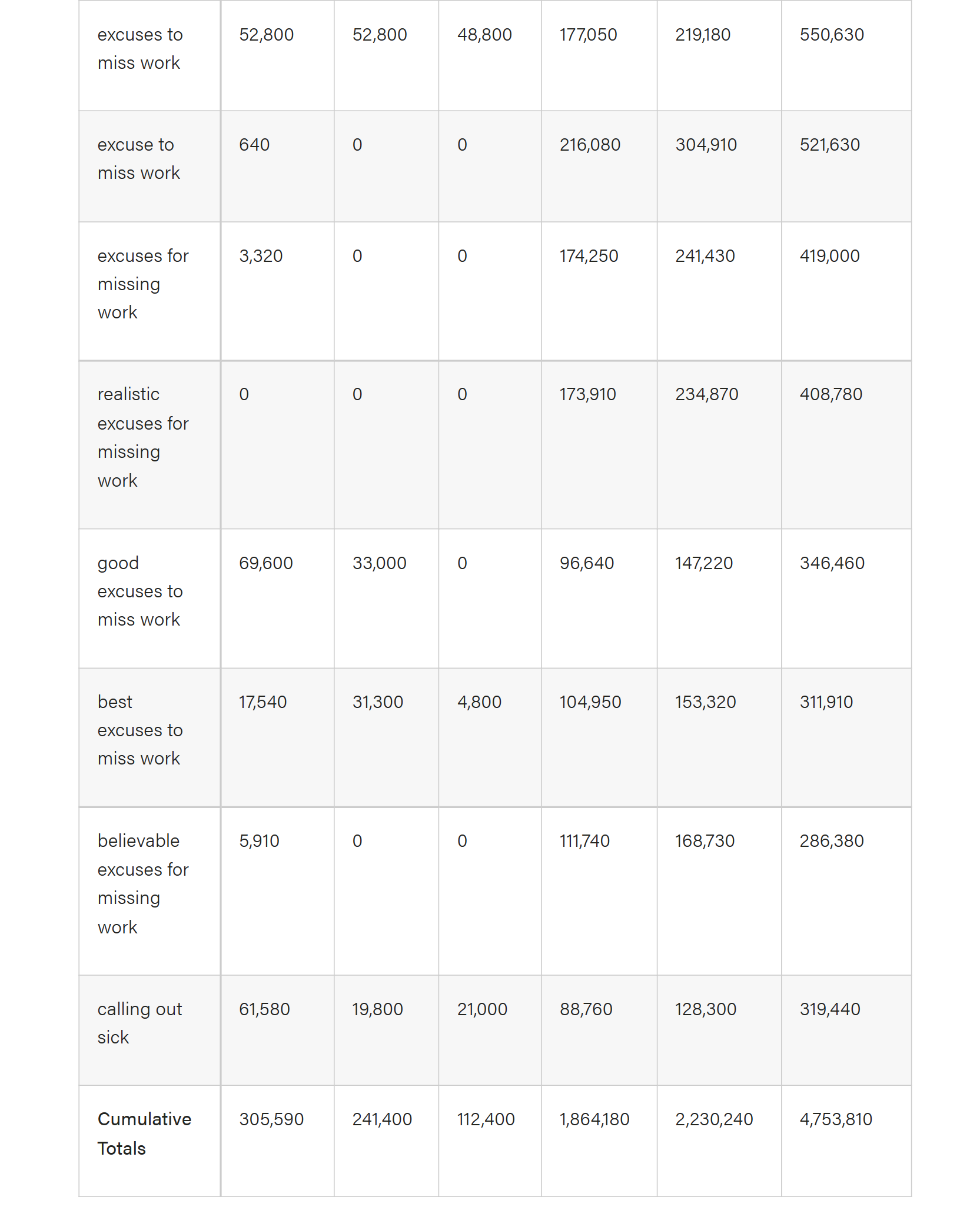
A new study is taking into consideration the number of Google Searches conducted by online users as excuses to skip work. And it’s appalling to see how it currently stands at an all-time high. Moreover, such searches have really gone high, when the results from the last two years were considered.

The news comes to us by Fortune reporting how The Great Resignation provides there are no signs of this slowing down. So when we do look at it from the perspective of going back to the office, well, it’s not very surprising after all as more and more workers are looking for ways to miss out on work in bigger figures.

When it came down to the top 10 most famous search terms, the search volume did increase by nearly 630% during the years 2018 to 2022.

Putting such data in perspective and using insight from experts, the study combined the results of the 10 most famous searches on Google that arose in the past 5 years, along with tips on how a firm can keep employees engaged so they don’t wish to get excuses to skip work.

It’s definitely interesting, to say the least. The volumes are jumping in an upward manner since 2021 and there doesn’t seem to be a trend of it slowing down either. But it does coincide with the fact that more and more people are getting back to working at the office. Remember, the pandemic gave rise to remote working. But now, people are getting back indoors at the office space.

So what does this trend tell us? Well, it has certainly not been an easy transition to get back on track. It’s a clear indication of people being reluctant to go forward for a healthy tomorrow.

Experts feel the solution to rid of such a feeling is getting insights from wellness coaches. The latter feel communication is key here and working toward de-stigmatizing being absent at the office space is key.

Those people that are working to look for more and more excuses to miss work are more likely to not have supervisors or perhaps they’re not working in an organized culture. The latter is where they can’t feel free to take time off without meeting new challenges or being ridiculed.


H/T: FrankGroup

Read next: Salary Guide: What Payscale Should Marketing, PR, And Content Positions Expect In 2023?
by Dr. Hura Anwar via Digital Information World

Commuting For Work Can Actually Improve Your Mental And Physical Well-Being As Per This Study

The comfort of working from home is a feeling that’s incomparable to none. But did you know how it can adversely impact your mental and physical well-being?

A new study suggests that when you commute for your work, you’re actually doing yourself a huge favor. The news comes to us thanks to researchers at the University College of London who mentioned how traveling a distance of 15 miles from your residence on a regular basis is great for your physical and mental health.

A team at UCL says that those individuals who happened to be living in poorly connected regions had negative impacts on health, especially those above the age of 55. Meanwhile, those older than this are likely to suffer severe mobility issues as well as loneliness. This is in comparison to those who are younger and often end up moving to bigger cities.

People who do end up traveling more often are likely to visit bigger cities. And they’re also more liable to catch up with their buddies and relatives on a more routine basis than others.

Researchers claim such findings prove how society is required to invest in transport options that are medium or long distance. This entails better roads as well as more access to commuting options like trains and buses.

The researchers were seen analyzing travel in the northern part of England. This is where locals faced more harsh health outcomes than others across the United Kingdom. There were rural and suburban locations that had been so badly linked.

The research made use of a questionnaire where nearly 3000 participants were enrolled. All of them were residents of Northern England and this is where the researchers evaluated how people felt about their health being affected by poor options for public transport in their vicinity.

The study evaluated how far people traveled and how many locations they went to and how far they traveled as well. At the same time, the mode of transport was also evaluated. Moreover, the authors were seen hypothesizing how lack of access to different types of public transport would be affiliated with residents' view of their health as they’re likely to participate less in social activities.

Factors such as location, demographics, and travel distance were evaluated, including social participation and how residents looked at their own health and well-being. The key variable discovered was the number of different localities people ended up visiting outside a certain local area. That is linked to greater social participation as well as better types of health.

Those above the age of 33 were more favorable to face limitations at traveling like limited mobility. They’re more likely to go through loneliness as well. And those living in rural and suburban places that had limited access were likely to go through population loss as young individuals moved toward cities while searching for work and great options for travel.

The authors concluded how such study results give rise to the need for more enhanced public policies which reduce constraints to travel in a specific region. This means there are better options for both public as well as private transport that enables frequent as well longer distance trips.

This was a great and unique study as until now, there have been none that glanced over the impact of limited access to travel on a person’s health and wellbeing.

Other reports from the past were seen focusing on poor connections of transport which lead to less sense of well-being as well as depriving people of economic advantages that can be attained through better commuting.


Read next: The Importance of a Good Night's Sleep: Why Getting Enough Rest is Essential for Your Health
by Dr. Hura Anwar via Digital Information World