It looks like digital audio is going to become a popular choice for marketers in 2023 with all things having been considered and taken into account. This comes from a report that was just released by Integral Ad Science, and it reveals that podcasts and other forms of digital audio have turned into fertile ground in which ads can be placed to improve product awareness and brand reputation.
Another thing that this report revealed was the concerns of various marketers who are currently working in the industry. 51% of marketers said that the deprecation of cookies and other forms of third party tracking are likely going to hit them pretty hard. 33% are also concerned about their ads being shown next to questionable content, and 18% said that they have noticed a decline in consumer trust towards proprietary software and are worried that this might impact their marketing efforts in the future.
With all of that having been said and now out of the way, it is important to note that social media platforms are going to continue to be hotbeds for marketing and advertising. 91% of marketers plan to advertise on at least one social media platform, but the platforms that they choose to work with are changing.
Back in 2022, 71% of marketers stated that they wanted to advertise on Facebook. This number has fallen to just 52% for 2023. YouTube’s share has fallen from 69% to 50%, Instagram’s has plummeted from 65% to 44%, and even TikTok has seen a 9 point decline going from 40% to just 31%.
In spite of the fact that this is the case, Twitter seems to be doing just fine. Its numbers haven’t changed at all, staying at the 46% mark, which seems to suggest that Elon Musk is not alienating marketers and brands like everyone thought he would.
What’s more, the current economic sentiment means that marketing spends on social media platforms are not growing as fast as people had hoped. Back in 2021, these marketing spends grew by an incredible 37%. The growth rate has plummeted and it now sits at around the 8% mark, and that does not bode well for the future of social media marketing.
Social advertising is also becoming less of an ideal option due to the erosion of consumer trust. 77% of marketers are worried that consumers don’t trust social media platforms in quite the same way that they used to. Still, transparency over user metrics is still something that is quite sought after, and 67% of marketers believe that they can get these metrics relatively easy from social media platforms that they might post ads on.
Hence, it doesn’t seem likely that the age of social advertising is at an end. However, Spotify was selected by 23% of marketers as a popular platform for the very first time. This seems to suggest that the scales are tipping, and it will be interesting to see if Spotify is able to sustain this popularity into the future. Whether or not that happens remains to be seen, but the coming year will prove to be a litmus test for the streaming platform and digital audio in general.
Read next: 54% of Marketing Firms Plan to Increase Budgets
by Zia Muhammad via Digital Information World
"Mr Branding" is a blog based on RSS for everything related to website branding and website design, it collects its posts from many sites in order to facilitate the updating to the latest technology.
To suggest any source, please contact me: Taha.baba@consultant.com
Thursday, January 19, 2023
22% of Consumers Consult Social Media for Leisure Activities
An abundance of choice might seem like a good thing at the outset, but in spite of the fact that this is the case it can also overwhelm consumers since they would have a hard time sifting through the various options. Consumers often turn to social media because of the fact that this is the sort of thing that could potentially end up putting their options into context.
With all of that having been said and now out of the way, it is important to note that around 22% of consumers consult social media whenever they are looking for some kind of out of home leisure activity to take part in. By comparison, just 17% of consumer said the same for video games, 20% for groceries and 21% for furniture.
This data comes from a YouGov report that surveyed consumers from 17 different countries. The findings of this survey reveal that social media is an important source of information for consumers who are on the lookout for OOHL activities.
This type of social media usage is especially prevalent among Chinese consumers, 32% of whom scan social media to find out what they can do for leisure. This is ten points higher than the international average of 22%. Spain and Italy come in second with 28% each, followed by India with 26% and Poland close behind with 25%.
Europe in general seems to be a hotbed of this type of usage, although its less prevalent in the UK where just 18% of users go to social media to find something leisurely to do. Denmark and Germany are also going against the trend, with 16% and 13% respectively.
It should come as no surprise that younger people are far more likely to check social media for leisure activities outside of the home than their older counterparts. 26% of people between 18 and 24 did this, with 24% of those between 25-34 saying the same. These cohorts will drive the inclusion of more out of home leisure recommendations on social media, and their proportions will likely go up in the near future.
Read next: Research Shows Brands Are Opting for More Efficient Marketing
by Zia Muhammad via Digital Information World
With all of that having been said and now out of the way, it is important to note that around 22% of consumers consult social media whenever they are looking for some kind of out of home leisure activity to take part in. By comparison, just 17% of consumer said the same for video games, 20% for groceries and 21% for furniture.
This data comes from a YouGov report that surveyed consumers from 17 different countries. The findings of this survey reveal that social media is an important source of information for consumers who are on the lookout for OOHL activities.
This type of social media usage is especially prevalent among Chinese consumers, 32% of whom scan social media to find out what they can do for leisure. This is ten points higher than the international average of 22%. Spain and Italy come in second with 28% each, followed by India with 26% and Poland close behind with 25%.
Europe in general seems to be a hotbed of this type of usage, although its less prevalent in the UK where just 18% of users go to social media to find something leisurely to do. Denmark and Germany are also going against the trend, with 16% and 13% respectively.
It should come as no surprise that younger people are far more likely to check social media for leisure activities outside of the home than their older counterparts. 26% of people between 18 and 24 did this, with 24% of those between 25-34 saying the same. These cohorts will drive the inclusion of more out of home leisure recommendations on social media, and their proportions will likely go up in the near future.
Read next: Research Shows Brands Are Opting for More Efficient Marketing
by Zia Muhammad via Digital Information World
Wednesday, January 18, 2023
This Fake Telegram App Might Have Been Spying on You
Telegram is the second most popular messaging app after WhatsApp, and its ubiquity has made it a primer target for malicious actors. It turns out that a fake version of Telegram has been making the rounds, and it may have been invading your privacy by spying on you with all things having been considered and taken into account. Researchers from Eset have found that the app contains spyware which can make it harder to maintain privacy than might have been the case otherwise.
With all of that having been said and now out of the way, it is important to note that this app uses Shagle to initiate its attacks. Shagle is a video chat platform that is free to use, and users may have spotted an ad that tells them to download Telegram. The thing is, this app is entirely fake and its sole purpose is to glean sensitive data from you in large quantities.
One might think that Shagle is to blame, but in spite of the fact that this is the case the site is another victim to impersonation. Users who download the app likely didn’t visit the legitimate version of Shagle. Instead, they were taken to a site that tells them to download an app which is a real red flag since Shagle does not have any apps for people to use. It is available solely through its websites, so users really need to keep this in mind.
This fake Telegram app is part of a new coordinated malware campaign that is causing great harm to a large number of users who don’t know any better. The group behind this app is called StrongPity, and unsuspecting users who download the app might end up accidentally giving it access to various other apps that are on their phone.
Google is not to blame, even though the app is for Android phones. It is only available through the fake site, and that just goes to show that you need to avoid downloading apps from third parties since you never know how risky they can end up being.
Read next: 30% All Malicious Cloud Downloads Came From OneDrive
by Zia Muhammad via Digital Information World
With all of that having been said and now out of the way, it is important to note that this app uses Shagle to initiate its attacks. Shagle is a video chat platform that is free to use, and users may have spotted an ad that tells them to download Telegram. The thing is, this app is entirely fake and its sole purpose is to glean sensitive data from you in large quantities.
One might think that Shagle is to blame, but in spite of the fact that this is the case the site is another victim to impersonation. Users who download the app likely didn’t visit the legitimate version of Shagle. Instead, they were taken to a site that tells them to download an app which is a real red flag since Shagle does not have any apps for people to use. It is available solely through its websites, so users really need to keep this in mind.
This fake Telegram app is part of a new coordinated malware campaign that is causing great harm to a large number of users who don’t know any better. The group behind this app is called StrongPity, and unsuspecting users who download the app might end up accidentally giving it access to various other apps that are on their phone.
Google is not to blame, even though the app is for Android phones. It is only available through the fake site, and that just goes to show that you need to avoid downloading apps from third parties since you never know how risky they can end up being.
Read next: 30% All Malicious Cloud Downloads Came From OneDrive
by Zia Muhammad via Digital Information World
Google To Soon Launch A Chatbot With ‘Moral Boundaries’ As Rival Competition For ChatGPT
There happens to be one thing on everyone’s minds. And in case you haven’t guessed by now, it’s linked to ChatGPT.
The launch of the AI-powered chatbot has plenty of people talking. But Google has other plans on its agenda, including the likes of arch-rival competition that could directly fight against this endeavor.
The only difference is that Google’s Deep Mind wants a chatbot that has some moral boundaries and that means we could soon be seeing a chatbot that is an adult version of what’s launched right now.
DeepMind is a part of Google’s subsidiary and it is making big promises including being a much more secure version of the leading AI assistant that might be revolutionizing the tech world.
DeepMind is a leader in the world of AI-powered technology for the past ten years and it was acquired by the likes of Google, around nine years ago. But with ChatGPT taking the spotlight in recent times, DeepMind is trying to launch its own chatbot which goes by the name Sparrow.
It would first be given out as a private beta during some part of this year. But Sparrow was first released to the public in 2022 as a reliable proof for concepts in any research paper. Many experts called it the best dialogue agent that is helpful and limits the risks linked to insecure and incorrect answers.
Despite all the news on what could go wrong, DeepMind appears to be confident across the board for its beta launch. It knows about the great controversies attached to the drawbacks or dangers including misinformation and inaccuracies. But it’s gearing up for a hopeful offering soon with this launch.
And let’s not forget how close of a relationship it has with Google, and that means it may be the answer to the best competition for ChatGPT.
As far as the delay in launch is concerned, DeepMind says it’s working to make sure it entails all the shortcomings present in ChatGPT so that it’s a great offering. This means saying hello to new features that ChatGPT lacks. Out of those, the most prominent one has to be citations of specific sources.
Moreover, a certain research paper on the likes of Sparrow proves it might be more conservative and certainly more constrained than the current ChatGPT on offer.
During the early part of the app’s tests, there was a willingness to say no to certain questions in regards to the context that it feels it’s right to defer the news out to humans. At the start, it was providing answers and backing that up with support, but this was when factual questions were shown.
The true abilities become much more clear when public betas are launched but for now, it’s quite evident that we’ll be seeing plenty of debates arise against it. You might need to grab the popcorn for this one, we believe.
Read next: Here Are the Most Googled Interview Questions
by Dr. Hura Anwar via Digital Information World
The launch of the AI-powered chatbot has plenty of people talking. But Google has other plans on its agenda, including the likes of arch-rival competition that could directly fight against this endeavor.
The only difference is that Google’s Deep Mind wants a chatbot that has some moral boundaries and that means we could soon be seeing a chatbot that is an adult version of what’s launched right now.
DeepMind is a part of Google’s subsidiary and it is making big promises including being a much more secure version of the leading AI assistant that might be revolutionizing the tech world.
DeepMind is a leader in the world of AI-powered technology for the past ten years and it was acquired by the likes of Google, around nine years ago. But with ChatGPT taking the spotlight in recent times, DeepMind is trying to launch its own chatbot which goes by the name Sparrow.
It would first be given out as a private beta during some part of this year. But Sparrow was first released to the public in 2022 as a reliable proof for concepts in any research paper. Many experts called it the best dialogue agent that is helpful and limits the risks linked to insecure and incorrect answers.
Despite all the news on what could go wrong, DeepMind appears to be confident across the board for its beta launch. It knows about the great controversies attached to the drawbacks or dangers including misinformation and inaccuracies. But it’s gearing up for a hopeful offering soon with this launch.
And let’s not forget how close of a relationship it has with Google, and that means it may be the answer to the best competition for ChatGPT.
As far as the delay in launch is concerned, DeepMind says it’s working to make sure it entails all the shortcomings present in ChatGPT so that it’s a great offering. This means saying hello to new features that ChatGPT lacks. Out of those, the most prominent one has to be citations of specific sources.
Moreover, a certain research paper on the likes of Sparrow proves it might be more conservative and certainly more constrained than the current ChatGPT on offer.
During the early part of the app’s tests, there was a willingness to say no to certain questions in regards to the context that it feels it’s right to defer the news out to humans. At the start, it was providing answers and backing that up with support, but this was when factual questions were shown.
The true abilities become much more clear when public betas are launched but for now, it’s quite evident that we’ll be seeing plenty of debates arise against it. You might need to grab the popcorn for this one, we believe.
Read next: Here Are the Most Googled Interview Questions
by Dr. Hura Anwar via Digital Information World
Twitter Puts Hundreds Of Items On Auction From Its Headquarters In San Francisco
Twitter has put up many items seen at its headquarters in San Francisco for an auction online.
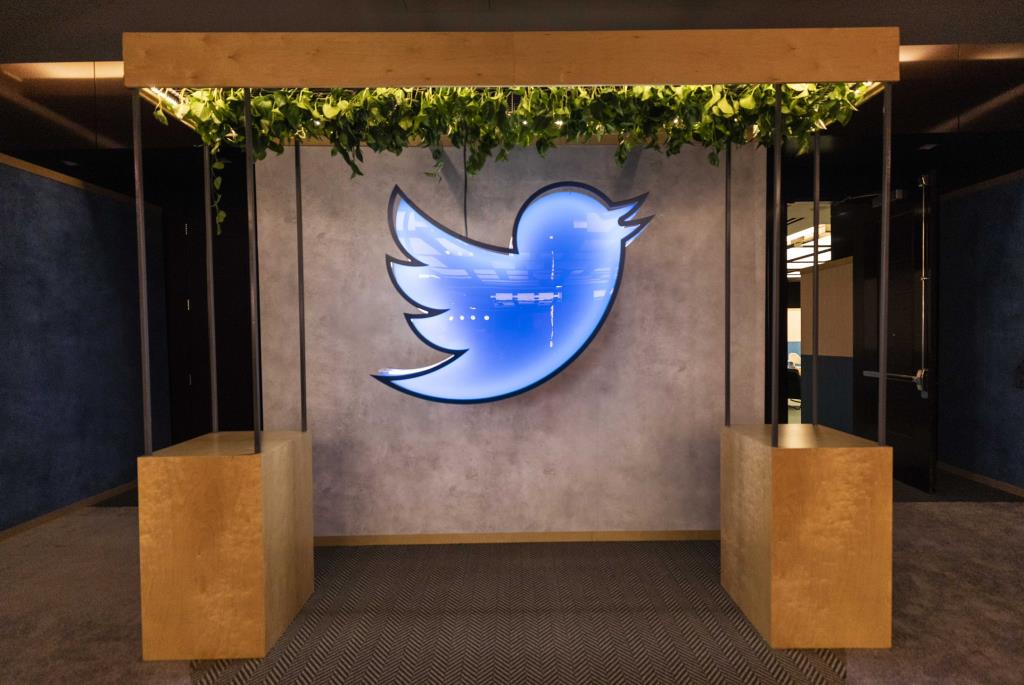
This includes the app’s famous statue of the classic Twitter bird logo that’s currently priced at a staggering $28,500. And now, we’re hearing how there are just a little less than 24 hours to make a bid for it.
Other than that, say hello to a planter that is a staggering 190 centimeters in design and worth $4,300. This particular sale comes at a time when Elon Musk was seen slimming down on the company, right after its $44 billion purchase that arose last year.
Image: hgpauction
Ever since it took over during the latter part of October, Musk was seen getting rid of more than half of his workforce, and that’s around 7500 getting terminated on the spot.
In the same way, we saw him putting an end to so many perks that employees were enjoying like free-of-cost meals. This brings us to the likes of several appliances used in the kitchen at the company that is also up for auction. Think along the lines of espresso machines and fountains for fizzy drinks that come complete with ice dispensers.
We then saw the social media giant offloading several coffee tables by Herman Millier which go about retailing at nearly $2000 for a new piece.
But it appears that no item is too tiny to auction off as it’s even going about selling its printing equipment and tiny sets of drawers that bid for $60. You can find a few conference booths that are marketed as being soundproof and a line of designer sofas too.
In November, we had Musk mention how the firm was witnessing huge drops in revenue after a few leading advertising partners had opted to leave.
Musk has also issued warnings about how the company may soon end up being bankrupt. As it is, the firm isn’t able to pay out rent at global offices and that entails the likes of its headquarters in San Francisco. This is where the landlord continues to sue for things like no payments.
There is news about the person who is administering the auction as one being a rep for leading firm Heritage Global Partners. Nick Drove spoke to the press and highlighted during an interview with Fortune Magazine how this sale is not linked to the recouping of expenses for the mega $44 billion purchase.
He also boldly declared that if there was someone out there that really assumed that you’d get huge returns from selling off a few computers and chairs and would pay for the massive mountain of purchase, then they likely deserve to be hailed as a moron.
But it wouldn’t be wrong to say that this behavior from Twitter is definitely bizarre, no matter what its actual incentives may be. What do you think about it?
Read next: Twitter Users Upset As App Enforces Long-Standing API Rules That’s Wreaking Havoc
by Dr. Hura Anwar via Digital Information World
This includes the app’s famous statue of the classic Twitter bird logo that’s currently priced at a staggering $28,500. And now, we’re hearing how there are just a little less than 24 hours to make a bid for it.
Other than that, say hello to a planter that is a staggering 190 centimeters in design and worth $4,300. This particular sale comes at a time when Elon Musk was seen slimming down on the company, right after its $44 billion purchase that arose last year.
Image: hgpauction
Ever since it took over during the latter part of October, Musk was seen getting rid of more than half of his workforce, and that’s around 7500 getting terminated on the spot.
In the same way, we saw him putting an end to so many perks that employees were enjoying like free-of-cost meals. This brings us to the likes of several appliances used in the kitchen at the company that is also up for auction. Think along the lines of espresso machines and fountains for fizzy drinks that come complete with ice dispensers.
Wild to see the Twitter office on auction. Board room tables, phone booths, chairs, monitors... even the Twitter bird statue. Great memories from a different era. https://t.co/kLOx69ZbeI pic.twitter.com/BFfvFy6Pg4
— Kevin Weil 🇺🇸 (@kevinweil) January 15, 2023
We then saw the social media giant offloading several coffee tables by Herman Millier which go about retailing at nearly $2000 for a new piece.
But it appears that no item is too tiny to auction off as it’s even going about selling its printing equipment and tiny sets of drawers that bid for $60. You can find a few conference booths that are marketed as being soundproof and a line of designer sofas too.
In November, we had Musk mention how the firm was witnessing huge drops in revenue after a few leading advertising partners had opted to leave.
Musk has also issued warnings about how the company may soon end up being bankrupt. As it is, the firm isn’t able to pay out rent at global offices and that entails the likes of its headquarters in San Francisco. This is where the landlord continues to sue for things like no payments.
There is news about the person who is administering the auction as one being a rep for leading firm Heritage Global Partners. Nick Drove spoke to the press and highlighted during an interview with Fortune Magazine how this sale is not linked to the recouping of expenses for the mega $44 billion purchase.
He also boldly declared that if there was someone out there that really assumed that you’d get huge returns from selling off a few computers and chairs and would pay for the massive mountain of purchase, then they likely deserve to be hailed as a moron.
But it wouldn’t be wrong to say that this behavior from Twitter is definitely bizarre, no matter what its actual incentives may be. What do you think about it?
Read next: Twitter Users Upset As App Enforces Long-Standing API Rules That’s Wreaking Havoc
by Dr. Hura Anwar via Digital Information World
Creators Launch Legal Action Against AI-Powered Tools That Rob Their Work
The power of AI technology has brought forward tools like ChatGPT and DALL-E which continue to produce the most amazing results. But creators are not happy because that means their work is getting repurposed.
Therefore, they’re not hesitating one bit in terms of launching legal cases against such tools as a means to ward them off from using their work. See, the problem is that such tools are really setting out amazing results and sparking the best business opportunities out there. So many people continue to raise legal queries about whether or not such processes are legal or not. After all, they’re busy sources the work belonging to humans for their own benefit of digital repurposing.
Creators are upset at DALL-E for using the final product that they offer at a cost to others as the source of new images. And it’s all so interesting because they have no legal right to do so, at least that’s the latest update on that. This is now a topic of high controversy as artists unite and are looking forward to amending such cases and preventing them from taking place.
A trio of artists is busy launching a new lawsuit against the likes of Stability AI and Midjourney, as well as the makers of Stable Diffusion and those in charge of artist portfolios like Deviant Art which produced its own AI generator for art. The creators accuse them of infringing the rights that are held by millions of artists who train AI tools on nearly five billion pictures that are copied from the internet without taking the consent of those originally making such final products.
The legal case also alleged how AI image generators work by stealing original content that allows them to create very similar work with the help of specific guides. The tools even go about explaining prompts and how you can make use of artists’ names by adding in their styles so as to make the best replica. There are guides that explain this and working artists are not happy because the industry is already saturated and now this.
Clearly, this is definitely not the first lawsuit of its kind linked to AI generators. And by the looks of it, it’s going to be far from the last one.
Meanwhile, there are reports of another group filing legal charges against Microsoft, OpenAI, and even the likes of GitHub regarding one of their tools called the CoPilot. This ends up producing plenty of codes linked to examples that were sourced by the likes of the internet and so many photographers are now making sure they’re aware of the legal rights of their own pictures that are used during the training process for AI tools.
Another leading concern is why big names like Getty Images refuse to list down AI-powered art of sale on the webpage. This comes as Google sets out a new blog that outlines why the firm isn’t releasing its own customized AI-powered tools in the public eye at this point in the game.
Photo: Unsplash / Deepmind
Read next: Twitter’s App Revenue Witnessed Massive 1,829% Growth In 2022
by Dr. Hura Anwar via Digital Information World
Therefore, they’re not hesitating one bit in terms of launching legal cases against such tools as a means to ward them off from using their work. See, the problem is that such tools are really setting out amazing results and sparking the best business opportunities out there. So many people continue to raise legal queries about whether or not such processes are legal or not. After all, they’re busy sources the work belonging to humans for their own benefit of digital repurposing.
Creators are upset at DALL-E for using the final product that they offer at a cost to others as the source of new images. And it’s all so interesting because they have no legal right to do so, at least that’s the latest update on that. This is now a topic of high controversy as artists unite and are looking forward to amending such cases and preventing them from taking place.
A trio of artists is busy launching a new lawsuit against the likes of Stability AI and Midjourney, as well as the makers of Stable Diffusion and those in charge of artist portfolios like Deviant Art which produced its own AI generator for art. The creators accuse them of infringing the rights that are held by millions of artists who train AI tools on nearly five billion pictures that are copied from the internet without taking the consent of those originally making such final products.
The legal case also alleged how AI image generators work by stealing original content that allows them to create very similar work with the help of specific guides. The tools even go about explaining prompts and how you can make use of artists’ names by adding in their styles so as to make the best replica. There are guides that explain this and working artists are not happy because the industry is already saturated and now this.
Clearly, this is definitely not the first lawsuit of its kind linked to AI generators. And by the looks of it, it’s going to be far from the last one.
Meanwhile, there are reports of another group filing legal charges against Microsoft, OpenAI, and even the likes of GitHub regarding one of their tools called the CoPilot. This ends up producing plenty of codes linked to examples that were sourced by the likes of the internet and so many photographers are now making sure they’re aware of the legal rights of their own pictures that are used during the training process for AI tools.
Another leading concern is why big names like Getty Images refuse to list down AI-powered art of sale on the webpage. This comes as Google sets out a new blog that outlines why the firm isn’t releasing its own customized AI-powered tools in the public eye at this point in the game.
Photo: Unsplash / Deepmind
Read next: Twitter’s App Revenue Witnessed Massive 1,829% Growth In 2022
by Dr. Hura Anwar via Digital Information World
Twitter’s App Revenue Witnessed Massive 1,829% Growth In 2022
A new year in the tech world means looking back at the past and how leading apps performed. And you might be shocked to learn that Twitter really did perform well, experiencing a staggering 1,829% growth.
As per this new App Intelligence report, the figures for revenue were not as great as what we witnessed in the likes of November of last year. Still, the growth was there and it was massive, reaching double digits.
The company’s net revenue gained through in-app purchases across both iOS and Android applications reached a staggering $1.9 million in the month of December of last year as per the estimated figure outlined. Remember, this is net and that means after the tech giants involved like Apple and Google took their respective fees or share.
Twitter began 2022 with a $244,000 figure for net revenue. But the company was able to earn $7.9 million in 2022 which is a good $409,000 increase from the figures calculated for the previous year. The fact that it only began collecting in October, it did not have a lot of time to earn and that is indeed a massive jump.
There is obviously another factor that must be considered here and that surrounds the company and its new CEO. The radical decision-making is not stopping and shareholders including advertisers are not too happy with the progress being made.
But despite this scenario, it does not appear there would be a demise soon. Plenty of apps owned by third parties are getting blocked and it might be a mistake but we’d have to see how many shakes end up being.
When you actually take a step back and analyze the whole situation, it’s evident that those platforms that used to work ad-free are now working with ads as a reliable way to take on some form of revenue generation mechanism that is reliable.
This would be a business model strategy that we’d see getting adopted in 2023 as earning through ads is an actual trend. So we will be seeing a lot more of that. So even apps that aren’t as popular would be joining the bandwagon and rolling out revenue models similar to this.
As a whole, it’s great news for everyone and especially for someone like Twitter’s chief Elon Musk, it’s the sort of direction he wouldn’t mind heading in.
Via: AF
Read next: Musk’s Takeover Of Twitter Has Caused A Massive Rise In Hate Speech Across The App’s Largest Markets
by Dr. Hura Anwar via Digital Information World
As per this new App Intelligence report, the figures for revenue were not as great as what we witnessed in the likes of November of last year. Still, the growth was there and it was massive, reaching double digits.
The company’s net revenue gained through in-app purchases across both iOS and Android applications reached a staggering $1.9 million in the month of December of last year as per the estimated figure outlined. Remember, this is net and that means after the tech giants involved like Apple and Google took their respective fees or share.
Twitter began 2022 with a $244,000 figure for net revenue. But the company was able to earn $7.9 million in 2022 which is a good $409,000 increase from the figures calculated for the previous year. The fact that it only began collecting in October, it did not have a lot of time to earn and that is indeed a massive jump.
There is obviously another factor that must be considered here and that surrounds the company and its new CEO. The radical decision-making is not stopping and shareholders including advertisers are not too happy with the progress being made.
But despite this scenario, it does not appear there would be a demise soon. Plenty of apps owned by third parties are getting blocked and it might be a mistake but we’d have to see how many shakes end up being.
When you actually take a step back and analyze the whole situation, it’s evident that those platforms that used to work ad-free are now working with ads as a reliable way to take on some form of revenue generation mechanism that is reliable.
This would be a business model strategy that we’d see getting adopted in 2023 as earning through ads is an actual trend. So we will be seeing a lot more of that. So even apps that aren’t as popular would be joining the bandwagon and rolling out revenue models similar to this.
As a whole, it’s great news for everyone and especially for someone like Twitter’s chief Elon Musk, it’s the sort of direction he wouldn’t mind heading in.
Via: AF
Read next: Musk’s Takeover Of Twitter Has Caused A Massive Rise In Hate Speech Across The App’s Largest Markets
by Dr. Hura Anwar via Digital Information World
Subscribe to:
Comments (Atom)