Monday, January 23, 2023

Users Are Spending Less Time On Snapchat As App Faces Tough Competition From Reels And YouTube Shorts

In 2022, Snapchat remained a sought-after social media platform. But new statistics are giving rise to some interesting facts worth a mention.

The amount of in-app time that users are spending across this platform is declining as we speak. And while some people are taking it positively as that signals less time of their lives wasted on social media, it’s not quite what team Snap would ever wish to hear.

It’s Meta and Google that are cashing in on the loss as they’re offering tough competition as arch rivals for the firm. Both Reels and YouTube Shorts are making sure Snap stays at the tip of its toes and it all makes sense as to why this is happening.

Snapchat has been looked upon as a great tool for businesses too that wish to connect with audiences across the board in the most fun and engaging manner. But recent stats aren’t directly putting the company in the best light as experts tracking the matter have plenty to say.

In such a situation, numbers are speaking much louder than actual words. Users who planned to use the app for marketing purposes might not be so keen on doing so, as more and more users limit their time on the platform.

It’s all thanks to CNBC's Carl Quintanilla who went public with the news and showed which apps are looking to scale big in 2023.


Read next: Snapchat Shocks the Industry with Record-Breaking App Revenue in December
by Dr. Hura Anwar via Digital Information World

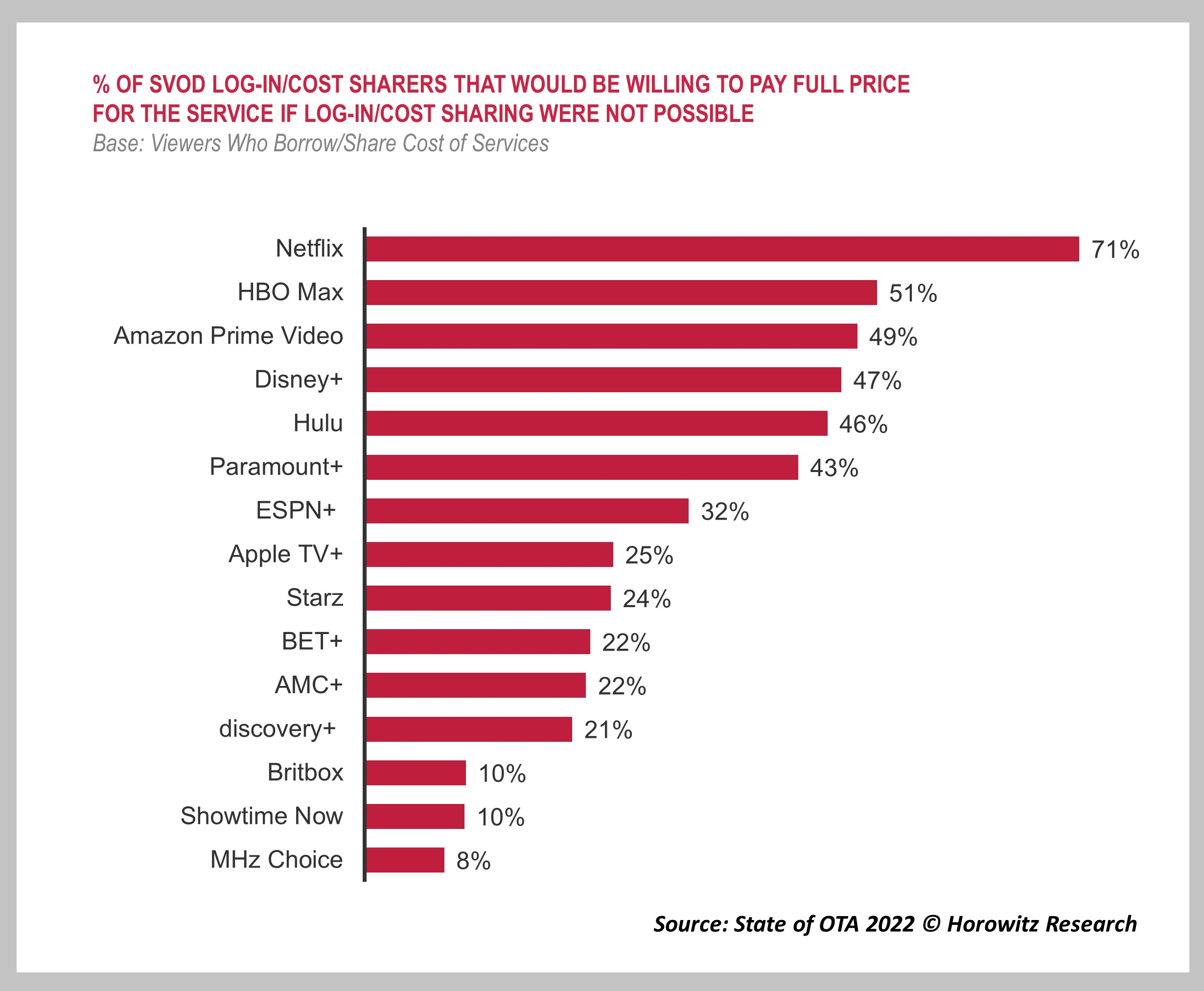
71% of Netflix users with shared accounts will be willing to pay full price if access is denied

The video streaming giant Netflix has started taking action against account-sharing users. Those who were using the service through someone else’s account will no longer be able to do so unless they pay for a full subscription for their own account.

The biggest challenge the company was worried about was whether these users would be willing to pay for their own subscriptions or would move on to other such platforms. However, the latest report from Horowitz Research, a consumer insights agency, has finally eased the tension.

The report suggests that around 71 percent of the users will prefer paying for their own subscription if access is blocked instead of shifting to another platform. These results were based on the responses collected from sixteen hundred users who frequently use such video subscription applications and sites.

On the other hand, alternatives such as HBO Max, Disney Plus, or Amazon Prime Video lagged far behind Netflix. For HBO Max, only fifty-one percent of the users will be paying the full amount, whereas for Amazon Prime, only forty-nine percent of the users will be willing to do this.

As it appears, the results are in favor of Netflix. The company had already planned new ways to hold on to their users by offering a paid subscription feature. The plan is that users will still be able to share their passwords with anyone outside the house; however, they will have to pay extra charges to avail this service.

Though the results are satisfactory, Netflix still believes that the clampdown will cause a loss of users. In order to prevent this, the company introduced an advertisement-supported subscription offer costing seven dollars a month instead of ten dollars.

Furthermore, the research company also stated that every 1 in 3 subscribers uses a shared account. The majority of the users are satisfied with the service and believe it is worth the money.

Adriana Waterston, chief revenue officer of the research firm, states that most of the users will stay with Netflix even after the clampdown. As per the progress report for the last three months of 2022, Netflix was successfully able to add more than seven million users to its list, leading to a total of two hundred and thirty million global subscribers.


Read next: A Lot Of Consumers Are Resistant To Paying For Identity Theft Protection
by Arooj Ahmed via Digital Information World

5 Ways to Use Automation to Boost Enterprise Sales

Although economists are debating whether or not we’re officially in a recession, it’s known that buyers are spending less and businesses everywhere are tightening their budgets, making sales even more challenging.

More than half of B2B tech companies report that sales cycles have become significantly longer in the past three years, and they are likely to grow even longer during the indefinite period of slow or stagnant economic growth ahead of us.


All of this means that sales teams need to become even more efficient at driving sales and closing deals. Sales automation can play a significant role in achieving this goal, helping sellers nurture leads more effectively and cut the time they spend on activities that take them away from actual sales.

Here are five ways for your organization to apply sales automation and improve sales performance, even when the economic climate is stormy.

1. Keep leads engaged to speed up sales cycles

With longer sales cycles, leads can languish in the funnel without arriving at closing. Sales representatives end up spending a lot of time reaching out repeatedly to disengaged leads, cutting into the time they need to close deals with prospects who are closer to purchase.

But sales automation can help you nurture leads more efficiently. Use it to open up new opportunities by re-engaging previous leads that have since “gone cold.” Identify buyers to contact, reaching out through email, text message, or LinkedIn at the right intervals, asking discovery questions, and understanding the answers using natural language processing.


Automation like Heyday can bring together signals from multiple touchpoints, including email, social media, WhatsApp, Facebook Messenger, and its own chatbot solution. The platform analyzes them to identify the best time for human reps to enter the loop, and filters conversations to the right contact so they can seamlessly continue the communication.

2. Maximize upselling and cross-selling

According to a recent HubSpot survey, 41% of all salespeople report that 20% or more of their revenue is derived from upselling. What’s more, 72% of sales reps who upsell and 74% of those who cross-sell agree that these activities drive up to 30% of their revenue.


But upselling and cross-selling can be fraught with difficulty for sales reps. Your firm’s product catalog is vast and customer needs are complicated, making it tough to come up with the ideal bundle that both pleases the customer and maximizes revenue for the company.

Fortunately, sales automation software can push the most appropriate upsell and cross-sell suggestions for each prospect. Sales teams won’t get bogged down trying to weigh up too many options, and prospects won’t be irritated by irrelevant bundles or overwhelmed with a flood of possibilities.

3. Strike while the lead is hot

The longer it takes for you to send a proposal or amend a quote according to the prospect’s requests, the more opportunity you leave for your competitors to nip in and steal your customer. But waiting for manager approval can add weeks to the sales cycle, and many companies are (justifiably) nervous about giving sales teams the authority to issue quotes independently.

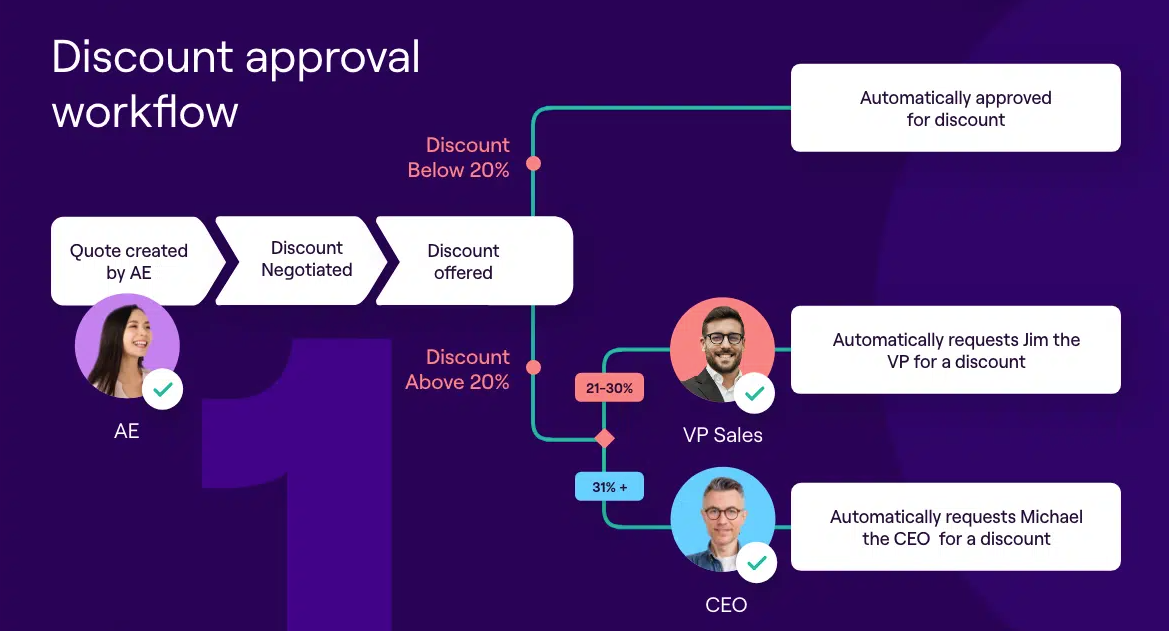
Sales automation can make the whole process much easier for sales teams. It applies complex parameters with built-in rules and guard rails that carry out back-end calculations for the sales agent, helping avoid costly mistakes while also removing the need to wait for manager approval. In situations where approvals are required, that process is also automated.


Accelerated process is exactly what SourceScrub, a data company, discovered when they stated using DealHub. With DealHub’s CPQ platform, SourceScrub was able to cut the time that sellers spend creating proposals by 94%, while the built-in “deal room” interface and its e-signature feature removed friction from the deal approval process.

4. Align all departments to retain customers

Retention is always vital, but it’s even more important during a recession, when you expect to make more sales to existing customers than to new ones. Success in this regard requires you to align all your departments, including post-sales support, into a seamless, positive customer experience.

For example, SaaS companies should use automated monitoring tools to track product use signals and spot the best moment to suggest an upgrade, add-on, or cross-sell to the relevant customer at the right time.

Similarly, businesses selling subscription-based products need to track renewal times so they can send a timely reminder or suggest an upgrade, like shifting from a monthly to an annual subscription, or from one year to three years.

5. Reach the right lead at the right time

Today’s B2B buyers want self-service nurture and checkout experiences across channels, but they also want to speak to a rep when they are ready. At these junctures, they expect the agent to already know all about their pain points and purchase journey up until now; 87% of business buyers expect sales reps to act as trusted advisors, according to Salesforce.
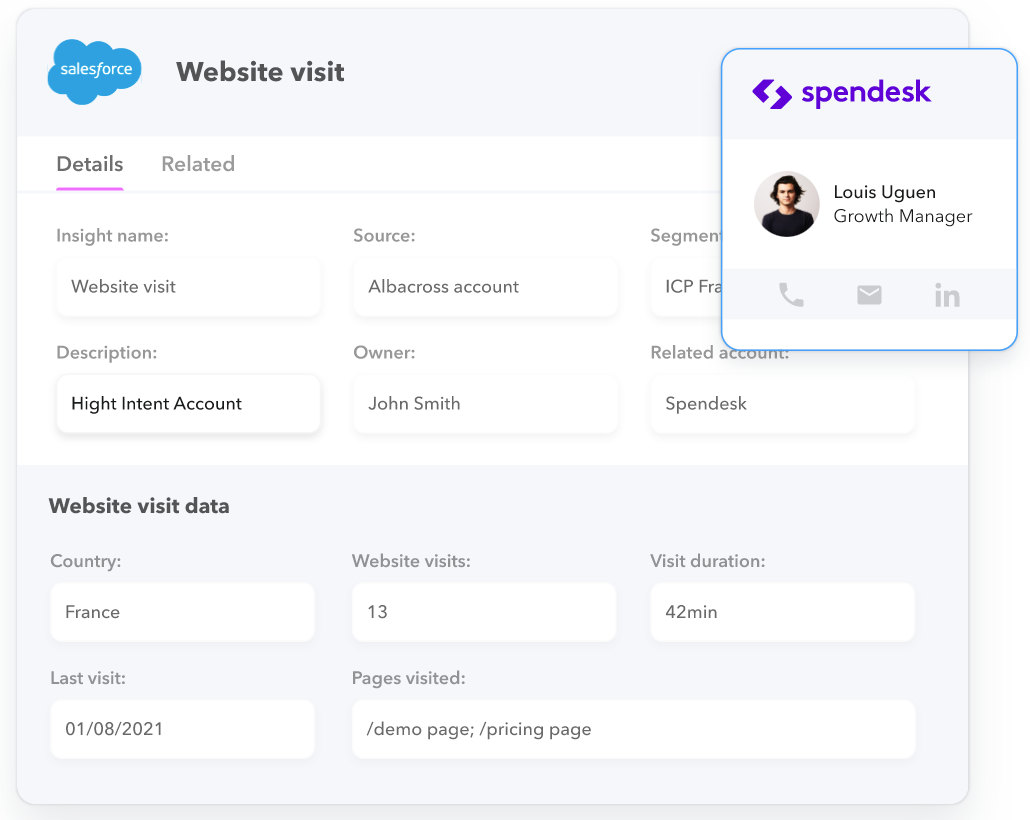


Meeting these expectations calls for using automated website visitor identification and tracking solutions like those enabled by Albacross. With the right intent-based workflows in place, you can set up CRM automations that score leads based on actions like opening emails, downloading ebooks, visiting specific pages of your website or clicking on your social media posts, and then notify you when a lead is “hot.”

In this way, automation stops sellers from wasting time on leads who aren’t really interested, and supports them to reach out to those who are at the perfect moment in the purchase journey.

Sales automation can boost your sales team’s selling power

When the sales get tough, the tough get sales automation. These solutions allow revenue teams to streamline quote generation, align departments, track the purchase journey, nurture leads, and optimize upselling and cross-selling opportunities. In this manner, sales leaders can refine sales pipelines, make sales processes more efficient, and ultimately close more deals.

by Irfan Ahmad via Digital Information World

Survey of almost 500 founders highlights the biggest factors that cause startups to fail

Starting a new business is not a cup of tea. It needs constant monitoring. While some startups flourish, others may not be lucky enough. An insight into factors that can make a business go up or down can help new owners.

As per the data revealed by the United States Bureau of Labor Statistics, almost twenty percent of new startups are not able to sustain themselves and eventually fail. Skynova, an online invoicing company, surveyed 492 startup owners in the third quarter of 2022. The data collected from the survey highlights major factors that can lead to the crash of a new business.

Low investment and lack of financial support are the single biggest factors leading to failure. This accounts for almost 47 percent of the business failures observed last year. The figures have doubled since 2021.

The ongoing inflation crisis in the United States (and globablly) is causing major problems, such as running short of cash to stabilize a business. Not just economic conditions but improper planning can also contribute to failure. Unfortunately, it is expected that the economic crisis will continue to be an important factor in 2023 as well.

The COVID-19 pandemic caused damage to most businesses. Even the bulls couldn’t save themselves from the damage, and small businesses were either forced to shut down or suffered great damage, leading to failure. However, with things going back to normal, the failure rate due to the pandemic began to decline as well. From fifty-nine percent in 2021 to thirty-three percent in 2022, the figures dropped.

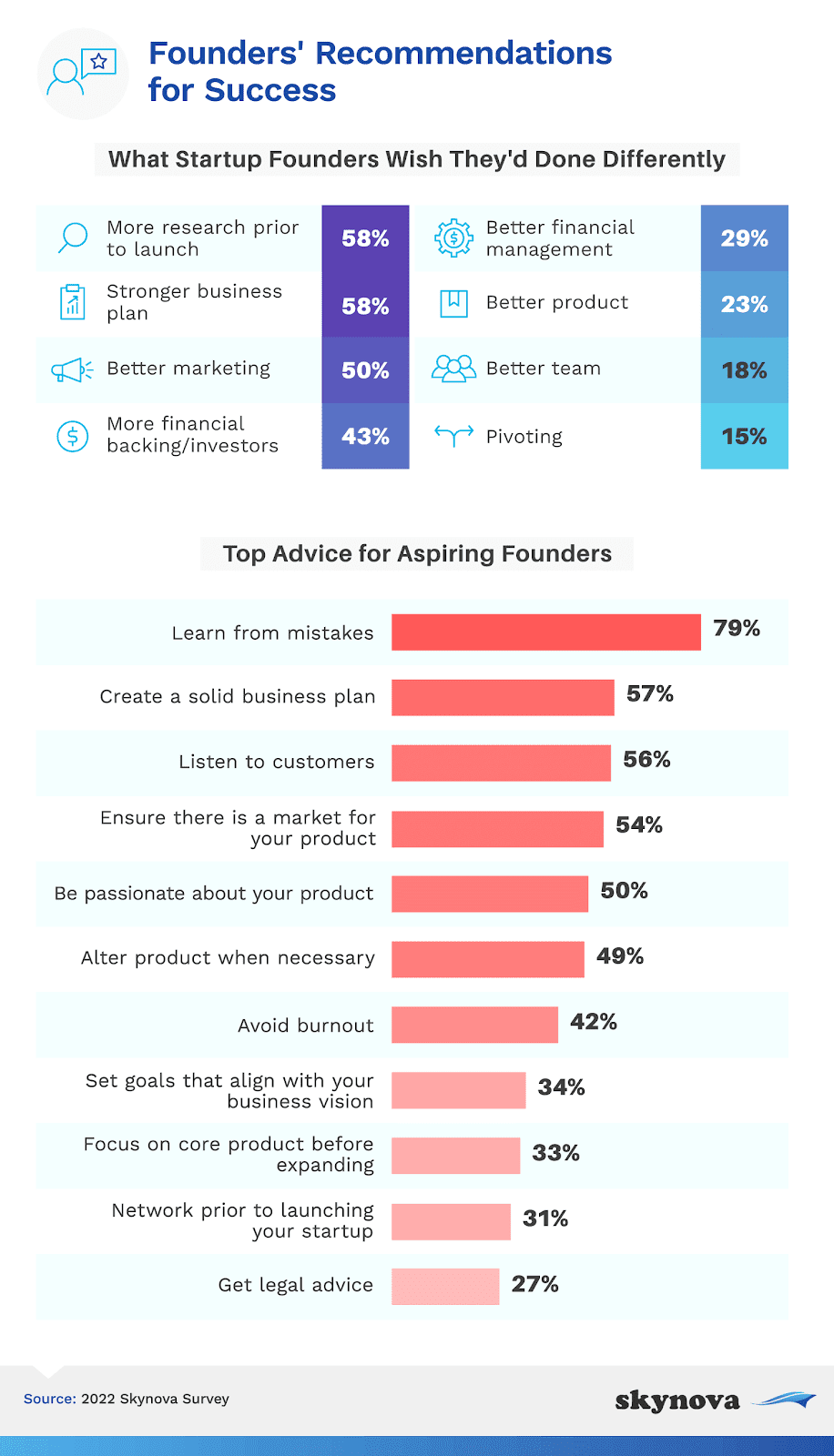
Even after keeping all the factors under control, it still cannot be predicted whether the new startups will crash or cash. However, those founders who were able to make their new business work had several suggestions for newcomers. Upon being questioned by Skynova, what would the founders do differently if they had the opportunity to do so at the beginning? In response to this, fifty-eight percent of the founders said that they would have done a more thorough market analysis as well as proper planning for the business.

When these founders were asked to share the most important advice for new founders, almost 79 percent of them suggested that they should learn more from their mistakes. In addition to this, 75 percent said that changing businesses based on the conditions can help them grow as they can avoid total failure. Whereas, failing to change the path on time can lead to a fall.

Kevin O’Leary, a well-known investor from Shark Tank, shared his views. According to Kevin, those who refuse to change when it is important are the ones who will only listen to themselves. Refusing to update can lead to failure.

Read next: Americans Have Less Working Hours But Their Pay Is Higher than The Poor Countries in Which Workers Have Long Working Hours
by Arooj Ahmed via Digital Information World

Snapchat Shocks the Industry with Record-Breaking App Revenue in December

Snapchat hit a new revenue target in December, generating a record $6.8 million in monthly revenue. This marks a significant increase from the previous month when the app generated an average shift of +12%.

According to data from app analytics firm App figures, the majority of this revenue came from in-app purchases, with users spending on virtual items and lenses within the app.


The success of Snapchat's in-app purchases can be attributed to the popularity of its lenses and filters. These features have become a staple of the app, with users frequently using them to enhance their photos and videos. Additionally, Snapchat's introduction of gaming features such as its "Snappable" AR games has also been a hit with users, driving in-app purchase revenue.

On the advertising front, Snapchat has been able to capitalize on its large and highly engaged user base. The app has been successful in attracting big-name brands to advertise on its platform, with companies such as McDonald's, Coca-Cola, and Samsung all running campaigns on the app.

The company has also been focusing on expanding its e-commerce capabilities, by allowing brands to sell products directly to users within the app. This has further contributed to the increase in the app revenue.

It's worth noting that these numbers represent only global iOS and Google Play revenue and don't include other platforms such as Amazon Appstore and Samsung Galaxy Store, so the actual revenue generated by the company may be higher.

Snapchat's success in generating app revenue is a testament to the company's ability to innovate and adapt to the changing digital landscape. The app's unique features and highly engaged user base have enabled it to attract both users and advertisers, leading to a significant increase in revenue. As the company continues to expand its capabilities and reach, it will likely continue to generate significant revenue in the future.

Moreover, Snapchat's success in generating app revenue can also be attributed to its focus on user engagement. The app has been successful in keeping its users highly engaged, with the average user spending over 30 minutes on the app daily. This has been a key factor in attracting both users and advertisers to the platform.

Another prime reason for Snapchat's increase in revenue is its ultimate investment in expanding its capabilities, with the launch of new features such as Spotlight and Spotlight Live. Spotlight is a feature that allows users to share their content with a wider audience, while Spotlight Live is a live-streaming feature that allows users to interact with their audience in real-time. Both of these features have been well-received by users and have further contributed to the increase in the app revenue.

Snapchat's success in generating app revenue is a positive sign for the company, which has been facing increased competition from other social media platforms. The app's unique features and highly engaged user base have enabled it to differentiate itself from other platforms and continue to attract users and advertisers.

In conclusion, in December, Snapchat hit a new app revenue milestone by generating $6.8 million in in-app revenue. This is a significant increase from the previous year when the app generated 12% of positive growth. The significant growth of the company's revenue is a sign of the constant prosperity and long-term growth of Snapchat.

Read next: Social Media Safety at an All-Time Low: Can Platforms Change the Trend?
by Arooj Ahmed via Digital Information World

Sunday, January 22, 2023

Google Search Will Allow AI-Generated Articles On Its Platform Without Any Penalization

AI-powered technology has been at the center of attention for obvious reasons.

A tool called ChatGPT has been causing major commotion because many creators feel they’re being robbed of their work thanks to AI intelligence.

Be it written content or images, the tool takes content found online and revamps it into something new. But the problem here is that it’s doing it for free and not giving associated credits to those that put in long hours. Neither are such people getting any financial compensation either. So as you can see, it’s not fun and games anymore.

One major publication forum that’s turning into major hype for various reasons is CNET who is publishing all such articles across its respective site. And people are not happening because it’s like giving a way to rob ideas.

Now, we’re hearing about how Google Search is not bothered and will allow the articles across its search engine. The company further explained how it’s not interested in how much content from produced.

Instead, their one and only goal are to showcase content that’s both helpful as well as relevant and that appeals to the users and not the search engine’s own rankings. So the term usefulness was used here and that makes sense because you want to know how much value that content is adding to a person’s life than other matters.

The aim is to create solutions that limit all kinds of helpful content in the Search bar, whether designed by humans or via the likes of automated processes. Remember, it was just last year that we saw Google share how it was altering the way pages were getting ranked on the app. This arose in the form of Helpful Content Updates. Moreover, such changes were designed to ensure content was better highlighted by the experts and by individuals for individuals instead of just showcasing SEO content that has zero goal of informing users. Instead, it was written in a manner to grab a hold of views for the pages through Google’s Search.

But the statements coming forward from Google are a huge reality check for so many individuals in this world. It has to do with how content is being made and now, they’re okay with the likes of AI technology making the most of the endeavor. But in the past, that was not the case. Google was against AI technology making content that it found to be useful on the search engine.

More clarification arising on the platform could mean lots of AI-generated content hitting Google Search’s direction. Moreover, shock hit the board when a certain post arose from BlackHatWorld that’s known for making illegal content and taking part in other types of shady practices.

It reportedly mentioned how it was time to produce content at high speed and you can only imagine what that meant. While another spoke in detail regarding making the most of such a critical moment in time where ChatGPT was functioning at its greatest.

We must mention that CNET has stopped publishing content after such news broke out so this is definitely interesting.


Read next: Fake ChatGPT Apps Are Commonplace on App Stores, and Google and Apple Might Be To Blame
by Dr. Hura Anwar via Digital Information World

Meta's Quest VR headset sets new record for holiday sales

Meta, a leading technology company known for its innovative virtual reality (VR) products, has set a new record for holiday sales of its flagship VR headset, the Quest.

According to data from App figures, a market intelligence platform, Meta's Quest saw a significant increase in sales during the holiday season, surpassing even their expectations.

The data shows that Meta's Quest recorded a total growth of 2 million downloads at the end of the year. This growth was driven by a combination of factors, including an expanding selection of VR content, enhanced marketing efforts, and an improved user experience.

To add more, the figure for Quest's downloads in the previous year was 1.97 million. Technically, the amount hasn't been boosted much this year, but for Meta, this figure plays an important role as the social media giant faced several crises the following year.

In addition to the content offering, Meta also focused on improving the user experience with the Quest. The company has released several updates to the headset, including improved resolution, increased comfort, and new features such as hand tracking and improved audio. These enhancements have helped make the Quest more accessible and user-friendly, further driving sales.

Furthermore, the company's marketing efforts also played a crucial role in Quest's success. Meta heavily promoted the Quest during the holiday season, through a combination of online advertising, social media campaigns, and in-store promotions. This helped to increase awareness of the product and drive sales.

It's worth mentioning that Meta's Quest VR headset is not only a consumer product but also a productive tool for the enterprise, it's been adopted by several companies for training, remote collaboration, and more, which helped to boost sales as well.

Meta's Quest VR headset offers a wide range of features that contribute to its success as a leading VR product. Some of these features include, Room-scale Tracking, Hand-tracking, Wireless Connectivity and more.

These features have helped to attract a wider audience, including both hardcore gamers and casual users looking for new ways to stay engaged and entertained.

As VR technology continues to evolve and become more mainstream, we will likely see more consumers turning to products like the Quest for immersive and engaging experiences.


Read next: A Lot Of Consumers Are Resistant To Paying For Identity Theft Protection
by Arooj Ahmed via Digital Information World