Saturday, February 11, 2023

A Recent Study Shows the Number of Apple Products Used By People on Average

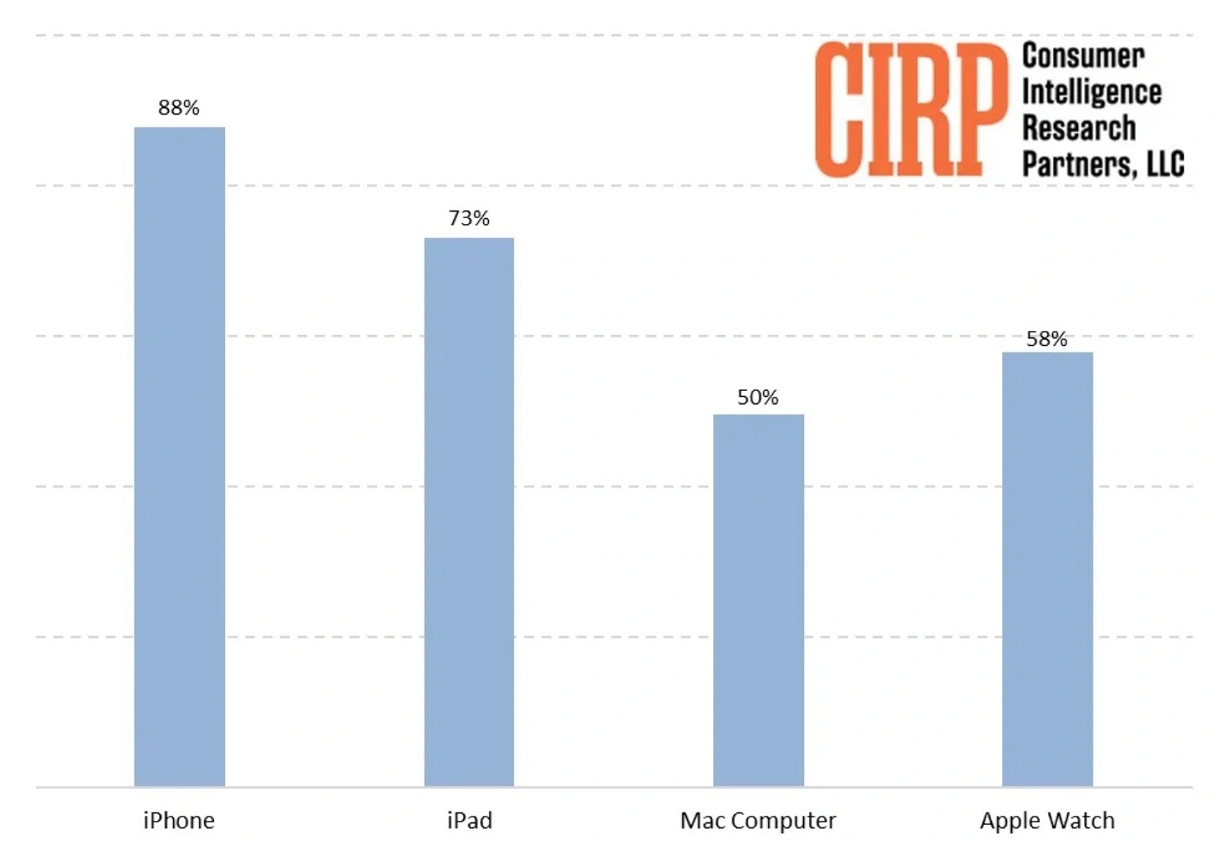
A recent study by a research group called CIRP looked at how popular Apple devices are, including the iPhone, iPad, Mac computer, and Apple Watch. The study found that the iPhone is the most popular Apple product, with nearly 90% of the people having it. The iPad comes second, with 73% of users having one, followed by the Apple Watch at 58% and the Mac at 50%.

According to the study, almost 60% of users own three or all four of the Apple main devices. Only a few people in the study had one Apple product, with the majority of those people having only an iPhone.

The study also showed two pie charts, one large and one small. The large pie chart showed the number of people who have one, two, three, or all four of the main Apple products. The smaller pie chart showed what people have if they only have one Apple product.

CIRP said that the Apple ecosystem is real and cross-selling works. It is rare to find users who only own a single Apple hardware device. The iPhone and iPad have helped Apple make a lot of fortune as compared to its other products.

By encouraging customers to keep buying more Apple products, the company has been able to maintain its position as a leader in the technology industry. The fact that almost 60% of Apple users own three or all four of the main devices shows just how successful the company has been in creating a strong customer base.

Apple's continued success is also because of its commitment to producing high-quality products and providing excellent customer experiences. The company's focus on creating a good environment, where all of its products work together, has been a key factor in its continued growth. Whether you're a casual user or a power user, there's an Apple product out there that's perfect for you. So, if you're in the market for a new device, consider giving Apple a try as you won't be disappointed.
Read next: This Survey Reveals How Different Generations Interact With Search Engines
by Arooj Ahmed via Digital Information World

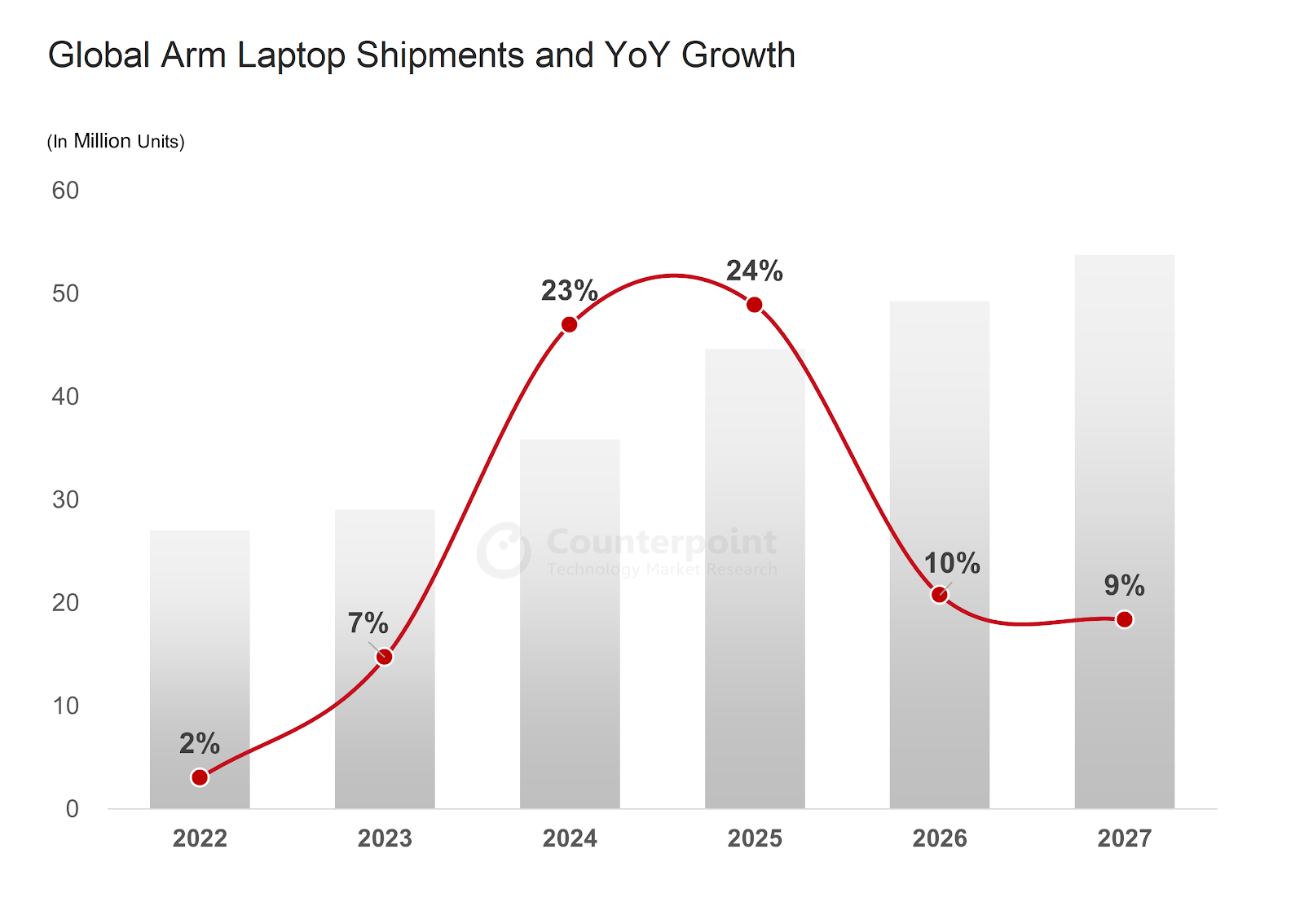
ARM laptops to resist the declining PC demand trend

According to Counterpoint’s latest report, global demand for personal computers is declining. Personal computers reached their all-time high demand at the time of the peak COVID-19 pandemic, as everyone was following the work-from-home policy. As restrictions started to be lifted and things started to go back to normal, global demand started to decline.

Last year, the demand came down by 15 percent year over year, and it is expected that the same trend will be observed in 2023 as well. While PC manufacturing companies were experiencing a downfall, tech giant Apple’s new MacBook series continued to resist the trend. ARM-based laptops could be able to save themselves from getting caught up in the declining demand trend.

Three years ago, in 2020, Apple introduced the newly designed M1 chipset for its MacBooks. This chip-enabled other Apple products, including the iPhone, to be operated similarly in terms of computing performance. The ARM laptops started with a 2 percent market share and reached 12 percent last year, which accounted for 90 percent of the total ARM laptop sector.

Other players in the industry, such as MediaTek and Qualcomm, have also shown an interest in ARM chips. Despite facing technical difficulties and cases against the product, the report predicts that by 2024, these two companies will be introducing their ARM-based personal computers as well as laptops, which could lead to 50 percent year-over-year growth.

With PC demand all set to go down in the ongoing year, Intel will be affected the most, as the company could lose 10 percent of its market share while competing with ARM laptops. The report has predicted that four years from now, ARM-based systems will account for 25 percent of the total PC and laptop industry, and the solution will keep expanding over time.

Furthermore, two years from now, it is expected that the ARM industry will have more than 21 percent of the market as the industry’s expansion rate will keep pace. Factors such as consumer awareness of ARM solutions in comparison to Intel’s X86 will play an important role in the upcoming trend.
Read next: Demand for autonomous cars is speeding up
by Arooj Ahmed via Digital Information World
Microsoft’s CEO Claims Human Oversight Is Needed When Powerful AI Models Are Involved

The CEO of Microsoft is making some major claims about AI models and how this sort of technology cannot remain unchecked for too long.

Satya Nadella explained how it’s not exactly as clear-cut as many people may have imagined. But now that AI chatbots seem to be revolutionizing the industry and their popularity soaring, some important aspects need to be considered.

Out of those, humans need to start taking greater responsibility in the form of overseeing what exactly is going on. In other words, you can’t blindly trust AI technology to do everything.

The news comes as so many people are calling out tools for wreaking havoc or being too inaccurate to be trusted. But Nadella feels that the right form of human oversight can prevent disasters from happening and stop them from going out of their control.

The great possibility of AI has incredible potential to reach new heights of success. And one can’t help but wonder why it’s being taken in a negative light, he added. Safety, alignment, and more can be taken care of when you’ve got such models in charge of human intervention. It’s all about thinking in depth about why AI is being used.

Powerful models need guidance from humans to be steered in the right direction. These models need to be made safer but by calling them out for their errors, we’re actually causing them to run away. And Microsoft does not feel it’s the right way to go about the matter.

There have been so many concerns linked to the world of AI technology but some members like Elon Musk and Altman claim the benefits to humanity are plenty. But at the same time, the threats to them are huge and that needs to be looked at more in detail.

The new partnership between OpenAI and Microsoft is being raved about and as we speak, millions are signing up to be on the waitlist dubbed as the new and improved Bing. It’s like saying hello to a new rival in the form of an AI-themed chatbot.

There are also reports of how Bing and ChatGPT were made to go head-to-head in an internal test. And you’ll be shocked to learn that Bing came out on time with smarter answers. So as you can see, the hype is quite real.

The new and improved features for conversations by Bing are not up for grabs yet to the public but the fact that there’s a waitlist means there must be something people are waiting for.

Toward the end of last year, search engine giant google was witnessed issuing a new Code Red after the sweeping launch and popularity of ChatGPT. Now, it’s going public with its own offering in this regard called Bard which happens to be an AI-based chatbot.

The new tool is being tested internally and is outlined to be a great answer to conversational AI technology. It might be released to the masses in the next few weeks so we’ll keep an eye out for that.


Read next: 68% of Employees Are Using ChatGPT Without Telling Their Bosses
by Dr. Hura Anwar via Digital Information World

68% of Employees Are Using ChatGPT Without Telling Their Bosses

The easy interface of Chat GPT coupled with its superior functionality meant that it was only a matter of time before people started to use it to get various basic tasks down throughout their work day. Back in January, it was found that 27% of workers had already started used Chat GPT in such a manner, and with all of that having been said and now out of the way it is important to note that this proportion has increased to 43% in just one month.

Chat GPT is likely not the only chatbot that is preferred by workers around the world, but in spite of the fact that this is the case it probably is the most popular by a large margin due to how much buzz it has generated. It has already managed to become the fastest growing app of all time, and the manner in which it can be used in professional contexts has likely played quite a tremendous role in that trend.

An interesting thing that can be seen in various surveys is that over two thirds of employees are not telling their managers or superiors that they are using Chat GPT. According to a recent survey conducted by Fishbowl, as many as 68% of workers who are using Chat GPT or other AI chatbots have not told their bosses that they are doing so.

That might be a problem because of the fact that this is the sort of thing that could potentially end up exposing workers to penalties once their bosses wisen up to what is going on. Alternatively, Chat GPT could be officially accepted as a part of workplace culture, since it can definitely make a lot of tasks such as copywriting and drafting emails a great deal easier than might have been the case otherwise.

Microsoft is planning to incorporate Chat GPT into Bing, which indicates that the AI revolution is more or less fully underway with all things having been considered and taken into account. It will be interesting to see where things go from here with AI chatbots and the like.
Read next: Microsoft’s AI-Powered Bing Chatbot Soars To The Top Of The App Store
by Zia Muhammad via Digital Information World

Friday, February 10, 2023

Google has new features in stock for us - People’s Cards and Enlarged Video Thumbnails

All of the Tech World has been engaged in creating a more simplified space for users through small changes. Google has been in the lead and has now introduced two more tiny changes that could lead to an elevated experience.

Google’s first change is that the search feed would now incorporate People’s Cards. These are profiles of people from various platforms that showcase their info. These were first introduced and limited only to India. But recently, it has been brought to our attention that the geographical limitation has been lifted.

The feature is also available in the US now. An SEO expert, Brian Freiesleben made his own People’s Card when he got to know about it in 2020. After its introduction in the US, Brian remembered his Card and now pledges to remove it as it is quite embarrassing.

Keeping Brian’s personal feelings aside, we believe the feature to be an excellent way for people to interact with one another and network. It is also a good way of providing opportunities and searching for potential work partners or employees.


H/T: Glenn Gabe / Twitter

The second change that Google incorporated is larger video thumbnails (as reported by Khushal Bherwani and Anuj thaker). We’re not sure how we feel about this one after checking them out.

The previous thumbnails were comparatively smaller and had the details of the video written next to them. However, the new thumbnail occupies all that space and is placed directly beneath the title with no other text.

We will find out how users feel about this change after a while although we believe this might be a tad too simplified for most of our tastes.

The thing with these changes is that you can never know if they would turn out to be good or bad. Although users like simplified formats, oversimplification is not everyone’s cup of tea.

Via: Anuj thaker

While it takes a little while and a lot of disapproval, simplified formats eventually turn out to be the best. For instance, when Instagram changed its logo, few people liked it. But can you imagine Instagram without the purple and pink gradient now?

Similarly, only time will tell whether these changes are for the better or worse. Till then, Google can keep working to make the space a better place.

Read next: Google Gears Up for the Future with Major Focus on Augmented Reality
by Arooj Ahmed via Digital Information World

Insights on why social app commerce revenue is underreported by 2.45 times

Social media platforms have played an important role in connecting brands and developers with their customers. However, commerce revenue on such platforms is not fully reported. As per SimplicityDX’s recent State of Social Commerce report, the revenue is underreported by 245 percent.

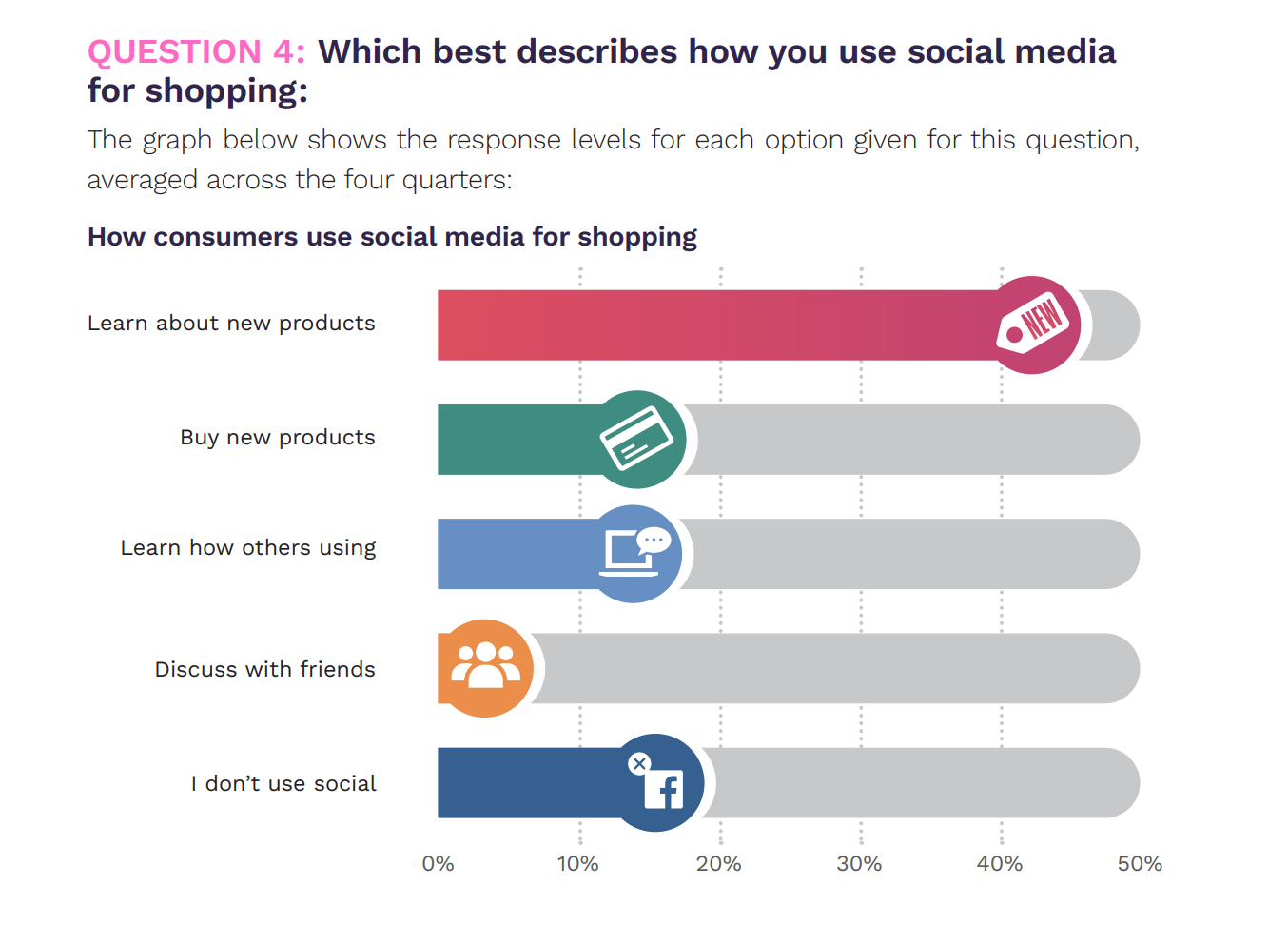
Social platforms are considered to host the highest ad trends for the ongoing year. Advertisements on social media apps such as Meta’s Instagram or ByteDance’s TikTok lead to 64 percent of the audience learning about new offers and items. Whereas 58 percent believe that influencers help them discover new items, only 16 percent of them use the platform for online shopping.

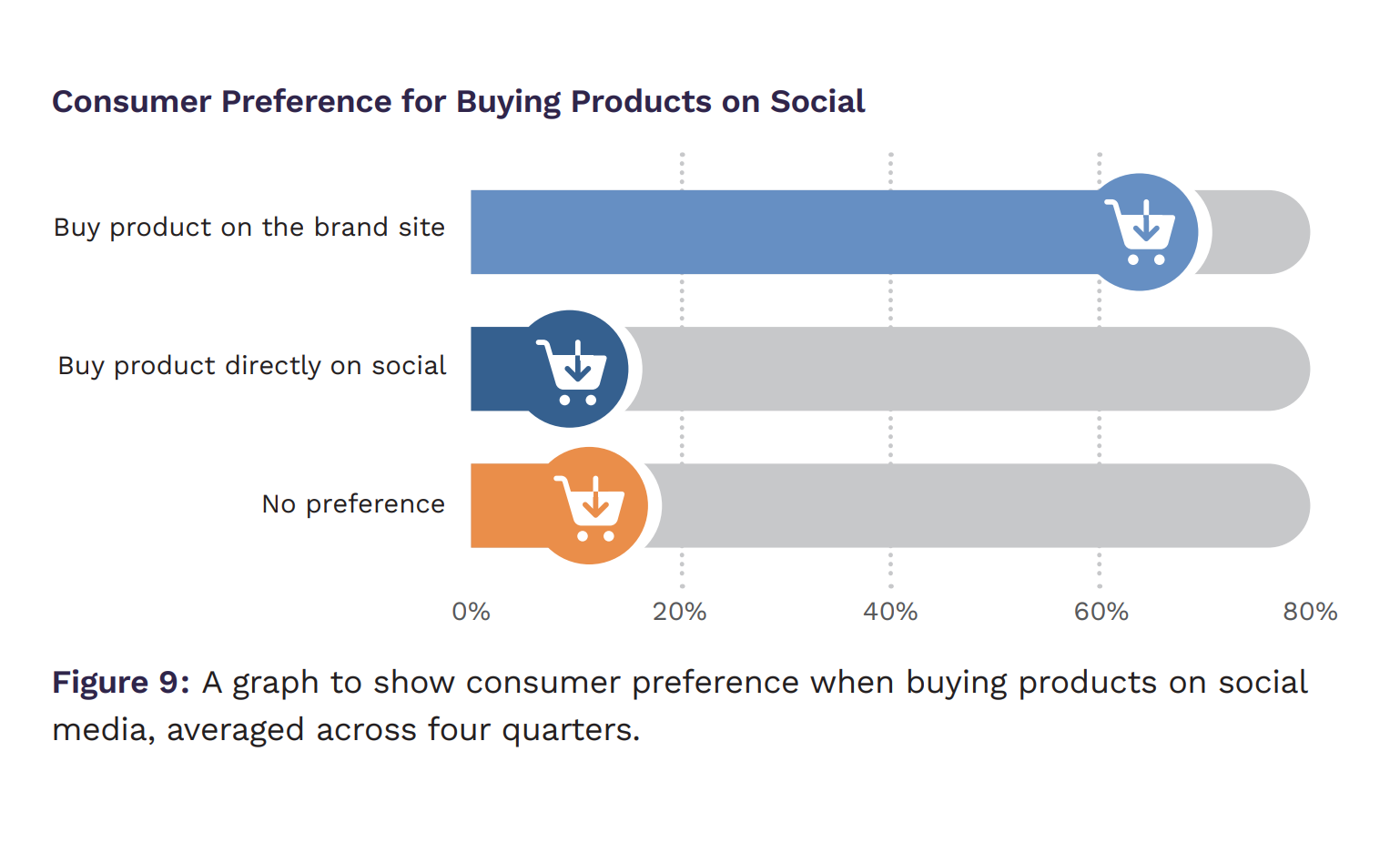
Buyers prefer using a brand’s website or application to place their order instead of using social media apps. Almost 71 percent of those who recently bought something via online shopping used the main website or application. Similarly, 77 percent of buyers prefer the same method when it comes to e-commerce. Almost 36 percent of the audience would buy products that would be displayed by their influencers during their live streaming.

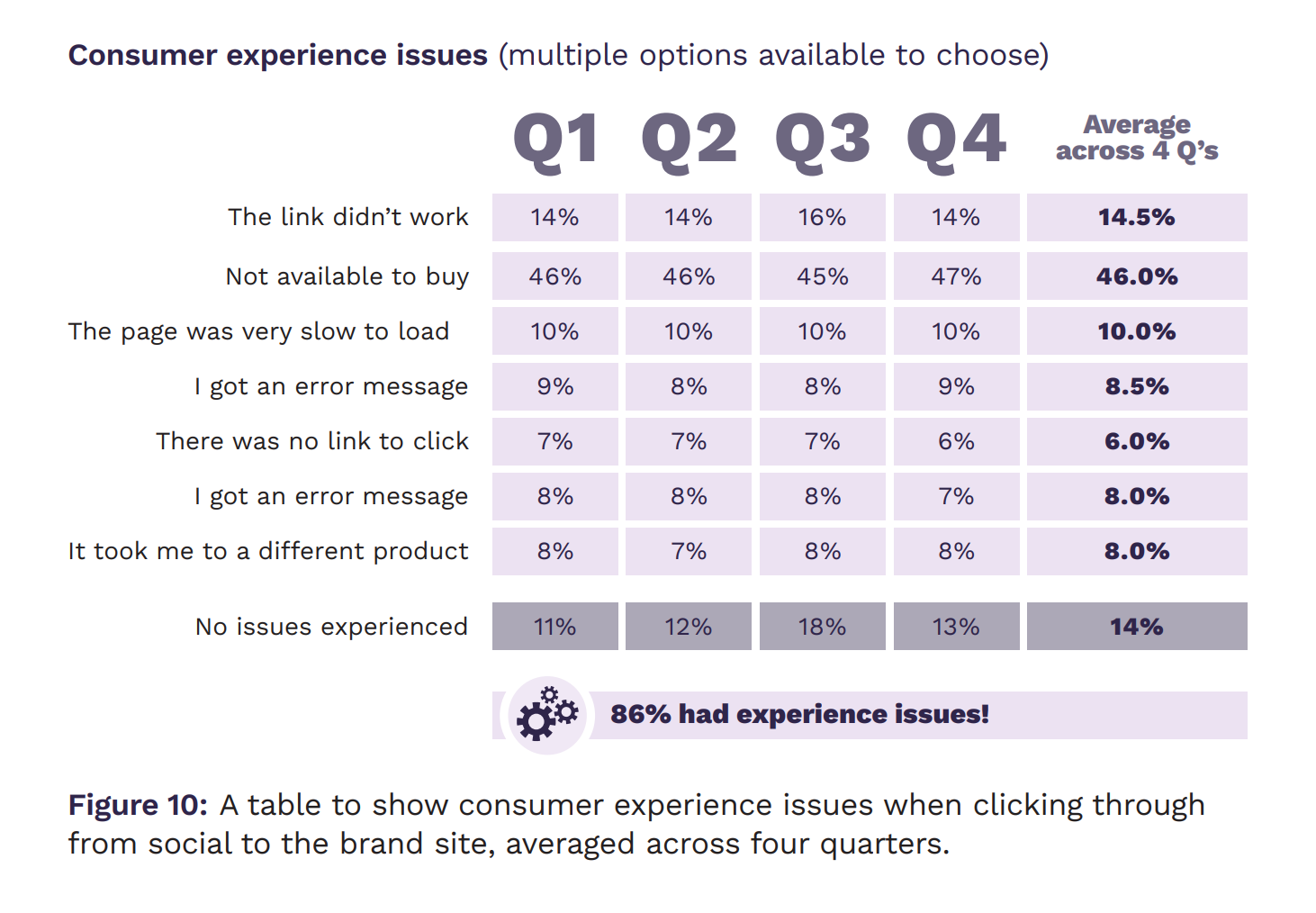
Two of the main reasons behind such figures are that 86 percent of the customers didn’t have a good experience while using social platforms to order things. The other reason is the confusion over how the product will be returned. Furthermore, a large number of users don’t want their data or banking details to be compromised while using social platforms to place an order.

The survey shows that 67 percent of the respondents did not trust social sites with their personal information, whereas 49 percent don’t trust brands with the same information. Moreover, 62 percent of the survey participants didn’t trust social platforms with credit card information, while 44 percent had trust issues with the brand.

To break the trend, building trust is a key task for sellers. In addition to this, the brands and businesses need to keep their stock available on both social platforms as well as the main website. This will help customers with easy checkout, even on social media sites.

Read next: 66% of Consumers Worry That Generative AI Could Cause Privacy Issues on Social Media
by Arooj Ahmed via Digital Information World

Most of the Retailers Throw Your Returns in the Landfill and You Can Avoid This By Following Some Tips

Retailers are facing a growing problem with the increasing number of returns that are being made by customers. While many of these returns are in like-new condition, they often end up in landfills, contributing to the waste crisis that the world is currently facing. The extent of this problem is not well known, as retailers do not like to share this information, according to Glenn Richey, who is the chair of the Department of Supply Chain Management (DSCM). Retailers fear that being caught disposing of returns could result in negative publicity, and they can ruin their brand reputation this way.

The returns tech platform, Optoro, estimated that as many as 9.6 billion pounds of returns ended up in landfills in 2021. This is equivalent to 10,500 fully loaded Boeing 747s and represents a 65% increase from the previous year. The amount of returns made by Americans has increased significantly in recent years, reaching $816 billion in 2022, a 7% rise from the previous year. The increase comes after a 78% jump from 2020 to 2021. The National Retail Federation (NRF) reports that returns are just a mathematical problem for many retailers without strong environmental or moral values. The cost of processing returns is high, involving shipping, inspection, repacking, and reselling. If the cost exceeds the value of the item, it is often discarded, leading to a large amount of waste ending up in landfills. To tackle this problem, some companies are adopting environmentally focused strategies to reduce waste and improve sustainability.


However, not all returns processors follow the same philosophy, leading to a massive amount of waste being sent to landfills every year. The increase in online shopping and the subsequent increase in returns has created a huge problem for the retail industry.

Consumers can take certain steps to reduce the chances of their returns ending up in landfills. These include considering the size and value of a product before purchasing, avoiding "bracketing" and "wardrobing," making fast returns in original packaging, and opting for high-quality, durable products. Retailers are also investing in returns technology and advanced strategies, and consolidation strategies used by major retailers like Amazon can reduce shipping costs. Companies specializing in returned products, such as Floorfound for furniture and Rebel Stork for baby gear, are also popping up. Overall, the increasing number of returns and the drive towards sustainability are pushing retailers to find innovative ways to reduce waste and minimize their environmental impact.

Read next: 43% of Workers Say Flexible Hours Boost Productivity
by Arooj Ahmed via Digital Information World