Tuesday, March 21, 2023

Is Brand Safety Essential? 67% of Mobile Advertisers Say Yes

The factors that consumers consider while making purchasing decisions tend to change dramatically from decade to decade or even year to year. Marketers must therefore figure out what the biggest priority is at any given point in time because of the fact that this is the sort of thing that could potentially end up helping them cater to consumer needs more effectively. It turns out, mobile advertisers have a very specific priority in mind that they deem essential.

With all of that having been said and now out of the way, it is important to note that 67% of mobile advertisers stated that brand safety was critical to their future success, as per IABEurope report. Customers need to be able to trust brands, and brand safety is a core component in turning that into a reality. The industry has actually made some great strides forward in this regard.

Back in 2019, 36% of marketers felt like they had done a decent job at preventing safety issues from becoming too prevalent. By last year, that proportion had increased to a healthy 53% with all things having been considered and taken into account. 71% of marketers stated that advances in technology have made it easier to focus on brand security than might have been the case otherwise.

However, another thing that this survey revealed was that marketers were facing many of the same challenges as they used to. At least 50% of marketers said that the believed this was the case, and that does not bode well for the future since it suggests that older problems have not been resolved with any degree of permanence.

80% of the marketers who responded to this survey also stated that brand safety requires a customized approach. Adopting a one-size-fits-all approach will not be conducive to bringing any improvement to the level of brand safety that is currently prevalent. It will be interesting to see how brands manage to overcome these challenges during 2023, as well as whether or not they have the chance to fix this issue which has been plaguing the marketing sector for quite some time now.


Read next: This Study Reveals Huge Gap Between PR Professionals and General Population
by Zia Muhammad via Digital Information World

Monday, March 20, 2023

New Study Showcases How Payments For Influencers Have Altered With Time

It was only about two years back when we witnessed a report that spoke about influencer compensation.

And as you can imagine, trends do alter with time. Therefore, a new report by Intellinfluence is helping influencers gain better insight into how the entire compensation process works and how much others in the same industry are getting paid.

In the past, there were no details outlined but today, we’re bringing forward a new report that really elaborates upon the compensation strategy being utilized across various leading social media apps.

Remember, with time, inflation has increased and the economic downturn continues. Moreover, the recession is at its peak and more and more layoffs in big firms are taking place. So read on if you’re in search of how influencers are looking to be paid in today’s modern day and age.

The report comprised a summary of results in the form of compensation questionnaires. This was sent out to influencers based in several regions of the west including the US, UK, and Canada. Remember, this was only recently conducted so it’s definitely very new and reflects today’s pattern of influencer compensation.

A total of 1700 people completed this questionnaire and the graphs showcased mean compensation results in terms of what these people expect, followed by the number of subscriber counts they have attained.

In this particular edition, influencers were not simply asked random questions like what they felt their worth may be. Instead, the authors asked them queries linked to how they felt their payments would alter as the number of subscribers increased.

Remember, each social media platform is different so the study really made sure to cover influencers on different apps and compared their charges depending on subscriber count. And it’s so interesting to see how the entire ordeal is not as simple as it seems. In fact, it’s actually quite difficult.

Influencers are finding it as hard as digital marketers and various brands to deduce the right pricing strategy. Remember, those comprising smaller audiences were seen asking for higher prices than those with a bigger fan following. So as you can see, the struggle was real. So if we had to put it simply, aspirations really turn into a reality as the number of audience members following them grows.

In addition to that, researchers noted how the compensation amount was not as linear as the respective audience size. See, when some inconsistencies do arise, it’s necessary to point them out live as this survey has done.

The team at Intellifluence asked bloggers what they’re receiving at this point in time depending on the per-post engagement. And such blog posts were around 500 to 800 words. In the same way, they were asked what they would expect one year down the line.

On average, most bloggers claim they would expect 40% more compensation in 12 months than what they’re being paid right now.

Since Instagram is popular among influencers, those with less than 1000 followers charge $89 per post while those with one million followers charge $1022 per post. Meanwhile, Facebook influencers have smaller audiences and rival counterparts on Instagram. But those with a bigger follower count charge way less.

Twitter might not be giving a lot in return to its influencers but the study proved how the amount has surged over the previous years. And as far as TikTok is concerned, the amount jumped exponentially when a TikToker passed the 100,000 follower count.

YouTube is one app that continues to dominate as we speak and it’s the second most visited website in the world. The study proved again how those with smaller subscriber counts estimated charged way more than those who were more established.

On average, people wanted at least $555 to do a campaign on the platform!
Read next: AI Advances Lead to Growing Concerns over Potential Risks
by Dr. Hura Anwar via Digital Information World

Do YouTube Links Really Reduce Reach on Other Platforms?

Making a video used to be a very costly and time intensive endeavor, but modern technology has made it far easier than might have been the case otherwise. In spite of the fact that this is the case, getting the same kind of reach for the videos that you do end up creating has become far more difficult than it ever was in the past.

While there are a multitude of social media platforms that you can post videos on, these platforms are often unable or perhaps unwilling to give you decent reach if you cross post. With all of that having been said and now out of the way, it is important to note that posting YouTube links to other social media platforms might be the worst way to get your content out there to a wider audience that would be willing to pay attention to it.

Social media platforms such as Facebook and Twitter often bury YouTube links because of the fact that this is the sort of thing that could potentially end up allowing people to prioritize posting native links. They don’t want to send traffic away from their sites, so they often reduce reach so that people are disincentivized from posting YouTube links and instead upload the videos directly to their own platforms.

Twitter is by far the worst platform in this regard, with YouTube links barely getting any views. That is a problem considering just how poor the performance of Twitter’s native video uploading system is, and it can have a harmful impact on users who want to leverage their Twitter followings to get more eyes on their content with all things having been considered and taken into account.

LinkedIn performs marginally better, but even there YouTube links tend to underperform when compared to directly uploaded videos and the like. This just goes to show that you need to post content onto every single platform directly. You can no longer rely on just YouTube to tide you over, otherwise you will remain full locked into the YouTube ecosystem and social media algorithms will inhibit your reach in several different ways.

Data via HootSuite
Read next: Digital Publishing Revenues Soar 3% as Subscription Success Continues
by Zia Muhammad via Digital Information World

Elon Musk Forces Twitter To Send Automated ‘Poop Emoji’ Responses To Members Of The Press

Twitter Chief Elon Musk never fails to surprise the world with his shenanigans. And now, we’re hearing about how the Tesla and SpaceX CEO had gone about displaying a certain distaste for the press with this next act.

Musk forced the app’s press email to generate auto-replies that comprised nothing more than a poop emoji. Yes, we’re not kidding you on this one. For a while now, Musk has shown how much he hates the press and now he wants to make it official with this childish behavior.

With time, he detailed more about how he fails to trust it and hates to even talk about it.

But this form of action is something new by the tech billionaire that we’ve not come across in a really long time. The fact that it’s being done on a professional level did leave plenty of people stunned as this is supposed to be the platform where concerns and queries by other leading media outlets are addressed. Now, it has turned into a joke.

Musk tweeted the change and really stunned the audiences with this news. They were not expecting this when the statement spoke about press@twitter.com responding with poop emojis.

Now keeping all the hilarious comments aside, the real question now is how are media outlets supposed to contact the app for some serious matters as the only outlet for doing so is a joke.

It’s also interesting how the news has gone viral with Musk’s Twitter post being witnessed more than 9 million times. Similarly, it was retweeted at least 3000 times and ended up getting around 42,000 likes.

The billionaire has never had a good relationship with the media, where he’s even gone as far as blasting it for being so relentless and an outlet for generating hate and bad news. He also dubbed all sorts of media content as being fake and racist against both white as well as Asian individuals.

Now, it seems that he wants to do nothing with it as can be seen with this recent move.

Moreover, as you can imagine, one person mentioned how this was like a general user experience. And then another wrote how he hoped to see this poop emoji pop up in all articles while we move forward.

And when asked if this was a temporary joke or a permeant decision, the response again had to do with another poop emoji.


Image: Sheel Mohnot

Read next: Twitter Opts To Downrank Accounts Belonging To Archrivals TikTok, Instagram, Snap, And Meta
by Dr. Hura Anwar via Digital Information World

Americans Agree: Online Oversharing is Out of Control

A new study has revealed that most Americans think people are oversharing online.

When posting personal information online in today's digital age, it might be simple to overdo it. Yet, a survey from Secure Data Recovery finds that most Americans believe people disclose too much on social media.

While many people are comfortable giving basic details about themselves, such as their first name (78 percent), birthday (67 percent), birthplace (59 percent), and age (57 percent), the poll of over 1,000 respondents across generations found that other information is viewed as being too intimate for public consumption. Fewer than 20 percent of respondents indicated they would be willing to disclose information about their health, finances, or home.

The survey also revealed variations between generations in terms of social media usage. For instance, millennials were more inclined to communicate political thoughts and post vacation photos than Gen Xers or baby boomers. Gen Xers were more willing to give work updates or suggestions for goods and services than millennials or baby boomers. The generation most unlikely to disclose personal information online was the baby boomer.

People tend to be comfortable sharing the highlights of their lives online, like vacations and graduations. However, more sensitive topics such as divorce or miscarriages are rarely shared among social media circles. As for oversharing - political views, everyday life happenings, bodily functions, and kids were marked by respondents as some of the most common subjects that can get a bit too much exposure on platforms across the web!

While parents used to be enthusiastic about sharing updates about their children online, this trend has been waning as current generations become more aware of the potential threats associated with having personal information posted publicly. The majority of Gen Xers (45 percent) still document and share stories from their kids' lives - although Boomers (27 percent) and Millennials (25 percent) are posting less overall.

Despite knowing that such content can open them up to cybercrime, 24 percent choose not to use social media privacy settings that could protect themselves and those they post about.

Many Americans are aware that digital media is forever, yet a shocking amount of them remain comfortable with sharing personal information openly. About one-third of citizens in the U.S. place their trust solely in their capacity to keep sensitive data safe when interacting online. Despite numerous negligent instances of personal data being compromised over recent years, individuals continue to rely on the concept that they can safeguard information versus malicious entities.


Read next: 87% of UK Adults Have Encountered Scams, New Survey Reveals
by Arooj Ahmed via Digital Information World

What Country Has the Highest Minimum Wage?

Establishing a minimum wage can be necessary because of the fact that this is the sort of thing that could potentially end up ensuring that people can pay their bills as long as they work. There is often a lot of pushback against the very notion of a minimum wage, but regardless countless countries have set the lower limits to make it less likely that people would go hungry than might have been the case otherwise.

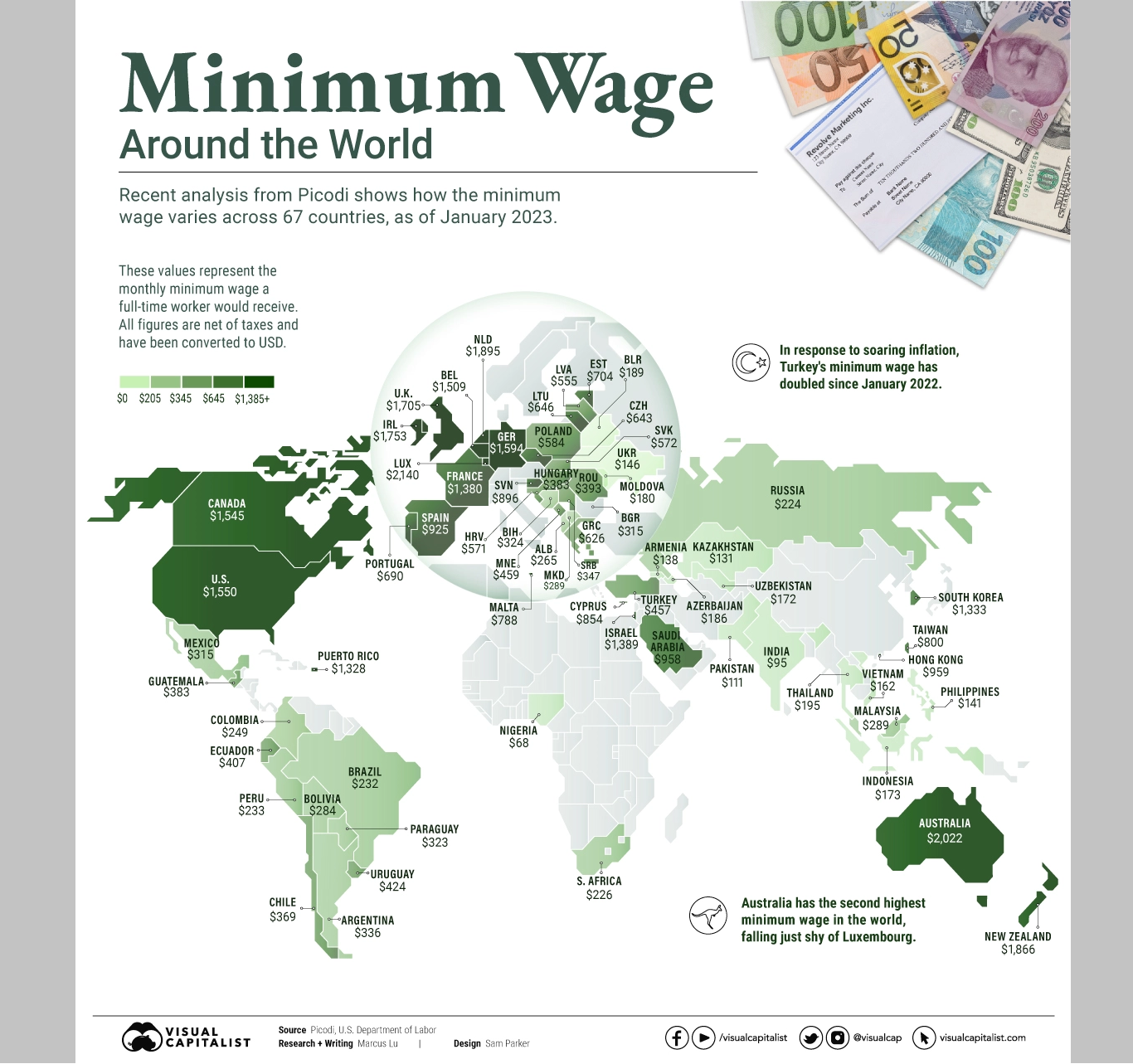
With all of that having been said and now out of the way, it is important to note that there is a lot of variation when it comes to minimum wages around the world. The country with the second highest minimum wage of all turned out to be Australia, where workers can stand to earn over $2,000 a month at a bare minimum.

Australia’s $2,022 minimum wage fell just short of Luxembourg’s $2,140, but in spite of the fact that this is the case Luxembourg has a much smaller population which makes it easier to keep these wages sustainable. Australia and Luxembourg have also increased their minimum wages by 4.7% and 9.2% respectively.

However, there are other countries out there where the minimum wage might not be all that high but it has still increased dramatically over the course of the past year. Cyprus tops the list with a whopping 104.5% increase, and Argentina comes in at a close second with 100%. This means that minimum wages in both these nations have more than doubled with all things having been considered and taken into account.

Turkey comes in at a distant third with a 32.5% increase, bringing its minimum wage up to around $457. However, Turkey’s currency, the Lira, has fallen by 40% in value, so this adjustment only serves to bring the minimum wage closer to previous levels.

In the US, minimum wage can vary from state to state. California offers the highest minimum wage of about $15.5 per hour, whereas many other states opt for the federal minimum wage of just $7.25 per hour. This makes the US one of the worst performers in terms of minimum wage.


H/T: VC / Picodi

Read next: 63% of Female Business Owners Found 2022 Exceptionally Challenging
by Zia Muhammad via Digital Information World

WhatsApp is planning to introduce two new updates in upcoming versions

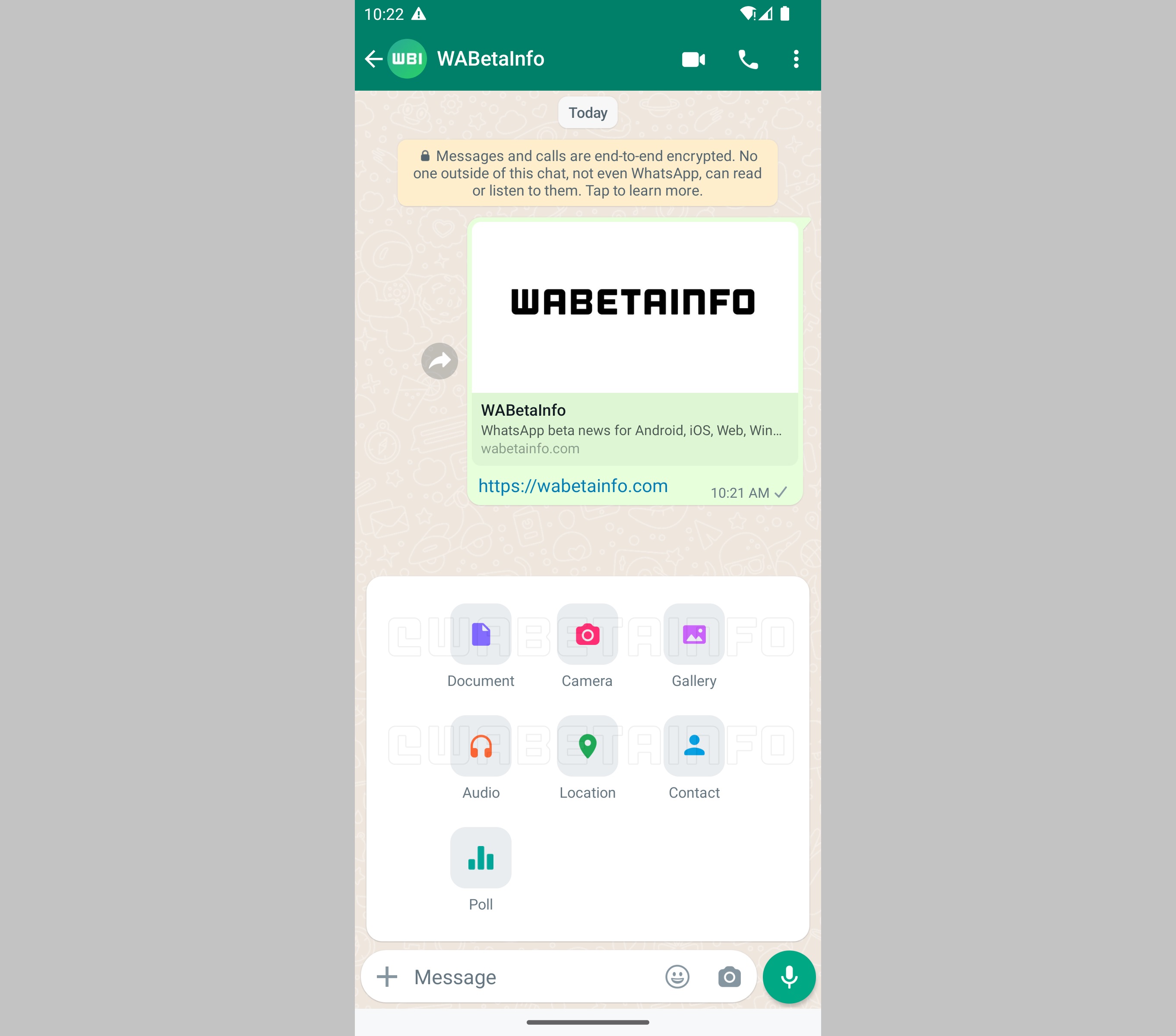
WBI has spotted that Whatsapp is planning to introduce two new updates for its users. These updates include an updated chat attachment menu and the ability to see groups in common while searching for a contact.

Starting with the first one, on March 4th, WBI revealed that WhatsApp was planning to update the chat for iOS users; however, as per the latest news, Android users will also be getting an updated menu. The current menu is outdated and needs to be changed. Based on the snapshot posted by Wabetainfo, it can be seen that the upcoming chat attachment menu will be completely updated. Not only will it look more clear, but it will also give users a much better experience. The beta version of the update has already been released for some users.


So far, no date has been shared as to when the updated menu will be available; however, it can be expected that it will be a part of upcoming updated versions.

Moving on to the second update, it can be seen that WhatsApp wants to offer a better experience to the users, from updating the menu to showing common groups while looking for a contact. At the end of 2022, WhatsApp released a similar update for desktop users who find it useful and time-saving.

The screenshot posted by Wabetainfo shows that whenever a contact is searched, a separate portion, namely Groups in Common, will also be shown. The update has already been released, not just for beta Android users but even for iOS users as well. It can be accessed via the beta version of WhatsApp available on the Play Store. The company has already expanded the number of beta users who will be able to get their hands on these updates.


Once again, no time and date are currently available; hence, it can be expected that, just like the updated menu update, groups in common will also be available anytime in the future.

Read next: WhatsApp Just Fixed a Major Bug, Here’s What You Should Know
by Arooj Ahmed via Digital Information World