Thursday, April 6, 2023

Only 4% of American Teens Say They Use VR

Meta has gone all in on VR because of the fact that this is the sort of thing that could potentially end up boosting its Metaverse plans. However, VR goggles have failed to capture all that much attention from consumers. A survey that was just released by Piper Sandler just revealed how little consumers in the teenager category care about such products with all things having been considered and taken into account.

According to this survey, around 29% of teens said that they own a VR headset. In spite of the fact that this is the case, only 4% of the teenagers that own these headsets stated that they use them daily, with 14% saying that they use them on a weekly basis. What this essentially entails is that less than 1% of American teenagers who responded to this survey use VR headsets every day.

Some industry insiders are claiming that this is all just a part of VR being a new piece of tech, but with all of that having been said and now out of the way it is important to note that most teens aren’t planning to buy them in the future. Out of all of the teenagers who participated in this survey, just 7% said that they intend to purchase a headset at any point. 53% said that they were either unsure or simply uninterested.

This seems to suggest that VR will have a harder time getting off of the ground than might have been the case otherwise. Meta is banking on VR being the future, but it seems that they missed the mark. AI is now the name of the game, and Meta might not have all that many supporters if it sticks with its VR based metaverse mission.

It will be interesting to see if these reduced sales have any impact on Meta’s strategy moving forward. The facts and figures just don’t seem to support the notion that the metaverse will be a driving force in the world of tech in the future, even if it is being offered by one of the biggest tech companies out there.


Read next: Shocking Truths: Which Consumer Electronics Cause the Most Injuries?
by Zia Muhammad via Digital Information World

Meta’s Top Executives Including CEO Mark Zuckerberg Are Spending A Lot Of Time Working On AI

The top executives at Meta are busy working on artificial intelligence and that includes CEO Mark Zuckerberg.

Other than that, we’ve got CPO Chris Cox and the firm’s CTO Andrew Bosworth on the same bandwagon as the rest of the leaders. The news was confirmed when Bosworth admitted the claims during his recent interview on Wednesday that was held with Nikkei Asia.

In the same way, we saw Bosworth shed light on how some of the work would end up benefiting the metaverse, which is the much hyped-up digital world that Meta has been promoting for so long now.

This is proof of how important of a project Meta thinks AI to be, especially after the roaring success of ChatGPT and Microsoft’s Bing technology. And with Google entering the race too with its own Bard chatbot, it only makes sense that Meta stepped up to the plate with its own inventions and start investing big time.

The owner of Facebook and Instagram mentioned a product group in February of this year where it claimed the focus would be just generative AI. The new set of tools including machine learning would enable computers to produce text, make graphics, and generate other forms of media that are very similar to human output.

We do need to remember how Meta does have its own AI-powered language model called LLaMa that it mentioned in February would be launched to the researchers.

In case you did not know, its LLaMA is similar to other competing models in the AI world and can produce replies to queries and even provide summaries of documents along the way.

Other than that, huge language models would be used to power apps such as ChatGPT, Bing, and Barda as well.

Bosworth has been responsible for overlooking the progress of Meta’s Reality Labs for a while now. It’s home to metaverse technologies as well as other endeavors that belong to Meta.

Just last year, we saw him putting out a massive figure describing the great loss Meta endured in its Reality Labs. This came out to be $13.72 billion. And it’s alarming because as per statistics, digital advertising makes up the majority of the company’s revenue. Thankfully, they did see a $116 billion revenue generation in the past year.

So we are expecting the firm to unveil some more commercial apps using AI in 2023 as confirmed by Bosworth. Hence, that would be exciting.


Read next: Meta Takes Its AR/VR Development To A New Level With The Launch Of A Visual Identification System
by Dr. Hura Anwar via Digital Information World

Meta Takes Its AR/VR Development To A New Level With The Launch Of A Visual Identification System

One integral aspect of AR development is identifying objects. And with the right system in place, viewers can get the best functional insights through a screen.

Thanks to AR face filters, we’ve already witnessed how social apps can better appreciate this aspect. And remember, the more equipped the system is in terms of comprehending eye placements and movements, the more refined the effect appears on a screen.

With time, the system keeps getting better and it could be seen generating responses to various aspects today, Meta has set out its own model featuring a great dataset to tackle things like this.

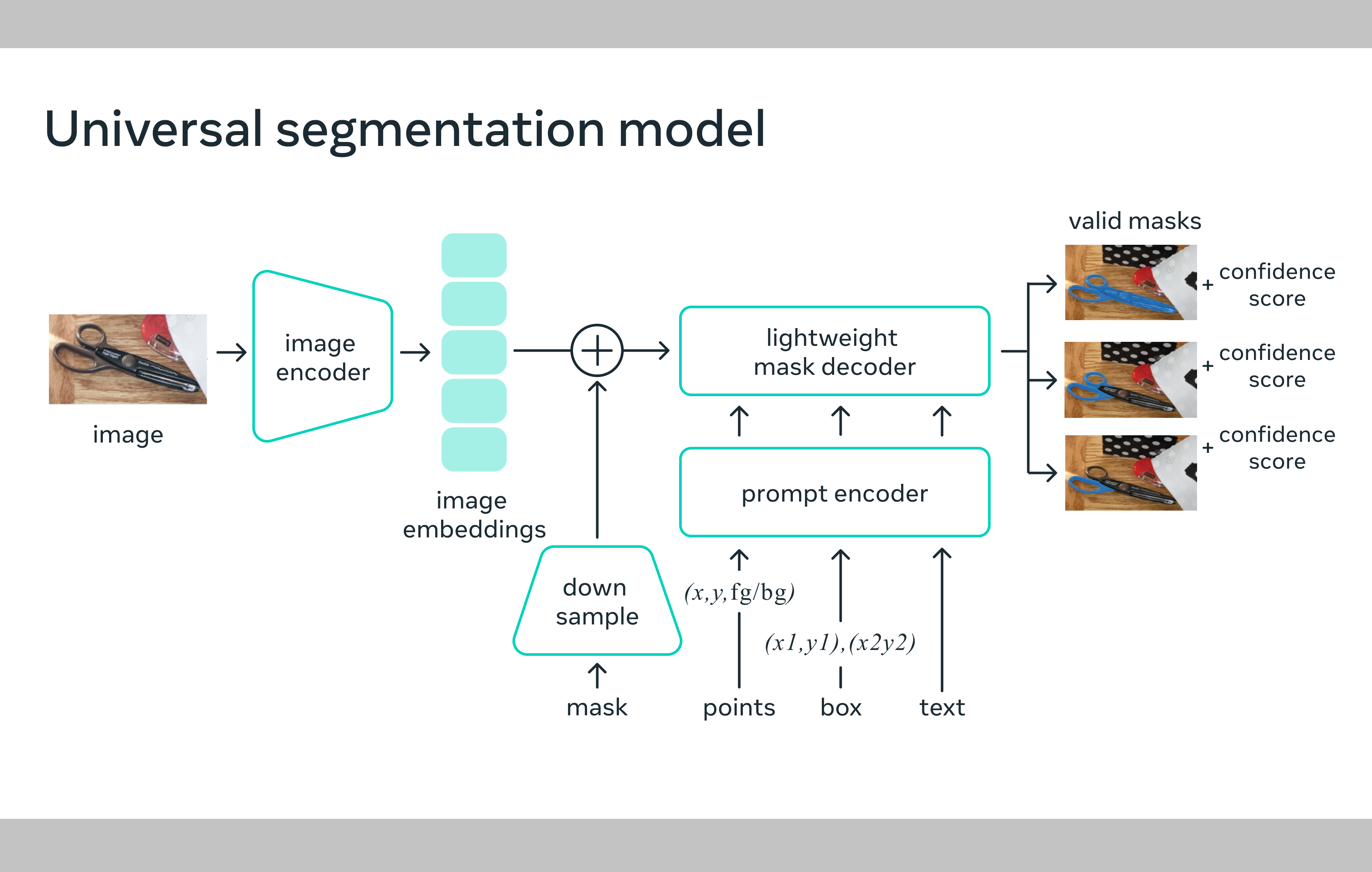
As Meta displays in its demo, the launch of a new system called Segment Anything is designed to give both researchers as well as developers the chance to keep things in one frame.

Facebook’s parent firm is referring to it as their biggest segmentation dataset ever where it can allow a large range of apps to function while fostering more research into models for better computer vision.

This kind of process gives rise to enhance capacity to run AR experiences but the tech giant hopes to introduce something similar for powering both AI as well as VR.

They hope to entail composable designs, prompt engineering, and a bigger variety of apps than systems get trained for specifically. And that could be an integral component in these types of domains like AR/VR, making content, and just the general use of AI-based systems.

There is an entire array of techniques by which datasets could be utilized and that might be the start of new beginnings to help take AR models to new horizons. Similarly, it might help the firm with its smart glasses launch- Project Aria.


Last year in June, we saw Meta delay releases of the AR glasses as a way to cut out costs for the firm. As per the latest report, the company opted to delete the latest addition of AR wearables that would have been launched as early as next year. They hoped to give more priority to the second generation of AR products but as of now, there is yet to be any hint of a release date.

We saw the company unveil its latest series of Ray Ban Stories- which was a smart glasses project put out in 2021. It was a precursor that led to better AR-based wearables that appeared to be getting launched soon but they did not.

Now, it looks like the current economic condition and Meta spending most of its resources on the metaverse may have shifted the ambitious ordeal in another direction.

For now, it’s not quite clear how much the endeavor is put back but as per the new dataset, it appears like there is a lot going on in terms of development regarding this front. And that might see a new form of release of smart glasses in the future.

Now, the company is putting more focus on VR and other investments including generative AI. Therefore, AR might be taking a backseat at Meta for now.

Read next: Influencers On Instagram Aren’t Happy With Meta After Its Two Massive Layoffs Cause Problems In Customer Service
by Dr. Hura Anwar via Digital Information World

Influencers On Instagram Aren’t Happy With Meta After Its Two Massive Layoffs Cause Problems In Customer Service

The worst thing for any customer is not getting assistance from a brand when problems arise and that appears to be taking place on Instagram.

Top influencers on the leading social media platform aren’t happy with the way things are operating on the app at this moment in time. Most of them claim to derive a livelihood through the app. But when it comes to getting good customer service, they’re being left in the dark and they’re not loving it.

Most are claiming to get little to no feedback, as far as customer service is concerned. And that’s when Meta had just recently conducted two massive firing sprees, getting rid of employees that took care of that division.

Now, the company seems to be struggling and failing at fulfilling those deficiencies. Around 11,000 workers would be left out in the dark- this is the type of announcement the firm followed through with.

All job cuts have taken a toll on the way customer service runs on the app as per a new report by CNBC. And these aren’t ordinary clients making clients. Some are leading fashion models and socialites including Katya Karlova. She complained of images getting stolen by people so they could create more fake profiles of hers.

Other than that, some of her pictures received the ‘too explicit’ status by the app and since a lot of those were affiliated with brands, it was turning into a major problem for her. And by the time she got a chance to respond to such bans, the number of followers got affected.

After all such problems arose, Karlova questioned whether or not Meta could give better client support and services because, by the looks of it, much fewer people are being designated tasks to address such matters.

Meanwhile, another example featured the top community manager of the group 50 Shades of Pink on Facebook. MeLynda Rinker revealed how she had some problems with the backend of Facebook Analytics. For help, she contacted the app’s support team and nobody reached back to her.

Therefore, she released a statement that outlined how strongly she felt when Meta fired its Facebook teams. She saw things were not functioning as before and they just failed to be given the same attention as that from the past.

The struggles were real and those users of the app were the ones getting affected it was frustrating, to say the least.

Those remaining are feeling pressured while the rest are not working as efficiently as there is not enough help to get tasks of the same magnitude done.

For now, Meta is yet to release any comments on the matter but we don’t think this matter can be hidden for too long as it’s serious. Content creators and influencers are known for making their voices heard and by the looks of it, Meta would surely need to give in before it’s too late.


Read next: Only 22% of Americans Oppose a TikTok Ban
by Dr. Hura Anwar via Digital Information World

Forbes Annual Ranking Of Richest Billionaires Shows Amazon Founder Jeff Bezos’s Wealth Taking Biggest Plunge In 2022

It can be said without any hesitation that the year 2022 was troublesome for many sectors and the tech industry is no exception.

Shares took a massive tumble and that really did end up causing a major dent in the fortune belonging to some top business founders.

This week, Forbes published its annual ranking for the richest billionaires and some shocking insights proved who stood their ground and who simply couldn’t.

It was Amazon’s Jeff Bezos whose wealth took the worst hit in 2022. To be more specific, we’re talking about a massive drop of $57 billion from the period of March of last year. Today, he's doing better and is standing firm at $114 billion, turning him into the world’s third-richest individual.

The stocks for Amazon dropped by a good 50% in the year 2022 and that turned the first time since we saw the public firm lose a staggering $1 trillion of its market share value.

But in terms of wealth gains, in second place, was none other than tech billionaire and CEO of Tesla and Twitter, Elon Musk. His net worth stands at $180 billion while the top place went to the CEO of LVMH Bernard Arnault. His net worth stands at $211 billion.

Coming to Amazon’s share price, fell by nearly 50% in the past year, and this made it the first public firm to ever endure a loss worth $1 trillion in terms of market value.

The list for 2023 has nearly 313 billionaires arising from the tech world and together, the sum of their fortune is close to $1.9 trillion. This is down from the previous year when 332 tech firm titans were seen, which were worth $2.1 trillion in 2022 as per records from Forbes.

But it was the year 2021 that served as blazing hot for the tech industry. This is where Forbes saw 365 tech billionaires witnessing a record worth $2.5 trillion.
As far as the year 2023 is concerned, it’s not been the best beginning for Amazon. The firm’s CEO that replaced Jeff Bezos, Andy Jassy opted to step down from the leading position in July of 2021.

They made it very clear in January that the firm would remove 18,000 jobs and that would make it the biggest job cut in the firm’s history.

We saw in March how Jassy declared that the company would be firing nearly 9000 more members of its workforce as it hopes to move ahead with a leaner organization.


Read next: Bill Gates Says Putting A Pause On AI Will Not Solve The Problems That This Technology Presents
by Dr. Hura Anwar via Digital Information World

Wednesday, April 5, 2023

Great Expectations: How Technology Elevates the Communications Experience

By Lisa Pignataro-Meath, Vice President, Strategy & Business Development, Broadridge Customer Communications

The past three years have changed customer experience (CX) and communications—driving consumers’ reliance on digital as well as their expectations for what qualifies as a good omni-channel communications experience.

Consumers have been dissatisfied with the customer experiences they’ve received for several years. Fast-forward to 2023, however, and we see customer dissatisfaction levels have skyrocketed. Almost 70% of consumers surveyed in Broadridge’s 2023 CX and Communications Consumer Insights study indicated that most of the companies they do business with need to improve the customer experience. That’s doubled since 2019.


Customers vote with their wallets. More than a third of customers will cut spending with a business after a negative interaction. Before tech can deliver better interactions and engagement, companies need to build—or even rebuild—their infrastructure to support it.

The personal touch through mass personalization

It is critical for companies to consider the role communications plays in customer perceptions and their overall experience. In fact, about three in five consumers judge a company’s level of innovation based on the communications they send.

Consumers don’t want cookie-cutter communications: They want more personalization. Eighty-one percent of consumers want businesses to customize their experience based on what the company knows about them. This expectation has led to frustration for consumers: only 28% say companies are “doing great” at customizing their experiences based on the data they have.


Consumers are looking for a hyper-personalized experience, which requires companies to structure their data and communications in a way that supports personalization at scale. Companies know they need to deliver this kind of experience, but most won’t accomplish their goals unless they do the behind-the-scenes work of rebuilding their technology.

Digital enhancements are increasing customer satisfaction levels

We observed an increase in digital adoption in 2022, but more consumers would go fully digital if the experience was better. In fact, 82% of consumers would go paperless—an increase of 11 percentage points since 2022.

Nearly three quarters of consumers want simpler communications, such as interactive summaries of important billing or statements directly within the email companies send. Directing them to a website in order to get this information creates friction in the experience—something consumers won’t tolerate.

What are some ways companies can improve the digital experience? One example is by providing customers with personalized summary communications with goal-based performance updates, a recap of key activities, and recommendations for what to do next.

It’s a matter of trust

Clear and personalized communications may be the first key to earning consumers’ trust, but providing robust account security is a close second. Privacy and data security are of vital importance to consumers, especially when they’re evaluating the trustworthiness of any company.

More than 40% of consumers stopped doing business with a company because of a hack that exposed consumer data. A majority agree that advances in digital identity security measures, like Face ID and PIN codes sent via email or text, would make them more likely to engage digitally with companies.

Building trust begins with building the technology required to keep customer information secure. Broadridge’s latest Digital Transformation and Next-Gen Tech Study finds that respondents plan to increase their investment in new technology—with cybersecurity at the fore—by 20% during the next two years.

Start with the essentials

Creating the kinds of CX experiences customers demand poses challenges, particularly for established companies with entrenched processes and systems. About 40% of companies find their path toward digital transformation stymied by rigid legacy systems.

More than a third of businesses face financial constraints that impede their ability to undergo digital transformation, which is compounded by economic difficulties. Similarly, an equal percentage struggle to strike a balance between innovative pursuits and daily operational tasks. These issues are partially driven by a scarcity of the expertise and talent necessary for technological advancement.

In today’s environment of limited budgets and resources, businesses don’t have to build their own custom solutions to address CX and communications challenges. There are customer communication management and CX leaders that can help create the solutions they need, without diverting valuable in-house resources away from their day-to-day business operations. These mutualized solutions make it easier to transform your operations and with less overhead than going at it alone.

Companies looking to satisfy consumers’ strong desire for digital enhancements can and should partner with an organization that can help them achieve their digital transformation and operational savings goals — while also taking their customer experience and communications to the next level. Doing so can not only help these businesses cut costs, but it can help them achieve a competitive edge in the marketplace by enhancing the communications experience. After all, every interaction counts.

Read next: Social Media Usage Is Greater Than Ever But Publishers Aren’t Making Much Of This Opportunity, New Study Proves
by Web Desk via Digital Information World

America’s Top 10 Predictions for the Impact Tech and Social Media Will Have in the Future, Revealed

Social media has had a significant impact on society in the relatively short time it has circulated. These platforms, which range from Facebook to TikTok, have radically transformed the way we engage, communicate, and consume information.

Social media has numerous advantages, such as the ability to connect with others across the world, but it's also necessary to recognize the new difficulties it has created. Social media has often been referred to as “a world of its own”, However, as time goes on and technology advances, the impact of social media on our real lives increases significantly.

In recent news, the United States ordered that Bytedance sell the well-known social media platform TikTok, or else face a ban in the US entirely. The White House already forbids TikTok from being installed on governmental devices, and as conversations continue, TikTok's future in America is still up in the air.

With this in mind, HigherVisibility has assessed the current attitudes toward social media in the US and its impact on lifestyle habits by surveying 2,000 consumers about the effect they feel the growth of social media has and will have, on their lives.

[Survey] America’s Top 10 Predictions for the Impact Tech and Social Media Will Have in the Future, Revealed

When it came to the predictions America has for the impact social media and technology will have in the future, it was found that over 1 in 5 people (22.12%) thought that people would consume more video content online than through traditional forms of media, and it appears that the tide has already turned. Data shows that in 2011, US citizens spent 214 minutes on digital media, as opposed to 453 minutes with traditional media, while in 2023, this has completely flipped. Citizens are now spending 500 minutes on digital media and 285 minutes with traditional media per day.

Unsurprisingly, this also raises concerns about how our perspectives are formed due to spending so much time online. Almost a quarter of people believe that people will be more susceptible to fake news, a phenomenon we’ve already seen due to how quickly ‘news’ disseminates on social media, and a further 1 in 5 believe people will be more easily radicalised due to the propaganda that they see within platforms. From health misinformation to political views, it’s clear to see how this can become problematic.


Taking a further look into social media’s impact on lifestyle and habits, over 1 in 2 respondents (57.71%) said that when they’re on social media, they often find themselves scrolling mindlessly. Despite this, over 1 in 5 people in the United States (20.82%) would rather spend time using social media than spend time with family and friends. Somewhat surprisingly, the generation that agreed with this statement the most was millennials, with over 40% claiming they would prefer to spend their time online (40.86%).

When it came to the impact of social media influencers on our mental health, the study found that 41% of men wished their lifestyle to appear in the same way as their favourite social media influencer, in comparison to 23.73% of women.

With news of the metaverse continuously in the media, the survey also found that over 2 in 5 US residents (43.78%) are concerned about the metaverse and whether this will increase social media usage in the future. Additionally, nearly 3 in 5 people (58.26%) are worried about what the future of their lives may look like due to the rise of social media and technology.


The study then found that nearly 1 in 3 (31.25%) people living in the US feel they have unrealistic expectations of themselves and their lives due to social media, with 32.80% also agreeing that after using social media, they often feel much worse than when they started.

Unrealistic expectations were most predominant in men with over 1 in 3 (36.42%) agreeing, in comparison to just under 1 in 4 women (26.27%).

Interestingly, the data found that the number of those who agreed with this statement declined as age increased, with over 1 in 2 Gen Z (50.76%) stating that they have unrealistic expectations of themselves as a result of social media, in comparison to just 8.08% of Baby Boomers, begging the question; is social media’s impact on the way we look at ourselves growing with each generation?

When it came to the impact of social media influencers on our mental health, the study found that 41% of men wished their lifestyle to appear in the same way as their favourite social media influencer, in comparison to 23.73% of women. In addition, almost 70% of people (67.05%) feel that social media's influence is more negative than positive, with nearly 1 in 3 respondents (30.90%) concerned that if people continue using social media to the same extent they are now, or more, within 50 to 100 years people will suffer from mental health issues and anxiety due to constantly comparing themselves on social media.

The exponential rise of AI has been likened to social media in many ways, with criticism around legislation and dealing with misinformation rife. There are numerous cases in which citizens feel their rights as a consumer have not been protected when it comes to social media platforms, and with legislation only being implemented 25 years later, there’s clear cause for concern when it comes to security and privacy. While the potential for these technological developments is huge and has the power to be utilized for advancement, there is also the possibility of misuse.

Interestingly, US citizens fear advancements in tech such as AI technology and AR/VR, as well as the ways in which this may impact people who spend time online. 1 in 5 people believe that we will rely on AI more and more, and a similar number fear that people will interact more on social media using AR/VR tech than they do in real life. This ultimately raises the question of whether we’re becoming more connected due to social media or disconnected. Given the issue of misinformation and fake news, it suggests that the lifestyle presented in ‘The Social Dilemma’ isn’t so dystopian, or far off, as we may have thought.

Read next: What's UR State Saying? A Look at the Most Popular Textspeak in Each State
by Web Desk via Digital Information World