LinkedIn has put out a new Brand To Buyer marketing report for the tech sector.
The newly published report looks at how different brands are exploring new purchases and which factors are having the biggest influence through such processes.
This report entails a long list of responses from more than 2000 different decision makers of the tech world while featuring 2100 marketers having valuable insights through evolving mindsets in this field. It feels this could help so many others stay informed about some great strategic planning.
Users can view the detailed report online but we’ve also summarized the key findings for your convenience below.
For starters, the platform notes down which tech budgets are on the rise. And it does make sense why it’s doing that because the rate at which things are shaking up in the tech world is definitely worth a mention. Did we mention the countless advances coming forward on the AI front too? Let’s not forget how the Metaverse is encouraging more enterprises to take a step back and think about how they can better their future.
In the same way, you need to remember that from the perspective of a marketer, there is a huge chance that you may reach out to firms providing the best solutions in the market that come aligned with their genuine concerns. More firms are putting out investments and in the future, it may lead to a long list of exciting opportunities.
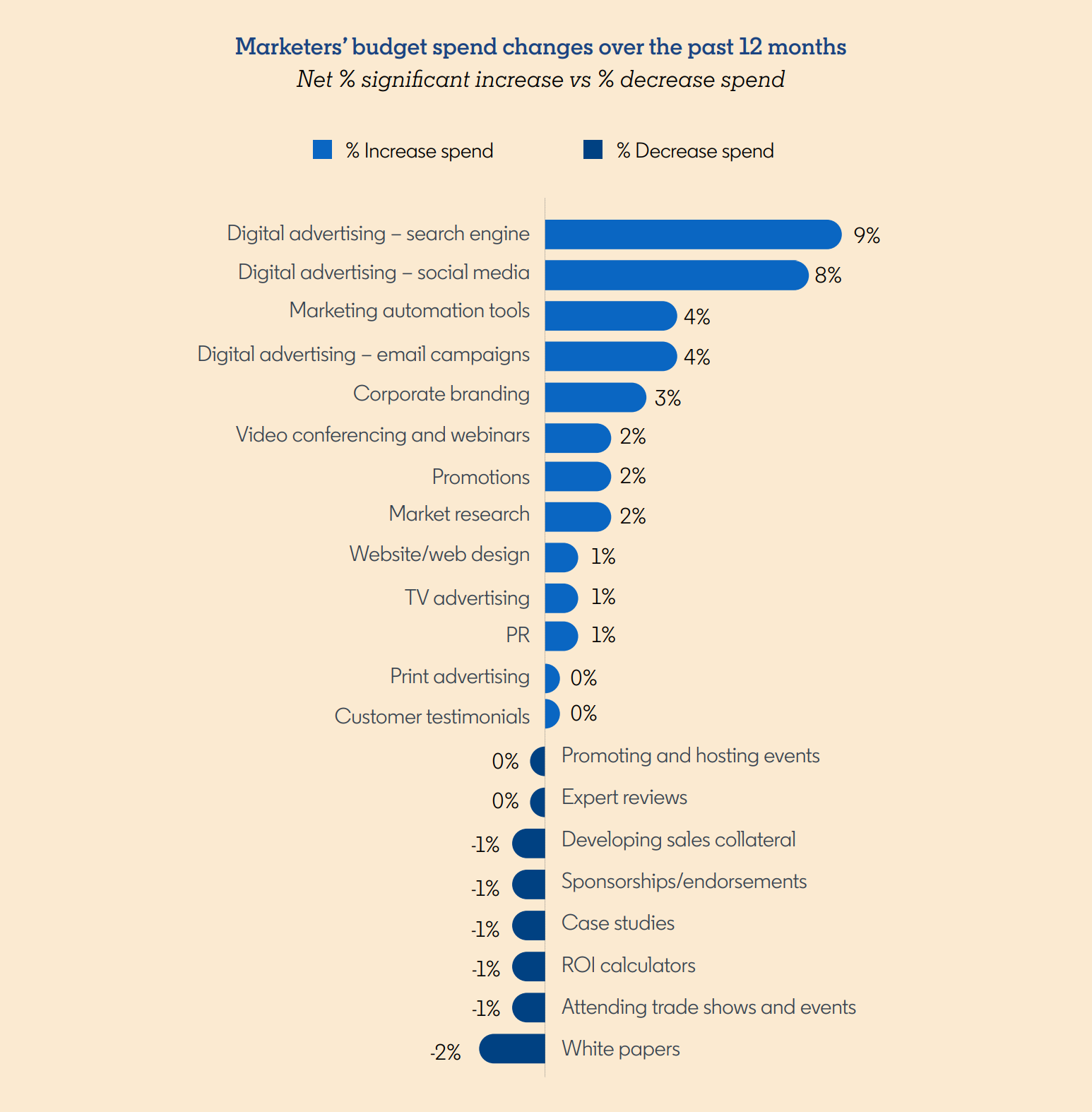
On the other hand, the report also looked at how leading tech marketers were trying to connect with the buyers of the industry while the most popular thoughts linked to communication had to do with messages.
As one can imagine, the marketing world linked to social media and SEO is the main target point while plenty of white papers and trade exhibits are on the decline. In the same way, the reports show how automation tools in the world of marketing are similarly increasing.
The research is also providing an overview of the best means for communication regarding tech buyers and the main elements that could enhance messaging. Furthermore, there are some greater insights linked to tech buyers trying to get details about social media arising to the top. Some insights are quite interesting while others are doing justice at setting out users’ outreach strategies. And in the end, the goal is to make sure they’re aligned with the thought process of decision-makers and how they’re making purchasing decisions.
Read next: The SEO study predicts the trajectory of content marketing tactics for 2023
by Dr. Hura Anwar via Digital Information World
"Mr Branding" is a blog based on RSS for everything related to website branding and website design, it collects its posts from many sites in order to facilitate the updating to the latest technology.
To suggest any source, please contact me: Taha.baba@consultant.com
Saturday, April 22, 2023
TikTok's Rise in Influencer Marketing: A Threat to Instagram's Reign
In the current era of digital innovations, Instagram has long reigned supreme. The Meta-owned platform has been the top choice for creators and brands alike, offering a visually focused platform that has helped launch countless careers and campaigns. However, in recent months, TikTok is not far behind Instagram.
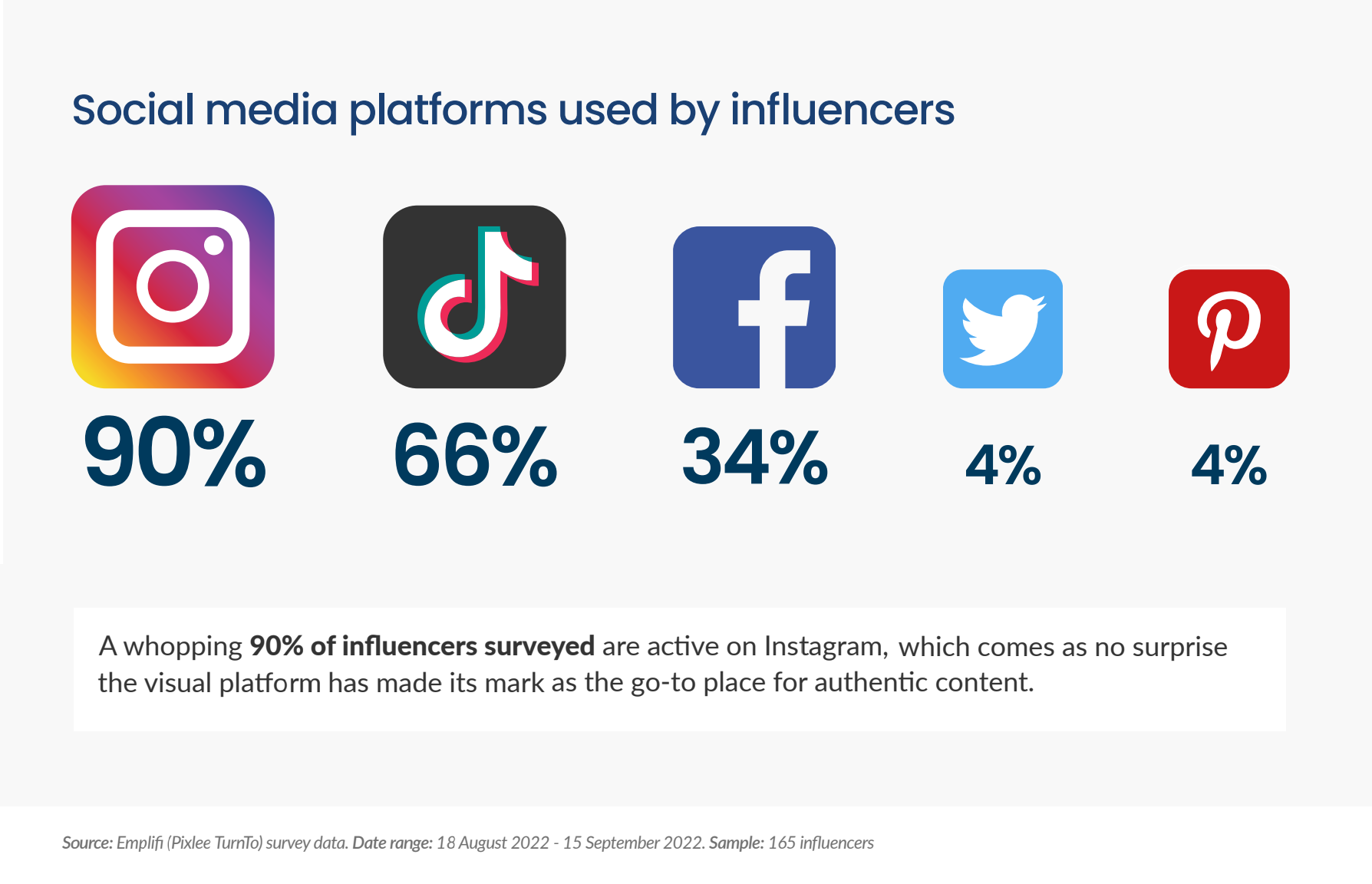
According to a new study conducted by Emplifi, Instagram is still the prime choice for internet marketing campaigns, with an estimated ninety percent of active influences on this platform. However, TikTok is not far behind, it hosts sixty-six percent of influencers. While Instagram's dominance in space is still undeniable, the report suggests that TikTok's rapid rise is worth watching.
One of the key reasons for TikTok's fame in the influencer marketing space is its ability to reach younger people. The platform's average consumer base is aged between 10 and 19 years old, making it an attractive platform for brands looking to target a younger demographic.
It has also been praised for its innovative features, which have helped it stand out in a crowded internet landscape. The platform's precise content has proven to be a hit with individuals. Brands have been quick to capitalize on TikTok's fame, with campaigns ranging from hashtag challenges to product placements.
However, Instagram is not taking TikTok's challenge lying down. The platform has recently launched several new features to keep its influencer marketing offerings competitive. One of these features is Insta Reels, which allows consumers to create s-precise content like TikTok. The research also shows that reels have risen by approx. 240% in the current year, making brands & individuals earn more.
In addition, various industries can multiply their reach through these strategies. Among all industries, healthcare is the most hit one, with reaches multiplied almost 18 times through these strategies.
Despite TikTok's growth, it remains to be seen whether the platform can overtake Insta as the go-to choose for internet marketing campaigns. However, what is clear is that TikTok's rise is a sign of the ever-evolving landscape of social media and influencer marketing. As brands continue to explore new ways to reach audiences and build their online presence, it will be fascinating to see how these two competitors, and others, continue to compete and innovate in the years to come.
Read next: IZEA’s State of Influencer Equality 2023 report shows average earnings have dramatically risen for influencers of all races and genders
by Arooj Ahmed via Digital Information World
According to a new study conducted by Emplifi, Instagram is still the prime choice for internet marketing campaigns, with an estimated ninety percent of active influences on this platform. However, TikTok is not far behind, it hosts sixty-six percent of influencers. While Instagram's dominance in space is still undeniable, the report suggests that TikTok's rapid rise is worth watching.
One of the key reasons for TikTok's fame in the influencer marketing space is its ability to reach younger people. The platform's average consumer base is aged between 10 and 19 years old, making it an attractive platform for brands looking to target a younger demographic.
It has also been praised for its innovative features, which have helped it stand out in a crowded internet landscape. The platform's precise content has proven to be a hit with individuals. Brands have been quick to capitalize on TikTok's fame, with campaigns ranging from hashtag challenges to product placements.
However, Instagram is not taking TikTok's challenge lying down. The platform has recently launched several new features to keep its influencer marketing offerings competitive. One of these features is Insta Reels, which allows consumers to create s-precise content like TikTok. The research also shows that reels have risen by approx. 240% in the current year, making brands & individuals earn more.
In addition, various industries can multiply their reach through these strategies. Among all industries, healthcare is the most hit one, with reaches multiplied almost 18 times through these strategies.
Despite TikTok's growth, it remains to be seen whether the platform can overtake Insta as the go-to choose for internet marketing campaigns. However, what is clear is that TikTok's rise is a sign of the ever-evolving landscape of social media and influencer marketing. As brands continue to explore new ways to reach audiences and build their online presence, it will be fascinating to see how these two competitors, and others, continue to compete and innovate in the years to come.
Read next: IZEA’s State of Influencer Equality 2023 report shows average earnings have dramatically risen for influencers of all races and genders
by Arooj Ahmed via Digital Information World
Smartphone Takes Over: Consumer Screen Time Hits Record High
Smartphone apps persist to dominate the digital space as consumers spend more time using them in the current year's quarter than they did a year ago. A recent analysis by DataAI highlights that they have been spending 5 and half hours on these apps lately.
In the face of a shaky economic crisis, consumers are looking for deals to save money. This has led to an increase in demand for budget-friendly platforms, resale platforms, and fast-fashion and affordable goods.
Some of the apps to gain fame in Australia & US includes Fly Bonza & Hopper. Also, apps with affordable deals & prices are the hottest trend right now.
The study also highlights that users are prioritizing joy even though their wallets are lighter, with TikTok leading the way for breakout consumer spend in the current year's first quarter. Also in several other countries, this platform was the top-rated one.
Other areas of growth include lingo learning, video streaming, comics and anime, and fitness aims. Calorie-counting platforms were rated highly in Germany, the UK, and the US as people soughtto achieve their new year’s fitness ambitions with guidance and accountability through premium subscriptions.
Besides joy, several games also dominated in multiple areas of the globe. Apps such as street fighter & block blast were the most widespread ones around the globe, making them installed & played several times.
However, besides all of these, experts also warn that excessive usage of smart devices can have adverse impacts on mental well-being. They recommend setting boundaries and taking breaks from screens to maintain a healthy balance.
Overall, the investigation provides valuable insights into the habits and preferences of cell phone consumers. With people spending an average of 5 and half Hours/Day on their devices, it's clear that mobile technology will continue to play a significant role in our daily lives.
Read next: The fastest mobile and broadband internet speeds in the world as of March 2023
by Arooj Ahmed via Digital Information World
In the face of a shaky economic crisis, consumers are looking for deals to save money. This has led to an increase in demand for budget-friendly platforms, resale platforms, and fast-fashion and affordable goods.
Some of the apps to gain fame in Australia & US includes Fly Bonza & Hopper. Also, apps with affordable deals & prices are the hottest trend right now.
The study also highlights that users are prioritizing joy even though their wallets are lighter, with TikTok leading the way for breakout consumer spend in the current year's first quarter. Also in several other countries, this platform was the top-rated one.
Other areas of growth include lingo learning, video streaming, comics and anime, and fitness aims. Calorie-counting platforms were rated highly in Germany, the UK, and the US as people soughtto achieve their new year’s fitness ambitions with guidance and accountability through premium subscriptions.
Besides joy, several games also dominated in multiple areas of the globe. Apps such as street fighter & block blast were the most widespread ones around the globe, making them installed & played several times.
However, besides all of these, experts also warn that excessive usage of smart devices can have adverse impacts on mental well-being. They recommend setting boundaries and taking breaks from screens to maintain a healthy balance.
Overall, the investigation provides valuable insights into the habits and preferences of cell phone consumers. With people spending an average of 5 and half Hours/Day on their devices, it's clear that mobile technology will continue to play a significant role in our daily lives.
Read next: The fastest mobile and broadband internet speeds in the world as of March 2023
by Arooj Ahmed via Digital Information World
Friday, April 21, 2023
Which US States Are Leading In Terms of AI Adoption and Innovation?
A new study has revealed the states most likely to use artificial intelligence (AI), and the results are surprising.
According to a recent survey from YACSS, a website builder powered by AI, Utah is the most AI-friendly state in the US. The study examined which conditions were most interested in employing AI for various reasons using data on Google terms.
Surprisingly, California and New York did not top the list. Instead, Utah became the most popular state for using AI. According to the study, art, voice generators (which produce human voices for video games and movies), music, animation, and resume writing were the uses of AI most likely to be used in Utah. With comparable outcomes, Oregon placed second on the list. Their most popular AI-related search keyword was art, followed by voice generator, music, animation, and resume writing.
The study also discovered that states like Texas, Washington, and Florida were interested in adopting AI for a range of applications. Demand for this technology is rising outside Silicon Valley and other American tech hubs.
YACSS' research shows that interest in artificial intelligence is multiplying across America - particularly in states like Utah and Oregon, where it is already being used extensively. With its ability to automate processes, improve efficiency and reduce costs, it's no wonder why people are looking into how they can use AI within their organizations.
Given the potential benefits of artificial intelligence, it's no surprise that more and more companies are investing in this technology. From healthcare to finance, AI has already transformed many industries for the better. However, experts agree there is still a long way to go before AI reaches its full potential.
AI is a rapidly evolving field, and companies must stay up-to-date on the latest developments to get the most out of their investment. Companies must also be aware of potential risks associated with AI technology, such as data privacy issues and ethical considerations.
The Mountain West area of the United States has the highest search engine activity, with Utah leading the pack with over 200 searches per 100,000 people. Oregon and Washington come in second and third, with monthly query counts that are just around 190. As we move farther east, Vermont comes in third, but with only 173 queries, it still trails behind its western counterparts—Colorado even has a slight advantage! Alaska retains a commanding position regarding raw volume, and New Hampshire completes the top 5. The final three states in our analysis are Idaho, Wyoming, and Maine, all of which claim over 150 searches each month for their residents.
Read next: The Rise Of AI Will Only Make Big Tech Companies Stronger As Experts Urge To Address Imbalance
by Arooj Ahmed via Digital Information World
According to a recent survey from YACSS, a website builder powered by AI, Utah is the most AI-friendly state in the US. The study examined which conditions were most interested in employing AI for various reasons using data on Google terms.
Surprisingly, California and New York did not top the list. Instead, Utah became the most popular state for using AI. According to the study, art, voice generators (which produce human voices for video games and movies), music, animation, and resume writing were the uses of AI most likely to be used in Utah. With comparable outcomes, Oregon placed second on the list. Their most popular AI-related search keyword was art, followed by voice generator, music, animation, and resume writing.
The study also discovered that states like Texas, Washington, and Florida were interested in adopting AI for a range of applications. Demand for this technology is rising outside Silicon Valley and other American tech hubs.
YACSS' research shows that interest in artificial intelligence is multiplying across America - particularly in states like Utah and Oregon, where it is already being used extensively. With its ability to automate processes, improve efficiency and reduce costs, it's no wonder why people are looking into how they can use AI within their organizations.
Given the potential benefits of artificial intelligence, it's no surprise that more and more companies are investing in this technology. From healthcare to finance, AI has already transformed many industries for the better. However, experts agree there is still a long way to go before AI reaches its full potential.
AI is a rapidly evolving field, and companies must stay up-to-date on the latest developments to get the most out of their investment. Companies must also be aware of potential risks associated with AI technology, such as data privacy issues and ethical considerations.
The Mountain West area of the United States has the highest search engine activity, with Utah leading the pack with over 200 searches per 100,000 people. Oregon and Washington come in second and third, with monthly query counts that are just around 190. As we move farther east, Vermont comes in third, but with only 173 queries, it still trails behind its western counterparts—Colorado even has a slight advantage! Alaska retains a commanding position regarding raw volume, and New Hampshire completes the top 5. The final three states in our analysis are Idaho, Wyoming, and Maine, all of which claim over 150 searches each month for their residents.
Read next: The Rise Of AI Will Only Make Big Tech Companies Stronger As Experts Urge To Address Imbalance
by Arooj Ahmed via Digital Information World
Let’s See What’s New in WhatsApp Beta for Android and iOS
If you're a WhatsApp user, you'll be excited to know that the Meta-owned messaging app has some new updates on the horizon to improve your experience. They recently released a beta for Android, and we have all the details.
One of the updates is a redesigned attachment menu that looks more modern and user-friendly. They're also making some changes to the keyboard, moving the selection bar to the top and removing the categories bar for emojis. While some users may worry that they won't be able to quickly access their favorite emojis, WhatsApp is still testing the feature, so it may change before it's released.
The update also includes information about compatibility with older operating systems. If you have an Android version lower than 5.0, the app will no longer work. This is because WhatsApp wants to ensure that the app is safe to use and provides the best experience possible. After you install the update, you might notice that the WhatsApp logo looks bigger than usual when you open the app. Don't worry, this is a known issue and doesn't affect the functionality of the app.
We're excited to see what other updates WhatsApp has in store for us. The latest WhatsApp beta for iOS 23.8.0.73 update has brought a new feature to the drawing editor: a revamped text editor. This feature is designed to enhance the user experience when editing images, videos, and GIFs by providing new text tools. The new text editor includes various features such as font options, text alignment, and text background color. Users can now easily select from different fonts and customize their text by changing the alignment to the left, center, or right. They can also change the background color of the text to make it stand out more.
With the new text editor, users will have access to new fonts such as Calistoga, Courier Prime, Damion, Exo 2, and Morning Breeze. This will give users even more options to choose from when customizing their text. The new text editor is currently available to some beta users but will be available to all of the users soon. It will roll out to even more users over the coming days.
The new text editor is part of WhatsApp's ongoing efforts to improve the user experience and provide new features to its users. With the ability to customize text in images, videos, and GIFs, users will be able to express themselves more creatively and effectively. As always, WhatsApp will continue to release updates and new features to enhance its messaging platform.
Both of these features are still rolling out and soon they will be available to all Android WhatsApp Users all around the world.
Read next: New study suggests VPN might have reached saturation point
by Arooj Ahmed via Digital Information World
One of the updates is a redesigned attachment menu that looks more modern and user-friendly. They're also making some changes to the keyboard, moving the selection bar to the top and removing the categories bar for emojis. While some users may worry that they won't be able to quickly access their favorite emojis, WhatsApp is still testing the feature, so it may change before it's released.
The update also includes information about compatibility with older operating systems. If you have an Android version lower than 5.0, the app will no longer work. This is because WhatsApp wants to ensure that the app is safe to use and provides the best experience possible. After you install the update, you might notice that the WhatsApp logo looks bigger than usual when you open the app. Don't worry, this is a known issue and doesn't affect the functionality of the app.
We're excited to see what other updates WhatsApp has in store for us. The latest WhatsApp beta for iOS 23.8.0.73 update has brought a new feature to the drawing editor: a revamped text editor. This feature is designed to enhance the user experience when editing images, videos, and GIFs by providing new text tools. The new text editor includes various features such as font options, text alignment, and text background color. Users can now easily select from different fonts and customize their text by changing the alignment to the left, center, or right. They can also change the background color of the text to make it stand out more.
With the new text editor, users will have access to new fonts such as Calistoga, Courier Prime, Damion, Exo 2, and Morning Breeze. This will give users even more options to choose from when customizing their text. The new text editor is currently available to some beta users but will be available to all of the users soon. It will roll out to even more users over the coming days.
The new text editor is part of WhatsApp's ongoing efforts to improve the user experience and provide new features to its users. With the ability to customize text in images, videos, and GIFs, users will be able to express themselves more creatively and effectively. As always, WhatsApp will continue to release updates and new features to enhance its messaging platform.
Both of these features are still rolling out and soon they will be available to all Android WhatsApp Users all around the world.
Read next: New study suggests VPN might have reached saturation point
by Arooj Ahmed via Digital Information World
Paddy Galloway decoded the YouTube Shorts algorithm to answer some frequently asked questions
Famous YouTube growth hacker Paddy Galloway, known for helping people build and grow their YouTube channels, recently shared some findings on his Twitter account regarding YouTube Shorts.
In order to carry out the project, Paddy, along with his chief analyst, Chris Gileta, studied thirty-three YouTube channels hosting 5,400 YouTube Shorts. Based on the data collected by the two, they were able to shed some light on one of the most frequently asked questions: how short should YouTube Shorts be?
Based on the graph posted by Paddy, it can be seen that most of the shorts were somewhere between thirty and forty seconds in length. Followed by a twenty to thirty-second time frame. Whereas shorts made in the zero to ten second limits were the lowest in numbers.
However, in terms of views, the results were a bit different. As mentioned above, shorts created in a 0–10 second time frame were the most rare ones; hence, they also had the least number of views. Surprisingly, on the basis of views, shorts following the 50- to 60-second frame gathered up to 1.7 million views as compared to the 30- to 40-second frame, which, despite having the most numbers, was at the third position in terms of views.
While creating a YouTube short, creators would only focus on the creation and not on holding people for as long as possible. Based on the collected data, it can be noted that shorts where the average view duration was greater than fifty seconds had an average of 4.1 million views. As the duration decreased, average views also began to decline. However, a big gap can be seen between the 40 and 50 second frames, which hold 1.8 million average views, whereas the 50 to 60 second frames gather 4.1 million average views.
While discussing things that need to be noted from the study, Paddy wrote that the YouTube algorithm prefers longer videos that have a better average view performance over very short ones. However, it does not mean that creators should start creating shorts with a particular time limit. There were many exceptions in this regard, so a certain length shouldn’t be focused.
Another important factor that is looked upon by the algorithm includes viewed versus swiped away difference. Based on the graph, it is evident that YouTube shorts created with less than sixty percent of them viewed versus swiped away had poor performance, whereas those ranging between seventy and ninety percent showed excellent progress.
According to Paddy, it is still unclear whether viewer engagement, such as likes or comments, is also included by the algorithm, just like it is in long-form videos. He further suggested that creators pay more attention to the first and second. It is the first second that decides whether it will be swiped away or watched.
Moving on to another frequently asked question, that of whether shorts are even worth it or not, Initially, Paddy himself considered shorts to be a short cut for getting more subscribers; however, after concluding the study, even his views have changed. Based on the collected data, YouTube videos had a higher subscriber conversion rate than shorts.
It is important to understand that while shorts are an easy way to get more subscribers with less effort, subscriber count is not that important, but still every creator wants it. And as for the main question, can Shorts help make meaningful money?
While comparing RPM pre and post February 1, 2023, it can be seen that after the 1st of February, average RPM went up. As compared to long videos, the duration of short videos does not seem to make any fruitful difference. Based on the graph, it can be seen that the average RPMs of all short durations were close to each other.
Hence, it can be concluded that currently, shorts are not capable of generating meaningful money, but it can be expected that within a year, things might change.
Read next: YouTube, TikTok or Instagram? This Study Revealed Which Short Video Platform is The Best
by Arooj Ahmed via Digital Information World
In order to carry out the project, Paddy, along with his chief analyst, Chris Gileta, studied thirty-three YouTube channels hosting 5,400 YouTube Shorts. Based on the data collected by the two, they were able to shed some light on one of the most frequently asked questions: how short should YouTube Shorts be?
Based on the graph posted by Paddy, it can be seen that most of the shorts were somewhere between thirty and forty seconds in length. Followed by a twenty to thirty-second time frame. Whereas shorts made in the zero to ten second limits were the lowest in numbers.
However, in terms of views, the results were a bit different. As mentioned above, shorts created in a 0–10 second time frame were the most rare ones; hence, they also had the least number of views. Surprisingly, on the basis of views, shorts following the 50- to 60-second frame gathered up to 1.7 million views as compared to the 30- to 40-second frame, which, despite having the most numbers, was at the third position in terms of views.
While creating a YouTube short, creators would only focus on the creation and not on holding people for as long as possible. Based on the collected data, it can be noted that shorts where the average view duration was greater than fifty seconds had an average of 4.1 million views. As the duration decreased, average views also began to decline. However, a big gap can be seen between the 40 and 50 second frames, which hold 1.8 million average views, whereas the 50 to 60 second frames gather 4.1 million average views.
While discussing things that need to be noted from the study, Paddy wrote that the YouTube algorithm prefers longer videos that have a better average view performance over very short ones. However, it does not mean that creators should start creating shorts with a particular time limit. There were many exceptions in this regard, so a certain length shouldn’t be focused.
Another important factor that is looked upon by the algorithm includes viewed versus swiped away difference. Based on the graph, it is evident that YouTube shorts created with less than sixty percent of them viewed versus swiped away had poor performance, whereas those ranging between seventy and ninety percent showed excellent progress.
According to Paddy, it is still unclear whether viewer engagement, such as likes or comments, is also included by the algorithm, just like it is in long-form videos. He further suggested that creators pay more attention to the first and second. It is the first second that decides whether it will be swiped away or watched.
Moving on to another frequently asked question, that of whether shorts are even worth it or not, Initially, Paddy himself considered shorts to be a short cut for getting more subscribers; however, after concluding the study, even his views have changed. Based on the collected data, YouTube videos had a higher subscriber conversion rate than shorts.
It is important to understand that while shorts are an easy way to get more subscribers with less effort, subscriber count is not that important, but still every creator wants it. And as for the main question, can Shorts help make meaningful money?
While comparing RPM pre and post February 1, 2023, it can be seen that after the 1st of February, average RPM went up. As compared to long videos, the duration of short videos does not seem to make any fruitful difference. Based on the graph, it can be seen that the average RPMs of all short durations were close to each other.
Hence, it can be concluded that currently, shorts are not capable of generating meaningful money, but it can be expected that within a year, things might change.
Read next: YouTube, TikTok or Instagram? This Study Revealed Which Short Video Platform is The Best
by Arooj Ahmed via Digital Information World
New study suggests VPN might have reached saturation point
According to a new study released by Virtual Intelligence Briefing, a data company known for improving clients’ performance by providing marketing programs, the use of virtual private networks (VPNs) has started to decline since 2020.
Three years ago, at the time of the COVID-19 pandemic, everyone shifted online. With the work-from-home policy being followed globally, people started using VPN services to link themselves with the internal private network of their respective firms. Eighty-five percent of the survey participants agreed on using VPN at that time. However, last year the numbers went up by just 2.4 percent, indicating that it might have reached the saturation point.
Don Boxley, Chief Executive Officer of DH2i, the company that sponsored the research study, told, that three years ago, work from home was observed globally, a trend that is still being followed by many people to this day. People were expecting to welcome more users using VPNs, with working from home trending everywhere.
However, the survey results didn’t verify it. In response to the results, Boxley exclaimed that there might not be any new users as the number of people working from home may have reached a limit.
Furthermore, it was also revealed that using these private networks has its own set of problems. Before COVID-19, the use of VPN was relatively low, making it easier to manage the issues; now, with the number of users at an all-time high, it is not that easy, and as a result, people have stopped using it and are seeking out alternatives.
VPNs’ popularity started to decline when a number of problems started to surface. Problems such as below-average speed, security concerns, the price of the service, and management. As a result of all the highlighted problems, users are seeking substitutes.
Don Boxley further added that, due to the limitations, virtual networks are unable to fulfil the requirement and are having a hard time keeping up with the demand. As a substitute, people have started using SDP Zero Trust, which not only provides protection from attacks but also reduces the need for firewall protection.
Read next: 70% Of American Smartphone Buyers Wish To Keep Their Devices For Two Years Or More As Per This Study
by Arooj Ahmed via Digital Information World
Three years ago, at the time of the COVID-19 pandemic, everyone shifted online. With the work-from-home policy being followed globally, people started using VPN services to link themselves with the internal private network of their respective firms. Eighty-five percent of the survey participants agreed on using VPN at that time. However, last year the numbers went up by just 2.4 percent, indicating that it might have reached the saturation point.
Don Boxley, Chief Executive Officer of DH2i, the company that sponsored the research study, told, that three years ago, work from home was observed globally, a trend that is still being followed by many people to this day. People were expecting to welcome more users using VPNs, with working from home trending everywhere.
However, the survey results didn’t verify it. In response to the results, Boxley exclaimed that there might not be any new users as the number of people working from home may have reached a limit.
Furthermore, it was also revealed that using these private networks has its own set of problems. Before COVID-19, the use of VPN was relatively low, making it easier to manage the issues; now, with the number of users at an all-time high, it is not that easy, and as a result, people have stopped using it and are seeking out alternatives.
VPNs’ popularity started to decline when a number of problems started to surface. Problems such as below-average speed, security concerns, the price of the service, and management. As a result of all the highlighted problems, users are seeking substitutes.
Don Boxley further added that, due to the limitations, virtual networks are unable to fulfil the requirement and are having a hard time keeping up with the demand. As a substitute, people have started using SDP Zero Trust, which not only provides protection from attacks but also reduces the need for firewall protection.
Read next: 70% Of American Smartphone Buyers Wish To Keep Their Devices For Two Years Or More As Per This Study
by Arooj Ahmed via Digital Information World
Subscribe to:
Comments (Atom)