Data has successfully taken oil's place as the world’s most valuable resource. As people have started to rely more on technology, cybercriminals are finding it easier to get their hands on people’s private information. In light of a new study, it has been revealed that malware and phishing scams are not the only causes of data leaks; instead, people are unintentionally offering their information to hackers as well.
According to research carried out by a group of people at U.K based East Anglia University, users are likely to offer private data of themselves if frequently countered with recurrent questions. This may force them to overshare, compromising their data and allowing it to be used to carry out malicious activities. This can happen anytime, even if a user is getting subscribed to an online newspaper site, switching off ads via an ad blocker, or finalizing online reviews. The more requests made, the more likely victims are to leak their data.
Based on a study in which 27 people were asked to give response to queries, including personal questions. The questionnaire also wanted to note their views on different topics such as immigrants, abortion, and recent political conditions. Participants were asked how much of their private data they would share and authorize it to appear on any public site for 14 days and then again for the same amount of time, but in return, they would be paid. Asking the same questions repeatedly is a tactic used by branding firms.
Another similar study involved 132 respondents answering personality questions and being asked to put their data on sale 2 occasions. The results showed that throwing repetitive queries regarding personal data can eventually led to increased information being when asked continuously . This shows that a simple strategy can result in people oversharing their data.
By using this strategy, hackers can force users to give away their data without knowing the consequences they might be facing. Hence, researchers are trying to figure out what exactly makes people overshare so they can prevent it from happening next time or find ways through which such attacks can be dodged in the future.
Read next: Economic Fears Are Forcing Many People To Spend Less But That’s Not The Case With Gen Z, New Research Claims
by Arooj Ahmed via Digital Information World
"Mr Branding" is a blog based on RSS for everything related to website branding and website design, it collects its posts from many sites in order to facilitate the updating to the latest technology.
To suggest any source, please contact me: Taha.baba@consultant.com
Sunday, April 23, 2023
Retail media spending is expected to reach $106.12 billion by 2027
Insider Intelligence’s latest report forecasts that retail media advertising spend will more than double in the next 4 years. The trend was found to be driven by factors including the rise of e-commerce as well as the increasing popularity of online shopping. As a result, retailers aim to capitalize on the trend by increasingly turning to retail media in order to drive more sales and increase revenue.
Retail media is a type of digital advertising that is specifically designed to target shoppers while they are browsing or making online purchases. The advertisements are later displayed on the retailer’s website or app as well as on third-party websites. They may also be posted on social media sites. Shopkeepers use these ads to promote their own products and services, and at the same time, they offer advertising space to third-party advertisers.
Based on the report, retail media ad spend in the United States is expected to hit 45.15 billion dollars in 2023, which will be around twenty percent more as compared to last year. For the next four years, growth is expected to increase until it reaches 106.12 billion dollars by 2027. E-commerce is playing an important role in maintaining growth. With more people shopping online, retailers are now seeking out ways to reach out to their targeted audience via the digital space.
Retail media advertising provides a way for retailers to target shoppers based on their browsing and purchasing history as well as their demographic location. With all these factors combined, retailers can target their audience more efficiently. Just like the rise in e-commerce, the increasing use of mobile phones is also an important factor in the trend. Since most people use their smart devices for online purchases, retailers are now planning to target these devices. These ads can be designed specifically for such devices and are optimised to appear on small screens.
It can be concluded that with the growing influence of retail media, the trend will continue to be a key part of retailers’ digital marketing strategies for many years to come.
Read next: TikTok's Rise in Influencer Marketing: A Threat to Instagram's Reign
by Arooj Ahmed via Digital Information World
Retail media is a type of digital advertising that is specifically designed to target shoppers while they are browsing or making online purchases. The advertisements are later displayed on the retailer’s website or app as well as on third-party websites. They may also be posted on social media sites. Shopkeepers use these ads to promote their own products and services, and at the same time, they offer advertising space to third-party advertisers.
Based on the report, retail media ad spend in the United States is expected to hit 45.15 billion dollars in 2023, which will be around twenty percent more as compared to last year. For the next four years, growth is expected to increase until it reaches 106.12 billion dollars by 2027. E-commerce is playing an important role in maintaining growth. With more people shopping online, retailers are now seeking out ways to reach out to their targeted audience via the digital space.
Retail media advertising provides a way for retailers to target shoppers based on their browsing and purchasing history as well as their demographic location. With all these factors combined, retailers can target their audience more efficiently. Just like the rise in e-commerce, the increasing use of mobile phones is also an important factor in the trend. Since most people use their smart devices for online purchases, retailers are now planning to target these devices. These ads can be designed specifically for such devices and are optimised to appear on small screens.
It can be concluded that with the growing influence of retail media, the trend will continue to be a key part of retailers’ digital marketing strategies for many years to come.
Read next: TikTok's Rise in Influencer Marketing: A Threat to Instagram's Reign
by Arooj Ahmed via Digital Information World
New Research Says Greetings And Sign-Offs Through Emails Can Prove If Your Colleagues Hate You Or Not
The workplace always has its fair share of benefits and drawbacks. And when we consider the latter, it wouldn’t be wrong to mention that not everyone is blessed with the best working colleagues.
But new research is giving people some hope in understanding that they can now determine how much love or hate their coworkers actually have for them.
The news comes to us thanks to a 1,000-member survey by Preply whose main goal was to figure out how plenty of greetings and sign-offs seen across emails get taken on by recipients of all kinds.
There are work emails that could be the most interesting of them all, with 91% of respondents claiming colleagues are at times, quite passive-aggressive through the mail.
This has led to so many people paying more attention to the tone used while 46% claim to decipher a certain colleague’s mode just by these two simple factors.
Meanwhile, another interesting that may reveal a lot is linked to the sender’s age. It’s proven how most Gen Z groups like to speak their minds and express a unique type of frustration via greetings and sign-offs. The trend is actually really big on TikTok, both when you’re at the sending end and at the receiving end of things.
In the survey, we even had respondents ranking the most savage kinds of greetings out there today. And one of the scariest ones out there today is not getting any form of greeting. It’s an email that tends to make you want to dive in completely.
Another very savage start is emails that begin with Hiya. It’s slightly better than greetings involving names or Hiya with your name, or simply no greeting and just your name. These are some fantastic ways to know if the co-worker is really made if the email ends with just their name. Then things like Cheers, Respectfully, and Thanks in Advance are also added.
But to really gauge what they mean or what they’re trying to say, you must learn to read between the lines, as confirmed by experts of the study. You need to know what sort of style is usual for the sender. And many people feel different survey respondents think of savage greetings and endings as a common and casual endeavor.
Furthermore, the study proves that greetings like Hi Karen, Good Morning Karen, and Hello Karen instead of the recipient’s actual name only are better and more inviting. These are some common examples of greetings worth a mention.
In the same way, if you’re on the search for new kinds of sign-offs, the respondents for the survey feel you can always add a Thank You, Thanks, Thanks In Advance, Sincerely, Regards, and Respectfully instead of just your name.
Best, Take Care, and Regards are a few other classics worth a mention and we have to agree that they really do give off a great appeal across the board.
Read next: Which US States Are Leading In Terms of AI Adoption and Innovation?
by Dr. Hura Anwar via Digital Information World
But new research is giving people some hope in understanding that they can now determine how much love or hate their coworkers actually have for them.
The news comes to us thanks to a 1,000-member survey by Preply whose main goal was to figure out how plenty of greetings and sign-offs seen across emails get taken on by recipients of all kinds.
There are work emails that could be the most interesting of them all, with 91% of respondents claiming colleagues are at times, quite passive-aggressive through the mail.
This has led to so many people paying more attention to the tone used while 46% claim to decipher a certain colleague’s mode just by these two simple factors.
Meanwhile, another interesting that may reveal a lot is linked to the sender’s age. It’s proven how most Gen Z groups like to speak their minds and express a unique type of frustration via greetings and sign-offs. The trend is actually really big on TikTok, both when you’re at the sending end and at the receiving end of things.
In the survey, we even had respondents ranking the most savage kinds of greetings out there today. And one of the scariest ones out there today is not getting any form of greeting. It’s an email that tends to make you want to dive in completely.
Another very savage start is emails that begin with Hiya. It’s slightly better than greetings involving names or Hiya with your name, or simply no greeting and just your name. These are some fantastic ways to know if the co-worker is really made if the email ends with just their name. Then things like Cheers, Respectfully, and Thanks in Advance are also added.
But to really gauge what they mean or what they’re trying to say, you must learn to read between the lines, as confirmed by experts of the study. You need to know what sort of style is usual for the sender. And many people feel different survey respondents think of savage greetings and endings as a common and casual endeavor.
Furthermore, the study proves that greetings like Hi Karen, Good Morning Karen, and Hello Karen instead of the recipient’s actual name only are better and more inviting. These are some common examples of greetings worth a mention.
In the same way, if you’re on the search for new kinds of sign-offs, the respondents for the survey feel you can always add a Thank You, Thanks, Thanks In Advance, Sincerely, Regards, and Respectfully instead of just your name.
Best, Take Care, and Regards are a few other classics worth a mention and we have to agree that they really do give off a great appeal across the board.
Read next: Which US States Are Leading In Terms of AI Adoption and Innovation?
by Dr. Hura Anwar via Digital Information World
Future Trends In The World Of Social Media: 2023 May Not Be TikTok’s Year After All
A new study conducted by Socialinsider is glancing over the future trends in social media as 2023 gets well underway.
2022 was definitely a year devoted to TikTok as the leading social media platform shone above all. But this year, that may not be the case. And it’s all thanks to new statistics from reports covering social media benchmarks in the industry.
More than 190 million posts arising from various platforms were put into perspective to better determine the trends on the app. This includes the rate of engagement for every platform and more.
For starters, let’s dive into the key insights that this report found. On average, TikTok’s engagement rate for this year was 4.2%, and it continues to decline year after year. For 2023, the decline got up to 28%.
Then we saw Instagram also observed a decline but the rate was 0.6% and it continues to fall as we speak. But it’s all thanks to Reels that stand for the best types of content on the app, producing nearly double the engagement for various other formats.
Then when we look at apps like Facebook, the average engagement rate is nearly 0.15%. And it was proven how the average engagement lines for a number of top social media platforms including foods and beverages as well as arts and crafts. The first two are more for TikTok, Facebook, and Instagram while the latter is for Twitter.
Coming to social media benchmarks, it’s proven that some brands are definitely having an easier time than all others in terms of communication. A lot of audiences are responsive and engaging regarding which type of business industry may be involved.
And to better realize which kind of social media app can benefit your brand, you need some sort of benchmark to determine the type of engagement rates on offer through various channels and with different types of data within the industry.
But looking at the past, we saw the TikTok app really grow big time in terms of popularity so it’s not a huge surprise that when you narrow it down in terms of engagement, TikTok has the advantage with numbers. So that’s when people start to experiment with various kinds of content through the app.
For now, TikTok is definitely the most engaging app of them all on social media. Next in line is Instagram and that has really put up with such a huge drop after the engagement. And then it would be Facebook.
In the last position, it would be Twitter where the engagement rate stands at 0.05%. So as you can see, if brands really do wish to make it big, they need to put in a little more effort in terms of strategy so a more engaging vertical can come into place and people can better manage expectations to attain those results.
When you look at the picture overall, you’ll see how the social media landscape is really changing with time. And that might be due to a particular reason. Today, it’s all about a dynamic picture where a number of changes are taking place and this industry is facing hard hits.
As far as the most popular type of content is concerned, it’s definitely short videos that are reigning supreme. And that might be linked to how enticing Reels are on both TikTok and Instagram. Those that introduced the decision to convert videos longer than 15 minutes to Reels are now reaping the benefits.
Yet, the TikTok app still stood last in terms of engagement.
Read next: Smartphone Takes Over: Consumer Screen Time Hits Record High
by Dr. Hura Anwar via Digital Information World
2022 was definitely a year devoted to TikTok as the leading social media platform shone above all. But this year, that may not be the case. And it’s all thanks to new statistics from reports covering social media benchmarks in the industry.
More than 190 million posts arising from various platforms were put into perspective to better determine the trends on the app. This includes the rate of engagement for every platform and more.
For starters, let’s dive into the key insights that this report found. On average, TikTok’s engagement rate for this year was 4.2%, and it continues to decline year after year. For 2023, the decline got up to 28%.
Then we saw Instagram also observed a decline but the rate was 0.6% and it continues to fall as we speak. But it’s all thanks to Reels that stand for the best types of content on the app, producing nearly double the engagement for various other formats.
Then when we look at apps like Facebook, the average engagement rate is nearly 0.15%. And it was proven how the average engagement lines for a number of top social media platforms including foods and beverages as well as arts and crafts. The first two are more for TikTok, Facebook, and Instagram while the latter is for Twitter.
Coming to social media benchmarks, it’s proven that some brands are definitely having an easier time than all others in terms of communication. A lot of audiences are responsive and engaging regarding which type of business industry may be involved.
And to better realize which kind of social media app can benefit your brand, you need some sort of benchmark to determine the type of engagement rates on offer through various channels and with different types of data within the industry.
But looking at the past, we saw the TikTok app really grow big time in terms of popularity so it’s not a huge surprise that when you narrow it down in terms of engagement, TikTok has the advantage with numbers. So that’s when people start to experiment with various kinds of content through the app.
For now, TikTok is definitely the most engaging app of them all on social media. Next in line is Instagram and that has really put up with such a huge drop after the engagement. And then it would be Facebook.
In the last position, it would be Twitter where the engagement rate stands at 0.05%. So as you can see, if brands really do wish to make it big, they need to put in a little more effort in terms of strategy so a more engaging vertical can come into place and people can better manage expectations to attain those results.
When you look at the picture overall, you’ll see how the social media landscape is really changing with time. And that might be due to a particular reason. Today, it’s all about a dynamic picture where a number of changes are taking place and this industry is facing hard hits.
As far as the most popular type of content is concerned, it’s definitely short videos that are reigning supreme. And that might be linked to how enticing Reels are on both TikTok and Instagram. Those that introduced the decision to convert videos longer than 15 minutes to Reels are now reaping the benefits.
Yet, the TikTok app still stood last in terms of engagement.
Read next: Smartphone Takes Over: Consumer Screen Time Hits Record High
by Dr. Hura Anwar via Digital Information World
How Have Recent Layoffs Impacted The Lives Of American Workers? This New Study Has The Answer
The current economic instability around the world has really taken a toll on the lives of office employees. And many were a part of the massive layoffs that took center stage in recent times, which still add uncertainty for those in full-time roles.
Thanks to Fiverr’s latest study, we’re getting some interesting insights as to how the lives of American workers were affected by the ordeal and how people are managing finances today. This includes what they’re putting forward as priorities in terms of the future of their career.
Fiverr’s recently published study entailed nationwide research that collaborated with Censuswide to produce a survey. This entailed 501 workers present in the US office or those having white-collar jobs that may have been asked to leave abruptly in the past 3 months.
Additionally, we’re seeing people talk about how interesting it has been to change careers after this sudden change as research proves that so many individuals are now opting to freelance while in search of their next leading position. Meanwhile, 34% of those surveyed are keen on keeping side hustles, even after they get hired for full-time in-office positions.
After the massive firing sprees, a lot of workers in the tech industry realized how important it was to freelance in the field of programming and technology. Similarly, sign-ups were generally much greater at the start of this year when compared to the year before.
We saw some major increases through different tech hubs and entails Silicon Valley, LA, Denver, Seattle, and New York as well. We are seeing an entire migration of talent and how the current economic downturn has led to it. So it would not be wrong to call it out as cause and effect.
Skilled personnel are thinking more about huge career priorities and are busy exploring different opportunities for work. Today, freelancing is more appealing than ever. People want to have more control over their lives and their careers so they don’t have to go through what they went through in the past. It’s more flexible and definitely more fulfilling for those working jobs that are either full-time or part-time.
Some key points worth a mention in this study include how those fired are searching for flexible work. And then nearly 75% of those taking part in this study feel unfulfilled in such a role. And then you have 74% agreeing that their position lacked that balance related to work-life.
Nearly 80% hope to explore new industries and put their respective skills into practice for the new position too. Did we mention how severance packages won’t ever be enough to accommodate expenses?
34% of those responding also shed light on the goal of making savings and investments. Nearly 31% hoped to move back in with loved ones while 32% planned to shift to areas that were less costly. But another 34% revealed how they would require financial assistance so would need to request loved ones for help.
After getting fired, so many workers are thinking about making their dream of having no boss and themselves in the leading position a reality.
One out of three people want to find a great side hustle while job hunting to avoid wasting time and so they can earn along the way. And even after finding their job, they hope to keep the side hustle.
32% shared grievances of not having trust in full-time roles again after the manner in which they were fired. And then more than 50% claim they’re loving the flexibility on offer or the stress linked to the classic 9 to 5 position.
Read next: List of brands used by cyber attackers in 2023 phishing campaigns
by Dr. Hura Anwar via Digital Information World
Thanks to Fiverr’s latest study, we’re getting some interesting insights as to how the lives of American workers were affected by the ordeal and how people are managing finances today. This includes what they’re putting forward as priorities in terms of the future of their career.
Fiverr’s recently published study entailed nationwide research that collaborated with Censuswide to produce a survey. This entailed 501 workers present in the US office or those having white-collar jobs that may have been asked to leave abruptly in the past 3 months.
Additionally, we’re seeing people talk about how interesting it has been to change careers after this sudden change as research proves that so many individuals are now opting to freelance while in search of their next leading position. Meanwhile, 34% of those surveyed are keen on keeping side hustles, even after they get hired for full-time in-office positions.
After the massive firing sprees, a lot of workers in the tech industry realized how important it was to freelance in the field of programming and technology. Similarly, sign-ups were generally much greater at the start of this year when compared to the year before.
We saw some major increases through different tech hubs and entails Silicon Valley, LA, Denver, Seattle, and New York as well. We are seeing an entire migration of talent and how the current economic downturn has led to it. So it would not be wrong to call it out as cause and effect.
Skilled personnel are thinking more about huge career priorities and are busy exploring different opportunities for work. Today, freelancing is more appealing than ever. People want to have more control over their lives and their careers so they don’t have to go through what they went through in the past. It’s more flexible and definitely more fulfilling for those working jobs that are either full-time or part-time.
Some key points worth a mention in this study include how those fired are searching for flexible work. And then nearly 75% of those taking part in this study feel unfulfilled in such a role. And then you have 74% agreeing that their position lacked that balance related to work-life.
Nearly 80% hope to explore new industries and put their respective skills into practice for the new position too. Did we mention how severance packages won’t ever be enough to accommodate expenses?
34% of those responding also shed light on the goal of making savings and investments. Nearly 31% hoped to move back in with loved ones while 32% planned to shift to areas that were less costly. But another 34% revealed how they would require financial assistance so would need to request loved ones for help.
After getting fired, so many workers are thinking about making their dream of having no boss and themselves in the leading position a reality.
One out of three people want to find a great side hustle while job hunting to avoid wasting time and so they can earn along the way. And even after finding their job, they hope to keep the side hustle.
32% shared grievances of not having trust in full-time roles again after the manner in which they were fired. And then more than 50% claim they’re loving the flexibility on offer or the stress linked to the classic 9 to 5 position.
Read next: List of brands used by cyber attackers in 2023 phishing campaigns
by Dr. Hura Anwar via Digital Information World
Saturday, April 22, 2023
Instagram Is The Most Profitable Platform For Sponsored Posts, Confirm Creators In New Study
The world of social media is booming and creators and influencers are resorting to various platforms to make money. After all, with such lucrative offers up for grabs, why wouldn’t creators make the most of the long list of opportunities?
With that being said, it can be hard to decide which app is leading in terms of its deals and brand partnerships. And that’s exactly where this new study comes into play.
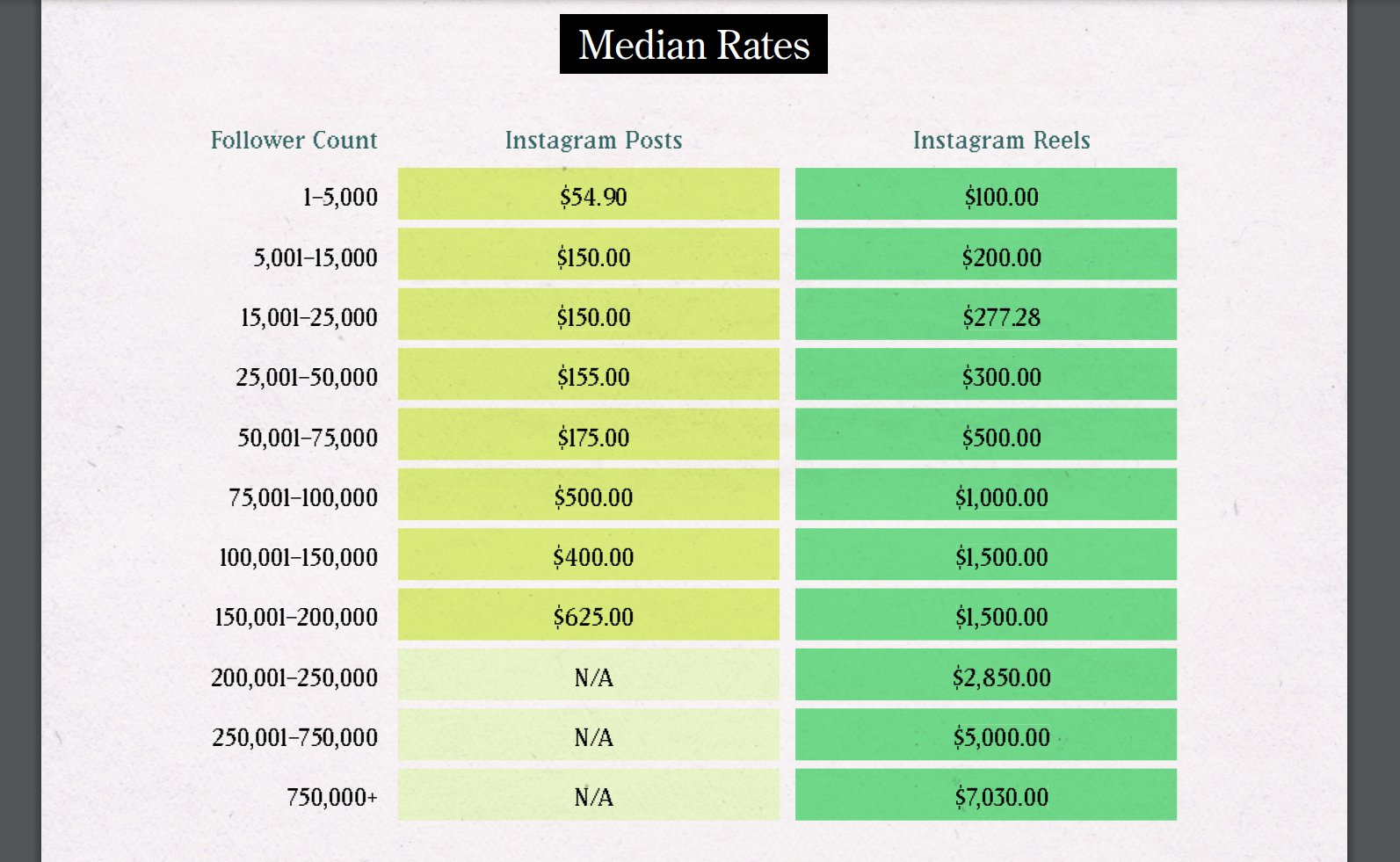
The report comes to us thanks to a top social media management platform called Later. It proved how creators look at Instagram as the most profitable app of them all, thanks to the great many brand partnership deals it provides.
Today, more and more creators are getting paid for sponsored content through the app than all other platforms and the figures are not small. The rates are high and creators can’t get enough.
We do agree that other studies are providing how TikTok is also booming in terms of its influencer marketing endeavors but it’s nothing like this app. Today, Instagram is at the head of the game thanks to a great many chances for brand collaborations.
TikTok is winning in terms of the starting stage of users growing their platforms and getting the attention they need regarding online content. But in terms of monetization, you’re definitely going to say hello to the likes of Instagram.
The research was conducted at the end of last year when the survey took on board 500 different global creators that work with Later and another platform for influencers called Mavrck. They also similarly took into consideration around 31,000 different social media posts.
This made way for a pool where tons of creators provided responses to the survey and most of them happened to arise from the female gender and millennial age group of the US population. Nearly half of them were white while 74% of those pooled worked as part-time content creators.
For starters, Instagram was clicked as the most popular platform for monetization among creators. These felt that posts on the app and Reels were two main ways through which they got paid, and after that, they felt it was posted on TikTok that were lucrative.
The shares for paid content on apps were also outlined where the top spot went to Instagram posts where 84% were paid, followed by Instagram Reels where 63% were paid. And then 27% were paid for TikTok Posts and 26% were paid for Facebook posts. Twitter, LinkedIn, and Pinterest were toward the bottom of the list with just 7 to 8% receiving payments for their posts on these platforms.
As far as the format through which creators made the most money is concerned, it was definitely Reels. And TikTok did win the race in terms of short-form content, but it was Reels that really turned out to be the most profitable endeavor of them all.
Those creators who wished to make long-term deals with brands made the majority of the list as compared to those wanting to work for a single-time purpose only. Others felt the urge to connect with the values of the brand and not just take in money. And that was great to see as experts feel it’s so necessary for today’s time to get this point across.
Read next: New study suggests VPN might have reached saturation point
by Dr. Hura Anwar via Digital Information World
With that being said, it can be hard to decide which app is leading in terms of its deals and brand partnerships. And that’s exactly where this new study comes into play.
The report comes to us thanks to a top social media management platform called Later. It proved how creators look at Instagram as the most profitable app of them all, thanks to the great many brand partnership deals it provides.
Today, more and more creators are getting paid for sponsored content through the app than all other platforms and the figures are not small. The rates are high and creators can’t get enough.
We do agree that other studies are providing how TikTok is also booming in terms of its influencer marketing endeavors but it’s nothing like this app. Today, Instagram is at the head of the game thanks to a great many chances for brand collaborations.
TikTok is winning in terms of the starting stage of users growing their platforms and getting the attention they need regarding online content. But in terms of monetization, you’re definitely going to say hello to the likes of Instagram.
The research was conducted at the end of last year when the survey took on board 500 different global creators that work with Later and another platform for influencers called Mavrck. They also similarly took into consideration around 31,000 different social media posts.
This made way for a pool where tons of creators provided responses to the survey and most of them happened to arise from the female gender and millennial age group of the US population. Nearly half of them were white while 74% of those pooled worked as part-time content creators.
For starters, Instagram was clicked as the most popular platform for monetization among creators. These felt that posts on the app and Reels were two main ways through which they got paid, and after that, they felt it was posted on TikTok that were lucrative.
The shares for paid content on apps were also outlined where the top spot went to Instagram posts where 84% were paid, followed by Instagram Reels where 63% were paid. And then 27% were paid for TikTok Posts and 26% were paid for Facebook posts. Twitter, LinkedIn, and Pinterest were toward the bottom of the list with just 7 to 8% receiving payments for their posts on these platforms.
As far as the format through which creators made the most money is concerned, it was definitely Reels. And TikTok did win the race in terms of short-form content, but it was Reels that really turned out to be the most profitable endeavor of them all.
- Also read: Amazon Retains Its Leading Position As The Best Place To Work While Google Plunges In Rankings
Those creators who wished to make long-term deals with brands made the majority of the list as compared to those wanting to work for a single-time purpose only. Others felt the urge to connect with the values of the brand and not just take in money. And that was great to see as experts feel it’s so necessary for today’s time to get this point across.
Read next: New study suggests VPN might have reached saturation point
by Dr. Hura Anwar via Digital Information World
Economic Fears Are Forcing Many People To Spend Less But That’s Not The Case With Gen Z, New Research Claims
A lot of consumers are really feeling the pressure of the current economic situation that has affected the entire world.
There is a lot of unpredictability at hand and the current economic fears are resulting in consumers spending less.
But new research proves that is not the case when it comes down to users from the Gen Z age group. As per recent stats from Wunderkind, the general spending of consumers during periods of economic uncertainty is at an all-time low or so it may appear.
However, so many of those consumers from Gen Z who were polled proved that 78% of them were not inclined or in favor of spending fewer amounts of money. So that was a major boon to various marketers. Remember, this form of cohort gives rise to nearly $360 billion in terms of disposable income as per the stats from the study published recently.
On the other hand, another very interesting finding reported how email seems to be the most famous portal among buyers across both the US and the UK region.
As a whole, 52% of American consumers and 64% from the United Kingdom had shoppers reducing purchases on things that they found to be non-essential. And nearly 37% of those hailing from the American consumer industry were limiting spending on those things they found to be essential, as were 30% of spenders from the United Kingdom.
But 63% of those arising from high-income American backgrounds aren’t seeing the purpose to reduce spending on luxuries.
Similarly, 54% of American consumers claim they are finding out more about the best buying deals through their emails and that’s nearly double the figure of those who find a such deals through advertising on social media.
Meanwhile, in places like the UK, email is witnessed as the best channel for different types of messaging against 60% of those in the US. Additionally, 30% of those in America were open to endeavors related to text marketing, the study proved. This was in comparison to the 20% who are present in the United Kingdom.
The study by Wunderkind really opened a lot of people’s eyes. It included a total of 1000 participants with an equal distribution hailing from the US and the UK regions.
What are your thoughts on this? Did you assume Gen Z would spend more or the same despite economic fears or not?
Read next: Paddy Galloway decoded the YouTube Shorts algorithm to answer some frequently asked questions
by Dr. Hura Anwar via Digital Information World
There is a lot of unpredictability at hand and the current economic fears are resulting in consumers spending less.
But new research proves that is not the case when it comes down to users from the Gen Z age group. As per recent stats from Wunderkind, the general spending of consumers during periods of economic uncertainty is at an all-time low or so it may appear.
However, so many of those consumers from Gen Z who were polled proved that 78% of them were not inclined or in favor of spending fewer amounts of money. So that was a major boon to various marketers. Remember, this form of cohort gives rise to nearly $360 billion in terms of disposable income as per the stats from the study published recently.
On the other hand, another very interesting finding reported how email seems to be the most famous portal among buyers across both the US and the UK region.
As a whole, 52% of American consumers and 64% from the United Kingdom had shoppers reducing purchases on things that they found to be non-essential. And nearly 37% of those hailing from the American consumer industry were limiting spending on those things they found to be essential, as were 30% of spenders from the United Kingdom.
But 63% of those arising from high-income American backgrounds aren’t seeing the purpose to reduce spending on luxuries.
Similarly, 54% of American consumers claim they are finding out more about the best buying deals through their emails and that’s nearly double the figure of those who find a such deals through advertising on social media.
Meanwhile, in places like the UK, email is witnessed as the best channel for different types of messaging against 60% of those in the US. Additionally, 30% of those in America were open to endeavors related to text marketing, the study proved. This was in comparison to the 20% who are present in the United Kingdom.
The study by Wunderkind really opened a lot of people’s eyes. It included a total of 1000 participants with an equal distribution hailing from the US and the UK regions.
What are your thoughts on this? Did you assume Gen Z would spend more or the same despite economic fears or not?
Read next: Paddy Galloway decoded the YouTube Shorts algorithm to answer some frequently asked questions
by Dr. Hura Anwar via Digital Information World
Subscribe to:
Comments (Atom)


