Wednesday, April 26, 2023

Study Reveals New Risks to the Longevity of Smart Electronic Devices

A new study from Fraunhofer IZM and its partners commissioned by the German Environment Agency has explored the mechanisms behind software obsolescence with an aim to provide practical recommendations for policy makers.

We depend increasingly on the convenience of intelligent electronic gadgets as technology becomes increasingly ingrained in our daily lives. However, when a system flaw prevents an intelligent electronic device from operating correctly while having excellent hardware health, all that satisfaction is abruptly lost. A recent study funded by the German Environment Agency identified new dangers to the longevity of intelligent electronic gadgets.

In this study, Fraunhofer IZM and its collaborators examined the factors contributing to software obsolescence and made helpful recommendations for political decision-makers. According to the results, users' expectations for long-term product functionality may only be met if manufacturers provide adequate support.

The findings from this study demonstrate the importance of considering customer expectations when creating intelligent electronic devices for them to remain functional over their entire lifetime. Manufacturers must ensure that their products are updated regularly and provide users with clear information on how to access these updates if needed.

The research team identified four main drivers that could lead to software obsolescence: market maturity, technical complexity, changes in standards, and changes in consumer behavior or preferences. They recommended that manufacturers integrate updates into their products to ensure a longer service life and consider customer needs when designing products so that they remain attractive over time.

In addition, manufacturers should actively inform customers about updates and provide them with clear information on how to access them. Companies need transparency regarding any changes made to their products so that customers can make informed decisions about whether or not they want to continue using them.

The Environmental Agency hired researchers from three prominent German institutions to conduct a thorough study that included status reporting, consumer surveys, and product group analyses to understand this problem better and identify ways to mitigate it. The results of this study led to practical solutions that could be applied to either individual users or structural levels.

This innovative group lays the groundwork for understanding the intricate connections between applications, product design, and environmental sustainability. Their work varies from small smart thermostats to more significant problems like Battery gates regarding how functionalities can be altered when device requirements change.

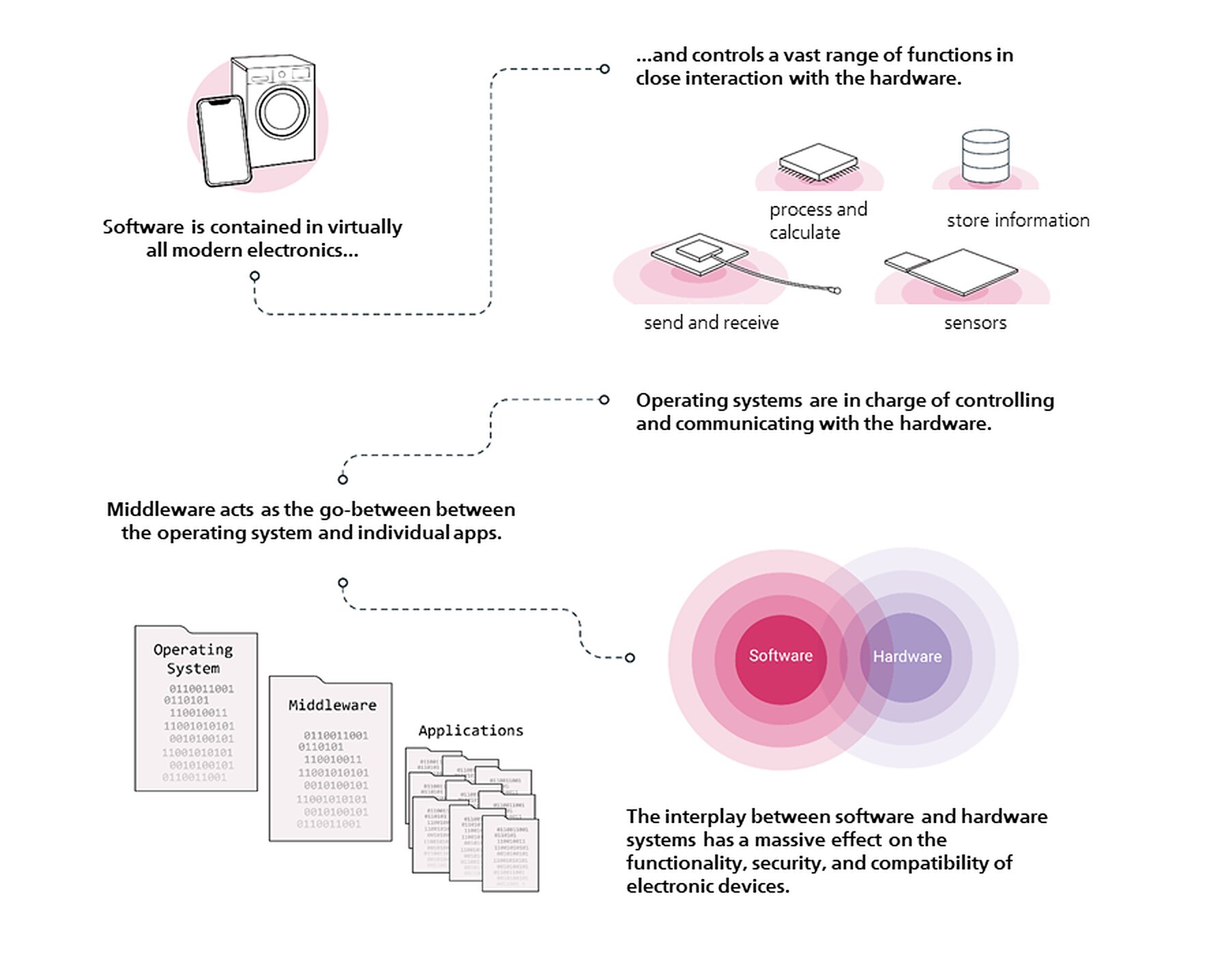
With the ever-growing demand for more advanced systems and devices, software obsolescence is poised to become an increasing concern. To better understand this phenomenon, a research team investigated three key aspects: security, functionality, and compatibility of computerized systems to expose any invisible flaws that may creep into existence due to continuous flux between customer requirements and expectations.

Researchers have developed creative ideas for extending product lives through software to assist consumers get the most out of their purchases. The three major concepts are that before releasing a product, producers must conform to minimal standards, devices must be able to function independently, security updates must be accessible for at least ten years, and systems must have easily accessible interfaces. Additionally, they advise manufacturers to be open about system requirements and support durations so that customers may make well-informed purchases.

Read next: Fake public Wi-Fi networks are found to be more common than juice jacking


by Arooj Ahmed via Digital Information World

UK All Set To Launch New Law To Boost Digital Competition And Reduce Fake Reviews

The United Kingdom’s House of Commons is gearing up to launch a new law that would help in enhancing the current state of the digital economy.

The law is all set to launch today as a means to boost up the digital sector while reducing fake reviews and limiting the number of subscription traps on offer. In the same way, the new law hopes to bring more benefits for several firms and consumers while boosting the credibility factor of the digital industry.

Under such legislation, the CMA would be the regulatory body that sets out sanctions on those breaking rules. So it’s expected that such measures would save consumers a huge sum of money, nearly 1.6 billion pounds each year. This would enable them to get out of the subscriptions that they may have never wished to attain in the first place.

But what are the penalties outlined for breaking such rules in the first place?

For starters, breaking protection laws set out for consumers means giving up 10% of yearly turnover attained globally by the firm. But to better put that into perspective, it’s nearly 300k per person.

Any breach of an undertaking provided by the CMA means facing penalties that are worth nearly 5% of the firm’s yearly global turnover. And per person, that’s around 150k. In addition to that, daily penalties for continuous non-compliant users would bring about a similar penalization.

Last but not least, those who are non-compliant with information notices and those who conceal evidence or give out fake information would have to face penalties that go up to 1% of the firm’s yearly global turnover. That’s around 30k per person and the added daily penalty would be included for continuous non-compliant behavior.

The consumer group named Which? mentioned how such laws are a crucial step toward making UK markets work in a better way for the public and companies white providing great support for a boost in the growth of the economy.

So many such consumer groups have so long campaigned against fake reviews and dishonest firms. They don’t want people to get trapped with unwanted subscriptions that are expensive. Similarly, so many consumer protections are in need of an upgrade too. Hence, with tougher laws and penalties in place, firms will think twice before engaging in such behavior.

One of the leading problems of such approaches is how language could be a little wishy-washy. It’s a huge trap for those trying to attain a subscription who don’t understand the terms mentioned and find it hard to end the subscription plan.

But with such rules in place, firms would be forced to set out clear details regarding the contract and what they want. Presumably, such clients that come across such negative practices could start to complain to the CMA about what they’ve been forced to go through. And the latter would pave the way for strict action.

Meanwhile, such new bills would also target fake reviews. So it’s going to be illegal to commission people to produce fake reviews. Similarly, it’s going to be illegal to put out advertisements of fake reviews too.

Firms that do end up hosting such reviews across websites would be required to take important steps to make sure such reviews are actually real and not fake. And last but not least, the bill would outline which small tech firms are displaying more dominance in the UK business sector against all others. So then, they would be able to target them easily.


Read next: The Rise Of The Green Tech Transition: Which Countries Are Ready To Adopt The Technology
by Dr. Hura Anwar via Digital Information World

Tuesday, April 25, 2023

The Rise Of The Green Tech Transition: Which Countries Are Ready To Adopt The Technology

The rise of the Green Tech Transition has begun but the question is which nations are prepared to adopt this form of technology.

A new study is shedding light on the global aspect of the endeavor and which regions are opening up in terms of readiness and acceptance.

As per recently published data, it’s the US, Netherlands, Sweden, Singapore, and Switzerland that are doing great in this regard. They’re opening up to the thought of adopting the frontier technology that is needed to make such a major shift.

The data comes to us thanks to a recently held conference at the UN that was linked to trade and development.

Nearly 166 nations were provided rankings in terms of how prepared they were to use the technology with a series of five indicators. This includes Industry, ICT, Skills, Research and Development, and even Finance.

A map was provided that allotted a final score and the US came second in terms of Research and development while it scored 11 in terms of ICT and 18th for skills. Then it was 16th for industry and second for finance. The total sum was 49.

The list’s bottom featured Gambia, Congo, Guinea, and the southern part of Sudan. These five nations were ranked near the bottom and were seen across five different categories. The chart shows a clear division in terms of high-income nations and lower-income nations. Latin America, Sub-Saharan Africa, and the Caribbean were all ready to see major changes in frontier technologies. And that means a lot of risk of missing out in terms of current technological changes.

Despite China’s ability to make and create frontier technology, the nation is ranked lower, and that is what has been expected. It’s coming in the 35th position due to huge disparities in terms of internet coverage and broadband speed. When you look at other members in the BRICS block, Brazil scored 40th position while India came in at 46th, and South Africa at 56th.

A long list of nations in Asia did a better job in terms of performance including Asia and Vietnam. The real difference between India’s expected and real ranking has to do with per capita income. It’s 67 places greater than usual. And most researchers feel this might be due to more investment in the world of infrastructure and technical skills.

With Earth Day just passing by yesterday, the UN is also issuing a clear warning regarding how the idea of a green transition is losing ground in most of the Global South. This would occur if so many governments and the members of the international community don’t take on adequate measures.

Another report by the UN conference regarding trade and development featured how it’s not going to be possible for economies to put reliance on historical pathways for growth driven by carbon. These countries need to make the most of the many green windows on offer regarding the world of science and technology.

This takes complete advantage of connectivity as well as digitalization which is where the term frontier technology arises. More and more people are open to technology like solar power, nanotechnology, Drone Technology, Robotics, and 3D Printing. Similarly, it’s where sustainable resources like Wind Energy, Biogas, and Biomass come into play. Lastly, AI and Green Hydrogen aren’t to be missed either.

This type of industry is very lucrative and has a lot of potential for growth in the future. As per data from UNCTAD, the forecast was seen to hit the $9.5 trillion figure by the year 2030.

The study showed how there was a great match between those of high and low economic groups. This is from 2018 but nearly 4 years down the line, the disparity has grown. And now, it’s time to be alert again.

So what is the solution? The answer is simple. To stop this from taking place, so many governments need to make a change in their policies before it’s too late. This includes encouraging growth within sectors that are greener and promoting scientific skills in such nations.


H/T: Statista Charts

Read next: Data shows the correlation between GDP per capita and world happiness
by Dr. Hura Anwar via Digital Information World

Instagram Is Working On Putting Polls In The Comments Section

Polls on Instagram are not something new but the app has seen how many people enjoy the feature ever since its launch.

You’ll find creators including polls into their stories so audience members can engage and put out opinions that might be popular for some while unpopular for others. Regular users are also keen on adding polls when they feel they’re not too sure about something.

With polls, it is just a great twist of fun and humor, not to mention unpredictability. After all, you never know what the majority might vote on for a certain topic in question.

Now, thanks to social media app researcher and mobile developer Alessandro Paluzzi, we’re hearing about how the app could be on the verge of introducing a new feature related to polls. This includes adding polls to the comments section.

It’s never been done in the past and this seems like something creative and new. The news was posted by the reverse engineering expert who claims we should be seeing a rollout in the next few weeks.

The news is very fresh but people’s comments are mixed about the rollout. Some feel it was a long time coming while others are talking about how it might only be helpful for creators and not anyone else. What do you think?


Read next: "The State of Influencer Earning" revealed the average cost of per post made by creators
by Dr. Hura Anwar via Digital Information World

Electronics and Technology Brands Invest in the Rapid Ad Growth of TikTok

According to a recent WARC estimate, the platform's ad income is anticipated to increase by 53% and reach a remarkable £15.2 billion.

As the two-year growth of the popular social media site is anticipated to continue into 2023, tech and electronics companies are hedging heavily on TikTok. According to a recent WARC estimate, the platform's ad income is expected to increase by 53% and reach a remarkable £15.2 billion. Despite a slowdown in the digital advertising market this year, TikTok stands out as a significant exception, with segments including the auto and soft drink industries predicted to have a general decline in ad expenditure.

TikTok has become a go-to platform for advertisers looking to maximize their reach and engagement in an increasingly fragmented media landscape. As such, tech and electronics brands will likely continue to invest heavily in the platform as they look for ways to stay ahead of the competition.

The report also highlights other industries that are expected to increase ad spending on TikTok in 2023, including automotive and soft drinks, which are forecasted to see an overall decrease in ad spending. It suggests that brands across multiple industries recognize the power of TikTok as a marketing tool and invest accordingly.

With its combination of creative content and powerful targeting capabilities, it's clear why so many businesses have chosen TikTok as their go-to platform for connecting with audiences worldwide.

With a stunning 75% of advertisers investing more in the platform this year, TikTok's marketing capabilities have proven indisputable. It is a desirable tool for marketers exploiting its potential due to its user base, algorithm, and UI. As a result, TikTok will unquestionably continue to be a key force in digital marketing.

TikTok is quickly establishing itself as a real force in the marketing world. According to recent data, 75% of marketers intend to increase the amount they spend on ads on this platform because of its enormous potential audience of 1 billion users and immense popularity (it has been the most downloaded app in the world for three years straight)! Another indication of the format's popularity among consumers today and its expanding influence is that it has formed a pattern for other social media apps like YouTube Shorts and Instagram Reels.

Consumer packaged products have substantially contributed to and driven its growth, with ad investments in TikTok expected to explode this year. Unfortunately, growing political toxicity from the app's Chinese ownership and misuse of user data may prevent the platform from expanding globally.

However, for now, the marketing power of TikTok is undeniable, and it's a significant trend to keep an eye on as a marketer. With its unique video format, it offers businesses the opportunity to build deeper relationships with their target audiences. As we continue to move toward more visual forms of communication, there's no doubt that TikTok will remain an essential platform for reaching engaged consumers.


Read next: Retail media spending is expected to reach $106.12 billion by 2027
by Arooj Ahmed via Digital Information World

Apple Wins Big Antitrust Appeals Court Battle Against Epic Games Over App Store Policies

Leading iPhone maker Apple has won big in terms of its antitrust-focused appeal that was staged against the makers of Fortnite, Epic Games.

The ongoing court battle was upheld by the district court’s ruling made during an earlier point in time and was linked to several antitrust claims that were now seen getting upheld in Apple’s favor.

In the same way, another decision regarding the lower court’s judgment was upheld in favor of Epic Games too. This was linked to the state of California’s Unfair Competition Law.

Epic Games had accused Apple of conducting some unfair business dealings regarding its App Store policies. Moreover, the top mobile game producer really hoped to showcase in its appeal how Apple behaved in an unlawful manner by limiting the distribution of applications across iOS devices to the App Store. And that forced payments to go via the company’s personal processor and prevented developers from speaking to clients regarding alternative payment methods.

The ruling was first made public to leading media outlet Bloomberg and after a short while, we saw tech giant Apple released a statement on the matter.

The decision made in favor of Apple resounded its victory in this case as 9 out of the 10 claims were put forward in the company’s direction, the report mentioned. And this is the second time in two years that we’ve seen the Federal Court make a decision about how Apple follows antitrust laws at both the state and federal levels.

The App Store says it continues to market competition and make way for innovation while expanding further on such opportunities. They are proud of the contributions on offer for its loyal clients as well as developers globally.

At the same time, it was interesting to see how the company did disagree on the ruling regarding one specific claim and for that, they’re asking for a review.

As one can imagine, such a ruling of Epic Games seems to be a major setback for them and many other developers who felt they could get the chance to force Apple to open iOS devices to various third-party app stores as well as different payment systems.

The first time we heard about such a lawsuit was in 2020 when Epic sued Apple and forced them to get rid of Fortnite from its App Store. This was right after it intentionally violated the App Store terms regarding in-app purchases. And even though Apple won the majority of the lawsuit when the judge declared the tech giant as not functioning as a monopolist, the court did favor Epic Games on Apple steering policies linked to restrictions on such purchases.

It mentioned that the tech giant wouldn’t be able to prevent developers from directing users toward other means of payment.

Therefore, we saw both Apple as well as Epic Game issues appeals against the decision and Apple was forced to make changes to the policies on the App Store in terms of external links. Meanwhile, Epic had to try for its antitrust case once more. But today’s decision is proof that Apple is following all policies as per state law.


Read next: Apple Gears Up For Earth Day By Sharing New Updates On Its Mission To Go Green And Become Carbon Neutral By 2030
by Dr. Hura Anwar via Digital Information World

Americans concur that businesses need to take more responsibility for waste

According to a recent survey, half of Americans think large corporations should be held more responsible for the waste that their goods produced.

A survey of 2,000 US adults found that 63% of respondents say companies must take a stand for sustainability, and 48% believe significant corporations must be held accountable for climate action.

Nearly three-fifths (59%) of survey participants agreed that businesses should safely and securely destroy hazardous materials. In comparison, 58% thought they should reuse and recycle materials whenever possible, and 53% wanted them to make products from recyclable materials.

The survey also showed that 62% of respondents believe businesses should lead in promoting sustainability and tackling climate change. Additionally, six out of ten people (63%) think that companies with a sustainable focus may change the world.

According to this survey that Covanta sponsored, consumers are increasingly committed to sustainability and eco-friendly practices. A startling four out of ten consumers said that sustainable materials management is the "most important" factor to consider when determining where to spend their hard-earned money. 56% of people would be willing to pay more for products made from recycled materials than those manufactured the traditional way. It is another evidence of how much we want ecologically friendly solutions.

Even though nine out of ten Americans engage in sustainable behaviors like recycling and using less plastic while shopping, many people believe that their efforts are insignificant compared to large corporations' combined influence. Most respondents—nearly half—believe that major organizations' activities will motivate people to engage even more proactively toward a greener future. Even better, consumers often favor companies that focus on eco-friendly goods and neighborhood involvement. In addition to having a positive ecological impact, businesses should take advantage of this chance to build enduring relationships with the clients they serve.

Businesses may have a big impact on the environment by putting several green measures into place. Making the most of material reuse, using recyclable components in product development, developing biodegradable products that decompose gradually without upsetting the delicate balance of nature, treating wastewater so it can be disposed of in the environment, obtaining sustainable resources from businesses, and turning non-recycled waste into energy are some of these.

With increasing numbers of people concerned about the environment and pushing for change, many organizations are taking steps toward becoming more sustainable. From reducing their carbon footprint to creating eco-friendly packaging initiatives, these organizations are stepping up to the plate and positively impacting our planet.

As consumers become increasingly aware of their environmental impact, they demand more from businesses — including taking responsibility for their waste streams. These results show that most Americans feel strongly that corporations must take climate action seriously and do what is necessary to reduce their environmental footprint.


Read next: Retail media spending is expected to reach $106.12 billion by 2027
by Arooj Ahmed via Digital Information World