It seems inevitable that AI will surpass humans in all walks of life, but creativity was seen as something that humans would always excel at. In spite of the fact that this is the case, it turns out that Chat GPT-4 may have already beaten humans at divergent thinking, which is one of the core components of creative intellect.
It is important to note that divergent thinking involves coming up with novel solutions in situations where a solution may not be apparent. A recent study gauged the divergent thinking of 151 participants versus Chat GPT-4, and the chatbot provided more in depth answers across the board.
The first of the three tests that were implemented was the alternative use test, which focused on coming up with creative methods for using mundane objects like forks and rope. The second test was called the consequences task, and it was all about answering hypothetical questions such as what would happen if humans didn’t need to sleep anymore. Finally, the divergent associations task require participants to come up with 10 nouns that were as semantically distant as possible.
Once the answers came in, they were judged based on how detailed they were, how long they were, as well as how semantically distinct each individual word was. In each test, Chat GPT-4 managed to provide better answers based on these three metrics. This seems to suggest that the chatbot has the potential to outthink humans in this specific criteria.
However, it bears mentioning that there are other aspects to creative thinking that weren’t addressed in these tests. Human input may also be necessary for the purposes of obtaining the best responses from the chatbot, and it might be interesting to judge the performance of other chatbots. Another factor at play here is that human responses may have been limited by having to do with the real world, whereas AI simply provides to try the answer as best it can even if it’s unrealistic. All of these factors will need to be considered when it comes to testing AI’s creativity in the future.
Image: DIW-Aigen
Read next: Global Employee Rights In The Spotlight: Top 10 Worst Nations For Workers
by Zia Muhammad via Digital Information World
"Mr Branding" is a blog based on RSS for everything related to website branding and website design, it collects its posts from many sites in order to facilitate the updating to the latest technology.
To suggest any source, please contact me: Taha.baba@consultant.com
Tuesday, March 5, 2024
Monday, March 4, 2024
Global Employee Rights In The Spotlight: Top 10 Worst Nations For Workers
A good job is quintessential to a prosperous lifestyle but what do you do when a nation you’re working in refuses to give you employee rights that you’re entitled to?
Thanks to ITUC, we’ve got the latest findings on this front in terms of which nations fell backward in terms of giving workers their right dues. To be more specific, the top 10 worst nations for workers in 2023 are in the spotlight and we’ve got the details for you below.
According to the media outlet, Belarus, Bangladesh, Myanmar, Philippines, Egypt, Tunisia, Turkey, Eswatini, and Egypt failed to impress. The report features a staggering 149 nations and ranks them according to which rights of freedom they were providing and where they happened to fall short of this endeavor.
This included a new right linked to collective bargaining and the freedom to oppose or go on strike when things did not fall rightly in place. Moreover, a score was allotted to every country, depending on how greatly or how poorly they faired against all others. 1 was for sporadic violations of their rights while those above 5 meant there was no guarantee in place linked to breaking the law.
In 2023, it’s the North African region and the Middle East that got the worst scores seen across the Global Rights Index. The average for them was 4.5. Meanwhile, some experts in the field even spoke about the greatness of Qatar which is doing well in this domain, producing remarkable progress, showing how keen it is on better workers’ rights.
But we must add how low scores in the Gulf region have to do with the continuous use of Kalafa, a grading score that’s stringent in terms of allotting points. And due to this, so many migrant employees continue to be abused of their basic human rights.
This part of the world was followed up closely by the likes of the Asia-Pacific which featured a score of 4.18. Then came Africa with 3.8, and then the US with 3.5. Meanwhile, employees and trade unionists were killed in close to eight different nations in 2023 alone. Those included countries like Ecuador, Peru, Brazil, Eswatini, Guatemala, and even El Salvador.
As per the infographic released on this front in the report, selective nations got the approval in the form of a green work and interestingly, all of them are present in the EU. Other parts of the globe showed less hopeful images and close to 87% of those nations have ended up going against the basic rights of workers by entering into a labor strike. This is a staggering 63% rise from what was seen in 2014.
Meanwhile, other highlights of the report displayed close to nine different nations witnessing ratings get worse in 2023 and then include Liberia, Congo, Togo, the UK, El Salvador, and even Haiti. But where there is bad, there is also some good. We’re seeing nations like Chile, Australia, and even Cote d’Ivoire pick up the pace in terms of better ratings.
The report was gathered after the ITUC rolled out questionnaires to several national unions around the globe so they could better highlight this matter and raise awareness on the issue which again is a fundamental right.
Those were recorded every year, starting from April to March, and then ended up getting verified too. Every nation is analyzed and marked against a series of indicators to produce an index such as that we’re seeing today.
Read next: AI Offers Convenience, But at What Cost?
by Dr. Hura Anwar via Digital Information World
Thanks to ITUC, we’ve got the latest findings on this front in terms of which nations fell backward in terms of giving workers their right dues. To be more specific, the top 10 worst nations for workers in 2023 are in the spotlight and we’ve got the details for you below.
According to the media outlet, Belarus, Bangladesh, Myanmar, Philippines, Egypt, Tunisia, Turkey, Eswatini, and Egypt failed to impress. The report features a staggering 149 nations and ranks them according to which rights of freedom they were providing and where they happened to fall short of this endeavor.
This included a new right linked to collective bargaining and the freedom to oppose or go on strike when things did not fall rightly in place. Moreover, a score was allotted to every country, depending on how greatly or how poorly they faired against all others. 1 was for sporadic violations of their rights while those above 5 meant there was no guarantee in place linked to breaking the law.
In 2023, it’s the North African region and the Middle East that got the worst scores seen across the Global Rights Index. The average for them was 4.5. Meanwhile, some experts in the field even spoke about the greatness of Qatar which is doing well in this domain, producing remarkable progress, showing how keen it is on better workers’ rights.
But we must add how low scores in the Gulf region have to do with the continuous use of Kalafa, a grading score that’s stringent in terms of allotting points. And due to this, so many migrant employees continue to be abused of their basic human rights.
This part of the world was followed up closely by the likes of the Asia-Pacific which featured a score of 4.18. Then came Africa with 3.8, and then the US with 3.5. Meanwhile, employees and trade unionists were killed in close to eight different nations in 2023 alone. Those included countries like Ecuador, Peru, Brazil, Eswatini, Guatemala, and even El Salvador.
As per the infographic released on this front in the report, selective nations got the approval in the form of a green work and interestingly, all of them are present in the EU. Other parts of the globe showed less hopeful images and close to 87% of those nations have ended up going against the basic rights of workers by entering into a labor strike. This is a staggering 63% rise from what was seen in 2014.
Meanwhile, other highlights of the report displayed close to nine different nations witnessing ratings get worse in 2023 and then include Liberia, Congo, Togo, the UK, El Salvador, and even Haiti. But where there is bad, there is also some good. We’re seeing nations like Chile, Australia, and even Cote d’Ivoire pick up the pace in terms of better ratings.
The report was gathered after the ITUC rolled out questionnaires to several national unions around the globe so they could better highlight this matter and raise awareness on the issue which again is a fundamental right.
Those were recorded every year, starting from April to March, and then ended up getting verified too. Every nation is analyzed and marked against a series of indicators to produce an index such as that we’re seeing today.
![]() |
by Dr. Hura Anwar via Digital Information World
How the ETF Will Change Crypto Use in 2024
2024 started out on a high note for the crypto industry with the approval of the spot Bitcoin ETF. After many years and many applications from top crypto companies, the SEC approved 11 spot ETFs and we have seen the effects ever since. As of this article, Bitcoin is eyeing a new all-time price high of above $66,000, a price point not seen since 2021.
With this in mind, we also have to look at the impact that this ETF will have on how consumers use crypto as a whole.
One of the first things that we can expect is more domestic crypto use. During crypto market booms, many more businesses begin accepting cryptos as a medium of exchange and more customers begin spending crypto on various goods and services.
Take gambling, for example. We have seen an increase in crypto casinos over the last few years and now that Bitcoin is seeing a price spike, Bitcoin betting is likely to become more popular. For many consumers, the appeal of possibly multiplying their current crypto stash through gambling with crypto will be especially potent.
Photo by Aleksi Räisä on Unsplash
We can also expect to see more channels for crypto purchases become available. As more people are spending crypto, there will be more crypto ATMs opening up around the world to cater to this need. New crypto exchanges will also spring up and existing exchanges will expand into new territories.
On top of the growing use of crypto for domestic purposes, various tokens will also see more investment. The growth of Bitcoin has typically coincided with the growth of major altcoins and this looks to be no different in 2024. This growth will mean that more people will invest in various tokens as the industry will be ripe for new projects to launch.
This will be even more so if more spot ETFs are launched. Even before the spot Bitcoin ETF was launched, there were rumours that other cryptos would be getting the same treatment. Currently, Ether is believed to be the next crypto to get an ETF and if this happens, the result will be very positive for the ecosystem. More people will invest in Ether, both through the ETF itself and also through other channels. Just like with Bitcoin, this will have a positive impact on its market value and its perception among consumers.
Speaking of perception, this ETF has the power to shift the public perception of cryptocurrency into a more positive light. A spot ETF is a very mainstream investment vehicle associated with the world of traditional finance. By having a cryptocurrency approved for a spot ETF, a message is sent about its legitimacy. The positive price effects of this ETF also mean that some members of the public will see it in a better light and be more willing to embrace it.
Cryptocurrency has faced criticism for years but the ETF, and all the things that come with it, could help redeem its image.
by Asim BN via Digital Information World
With this in mind, we also have to look at the impact that this ETF will have on how consumers use crypto as a whole.
One of the first things that we can expect is more domestic crypto use. During crypto market booms, many more businesses begin accepting cryptos as a medium of exchange and more customers begin spending crypto on various goods and services.
Take gambling, for example. We have seen an increase in crypto casinos over the last few years and now that Bitcoin is seeing a price spike, Bitcoin betting is likely to become more popular. For many consumers, the appeal of possibly multiplying their current crypto stash through gambling with crypto will be especially potent.
Photo by Aleksi Räisä on Unsplash
We can also expect to see more channels for crypto purchases become available. As more people are spending crypto, there will be more crypto ATMs opening up around the world to cater to this need. New crypto exchanges will also spring up and existing exchanges will expand into new territories.
On top of the growing use of crypto for domestic purposes, various tokens will also see more investment. The growth of Bitcoin has typically coincided with the growth of major altcoins and this looks to be no different in 2024. This growth will mean that more people will invest in various tokens as the industry will be ripe for new projects to launch.
This will be even more so if more spot ETFs are launched. Even before the spot Bitcoin ETF was launched, there were rumours that other cryptos would be getting the same treatment. Currently, Ether is believed to be the next crypto to get an ETF and if this happens, the result will be very positive for the ecosystem. More people will invest in Ether, both through the ETF itself and also through other channels. Just like with Bitcoin, this will have a positive impact on its market value and its perception among consumers.
Speaking of perception, this ETF has the power to shift the public perception of cryptocurrency into a more positive light. A spot ETF is a very mainstream investment vehicle associated with the world of traditional finance. By having a cryptocurrency approved for a spot ETF, a message is sent about its legitimacy. The positive price effects of this ETF also mean that some members of the public will see it in a better light and be more willing to embrace it.
Cryptocurrency has faced criticism for years but the ETF, and all the things that come with it, could help redeem its image.
by Asim BN via Digital Information World
AI Offers Convenience, But at What Cost?
Everyone knows that AI has the potential make life a whole lot easier than might have been the case otherwise, but it appears that it will come at a heavy cost. According to a recent report published by Elon University, AI will make the pursuit of happiness a lot harder than it used to be. It might offer an increased amount of convenience in our day to day lives, but in spite of the fact that this is the case, pleasure will be considerably more difficult to come by.
This report is based on the input of 328 experts hailing from a wide range of fields. 79% of the people that responded to this survey were of the opinion that AI will have a negative impact on privacy, with 54% saying the same about basic human rights with all things having been considered and taken into account. People’s relationships with others will also be negatively impacted according to 46% of respondents, and 43% suggested that it will become harder to look for jobs.
With all of that having been said and now out of the way, it is important to note that there are some benefits that it will yield as well. For example, 73% said that people’s daily tasks will become somewhat easier to get through, and 71% said the same about shopping for goods and services.
Healthcare is also an area that will see some forward momentum, since new diagnostic tools will start to come to the fore. However, it bears mentioning that wealth inequality will become even worse than it used to be according to 70% of individuals that responded to questions presented in this study.
Political equality and democratic norms may also end up becoming compromised due to the presence of AI. 67% of survey respondents felt like politics and elections will become less fair, and AI might also have a negative impact on warfare according to 61% of the experts polled in this report. Criminal justice systems as well as the overall levels of civility in human society is expected to go down as well all in all.
Read next: Global Diplomacy Rankings: China Leads, Followed by the US
by Zia Muhammad via Digital Information World
This report is based on the input of 328 experts hailing from a wide range of fields. 79% of the people that responded to this survey were of the opinion that AI will have a negative impact on privacy, with 54% saying the same about basic human rights with all things having been considered and taken into account. People’s relationships with others will also be negatively impacted according to 46% of respondents, and 43% suggested that it will become harder to look for jobs.
With all of that having been said and now out of the way, it is important to note that there are some benefits that it will yield as well. For example, 73% said that people’s daily tasks will become somewhat easier to get through, and 71% said the same about shopping for goods and services.
Healthcare is also an area that will see some forward momentum, since new diagnostic tools will start to come to the fore. However, it bears mentioning that wealth inequality will become even worse than it used to be according to 70% of individuals that responded to questions presented in this study.
Political equality and democratic norms may also end up becoming compromised due to the presence of AI. 67% of survey respondents felt like politics and elections will become less fair, and AI might also have a negative impact on warfare according to 61% of the experts polled in this report. Criminal justice systems as well as the overall levels of civility in human society is expected to go down as well all in all.
Read next: Global Diplomacy Rankings: China Leads, Followed by the US
by Zia Muhammad via Digital Information World
Global Diplomacy Rankings: China Leads, Followed by the US
China now has more diplomatic offices around the world than any other country. This was shared in a report by the Lowy Institute in 2024. The United States is just a bit behind China, making these two countries the top players in global diplomacy. China has 274 diplomatic sites, while the US has 271. China took the lead in 2019 and has stayed in front since then.
The report shows that China is especially strong in Africa, East Asia, the Pacific, and Central Asia. This is partly because the US pulled out of Afghanistan. However, the US has more diplomatic offices in Europe, North and Central America, and South Asia. In the Middle East and South America, China and the US have the same number of posts.
Other countries are also expanding their diplomatic networks. Türkiye, for example, moved up to the third spot this year from fifth last year. India made a jump too, now at rank 11 from 12 last year. These countries are adding more offices quickly, especially India, which has opened 11 new sites since 2021, with eight in Africa.
The 2024 Global Diplomacy Index looks at the diplomatic efforts of 66 countries and territories, including those in Asia, members of the G20, and the Organization for Economic Co-operation and Development (OECD). This information helps us understand how countries connect and work with each other around the world. Diplomatic offices play a key role in these global relationships, and the number of offices a country has can show how active and influential it is on the world stage.
Chart: DIW
Embassies and Consulates
Read next: Global Freedom on the Decline, Report Finds
by Mahrukh Shahid via Digital Information World
The report shows that China is especially strong in Africa, East Asia, the Pacific, and Central Asia. This is partly because the US pulled out of Afghanistan. However, the US has more diplomatic offices in Europe, North and Central America, and South Asia. In the Middle East and South America, China and the US have the same number of posts.
Other countries are also expanding their diplomatic networks. Türkiye, for example, moved up to the third spot this year from fifth last year. India made a jump too, now at rank 11 from 12 last year. These countries are adding more offices quickly, especially India, which has opened 11 new sites since 2021, with eight in Africa.
The 2024 Global Diplomacy Index looks at the diplomatic efforts of 66 countries and territories, including those in Asia, members of the G20, and the Organization for Economic Co-operation and Development (OECD). This information helps us understand how countries connect and work with each other around the world. Diplomatic offices play a key role in these global relationships, and the number of offices a country has can show how active and influential it is on the world stage.
Chart: DIW
| Country / Territory | Embassies / High Commissions | Consulates / Consulates General | Permanent Missions | Other Representations | Total Posts |
|---|---|---|---|---|---|
| China | 173 | 91 | 8 | 2 | 274 |
| United States | 168 | 83 | 12 | 8 | 271 |
| Türkiye | 145 | 93 | 12 | 2 | 252 |
| Japan | 152 | 66 | 10 | 23 | 251 |
| France | 158 | 72 | 18 | 1 | 249 |
| Russia | 143 | 74 | 10 | 3 | 230 |
| United Kingdom | 156 | 51 | 11 | 7 | 225 |
| Germany | 148 | 56 | 11 | 2 | 217 |
| Italy | 124 | 74 | 8 | 0 | 206 |
| Brazil | 133 | 58 | 12 | 2 | 205 |
| India | 135 | 50 | 5 | 4 | 194 |
| Spain | 114 | 65 | 10 | 1 | 190 |
| South Korea | 114 | 60 | 5 | 8 | 187 |
| Mexico | 80 | 71 | 8 | 2 | 161 |
| Canada | 98 | 38 | 11 | 10 | 157 |
| Argentina | 87 | 54 | 7 | 2 | 150 |
| Netherlands | 106 | 28 | 10 | 5 | 149 |
| European Union* | 132 | 0 | 8 | 3 | 143 |
| Switzerland | 102 | 30 | 7 | 2 | 141 |
| Hungary | 87 | 43 | 7 | 3 | 140 |
| Poland | 91 | 33 | 9 | 2 | 135 |
| Greece | 85 | 39 | 9 | 1 | 134 |
| Indonesia | 92 | 34 | 3 | 1 | 130 |
| Saudi Arabia | 104 | 19 | 4 | 1 | 128 |
| Portugal | 75 | 42 | 9 | 1 | 127 |
| Australia | 85 | 33 | 4 | 2 | 124 |
| Pakistan | 89 | 29 | 3 | 0 | 121 |
| Chile | 73 | 41 | 6 | 1 | 121 |
| Czechia | 91 | 16 | 7 | 6 | 120 |
| Colombia | 63 | 49 | 5 | 0 | 117 |
| South Africa | 98 | 12 | 2 | 2 | 114 |
| Belgium | 83 | 18 | 8 | 4 | 113 |
| Taiwan** | 12 | 1 | 1 | 96 | 110 |
| Israel | 80 | 21 | 5 | 1 | 107 |
| Malaysia | 78 | 24 | 3 | 1 | 106 |
| Austria | 83 | 13 | 6 | 2 | 104 |
| Sweden | 87 | 8 | 7 | 0 | 102 |
| Ireland | 71 | 20 | 6 | 1 | 98 |
| Thailand | 65 | 28 | 3 | 1 | 97 |
| Vietnam | 67 | 22 | 4 | 1 | 94 |
| Philippines | 63 | 27 | 4 | 0 | 94 |
| Norway | 74 | 7 | 9 | 1 | 91 |
| Finland | 74 | 6 | 7 | 3 | 90 |
| Denmark | 66 | 16 | 6 | 2 | 90 |
| Slovakia | 63 | 9 | 8 | 2 | 82 |
| Bangladesh | 58 | 20 | 2 | 0 | 80 |
| New Zealand | 49 | 15 | 3 | 1 | 68 |
| Lithuania | 42 | 11 | 8 | 1 | 62 |
| Sri Lanka | 46 | 12 | 1 | 1 | 60 |
| Slovenia | 43 | 7 | 7 | 1 | 58 |
| Costa Rica | 42 | 5 | 4 | 1 | 52 |
| Mongolia | 33 | 13 | 1 | 3 | 50 |
| Singapore | 29 | 16 | 4 | 1 | 50 |
| Latvia | 38 | 1 | 7 | 0 | 46 |
| Estonia | 38 | 2 | 6 | 0 | 46 |
| Myanmar | 38 | 6 | 2 | 0 | 46 |
| Luxembourg | 35 | 4 | 6 | 1 | 46 |
| North Korea | 39 | 1 | 3 | 0 | 43 |
| Cambodia | 28 | 12 | 3 | 0 | 43 |
| Brunei | 35 | 4 | 3 | 0 | 42 |
| Nepal | 32 | 7 | 1 | 0 | 40 |
| Laos | 26 | 11 | 3 | 0 | 40 |
| Timor-Leste | 23 | 5 | 3 | 0 | 31 |
| Iceland | 17 | 4 | 5 | 0 | 26 |
| Papua New Guinea | 16 | 4 | 1 | 0 | 21 |
| Bhutan | 6 | 3 | 1 | 0 | 10 |
Read next: Global Freedom on the Decline, Report Finds
by Mahrukh Shahid via Digital Information World
Sunday, March 3, 2024
The Combined Net Worth of Richest People in the World is $1.44 Trillion as of February 2024
The good pals over at VisualCapitalist have compiled the data from Forbes real Time Billionaires list and made a list of world’s richest people as of February 2024. The combined fortune of the top ten richest billionaires in the world is about $1.44 trillion. Due to a 21% decline in Elon Musk’s wealth in 2023, Bernard Arnault made it to the top of the richest list in 2024. He has a net worth of $212.1 billion. He is a French man who is a CEO and chairman of luxury goods company LVMH and owns a number of luxury brands like Louis Vuitton, Sephora, Tiffany and Co. etc. Arnault also has investments in many big companies like Netflix and TikTok.
The total net worth of the top five richest people in the world grew by 4% which is about $904.9 billion in total. The second richest man in the world is Elon Musk with $194.6 billion net worth. His source of income is through Tesla and SpaceX. He is now also the owner of social media site, X. Third richest person is Amazon’s CEO, Jeff Bezos, with $192.4 billion net worth followed by Mark Zuckerberg with a net worth of $161.8 billion. Larry Ellison, the owner of Oracle is the fifth richest person with a $144.0 Billion fortune.
Names like Warren Buffett, Bill Gates, Larry Page, Steve Ballmer and Sergey Brin made to the bottom five of top 10 richest people in the world list. The richest woman in the world is L’Oréal’s Françoise Bettencourt Meyers whose net worth grew by $1.2 billion in 2023. Out of all the top ten rich people, Mark Zuckerbeg saw a significant growth in his net worth. It grew 39% by February 2024 from November 2023 and it surged to $45 billion.
Zhong Shanshan, the chairman and founder of Nongfu Spring is the richest person in Chine with $60.5 billion net worth. In India, the chairman of Reliance Industries, Mukesh Ambani, is the richest with $102.1 net worth.
Read next: The Best Cloud Storage Apps to Use in 2024
by Arooj Ahmed via Digital Information World
The total net worth of the top five richest people in the world grew by 4% which is about $904.9 billion in total. The second richest man in the world is Elon Musk with $194.6 billion net worth. His source of income is through Tesla and SpaceX. He is now also the owner of social media site, X. Third richest person is Amazon’s CEO, Jeff Bezos, with $192.4 billion net worth followed by Mark Zuckerberg with a net worth of $161.8 billion. Larry Ellison, the owner of Oracle is the fifth richest person with a $144.0 Billion fortune.
Names like Warren Buffett, Bill Gates, Larry Page, Steve Ballmer and Sergey Brin made to the bottom five of top 10 richest people in the world list. The richest woman in the world is L’Oréal’s Françoise Bettencourt Meyers whose net worth grew by $1.2 billion in 2023. Out of all the top ten rich people, Mark Zuckerbeg saw a significant growth in his net worth. It grew 39% by February 2024 from November 2023 and it surged to $45 billion.
Zhong Shanshan, the chairman and founder of Nongfu Spring is the richest person in Chine with $60.5 billion net worth. In India, the chairman of Reliance Industries, Mukesh Ambani, is the richest with $102.1 net worth.
Read next: The Best Cloud Storage Apps to Use in 2024
by Arooj Ahmed via Digital Information World
Saturday, March 2, 2024
Unlimited Possibilities: The Best Cloud Storage Apps to Download in 2024
If your device's storage is full and you have important files that you cannot delete, there are many storage apps available these days that you can try to save your files. While there are numerous cloud storage apps available, most of them come with a price if you need larger space. After conducting research, we have selected some of the best cloud storage apps for you to use. However, before you begin, it is important to know what to look for in storage apps for cloud if you have a large number of files to save.
● It is a built-in app in almost all Android devices and can automatically back up your photos.
● You can save any files on it and access it on any device.
● Files from Google Docs, Sheets, Slides and other Google apps are also saved on Google Drive
● You do not need to do any maintenance on it to make iCloud work smoothly.
● If you only use iCloud on the web, you can only store up to 1GB of data.
● It is not available on any platforms other than Apple.
● It is a low maintenance app that works automatically.
● It has full cross-platform support.
● The platform sends deceptive emails when you are near the full storage limit.
● It doesn’t have a competitive price.
● It has very useful tools for Business files.
● The customer support section is not good.
● Its price isn’t competitive at high storage options
● It has organized photo libraries.
● Microsoft is notorious for changing default settings, which means that some of your files, which you may not want on the cloud, could end up there."
● It automatically backs up pictures from any device.
● Customer reviews suggest Jottacloud sometimes can be totally "unreliable and they have poor support".
● You can pay for the storage you need instead of going for its storage plans.
● As per customer reviews the platforms "isn't as smoothly working as another competitor"
● You can easily afford up to 100TB storage.
● IDrive backup faces redirection issues, requiring data re-upload.
● It has a separate area where you can store your photos and do backup.
● "It's getting better but still needs work"
● For advanced users, it has NAS packages and more advanced tools.
● As per a customer on Trustpilot, "Storage is great, but customer service is lacking"
● Due to privacy encryption, if you forget your password, there’s no way you can access your account.
Read next: Canalys Forecasts 20% Surge in Global Cloud Spending, Outpacing 2023 Growth Rate
by Arooj Ahmed via Digital Information World
Features of a Good Storage App
While finding the best storage apps for cloud, we got to know that there are some features that are important for storage apps to have to make them best.Enough Storage:
What’s the use of a storage app if it doesn’t have good storage capacity? In addition to enough storage, you need to look out for apps that can do maximum monthly transfers and what type of files can the storage app allow to store in it.Good Pricing:
Every good thing comes up with a price. If you are looking for a good storage app for free, it is almost impossible. What you can hope for in a storage app is that it should come up with useful features with a better pricing plan.Organizing Tools:
Storage apps should have useful organizing tools that can easily sort, filter, search and organize your files.Secure and Reliable:
As you are going to save a lot of files in your Storage app, security and reliability should be your top priority.Top 10 Best Cloud Storage Apps
Now comes the moment that you all have been waiting for. To get the best storage features, we have come up with some of the best cloud storage apps for you. These cloud storage apps are:- Google Drive
- iCloud
- Dropbox
- Box
- OneDrive
- JottaCloud
- Koofr
- iDrive
- Internxt
- MEGA
1- Google Drive
Google Drive is the most popular app when it comes to storage. It is available for Android. Windows, MAC, iOS and Web. The reasons why this cloud storage app is at the top are as follows:● It is a built-in app in almost all Android devices and can automatically back up your photos.
● You can save any files on it and access it on any device.
● Files from Google Docs, Sheets, Slides and other Google apps are also saved on Google Drive
Cons of Google Drive:
● You have to use Google Drive no matter what if you use Google Workspace.Pricing for Google Drive:
15 GigaBytes (GB) storage is free on Google. To get 100 GB space, pricing is $1.99 per month. If you need up to 5TB storage, $18 per month is the price for it.2- iCloud:
As Google Drive is the best storage app for Android users, iCloud is best for Apple users. It works on MAC, Windows, iOS and Web.Pros of iCloud:
● iCloud syncs easily with all Apple devices.● You do not need to do any maintenance on it to make iCloud work smoothly.
Cons of iCloud:
● Most of the space in iCloud is covered up with photos.● If you only use iCloud on the web, you can only store up to 1GB of data.
● It is not available on any platforms other than Apple.
Pricing for iCloud:
5GB storage is free on iCloud. $0.99 per month is the price for 50GBs. To get up to 2TB storage space, you need to pay $12.99 per month.3- Dropbox
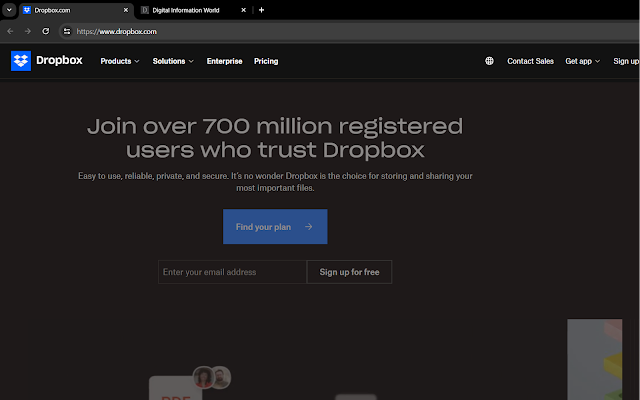
Dropbox is available for MAC, Android, Windows and iOS devices. Upon testing the app, we found out that it runs smoothly on any platform without any much effort. It automatically runs in the background and syncs the files. Some of its pros and cons are:● It is a low maintenance app that works automatically.
● It has full cross-platform support.
Cons of Dropbox:
● Dropbox has announced plans to remove its 2TB family share plan in 2024.● The platform sends deceptive emails when you are near the full storage limit.
● It doesn’t have a competitive price.
Pricing for Dropbox:
2GB storage is free on Dropbox and you have to pay $11.99 per month to get 3TB storage. There are also different pricing plans for business use.4- Box
Box is available for Windows, MAC, iOS, Android and Web. It is a very simple and easy to use cloud storage app.Pros of Box:
● You can get unlimited storage for $60 per month.● It has very useful tools for Business files.
Cons of Box:
● Unlimited storage is only possible with 5GB per file.● The customer support section is not good.
● Its price isn’t competitive at high storage options
Pricing for Box:
10GB is available for free. Other plans include 100Gb for $14 a month to $60 with three users.5- OneDrive
You can use OneDrive on MAC, Windows, Android, iOS and Web. It is great for Microsoft users to save their files on.Pros of One Drive:
● It is built in Microsoft and Windows devices but can easily cross platform with MAC and IOS devices.● It has organized photo libraries.
Cons of One Drive:
● There is only limited storage space.● Microsoft is notorious for changing default settings, which means that some of your files, which you may not want on the cloud, could end up there."
Pricing for One Drive:
5GB are free on OneDrive while you have to pay $1.99 per month for 100GBs. 6TBs are available for $9.99 per month to split between 6 users so each user gets 1TB.6- JottaCloud
Mac, Windows, iOS, Android and command line tools support JottaCloud. You can upload anything to JottaCloud and can decide which files to sync with it and which files to not.Pros of JottaCloud:
● It has a vast unlimited storage space options of course with a paid plan.● It automatically backs up pictures from any device.
Cons of JottaCloud:
● Its desktop app isn’t as smooth as a mobile app.● Customer reviews suggest Jottacloud sometimes can be totally "unreliable and they have poor support".
Pricing for JottaCloud:
You get 5GB for free on JottaCloud. For personal use, unlimited storage’s price is 9.90 euros per month. You can get 1TB for 6.90 euros a month for a family plan that is among 5 users. For commercial use, 1TB storage is for 49 euros per month.7- Koofr
You can use Koofr on Mac, Windows, Linux, iOS, Android, Huawei AppGallery, WebDAV, Rclon and Web. It is best for backing up Huawei phones and is overall a good cloud storage phone for other devices. Its pros and cons include:Pros of Koofr:
● You can combine different accounts from storage providers on Koofr.● You can pay for the storage you need instead of going for its storage plans.
Cons of Koofr:
● When you are choosing your own storage space, you will need good management and strategies to do so.● As per customer reviews the platforms "isn't as smoothly working as another competitor"
Pricing for Koofr:
10GB is free on Koofr while you have to pay 0.50 euros per month to get more than 10GBs. To get 20TB, you have to pay 120 euros per month.8- iDrive
Mac, Windows, Linux, Unix, iOS, Android, and Windows Server can easily support iDrive. If you want an app that can easily back-up your cloud storage, iCloud is one of the best.Pros of iDrive:
● It has a great back-up plan for all your files.● You can easily afford up to 100TB storage.
Cons of iDrive:
● Your data privacy is only guaranteed if you choose Team and Business Plans● IDrive backup faces redirection issues, requiring data re-upload.
Pricing for iDrive:
10GB storage is free in iDrive. To get 5TB, you have to pay $9.95 per month. $99.95 monthly is the price of 100TB storage9- Internxt
You can download Internxt on Windows, MAC, Android, IOS, Linux and Web. The pros and cons of Internxt are:Pros of Internxt:
● It has great rules for data privacy and you do not need technical knowledge to understand them.● It has a separate area where you can store your photos and do backup.
Cons of Internxt:
● It doesn’t have a great pricing for TB files.● "It's getting better but still needs work"
Pricing for Internxt:
You can access 10GB for free here. To get 10TB, $34.99 per month is the price.10- MEGA
MEGA works for a lot of devices like Android, MAC, Windows, Linux, iOS, Chrome extension, Edge extension, Command Line Protocol, QNAP NAS and Synology NAS. It has great plans for storage and offers up to 15TB.Pros of MEGA:
● It has a good pricing plan for 8TB and more storage spaces.● For advanced users, it has NAS packages and more advanced tools.
Cons of MEGA:
● You can only transfer a limited number of files monthly.● As per a customer on Trustpilot, "Storage is great, but customer service is lacking"
● Due to privacy encryption, if you forget your password, there’s no way you can access your account.
Pricing for MEGA:
20GBs are free on MEGA and the pricing plan is 9.99 euros monthly for 2TB and 29.99 euros monthly for 16TB.Read next: Canalys Forecasts 20% Surge in Global Cloud Spending, Outpacing 2023 Growth Rate
by Arooj Ahmed via Digital Information World
Subscribe to:
Comments (Atom)