Thursday, January 26, 2023

Getting to Grips with Appointment Scheduling Software

As businesses of all sizes are starting to think about the implications of automated software, you may have come across appointment scheduling apps. There is a lot of information out there supporting their use, but you may still be left wondering if this kind of system will be the right choice for your needs. With this in mind, here is a comprehensive look at appointment scheduling software to help you make the right decision.

The main features of appointment scheduling software at a glance

Illustration: Freepik
When selecting a scheduling app for small business needs, it will be worthwhile to take note of the features on offer. As a quick overview, these are:
  • Employee and customer management
  • Simple payment processing and streamlined billing processes
  • Appointment reminders
  • Calendar integration to manage and update scheduling tasks
  • Integration for employee and customer data
  • Cancelling and rescheduling capabilities
  • Mobile compatibility
A more in-depth look at the top features:

1. Customisable automatic notifications and reminders

Not only will appointment scheduling software send out automatic confirmation and reminders to customers who book with you, but you will also be able to set preferences for email, SMS, or even automated calls when integrating software.

2. Software integration

At the mention of integrating software, many appointment schedulers on the market will allow connectivity with apps like Mailchimp, Office 365 and more. Bookings can be made simpler and faster, as secondary tasks are automatically triggered.

This can also be worthwhile for online meetings as Covid 19 has changed the way businesses and customers interact. In recent years it has become especially important to offer online meetings and well-appointed scheduling software will be able to support apps like Zoho Meetings and Zoom, as well as automatically send meeting URLs once booking is confirmed.

3. Cancelling and rescheduling capabilities

All appointment scheduling software will allow both customers and staff to cancel or reschedule appointments as easily as they can schedule them. With intuitive design and automated notifications, time won’t be lost waiting around for individuals who aren’t going to show up. This option can help to build trust and increase brand reputability.

4. Tailored booking for your business

It’s no secret that you won’t offer the same service as your competitors, let alone every other business out there, so appointment scheduling software is designed to offer a level of customisation to meet your needs. You will be able to list your specific services and easily link to them and many will let you create a booking page that reflects your brand.

5. Team scheduling for improved services

A great feature of appointment scheduling software is the fact that it can assign the right team members to the tasks that best suit their capabilities. This means that if a customer needs advice relating to a specific product, they will have access to the best representative for the job with little fuss.

6. Support for online payment options

Instead of spending time compiling bank account details and waiting for payment processing protocol, you will be able to add a host of payment gateways like PayPal to give customers more options when paying for your products or services.

7. A mobile-friendly interface to surpass desktop functionality

In the current digital environment, providing customers the ability to make, cancel and obtain information about appointments right at their fingertips can be a must. Offering mobile functionality could set you apart from the competition.

Main advantages of appointment scheduling software:
  • The ability to attract new customers and improve retention
  • Engage and serve more customers per hour/day
  • Improve efficiency for staff
  • Ensure customers keep appointments
  • Drive traffic (both in-store and online where applicable)
  • Boost sales
  • Improve customer loyalty and brand image
  • Maintain an advantage over competitors
Should you get an appointment scheduling app for your small business?

As you can see, there are an array of benefits to enjoy when using appointment scheduling software and the good news is that it shouldn’t take long to set up and roll out across your small business. It’s typically a simple system to learn and will support upgrades for the future, so you won’t have to worry about changing software down the line.

by Web Desk via Digital Information World

More Challenges For TikTok As App Scrutinized For Its Failing Creator Monetization Program

The competition in the world of social media cannot be denied. There are apps that are working round the clock to come out on top and creator monetization is just one way.

But things may not be the brightest for the TikTok app as it continues to face so many challenges across the board. The recent launch of the Pulse program really struggled to reach meteoric growth.

Stars were promised that they would be rewarded for all of their hard work and efforts on the platform but that was not the case.

Then we heard about plenty of controversies linked to political parties and lawmakers having their say about security breaches and data tracking. And despite the ByteDance-owned firm pleading its case with evidence that it was never involved in such behavior, it started getting banned on devices owned by top US officials due to this fear.

Then there are speculations about a complete ban in the US market and that might not be a good direction to head towards.

As it is, monetization for the likes of Short Form video content is never easy and comes with its own share of challenges. Remember, you simply can’t attain revenue by having in-stream ads run on the app. The latter would be the case when you’ve got videos of longer duration. But here, you’ve got very little content to deal with altogether.

There are unique hurdles as you cannot monetize directly and that leaves the app in a very tricky spot. Top creators know that they could very easily leave the platform and head on over to arch-rivals like YouTube or perhaps Meta’s Instagram. This is where they can find more ways to attain revenue directly.

The app has really been trying hard to come up with the likes of bigger and better solutions to combat this ordeal. This is the reason why they made an attempt through the launch of the Pulse advertising initiative. This allows advertisers to put ads along with content created through the likes of top creators on the platform.

Such creators and even publishers have more than 100,000 followers that apply to gain a share of the revenue made through this means. This may have appeared to be a great pathway to get the share but now after seeing the results, we don’t think so.

So many interviews conducted by leading media outlet Fortune showed how a number of influencers on the TikTok app that had mega fan followings just were left so confused. They were enrolled in this program but weren’t getting any earnings that exceeded $5.

Yes shocking as that value sounds, it’s the reality of the matter. And now, people feel that perhaps enrolling as a whole was never a good idea, to begin with. Moreover, the news is arriving at a time when you’ve got the likes of YouTube really advancing on this front.

YouTube is launching its own Shorts initiative and that means creators would be rewarded for making shorter content on the app. It’s designed to go live next month and that is really not the type of news TikTok may wish to hear.

The app is really struggling on so many fronts and monetization is surely one of those. This enables creators to get a share of the whole revenue generated through such ads as insights arrive during a time that’s much less than ideal for the platform.

On an average basis, YouTube pays creators around $10 billion a year and that continues to rise. So while you might think the Shorts program for monetization is new, it might prove to be something huge in the near future for the app.


Read next: TikTok Tests Podcast Tool That Allows Background Listening
by Dr. Hura Anwar via Digital Information World

Instagram users will soon be able to create Channels that host up to one million users

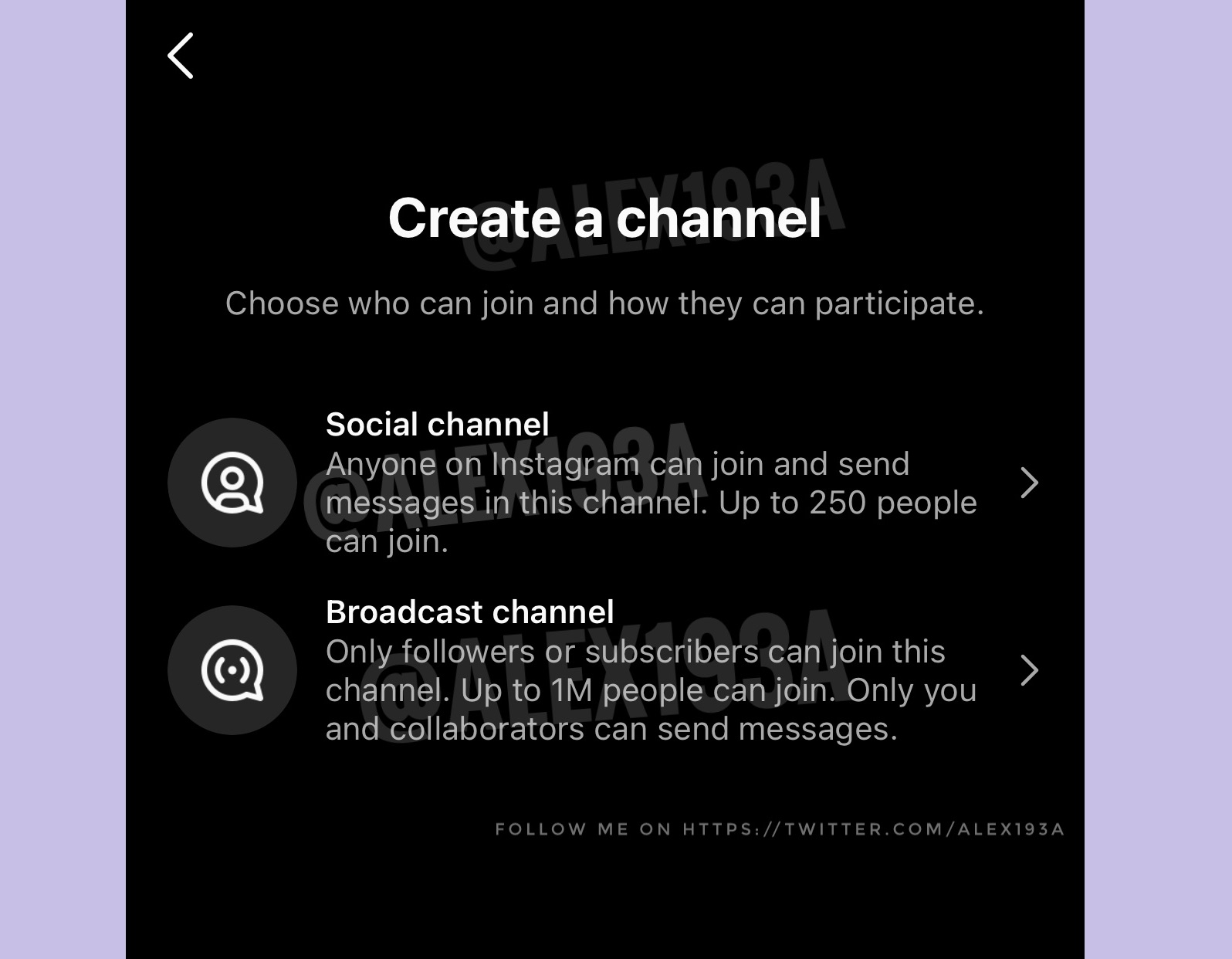
Last year, on October 12th, Alessandro Paluzzi, a renowned mobile app developer, and leaker, revealed that Instagram was working on the ability to create channels. The main objective behind these Channels would be to provide a platform on which multiple users could discuss certain topics. Initially, these channels were referred to as public groups, but later on, the term “channel” took over.

Channels were not restricted to followers only; instead, anyone could discover one and come aboard with the discussion. Later on, to make them more discoverable, developers offered to let the channel creators feature them on their profiles.

Going forward with this new feature, Instagram divided channels into 2 categories. Social channel, having the ability to host almost 250 users. A broadcast channel that can host over one million users.


Social channels, despite being restricted to 250 users only, gave an advantage to the audience as anyone could join and share their views with others. Whereas a Broadband channel can only be joined by followers or subscribers. Not only this but the ability to send messages is restricted to the creator and channel moderator.

While the feature may appear to be new on this platform, those who are familiar with Telegram and use the application know that Instagram took the idea of such a feature from Telegram. With this new feature, Instagram will be creating competition for Telegram as it moves forward to offer an all-in-one platform to its users. From short videos known as “reels” to its IGTV, uploading stories, and now Instagram channels.

Alessandro Paluzzi has been keeping his followers updated with this update ever since it was announced by Instagram. The latest development was also revealed by him on his Twitter account.

Though the feature is still new, Instagram still has a long way to go with it. It can be expected that the developers will be working to make the Channel feature more user-friendly to retain the maximum number of users. Just like reels is doing a good job for Instagram, the app developers will be aiming to do the same with Channel.

Read next: AI Might Be Even More Biased Than People
by Arooj Ahmed via Digital Information World

Wednesday, January 25, 2023

Video Accounts For 65% Of All Internet Traffic, New Study Proves

A new study by Sandvine is shedding light on an ongoing trend. This is related to how much video content is raging in the tech world, accounting for nearly 65% of all the traffic currently seen on the internet.

Data usage from such prominent video websites showed a great 24% YoY increase.

This particular report showcased information from around 177 service providers that were witnessed in various places around the world. Moreover, such a breakdown of internet usage showcases several leading tech giant firms such as Facebook, Microsoft, Google, Netflix, Apple, and Amazon. These account for half of the traffic coming in. And if we had to outline the leaders, it would be both Google and Netflix that really do end up consuming the majority of the bandwidth.


In one recently published statement, one researcher at Sandvine called out the video as being an integral component of conferencing, messaging, socializing, and gaming. He also mentioned how the traffic spike witnessed during the COVID-19 era is actually now a new normal that’s linked to bandwidth usage.

This rapid acceleration for digitalization has caused a major reliance upon the likes of apps with a huge evolution toward sophisticated platforms that combine several functions with features.

It’s all very interesting because streaming videos were already seen as a major source of web traffic before the pandemic struck. And that sort of category share is just growing as all service providers need to figure out how they plan on witnessing a growing appetite for the likes of data.

The firm’s CTO says that many telecom firms are predicted to attain regulatory relief as the demand from the consumers’ side isn’t coming slow.

More details can be taken from the Sandvine report which includes a complete breakdown of how trends regarding internet usage changed in 2022.

Read next: Two-Thirds Of Consumers Will Abandon Apps Or Sites Offering Poor Performance As Per This Study
by Dr. Hura Anwar via Digital Information World

Amazon Echo, Google Home or Apple HomePod, Which Smart Speaker Dominates the U.S Market?

In this fast-developing world, technology is taking over every factor of our lives and is undeniably making it easier for us. One prime example of this is voice-controlled Home assistants like Alexa and Echo dot. As expected there is an Apple version of it called the HomePod.

Two years ago the original HomePod was discontinued by Apple without a replacement for it available back in March 2021. But now, very out of the blue, last week, the tech giant announced that a new Apple 2nd generation HomePod will be making its way into the world. This new version of the HomePod will be powered by the S7 chip which was originally meant for the Apple Watch.

The upgraded version is surprisingly a downgrade from the original version as it is equipped with five tweeters rather than the 7 of the last version, and has four instead of six microphones. This will help Apple maximize its profit and equalize the cost of production. The thing is that the original cost more to make than it sold for and was considered over-engineered by many people, deterring the sales even further.

One of the most important factors for buyers is that they want affordability and connectivity both, rather than the sound that their device can produce. This is a reason that the OG HomePod could never reach what its other counterparts reached, while the HomePod mini which was priced at a very economical $99, something that is unusual for Apple, took off and became a hit almost instantly after its launch which took place in 2020. However, some of the people that swear by Apple, wanted the company to release a speaker and that was one of the reasons that Apple is back with the HomePod 2nd generation, even though it has changed something that ultimately makes it cheaper to manufacture and cheaper to buy.

Statista Consumer Insights conducted a survey and the results shows that Amazon is leading the smart speaker landscape in the US. This is kind of understandable as the company practically invented the category when they launched the first Amazon Echo back in 2014. The reason for their leadership is that they have a good strategy where they have kept their speakers at an affordable price throughout the years and thus have succeeded in getting them to many homes throughout the whole American continent.


Read next: The Best US Mobile And Broadband Internet Performance For Q4 Of 2022 Revealed
by Arooj Ahmed via Digital Information World

52% of Marketers Increase Social Media Budgets Due to Economic Turmoil

Now that 2023 is in full swing, marketers are starting to reveal what their main focuses will be in the upcoming year. It seems that 2023 is shaping up to be the year of social media, with around 52% of marketers saying they plan to increase ad spends on social media with all things having been considered and taken into account.

Social video is also an appealing prospect for such marketers, with 49% saying that they are interested in seeing where it goes in a recent survey. The survey was conducted by Meltwater, and it reveals a lot about the state of the industry.

With all of that having been said and now out of the way, it is important to note that it is economic uncertainty that is leading marketers to up the ante on social media. 81% of marketers plan to use social media to boost awareness for brands that they have been tasked with representing, with 60% hoping to get a bit more engagement out of consumers.

At the same time, 49% of marketers who responded to this survey are hoping that social media will help them get more new customers than might have been the case otherwise. 71% of marketers say that organic marketing will be a top priority for them, with just 66% saying that they plan to use paid social posts.

This seems to suggest that there will be an influx of organic posts, and that might not bode well for Facebook’s business model. The social media juggernaut depends on ad buys, although it’s not all gray skies for the struggling enterprise.

Marketers are saying that they plan to dedicate as much as 32% of their marketing budgets to ad buys on social media. That might give Facebook a bit of breathing room, and it will also provide relief to Elon Musk’s Twitter.

Economic turmoil is forcing marketers to go back to basics, and they will be emphasizing outreach and awareness in 2023. The results of this year will be quite telling since they will show how the market responds to such stress.
Read next: Two-Thirds Of Consumers Will Abandon Apps Or Sites Offering Poor Performance As Per This Study
by Zia Muhammad via Digital Information World

Gen Z Loves Fact Checking, So Why Do They Still Believe in Conspiracy Theories

Gen Z is the most tech savvy generation in history, and that has made them well aware of the need for fact checking. Reports have shown that Gen Z is more like to fact check information that they see online, but in spite of the fact that this is the case they also appear to be at least somewhat more likely to believe misinformation.

A report that was published by The News Movement and OliverWyman Forum spoke at length about this. Conducted over a period of two years, this report sought to highlight what businesses need to do in order to personalize their content.

With all of that having been said and now out of the way, it is important to note that this report revealed that social media was a primary source of information for members of Gen Z. They are 2.7 times more likely to listen to digital news outlets rather than traditional ones, and only around 30% of them turn to newspapers, magazines and other such news sources.

57% of Gen Z said that social media was their standard resource for news, but they also appear to trust it the least. 60% of them say that they are wary of short news formats like videos and small articles because of the fact that this is the sort of thing that could potentially end up failing to provide them with much needed context.


What’s more, 50% of Gen Z say that social media has made them more susceptible to fake news than might have been the case otherwise. 50% of them are also aware that their desire for personalization might trap them in some kind of an ideological bubble.

Gen Z is still quite young, and members of this generation are likely still getting used to the barrage of news that they receive. It will take them some time to figure out how to parse legitimate information from poorly sourced data, but their awareness regarding fact checking is a heartening sign with all things having been considered and taken into account since it indicates that there is hope for them.

Read next: Two-Thirds Of Consumers Will Abandon Apps Or Sites Offering Poor Performance As Per This Study
by Zia Muhammad via Digital Information World