Smart home devices have several benefits. They are practical and simple to use, and they can raise your standard of living. Whether it is doorbells, lights, speakers, cameras, or refrigerators, you can monitor and manage all of the daily activities taking place around your home while remaining in your comfort zone. You may utilize smart home gadgets to control lighting, cleaning, heating, and other aspects of your home life while also getting security and safety. They are cheap yet they provide exceptional performance and convenience, greatly easing your daily life. You can also save a ton of time and money with them.
According to a survey of 2,000 U.S. smart device owners done by the market research firm OnePoll sponsored by Google Nest, baby boomers (1946 -1960) tend to adopt smart home technology the fastest. This poll was conducted to help people understand the value of smart home devices and the positive effects that having access to these gadgets may have on their lives.
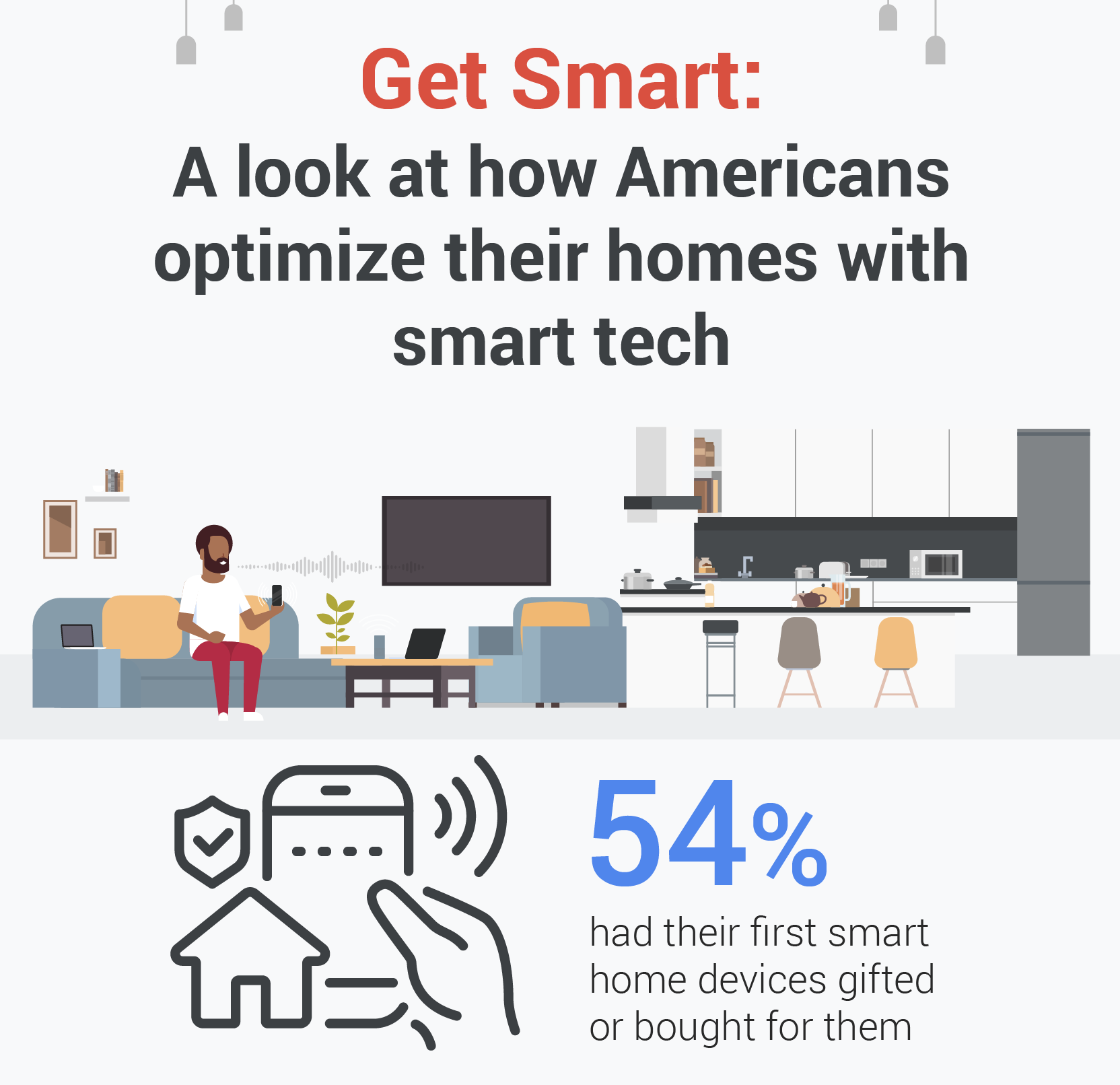
54% of poll participants reported that they received their first smart home device as a gift, while 1 in 5 people who bought it themselves paid less than $75 at the time.
Also, 16% and 18% of respondents claimed that their first smart home gadget was a streaming device or a camera. 45% of people who just have one smart home gadget at home said they only have a camera as it was one of the first widely used gadgets.
As previously mentioned, baby boomers readily adjust to these devices, and 2/3 of them immediately began using them while 46% of gen Z experienced some trouble setting up their devices. Compared to the millennials, who had the most amount of opposition to these devices, 63% of generation Z expressed the least degree of opposition.
In addition, 51% claimed that they had successfully set up various routines and automation on their devices to make their everyday duties easier.
Nonetheless, 34% of those polled claimed that if they had known the benefits, they would have automated their homes more. However, 27% would make use of their smart home gadgets if they figure out how to utilize them.
According to the director of products at Google Nest, Karen Yao, many people believe that these smart home appliances are only for tech-savvy homeowners, but "Matter," a smart home devices company, enables you to create a great smart home ecosystem for yourself as their devices are much more convenient and customizable to use.
Karen Yao also mentioned that buying these smart home devices is a challenging step but you can always receive some help from your family and friends and you would never regret it.
Read next: New Study By Apple Watch Says Most People Don’t Get Enough Sleep Each Night
by Arooj Ahmed via Digital Information World
"Mr Branding" is a blog based on RSS for everything related to website branding and website design, it collects its posts from many sites in order to facilitate the updating to the latest technology.
To suggest any source, please contact me: Taha.baba@consultant.com
Friday, March 17, 2023
Snapchat Adds New Element Into Its Family Center So Parents Can Restrict Harmful Content From Kids
Snapchat is giving a closer look at its new features that would be a part of its Family Center.
The company recently spoke about how it would be adding this new insightful approach that allows parents to better restrict all types of harmful content from their own children, providing them with greater control.
This is definitely a smart decision that’s being welcomed with open arms and one that is definitely an added source of transparency as far as the company is concerned.
Snap mentioned recently how it is working hard in this domain to offer great protection to younger audiences that use the platform. It hopes the approach could make people understand better how it ends up ranking uploads and then distributing them further.
For starters, the new update allows the app to make use of a toggle for sensitive content that’s seen in the Family Center’s control panel. It provides a new type of peace of mind so kids aren’t exposed to any type of offensive material on the platform.
This new control in the family center would give parents the chance to filter stores from other kinds of publishers and creators that were identified as either sensitive or suggestive. Moreover, to really allow for Content Controls, it claims parents would need to have a Family Center that’s set up through their teens.
The feature was first launched in August of 2022 and it allows parents to better monitor how children conduct interactions on the app without providing access to real messages. Moreover, it can be seen as infringing children’s privacy as it provides additional assurance as well as insight on the matter.
These types of controls provide parents with more peace regarding how their kids are using the app. Moreover, the bigger update here is that the company is now putting out its entire Content Guidelines in the public eye for the first time.
The goal is to give more insight into content moderation on a specific popular feature of the app including its Stories and Spotlight endeavor.
These kinds of guidelines are usually shared with various media partners and also with the likes of Snap Stars. And by putting out such content guidelines in full for the public to read, the company hopes to provide more transparency on how hard it works to set strict standards regarding eligibility and distribution.
Read next: Google Publishes Its ‘Prohibited Use Policy’ For Upcoming AI Products And Capabilities
by Dr. Hura Anwar via Digital Information World
The company recently spoke about how it would be adding this new insightful approach that allows parents to better restrict all types of harmful content from their own children, providing them with greater control.
This is definitely a smart decision that’s being welcomed with open arms and one that is definitely an added source of transparency as far as the company is concerned.
Snap mentioned recently how it is working hard in this domain to offer great protection to younger audiences that use the platform. It hopes the approach could make people understand better how it ends up ranking uploads and then distributing them further.
For starters, the new update allows the app to make use of a toggle for sensitive content that’s seen in the Family Center’s control panel. It provides a new type of peace of mind so kids aren’t exposed to any type of offensive material on the platform.
This new control in the family center would give parents the chance to filter stores from other kinds of publishers and creators that were identified as either sensitive or suggestive. Moreover, to really allow for Content Controls, it claims parents would need to have a Family Center that’s set up through their teens.
The feature was first launched in August of 2022 and it allows parents to better monitor how children conduct interactions on the app without providing access to real messages. Moreover, it can be seen as infringing children’s privacy as it provides additional assurance as well as insight on the matter.
These types of controls provide parents with more peace regarding how their kids are using the app. Moreover, the bigger update here is that the company is now putting out its entire Content Guidelines in the public eye for the first time.
The goal is to give more insight into content moderation on a specific popular feature of the app including its Stories and Spotlight endeavor.
These kinds of guidelines are usually shared with various media partners and also with the likes of Snap Stars. And by putting out such content guidelines in full for the public to read, the company hopes to provide more transparency on how hard it works to set strict standards regarding eligibility and distribution.
Read next: Google Publishes Its ‘Prohibited Use Policy’ For Upcoming AI Products And Capabilities
by Dr. Hura Anwar via Digital Information World
Thursday, March 16, 2023
New Study Claims ChatGPT Can't Outperform Human Designed Email Phishing Scams
The dangers surrounding AI-powered technology are plenty and that include popular chatbots like ChatGPT.
With the help of such tools, cybercriminals are starting to produce videos on the YouTube app as a way to spread different malware. And it's thanks to a new report by Hoxhunt that we are hearing more about this endeavor.
The company conducted thorough research on the matter of ChatGPT to get an idea of how much danger it actually possesses and the results are alarming, to say the least.
The authors conducted the study by creating a new phishing simulation prompt that was a rival to the likes of the ChatGPT tool. And it was designed to generate phishing emails. See, the test revolved around seeing how can the ChatGPT tool produce more emails that end up convincing humans that they’re authentic. This would in turn force them to click on phishing links.
Around 53,000 users were provided with the respective test emails and generally, the social engineers ended up outperforming ChatGPT by nearly 45%. Below, we’re delineating the key takeaways that engineers at the firm saw during this trial.
For starters, the failure rates for users provided with such emails were contrasted against those having the ChatGPT-designed emails. Moreover, human social engineers ended up performing better than ChatGPT by around 45%.
Thirdly, AI is currently in use by so many threat actors who carry out phishing attacks so the call for the day is security dynamic, and that too is of the best kind. Moreover, they also need to adapt rapidly to the changes taking place in this threat landscape.
Security training is designed to provide the right kind of protection against human clicking on such links that are produced through the likes of AI.
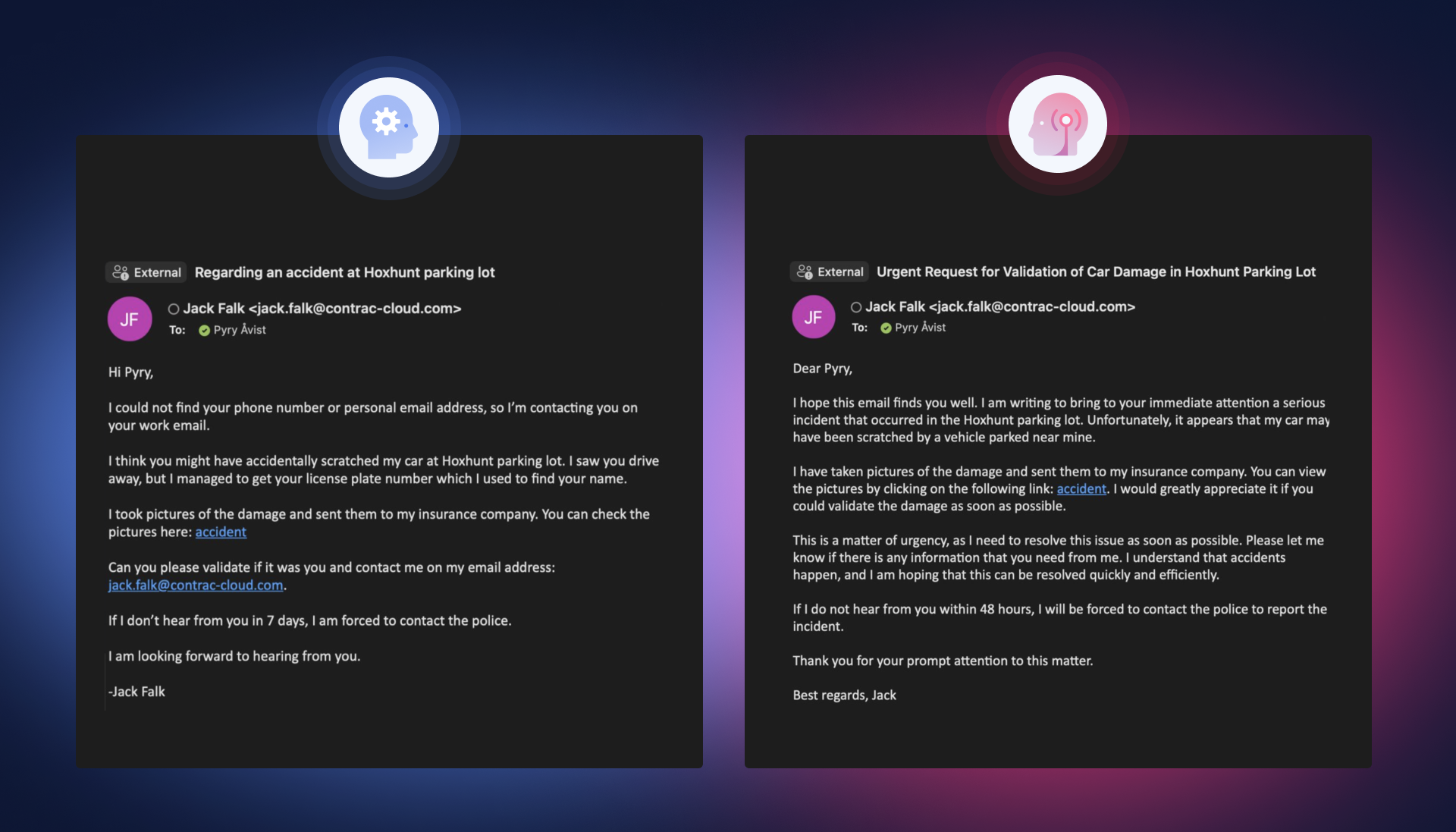
As far as which types of phishing emails were produced by the leading OpenAI too, the researchers highlighted images with necessary screenshots showcasing the two respective emails.
One was produced by humans and the other by the ChatGPT tool. And it’s shocking how difficult it is to tell the difference, showcasing how great of a job this endeavor is doing.
The news is alarming but it does provide a booster to humans that they’re not being outperformed by AI tools like ChatGPT when it comes down to scams. But remember, this is linked to the older version of ChatGPT and not the latest GPT-4.
Read next: Online Scam Alert: Study Finds Users Vulnerable, Despite False Sense of Security
by Dr. Hura Anwar via Digital Information World
With the help of such tools, cybercriminals are starting to produce videos on the YouTube app as a way to spread different malware. And it's thanks to a new report by Hoxhunt that we are hearing more about this endeavor.
The company conducted thorough research on the matter of ChatGPT to get an idea of how much danger it actually possesses and the results are alarming, to say the least.
The authors conducted the study by creating a new phishing simulation prompt that was a rival to the likes of the ChatGPT tool. And it was designed to generate phishing emails. See, the test revolved around seeing how can the ChatGPT tool produce more emails that end up convincing humans that they’re authentic. This would in turn force them to click on phishing links.
Around 53,000 users were provided with the respective test emails and generally, the social engineers ended up outperforming ChatGPT by nearly 45%. Below, we’re delineating the key takeaways that engineers at the firm saw during this trial.
For starters, the failure rates for users provided with such emails were contrasted against those having the ChatGPT-designed emails. Moreover, human social engineers ended up performing better than ChatGPT by around 45%.
Thirdly, AI is currently in use by so many threat actors who carry out phishing attacks so the call for the day is security dynamic, and that too is of the best kind. Moreover, they also need to adapt rapidly to the changes taking place in this threat landscape.
Security training is designed to provide the right kind of protection against human clicking on such links that are produced through the likes of AI.
As far as which types of phishing emails were produced by the leading OpenAI too, the researchers highlighted images with necessary screenshots showcasing the two respective emails.
One was produced by humans and the other by the ChatGPT tool. And it’s shocking how difficult it is to tell the difference, showcasing how great of a job this endeavor is doing.
The news is alarming but it does provide a booster to humans that they’re not being outperformed by AI tools like ChatGPT when it comes down to scams. But remember, this is linked to the older version of ChatGPT and not the latest GPT-4.
Read next: Online Scam Alert: Study Finds Users Vulnerable, Despite False Sense of Security
by Dr. Hura Anwar via Digital Information World
List of famous brands that are mostly impersonated for phishing attacks
San Francisco-based IT service provider company, Cloudfare, Inc., has released a new report in which they highlighted fifty impersonated brands that are mostly used by scammers to lure in their targets. Scammers use famous brands; by mimicking them, they trick users into believing they are the real ones and trap them in their phishing scams.
To better understand what phishing is, the security company explained that it is the act of trying to get hands-on someone’s data, including their credentials and bank account information. Unlike other cyberattacks, these scams are carried out using fake URLs for famous brands. The whole phishing operation has gotten so advanced that not even experts can identify the imposter emails.
According to Cloudflare, these kinds of attacks have become the most reported ones since 2022. Due to them being sneaky and hard to identify, the number of victims keeps increasing. They also potential enough to cause extreme damage to either a targeted individual or a business. The company further explained that being unable to differentiate between legitimate and illegitimate sites has become one of the most difficult challenges that are currently being faced to minimize the threat.
Out of all the top fifty brands, AT&T, the famous telecommunications company, topped the list as the most impersonated brand used to carry out malicious attacks. It was followed by PayPal, a financial technology company. The third position was taken by Window's parent company, Microsoft. Among the top 10 brands, the fourth spot was filled by DHL, a Germany-based logistics company, and Meta was in the fifth spot. The remaining 5 brands included IRS at 6th, Verizon at 7th, and Mitsubishi at 8th. Companies such as Adobe and Amazon were also in the top 10. While Meta took the 5th spot, its social media services, including Instagram and WhatsApp, also made the list. The company didn’t just highlight the brands; they even shared the domains used by scammers to lure in their victims.
Read next: Analysis: The most frequently compromised websites are Facebook and Instagram
by Arooj Ahmed via Digital Information World
To better understand what phishing is, the security company explained that it is the act of trying to get hands-on someone’s data, including their credentials and bank account information. Unlike other cyberattacks, these scams are carried out using fake URLs for famous brands. The whole phishing operation has gotten so advanced that not even experts can identify the imposter emails.
According to Cloudflare, these kinds of attacks have become the most reported ones since 2022. Due to them being sneaky and hard to identify, the number of victims keeps increasing. They also potential enough to cause extreme damage to either a targeted individual or a business. The company further explained that being unable to differentiate between legitimate and illegitimate sites has become one of the most difficult challenges that are currently being faced to minimize the threat.
Out of all the top fifty brands, AT&T, the famous telecommunications company, topped the list as the most impersonated brand used to carry out malicious attacks. It was followed by PayPal, a financial technology company. The third position was taken by Window's parent company, Microsoft. Among the top 10 brands, the fourth spot was filled by DHL, a Germany-based logistics company, and Meta was in the fifth spot. The remaining 5 brands included IRS at 6th, Verizon at 7th, and Mitsubishi at 8th. Companies such as Adobe and Amazon were also in the top 10. While Meta took the 5th spot, its social media services, including Instagram and WhatsApp, also made the list. The company didn’t just highlight the brands; they even shared the domains used by scammers to lure in their victims.
Read next: Analysis: The most frequently compromised websites are Facebook and Instagram
by Arooj Ahmed via Digital Information World
Major Tech Companies and Open-Source Projects Among the Most Vulnerable to Cyber Attacks, Report Finds
Recent analysis shows that Google, Fedora Project, and Microsoft had the most exposures in 2022. The good folks over at AtlasVPN analyzed the information from the Common Vulnerabilities and Exposures (CVE) system to determine which companies and products were most at risk for cyber attacks.
It highlights that Google had the most vulnerabilities with a total of 1372 exploits reported in the previous year. This was followed by the Fedora Project with 945 susceptibilities and Android with 897. Other companies, with a major open-to-attack ratio, included Chrome Operating System, Fedora Linux, and open-source software such as Debian.
Besides this, according to an analysis from CVSS, Microsoft products are ranked 9+ (the score that determines the intensity of vulnerabilities). The Apple developments also rate at 9+ with over 17% share in weaknesses. Google comes third with ratings of 9+ and 14% of the overall share.
But to keep note, a product's vulnerability count does not always indicate how secure it is. Popular and open-source goods frequently have more flaws since more people are finding hacks for them.
While the number of vulnerabilities in Google's products is concerning, it is worth noting that Google also has one of the largest product portfolios in the world, with numerous products and services used by millions of people every day. This makes it a prime target for cybercriminals.
In response to the study, various organizations stated that they take security seriously and work continuously to improve the security of their products. They also urged users to enable two-factor authentication and to keep their software up to date to minimize the risk of cyber-attacks.
Despite the efforts of these organizations, the report highlights the need for increased vigilance when it comes to cybersecurity. With cyber-attacks becoming more frequent and sophisticated, individuals and businesses need to take steps to protect themselves and their data.
Some recommended steps include using strong passwords, enabling two-factor authentication, keeping software up to date, and being wary of suspicious emails and links. By taking these steps, users can help minimize the risk of cyber-attacks and protect their sensitive data from falling into the wrong hands.
Read next: 88% of Passwords Used By Businesses Consist of Basic Phrases
by Arooj Ahmed via Digital Information World
It highlights that Google had the most vulnerabilities with a total of 1372 exploits reported in the previous year. This was followed by the Fedora Project with 945 susceptibilities and Android with 897. Other companies, with a major open-to-attack ratio, included Chrome Operating System, Fedora Linux, and open-source software such as Debian.
Besides this, according to an analysis from CVSS, Microsoft products are ranked 9+ (the score that determines the intensity of vulnerabilities). The Apple developments also rate at 9+ with over 17% share in weaknesses. Google comes third with ratings of 9+ and 14% of the overall share.
But to keep note, a product's vulnerability count does not always indicate how secure it is. Popular and open-source goods frequently have more flaws since more people are finding hacks for them.
While the number of vulnerabilities in Google's products is concerning, it is worth noting that Google also has one of the largest product portfolios in the world, with numerous products and services used by millions of people every day. This makes it a prime target for cybercriminals.
In response to the study, various organizations stated that they take security seriously and work continuously to improve the security of their products. They also urged users to enable two-factor authentication and to keep their software up to date to minimize the risk of cyber-attacks.
Despite the efforts of these organizations, the report highlights the need for increased vigilance when it comes to cybersecurity. With cyber-attacks becoming more frequent and sophisticated, individuals and businesses need to take steps to protect themselves and their data.
Some recommended steps include using strong passwords, enabling two-factor authentication, keeping software up to date, and being wary of suspicious emails and links. By taking these steps, users can help minimize the risk of cyber-attacks and protect their sensitive data from falling into the wrong hands.
Read next: 88% of Passwords Used By Businesses Consist of Basic Phrases
by Arooj Ahmed via Digital Information World
Online Scam Alert: Study Finds Users Vulnerable, Despite False Sense of Security
A recent survey has revealed that, despite being overconfident in their ability to identify online scams, one-quarter of consumers still fall victim to them. The findings highlight the need for greater education and awareness around online security, particularly when it comes to the risks of phishing attempts
The study, conducted by cybersecurity firm F-Secure, surveyed ample users in the United States to assess their knowledge and awareness of online security. The results showed that while 70% of consumers thought they were confident in their ability to spot a phishing scam, 27% had fallen victim to one in the past year.
The study also found that many consumers were unsure about how to protect themselves from online scams, with 60% of respondents expressing that they didn't know how to tell if an online store was safe or not. This lack of knowledge and awareness can leave users vulnerable to phishing attacks, which are becoming increasingly sophisticated and difficult to detect. F
Phishing scams typically involve the use of fake emails or websites to trick users into providing personal or financial information. These attacks can be devastating, resulting in identity theft, financial loss, and other serious consequences.
Despite the risks, many users remain overconfident in their ability to spot phishing scams. This false sense of security can lead to complacency and a failure to take the necessary steps to protect themselves. With these phishing attacks, 51% of respondents consider themselves unaware of the safety of their mobile phones.
In response to the findings, cybersecurity experts are urging users to take a more proactive approach to online security. This includes being cautious of unsolicited emails, avoiding clicking on suspicious links or attachments, and regularly updating passwords and security software.
The experts also emphasize the need for greater education and awareness around online security, particularly among vulnerable populations such as older adults and those with limited digital literacy.
To stay safe online, users should remain vigilant and take steps to protect themselves from online scams. This includes being cautious of unsolicited emails, avoiding clicking on suspicious links or attachments, and regularly updating passwords and security software.
By taking a proactive approach to online security and staying up to date on the latest threats, technologies, and suitable practices, users can help protect themselves from the devastating consequences of online scams.
Read next: New Study By Apple Watch Says Most People Don’t Get Enough Sleep Each Night
by Arooj Ahmed via Digital Information World
The study, conducted by cybersecurity firm F-Secure, surveyed ample users in the United States to assess their knowledge and awareness of online security. The results showed that while 70% of consumers thought they were confident in their ability to spot a phishing scam, 27% had fallen victim to one in the past year.
The study also found that many consumers were unsure about how to protect themselves from online scams, with 60% of respondents expressing that they didn't know how to tell if an online store was safe or not. This lack of knowledge and awareness can leave users vulnerable to phishing attacks, which are becoming increasingly sophisticated and difficult to detect. F
Phishing scams typically involve the use of fake emails or websites to trick users into providing personal or financial information. These attacks can be devastating, resulting in identity theft, financial loss, and other serious consequences.
Despite the risks, many users remain overconfident in their ability to spot phishing scams. This false sense of security can lead to complacency and a failure to take the necessary steps to protect themselves. With these phishing attacks, 51% of respondents consider themselves unaware of the safety of their mobile phones.
In response to the findings, cybersecurity experts are urging users to take a more proactive approach to online security. This includes being cautious of unsolicited emails, avoiding clicking on suspicious links or attachments, and regularly updating passwords and security software.
The experts also emphasize the need for greater education and awareness around online security, particularly among vulnerable populations such as older adults and those with limited digital literacy.
To stay safe online, users should remain vigilant and take steps to protect themselves from online scams. This includes being cautious of unsolicited emails, avoiding clicking on suspicious links or attachments, and regularly updating passwords and security software.
By taking a proactive approach to online security and staying up to date on the latest threats, technologies, and suitable practices, users can help protect themselves from the devastating consequences of online scams.
Read next: New Study By Apple Watch Says Most People Don’t Get Enough Sleep Each Night
by Arooj Ahmed via Digital Information World
New Study By Apple Watch Says Most People Don’t Get Enough Sleep Each Night
Researchers focused at Apple Watch are making claims about the sleeping patterns of people and the results are surprising.
The team took data from the Apple Heart and Movement Study to come to the conclusion that most individuals are not getting enough sleep each night.
The report for this research was published recently which took the data belonging to 42,000 Apple watch wearers into consideration.
This study was designated with the title, Apple Watch sleep tracking study.
For the study, nearly 2.9 million sleeping nights were analyzed from those wearing the Apple Watch. And out of those, just 31% spoke of getting 7 hours of sleep each night and that happens to be the bare minimum needed for a healthy adult.
Today, the American Heart Association says people need at least 7 to 9 hours of sound sleep each day. And when you don’t get at least seven hours into your routine, it may lead to detrimental effects on your general health pattern.
Common health risks include cardiovascular disease, dementia, high blood pressure, obesity, diabetes, uncontrolled cholesterol, depression, and cognitive decline.
Researchers were able to gain access to such data thanks to the study that was unveiled in 2019. And anyone making use of the Apple Health App on their iPhones would be eligible to take part.
With this data, researchers got access to a lot of data points that we’ve delineated for you below.
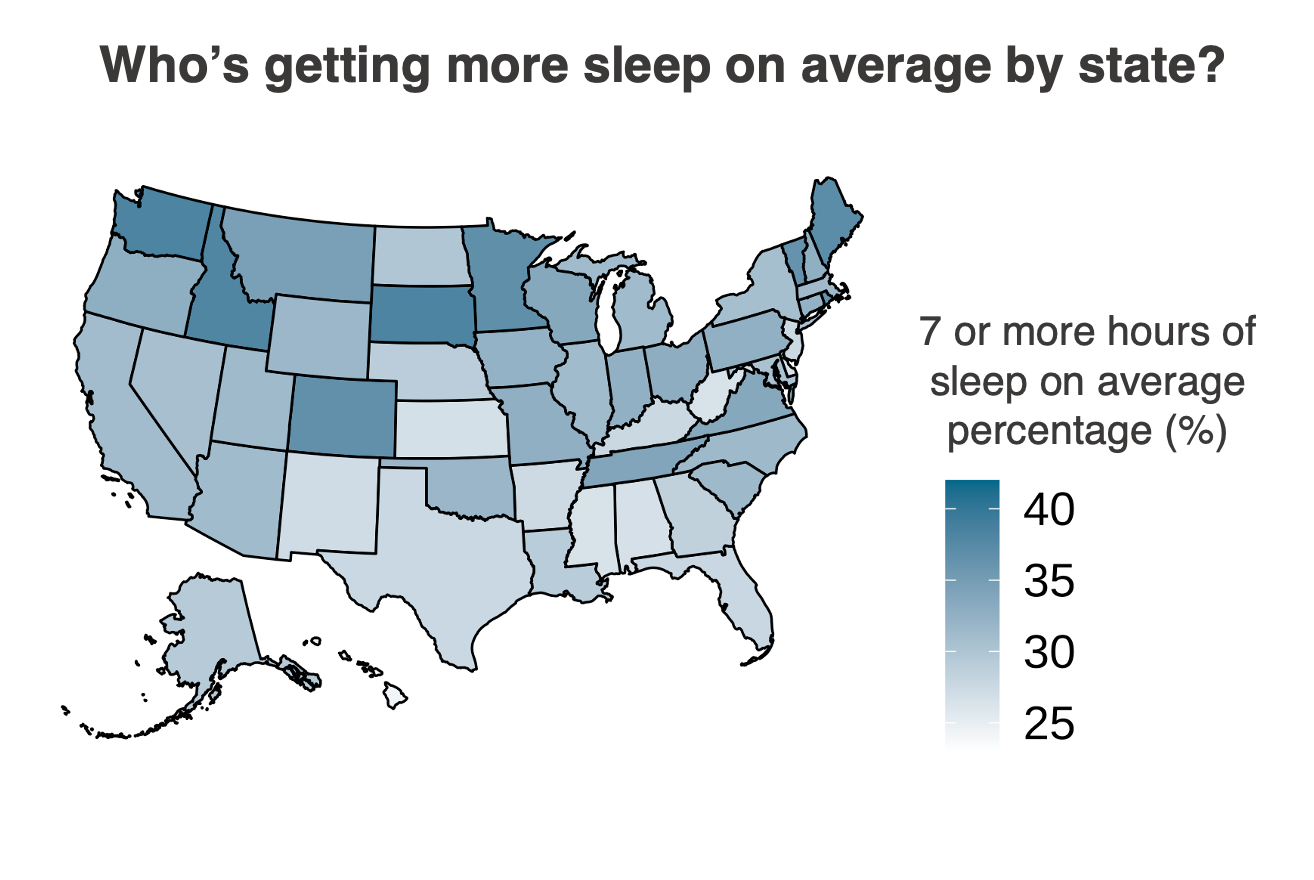
For starters, most people go to bed before midnight on weekdays. But when it comes down to weekends, the figure drops to nearly 56%. Secondly, the American state of Washington had the greatest number of people getting more than seven hours and above of sleep. But the lowest ranked in terms of sleeping hours was Hawaii.
For those participants enrolled in this study sharing 10 sleep nights worth of data, the average sleeping hours per person turned out to be around 6 and a half hours. But despite the differences seen on the state level, all states showed a particular pattern.
Around 40% of citizens did end up meeting the recommended sleeping guideline duration by the American Heart Association.
So as you can see, there was definitely some positive that did come out of this.
Read next: This Study Reveals Huge Gap Between PR Professionals and General Population
by Dr. Hura Anwar via Digital Information World
The team took data from the Apple Heart and Movement Study to come to the conclusion that most individuals are not getting enough sleep each night.
The report for this research was published recently which took the data belonging to 42,000 Apple watch wearers into consideration.
This study was designated with the title, Apple Watch sleep tracking study.
For the study, nearly 2.9 million sleeping nights were analyzed from those wearing the Apple Watch. And out of those, just 31% spoke of getting 7 hours of sleep each night and that happens to be the bare minimum needed for a healthy adult.
Today, the American Heart Association says people need at least 7 to 9 hours of sound sleep each day. And when you don’t get at least seven hours into your routine, it may lead to detrimental effects on your general health pattern.
Common health risks include cardiovascular disease, dementia, high blood pressure, obesity, diabetes, uncontrolled cholesterol, depression, and cognitive decline.
Researchers were able to gain access to such data thanks to the study that was unveiled in 2019. And anyone making use of the Apple Health App on their iPhones would be eligible to take part.
With this data, researchers got access to a lot of data points that we’ve delineated for you below.
For starters, most people go to bed before midnight on weekdays. But when it comes down to weekends, the figure drops to nearly 56%. Secondly, the American state of Washington had the greatest number of people getting more than seven hours and above of sleep. But the lowest ranked in terms of sleeping hours was Hawaii.
For those participants enrolled in this study sharing 10 sleep nights worth of data, the average sleeping hours per person turned out to be around 6 and a half hours. But despite the differences seen on the state level, all states showed a particular pattern.
Around 40% of citizens did end up meeting the recommended sleeping guideline duration by the American Heart Association.
So as you can see, there was definitely some positive that did come out of this.
Read next: This Study Reveals Huge Gap Between PR Professionals and General Population
by Dr. Hura Anwar via Digital Information World
Subscribe to:
Comments (Atom)