Flashpoint, a global platform dealing in risk intelligence for organizations, release a report which says during the first half of 2022, the most serious breaches dropped as compared to last year. The report shows that 1,980 breaches occurred due to glitches and web-related errors have fallen from 27.3 billion in 2021 to 1.4 billion in 2022.
While this indicates that businesses would have set their priorities to prevent data breaches and still organizations need to become active in dealing with cyber threats efficiently. Most of the data breaches recognized in the report are due to hacking, with 60 percent of cybercrimes aroused from illegitimate access to software systems. This is essentially crucial to take steps to minimize web exposure as well as organizations will need to pay attention to stopping cybercriminals. Moreover, security teams within organizations need to focus on vulnerability management strategies with improved intelligence. Talking about vulnerability management, it is the cyber activity that is based on efficient assessment and detailed report of susceptible actions in IT. Vulnerability is the major issue that organizations are worried about. Because of this organizations must become proactive in closing loopholes and insecure setups.
Flashpoint’s study also reveals that only 23 percent of data breaches initiated from within the victim enterprise and mostly (61 percent) of breaches were mainly due to data handling errors. The state of data breach intelligence study identified 54 breaches aroused from Turncloak (malicious insider) referring to someone who illegally uses credentials for financial or personal benefits. In addition, the occurrence of ordinary events of cybercrime to minor stealing of credit card data from people during purchasing.
Finally, Flashpoint’s mid-year report depicts how firms should learn security measures accordingly and address the significant threats that often take place when defending against, or getting back to normal circumstances after a data breach.
Read next: 265 Brands Impersonated in Credential Phishing Attacks in the First Half of 2022
by Arooj Ahmed via Digital Information World
"Mr Branding" is a blog based on RSS for everything related to website branding and website design, it collects its posts from many sites in order to facilitate the updating to the latest technology.
To suggest any source, please contact me: Taha.baba@consultant.com
Friday, August 19, 2022
Google’s stopwatch functionality is working again after a month of mysterious disappearance
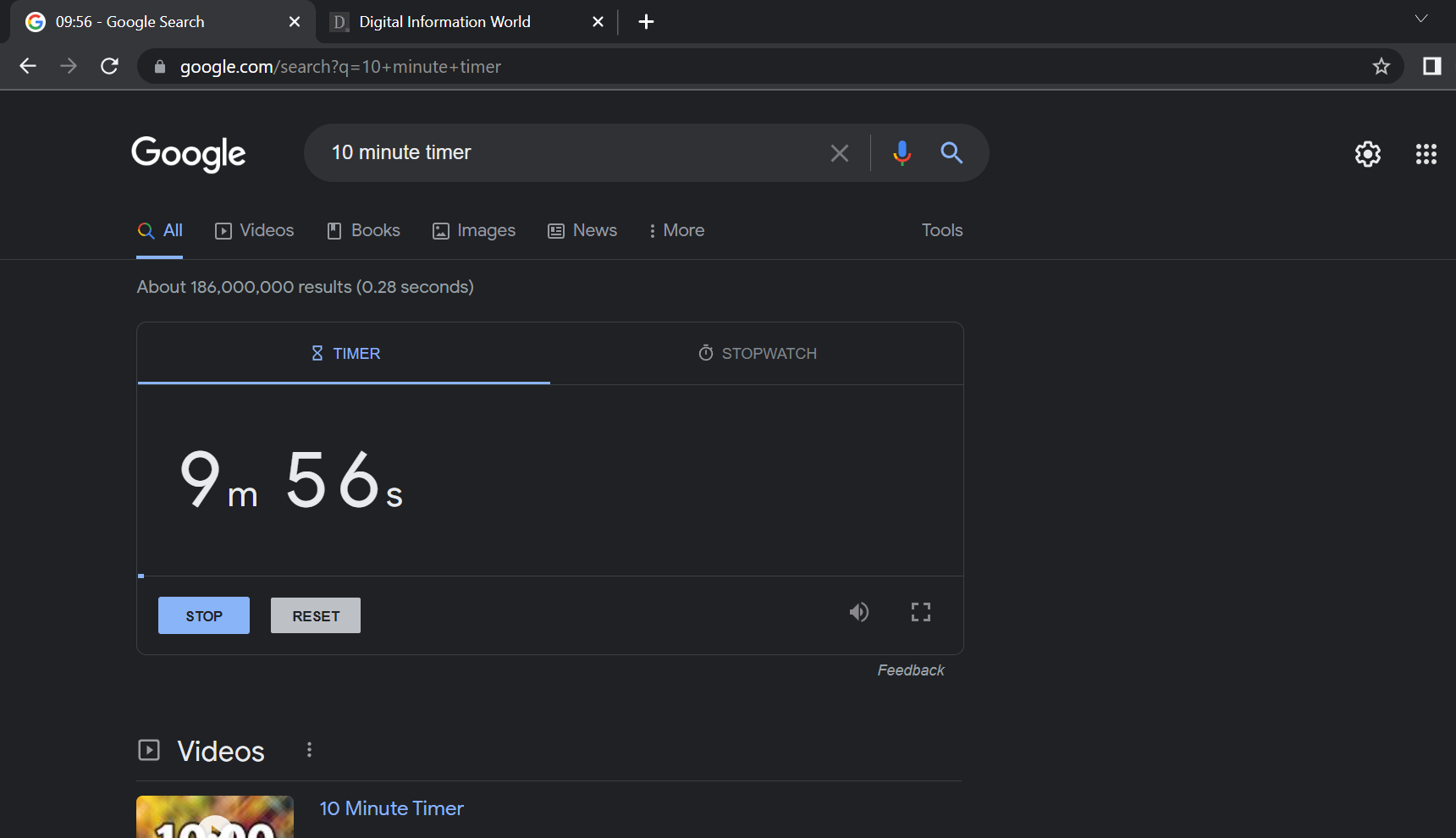
Complains have been roaming around on Twitter that the ability to set the timer on Google is broken. A while ago, the company developed a popular feature of a stopwatch to allow people to set timers while searching for their queries, such as "10 minutes timer". Last month, several users reported that the feature has gone missing. But, the good news is that the bug is fixed now and the stopwatch and timer car is working again, informed Google's Danny Sullivan.
A month ago, when people were searching for a stopwatch or timer, the box that usually appears in the search bar eventually stopped displaying. Instead, it shows web pages and videos related to online timers and stopwatches. You might have no idea about this feature as a user also reported noticing this tool after a long while. It is a simple feature that allows users to set a timer for instance 15 minutes and the timer would start ticking instantly. The timer helps people to take a mini break or distract themselves from the workload.
When the feature disappeared, some users suggested installing plugins, but not many people find it a good alternative. In addition, when users were looking for Google’s stopwatch they found it disgusting to visit certain websites to get just a minute of functionality. It was not known whether the removal of the stopwatch was made intentionally or it was a bug. Anyhow, Dany Sullivan, an analyst who better understands Google and helps people to notice news about Google and hears public feedback shared a tweet that says the Google timer started working again.
The feature is accessible now and you can immediately pull it up on the web. If you haven’t used this tool before, it is time to use this handy tool and get benefits from it. One way to do this is to visit Google’s homepage and in the search box type (Set a timer for Y minutes). When you provide the time, the timer will start counting down. Another way to use this functionality is to simply type the same thing on the URL bar in Google Chrome if you want to skip the lengthy part.
For the stopwatch, start instantly from Google’s homepage just like you do in case of a timer. Type Start a stopwatch in the search box. The stopwatch will instantly start ticking and you can easily stop or restart the stopwatch. Furthermore, you can also use the stopwatch functionality from the URL bar.
If you still have queries regarding the stopwatch and timer, make sure to ask on Twitter or take Google’s help.
Read next: A Global Overview of Internet Prices and Speed
by Arooj Ahmed via Digital Information World
A month ago, when people were searching for a stopwatch or timer, the box that usually appears in the search bar eventually stopped displaying. Instead, it shows web pages and videos related to online timers and stopwatches. You might have no idea about this feature as a user also reported noticing this tool after a long while. It is a simple feature that allows users to set a timer for instance 15 minutes and the timer would start ticking instantly. The timer helps people to take a mini break or distract themselves from the workload.
When the feature disappeared, some users suggested installing plugins, but not many people find it a good alternative. In addition, when users were looking for Google’s stopwatch they found it disgusting to visit certain websites to get just a minute of functionality. It was not known whether the removal of the stopwatch was made intentionally or it was a bug. Anyhow, Dany Sullivan, an analyst who better understands Google and helps people to notice news about Google and hears public feedback shared a tweet that says the Google timer started working again.
The feature is accessible now and you can immediately pull it up on the web. If you haven’t used this tool before, it is time to use this handy tool and get benefits from it. One way to do this is to visit Google’s homepage and in the search box type (Set a timer for Y minutes). When you provide the time, the timer will start counting down. Another way to use this functionality is to simply type the same thing on the URL bar in Google Chrome if you want to skip the lengthy part.
For the stopwatch, start instantly from Google’s homepage just like you do in case of a timer. Type Start a stopwatch in the search box. The stopwatch will instantly start ticking and you can easily stop or restart the stopwatch. Furthermore, you can also use the stopwatch functionality from the URL bar.
If you still have queries regarding the stopwatch and timer, make sure to ask on Twitter or take Google’s help.
Read next: A Global Overview of Internet Prices and Speed
by Arooj Ahmed via Digital Information World
How Safe Is Android 13? Concerns Arise As Malware Developers Bypass Its New ‘Restricted Setting’
Android 13 is out and the makers have promised better security enhancements including a special restricted setting feature.
But what if we told you that the promises made have failed to hold through as leading malware developers claim they’ve managed to create droppers to bypass the security feature outlined? Yes, developers say they’ve devised a system based on tactics to overcome the safety features.
The news is alarming and an apparent setback for those with high hopes. Remember, it’s only been a day or two since we last heard about the launch. This was seen across Google’s Pixel phones and AOSP’s source code.
Despite the news, you can’t deny how hard Google tried to disturb mobile malware that made attempts to enter the system using vital and powerful permissions like AccessbilityService.
This way, the malware was allowed to carry out their malicious threats to the systems, making it easy for the company to detect and disable them. But it seems their hard work couldn’t go all the way.
Thanks to a few research experts and tech analysts from Threat Fabric, a new report highlights how malware authors achieved success in creating Android-specific malware droppers that certainly go above and beyond such features.
They end up delivering results that make the most of the users’ devices, leaving them vulnerable to further attack while enjoying the highest privileges.
When we look at Android versions from the past, it’s quite clear how most of them are related to making their way inside the device through apps found simply from Google’s Play Store. They appear legitimate but their true behavior is masqueraded.
At the time of making downloads, different malware apps force users to gain access to various permissions that authors dub risky. On the other end, they’re sideloading dangerous payloads by breaking through the device’s accessibility service.
The latter has been labeled as one of the most easily abused systems out there for Android. With simple touches and swipes, apps are allowed to perform tasks with ease and can even return to home screens with a single tap. And you guessed it, the user has zero clue of what’s really going on.
On usual occasions, the malware has the ability to give itself more permission than allowed. This way, the victim is stopped from making attempts to have the app deleted.
But what really surprises many is how engineers had boasted so much about the new restricted setting functionality. The purpose with which it was designed was to block sideloading from requesting permission from the Accessibility Service. This way, it would be limiting functions to just APKs from Google’s Play Store.
Now, there’s clear proof thanks to Threat Fabric how the system is being fooled easily and bypassed for malicious means into the Accessibility Service.
The malware dropper manages to include some different types of features so it bypasses restricted settings in place.
It’s called BugDrop and while it’s still in its early stage of development, it’s doing a pretty fine job as a novel entity.
The code featured is very similar to that observed with Brox. This is another name provided to malware making its way to different hacking platforms.
With Android 13, search giant Google thought it would be good to restrict entry into the Accessibility Services, other than the Notification Listener to apps getting installed via the session-based method only.
Therefore, if BugDrop was actually using this method for sideloading, it would be detected through the new Android protection system as proven by the malware developers.
For now, BugDrop is in its early creation phase. But soon, it’s going to be ready for further deployment, wreaking havoc across Android devices by the masses.
Read next: New Survey Proves 49% Of Android Users Prefer Switching To iPhones Because It’s Safer
by Dr. Hura Anwar via Digital Information World
But what if we told you that the promises made have failed to hold through as leading malware developers claim they’ve managed to create droppers to bypass the security feature outlined? Yes, developers say they’ve devised a system based on tactics to overcome the safety features.
The news is alarming and an apparent setback for those with high hopes. Remember, it’s only been a day or two since we last heard about the launch. This was seen across Google’s Pixel phones and AOSP’s source code.
Despite the news, you can’t deny how hard Google tried to disturb mobile malware that made attempts to enter the system using vital and powerful permissions like AccessbilityService.
This way, the malware was allowed to carry out their malicious threats to the systems, making it easy for the company to detect and disable them. But it seems their hard work couldn’t go all the way.
Thanks to a few research experts and tech analysts from Threat Fabric, a new report highlights how malware authors achieved success in creating Android-specific malware droppers that certainly go above and beyond such features.
They end up delivering results that make the most of the users’ devices, leaving them vulnerable to further attack while enjoying the highest privileges.
When we look at Android versions from the past, it’s quite clear how most of them are related to making their way inside the device through apps found simply from Google’s Play Store. They appear legitimate but their true behavior is masqueraded.
At the time of making downloads, different malware apps force users to gain access to various permissions that authors dub risky. On the other end, they’re sideloading dangerous payloads by breaking through the device’s accessibility service.
The latter has been labeled as one of the most easily abused systems out there for Android. With simple touches and swipes, apps are allowed to perform tasks with ease and can even return to home screens with a single tap. And you guessed it, the user has zero clue of what’s really going on.
On usual occasions, the malware has the ability to give itself more permission than allowed. This way, the victim is stopped from making attempts to have the app deleted.
But what really surprises many is how engineers had boasted so much about the new restricted setting functionality. The purpose with which it was designed was to block sideloading from requesting permission from the Accessibility Service. This way, it would be limiting functions to just APKs from Google’s Play Store.
Now, there’s clear proof thanks to Threat Fabric how the system is being fooled easily and bypassed for malicious means into the Accessibility Service.
The malware dropper manages to include some different types of features so it bypasses restricted settings in place.
It’s called BugDrop and while it’s still in its early stage of development, it’s doing a pretty fine job as a novel entity.
The code featured is very similar to that observed with Brox. This is another name provided to malware making its way to different hacking platforms.
With Android 13, search giant Google thought it would be good to restrict entry into the Accessibility Services, other than the Notification Listener to apps getting installed via the session-based method only.
Therefore, if BugDrop was actually using this method for sideloading, it would be detected through the new Android protection system as proven by the malware developers.
For now, BugDrop is in its early creation phase. But soon, it’s going to be ready for further deployment, wreaking havoc across Android devices by the masses.
Read next: New Survey Proves 49% Of Android Users Prefer Switching To iPhones Because It’s Safer
by Dr. Hura Anwar via Digital Information World
Netflix Might Limit Offline Downloads In Its Ad-Free Versions Of The Streaming Service
If you thought the ad-supported tier of popular streaming service Netflix was the same as before, except for the addition of a few commercials, well, you’re wrong.
Thanks to a leading developer named Steve Moser, we’re getting some more information about how things are about to change.
Moser shared with Bloomberg how Netflix plans on introducing a few changes that entail limiting the number of offline downloads on the ad-free version.
At the moment, Netflix has a total of three different versions or tiers that are up for grabs. For starters, the standard version costs $9.99 per month. This enables users to watch content on only one screen at a single time.
Those who sign up for the $14.99 package a month can avail of HD quality and the chance to watch content on any two screens in one go. And those who want a little something extra can opt for the $19.99 deal where users get the chance to watch content on at least four different screens at once.
If you ask us, we certainly don’t see the move as a huge surprise for obvious reasons. Netflix trying to guard users against making offline downloads on the ad-free version certainly is sensible. After all, those who pay more should certainly get more.
This past year, we saw the company’s co-CEO mention boldly how the ad-supported version of the streaming service was not going to entail the same offerings as the one without ads. Moreover, he elaborated further on how those that support ads were designed to be the true gateway of great benefits at lower price tags.
Remember, it’s not simple to serve ads when you’re offline. We don’t believe the mission is impossible but it’s certainly not easy. As it is, the company is putting plenty of things behind payment barriers that we feel should be standard for everyone.
Keeping in mind records from the past, Netflix is yet to treat the ideology behind offline downloads as one that’s seen as a major benefit. The feature was launched back in the year 2016. At that time, the firm had only just begun enabling the concept of making downloads offline.
The whole idea was centered around providing support to those places where wi-fi connections weren’t performing at their best. And truth be told, Netflix was quite behind other archrivals who were already providing the benefit.
For instance, Amazon Prime allowed users to download content and then carry on watching it later for so long.
The news comes after we last heard from the famous content streaming service platform joining hands with Microsoft. Yes, the latter would now be seen as its leading tech, sales, and marketing partner as the duo collaborated, leaving behind so many others who had hopes of the same.
This is what has allowed for the ad-support version of Netflix to arise essentially. We’re going to see the probable launch of the new variants with ads in 2023 and until then, enjoy the platform as much as you can.
Read next: 7 in 10 consumers feel uncomfortable if their online activity gets leaked to someone they are familiar with
by Dr. Hura Anwar via Digital Information World
Thanks to a leading developer named Steve Moser, we’re getting some more information about how things are about to change.
Moser shared with Bloomberg how Netflix plans on introducing a few changes that entail limiting the number of offline downloads on the ad-free version.
At the moment, Netflix has a total of three different versions or tiers that are up for grabs. For starters, the standard version costs $9.99 per month. This enables users to watch content on only one screen at a single time.
Those who sign up for the $14.99 package a month can avail of HD quality and the chance to watch content on any two screens in one go. And those who want a little something extra can opt for the $19.99 deal where users get the chance to watch content on at least four different screens at once.
If you ask us, we certainly don’t see the move as a huge surprise for obvious reasons. Netflix trying to guard users against making offline downloads on the ad-free version certainly is sensible. After all, those who pay more should certainly get more.
This past year, we saw the company’s co-CEO mention boldly how the ad-supported version of the streaming service was not going to entail the same offerings as the one without ads. Moreover, he elaborated further on how those that support ads were designed to be the true gateway of great benefits at lower price tags.
Remember, it’s not simple to serve ads when you’re offline. We don’t believe the mission is impossible but it’s certainly not easy. As it is, the company is putting plenty of things behind payment barriers that we feel should be standard for everyone.
Keeping in mind records from the past, Netflix is yet to treat the ideology behind offline downloads as one that’s seen as a major benefit. The feature was launched back in the year 2016. At that time, the firm had only just begun enabling the concept of making downloads offline.
The whole idea was centered around providing support to those places where wi-fi connections weren’t performing at their best. And truth be told, Netflix was quite behind other archrivals who were already providing the benefit.
For instance, Amazon Prime allowed users to download content and then carry on watching it later for so long.
The news comes after we last heard from the famous content streaming service platform joining hands with Microsoft. Yes, the latter would now be seen as its leading tech, sales, and marketing partner as the duo collaborated, leaving behind so many others who had hopes of the same.
This is what has allowed for the ad-support version of Netflix to arise essentially. We’re going to see the probable launch of the new variants with ads in 2023 and until then, enjoy the platform as much as you can.
Read next: 7 in 10 consumers feel uncomfortable if their online activity gets leaked to someone they are familiar with
by Dr. Hura Anwar via Digital Information World
Amazon Is Very Keen On Adopting A TikTok Themed Feed With Internal Tests In Full Swing
There are plenty of apps that can’t get over TikTok’s successful layout for its social feed. And that’s why they’re doing everything in their power to take inspiration and generate an algorithm that’s awfully similar.
After Facebook, Instagram, Twitter, Snapchat, Pinterest, and more, it now seems Amazon has joined the bandwagon.
While you probably wouldn’t expect to see a leader in the eCommerce industry take on the role, well, anything is possible in the digital world.
Amazon has joined the likes of so many others who took the initiative of doing this in the past. And as the old saying goes, it’s better late than never.
The news report comes to us thanks to Watchful who recently outlined in detail how Amazon has already begun internal testing the idea. And yes, that just goes to show how motivated they are on taking the initiative on board.
Amazon is experimenting to see whether or not vertical photographs and video content across the app can be a success. The test is solely restricted to just Amazon staff members but if it does turn out well, we can see it being released for the rest of us soon.
Images were provided by Watchful to the WSJ in this regard. And by the looks of it, the new feed that has been dubbed ‘Inspire’ is going to be seen across the app’s navigation bar towards the bottom end of the page.
After clicking on the diamond-shaped image, users will get a glimpse of posts across their feed. This will entail a few links to those goods and services seen across the post.
For those who may not be aware, Amazon isn’t doing this for the first time. The company was seen copying or taking inspiration from other leading apps such as Meta’s Instagram.
Amazon’s ‘Posts’ is not only an advertising tool but it is a direct copycat version of Instagram as well. Other than that, we know how Amazon has invested in some live shopping features and also in the world of influencer marketing too.
But let’s be honest here. Amazon getting inspired by TikTok isn’t arising here out of the blue. TikTok is gaining fame for offering plenty of product recommendations linked to Amazon as well. On average, you’ll find around 26 billion views linked to the hashtag Amazon Finds.
Moreover, some content creators on TikTok have even managed to gather millions of their followers by searching for Amazon Product recommendations that truly strike a note with users.
As a result, they end up earning commissions when a particular user makes use of affiliate links. On that note, it makes sense why Amazon would want to double its own profits through the native app instead of seeing people come forward through other apps like Instagram or TikTok.
For now, we’re not too sure if the feature will actually get launched on Amazon or not. Also, users might not find the native offering of Amazon too appealing as that seen across different platforms.
Remember, it’s all a big trial and if successful, we’ll see it pulling forward.
Read next: Amazon Continues to Dominate Ecommerce With 61% of Product Searches
by Dr. Hura Anwar via Digital Information World
After Facebook, Instagram, Twitter, Snapchat, Pinterest, and more, it now seems Amazon has joined the bandwagon.
While you probably wouldn’t expect to see a leader in the eCommerce industry take on the role, well, anything is possible in the digital world.
Amazon has joined the likes of so many others who took the initiative of doing this in the past. And as the old saying goes, it’s better late than never.
The news report comes to us thanks to Watchful who recently outlined in detail how Amazon has already begun internal testing the idea. And yes, that just goes to show how motivated they are on taking the initiative on board.
Amazon is experimenting to see whether or not vertical photographs and video content across the app can be a success. The test is solely restricted to just Amazon staff members but if it does turn out well, we can see it being released for the rest of us soon.
Images were provided by Watchful to the WSJ in this regard. And by the looks of it, the new feed that has been dubbed ‘Inspire’ is going to be seen across the app’s navigation bar towards the bottom end of the page.
After clicking on the diamond-shaped image, users will get a glimpse of posts across their feed. This will entail a few links to those goods and services seen across the post.
For those who may not be aware, Amazon isn’t doing this for the first time. The company was seen copying or taking inspiration from other leading apps such as Meta’s Instagram.
Amazon’s ‘Posts’ is not only an advertising tool but it is a direct copycat version of Instagram as well. Other than that, we know how Amazon has invested in some live shopping features and also in the world of influencer marketing too.
But let’s be honest here. Amazon getting inspired by TikTok isn’t arising here out of the blue. TikTok is gaining fame for offering plenty of product recommendations linked to Amazon as well. On average, you’ll find around 26 billion views linked to the hashtag Amazon Finds.
Moreover, some content creators on TikTok have even managed to gather millions of their followers by searching for Amazon Product recommendations that truly strike a note with users.
As a result, they end up earning commissions when a particular user makes use of affiliate links. On that note, it makes sense why Amazon would want to double its own profits through the native app instead of seeing people come forward through other apps like Instagram or TikTok.
For now, we’re not too sure if the feature will actually get launched on Amazon or not. Also, users might not find the native offering of Amazon too appealing as that seen across different platforms.
Remember, it’s all a big trial and if successful, we’ll see it pulling forward.
Read next: Amazon Continues to Dominate Ecommerce With 61% of Product Searches
by Dr. Hura Anwar via Digital Information World
Thursday, August 18, 2022
A Global Overview of Internet Prices and Speed
The internet has quickly become a vital utility because of the fact that this is the sort of thing that could potentially end up keeping people well connected with each other as well as giving them access to all kinds of useful information. In spite of the fact that this is the case, internet availability and quality can vary dramatically from country to country. It is estimated that around 5 billion people are able to access the internet these days, which means that there are still close to 3 billion who don’t have it.
With all of that having been said and now out of the way, it is important to note that the recent pandemic has spurred a lot of growth in internet access. Between the years of 2019 and 2021, around 800 million new internet users were added all around the world with all things having been considered and taken into account. The highest level of internet access can be seen in Europe and North America which is not surprising given that these are the most well developed regions in the world.
92% of Europeans have access to the internet, and the highest number of internet users can be seen in Germany where over 79 million people are able to access it. The US has well over 300 million internet users, or 307 million to be precise, but there are still over 23 million Americans who only access the internet infrequently and might not have good quality internet that they can rely on.
Moving on to Africa, this continent faces a real problem when it comes to internet availability and quality. Only 43.1% of the people in Africa have access to a reliable enough internet connection, which is far lower than global internet penetration rates which exceed 66%. The northern half of the continent generally has more reliable internet connections available, such as in Morocco where internet penetration is at a fairly high 84.1%
However, other nations in Africa have barely any people who use the internet. In the Central African Republic, only about 7.1% of the population uses the internet which means that the vast majority of the population is cut off from necessary information and the business opportunities that the internet can provide.
The Asia Pacific region is more of a mixed bag. 62% of all internet users in this region hail from China, which has 35%, and India, which has 27%. Indonesia comes in third, but it only has a relatively meager 7.7% of total internet users in this region. Additionally, Indonesia as well as Pakistan have relatively unreliable internet connections which are prone to disruptions and disconnections.
As for internet speed and quality, this is largely contingent on the size of the country and its population. The best internet speeds in the world can be found in Monaco, with an average broadband speed in excess of 261 Mbps. The fastest mobile internet speed can be found in South Korea and it is a whopping 202.6 Mbps which is considerably higher than the second ranking country of Switzerland where mobile speeds can reach 135.7 Mbps on average. With so many people without internet in the world, more work needs to be done to fill in the gap. Take a look at below charts for more insights:
H/T: Atlasvpn
Read next: Study shows shoppers are more likely to buy products from brands that offer a personalized experience
by Zia Muhammad via Digital Information World
With all of that having been said and now out of the way, it is important to note that the recent pandemic has spurred a lot of growth in internet access. Between the years of 2019 and 2021, around 800 million new internet users were added all around the world with all things having been considered and taken into account. The highest level of internet access can be seen in Europe and North America which is not surprising given that these are the most well developed regions in the world.
92% of Europeans have access to the internet, and the highest number of internet users can be seen in Germany where over 79 million people are able to access it. The US has well over 300 million internet users, or 307 million to be precise, but there are still over 23 million Americans who only access the internet infrequently and might not have good quality internet that they can rely on.
Moving on to Africa, this continent faces a real problem when it comes to internet availability and quality. Only 43.1% of the people in Africa have access to a reliable enough internet connection, which is far lower than global internet penetration rates which exceed 66%. The northern half of the continent generally has more reliable internet connections available, such as in Morocco where internet penetration is at a fairly high 84.1%
However, other nations in Africa have barely any people who use the internet. In the Central African Republic, only about 7.1% of the population uses the internet which means that the vast majority of the population is cut off from necessary information and the business opportunities that the internet can provide.
The Asia Pacific region is more of a mixed bag. 62% of all internet users in this region hail from China, which has 35%, and India, which has 27%. Indonesia comes in third, but it only has a relatively meager 7.7% of total internet users in this region. Additionally, Indonesia as well as Pakistan have relatively unreliable internet connections which are prone to disruptions and disconnections.
As for internet speed and quality, this is largely contingent on the size of the country and its population. The best internet speeds in the world can be found in Monaco, with an average broadband speed in excess of 261 Mbps. The fastest mobile internet speed can be found in South Korea and it is a whopping 202.6 Mbps which is considerably higher than the second ranking country of Switzerland where mobile speeds can reach 135.7 Mbps on average. With so many people without internet in the world, more work needs to be done to fill in the gap. Take a look at below charts for more insights:
H/T: Atlasvpn
Read next: Study shows shoppers are more likely to buy products from brands that offer a personalized experience
by Zia Muhammad via Digital Information World
New Survey Proves 49% Of Android Users Prefer Switching To iPhones Because It’s Safer
The debate between Android and iPhone devices is one that has evolved in the past few years. But a new study is shedding light on what Android users really think about making a switch to iPhones and why.
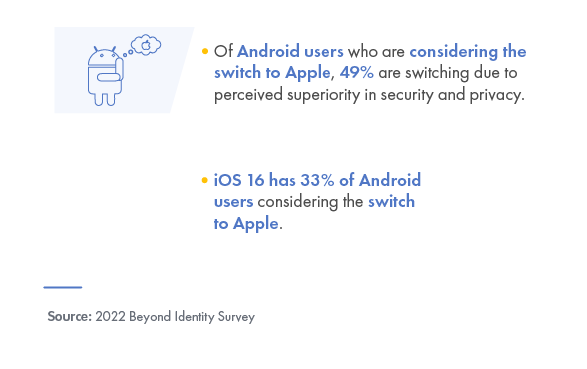
According to the research published, almost half of Android users wouldn’t mind making the switch to Apple smartphones. And the reason being is simple: they call it safer and more private as compared to Android.
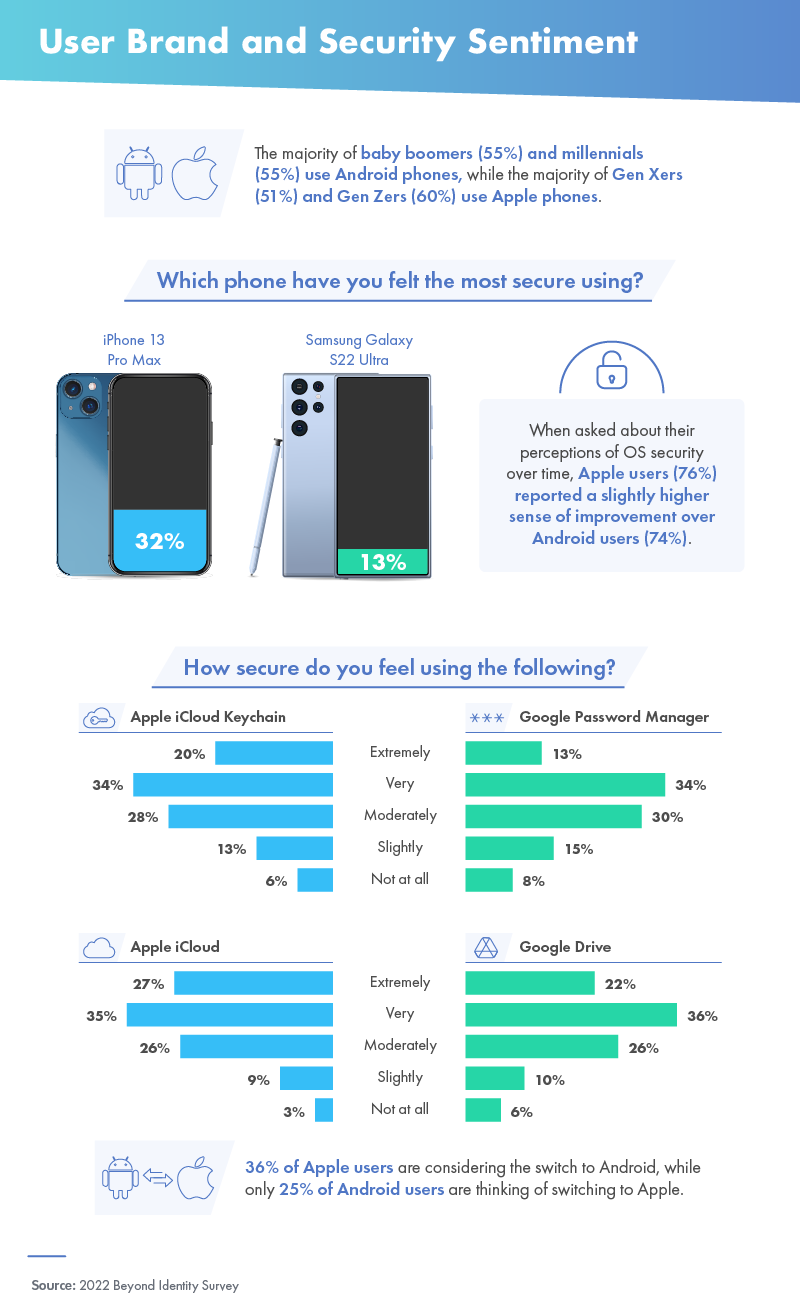
The results of the survey aren’t a huge surprise for obvious reasons. Many can’t help but hold a clear superiority of iPhones over all others. And in addition to that fact, consumers definitely feel a little safer when using the latest version of the iPhone 13 when compared to the latest Samsung S22.
The news comes to us thanks to the report published by Beyond Infinity, which set out with the task to have nearly 1,000 Americans interviewed for this purpose of mobile security.
Regarding users’ habits and feelings, around 76% of iPhone users feel safe and satisfied with their devices. On the other hand, a good 74% of users of Android devices carried the same sentiments.
Both smartphone users say it’s a remarkable difference between both devices and they’d definitely prefer the iPhone maker over Samsung any day. Moreover, it was interesting to see iPhone users claim that they were more than twice as likely to trust their device than any other, especially Android.
In specific words, the iPhone happened to be the most secure device that they’ve come across in their lives.
Meanwhile, other key findings seen in the study were related to how cloud services really affect both Apple and Android users.
Around 20% of the users surveyed having iCloud keychain claim to feel so safe, while the rest can’t be said for Google users in regard to their Password Manager. Only 13% of the latter felt safe there.
On the other hand, let’s move on to Apple users, of which 27% feel so safe when using their iCloud. In comparison, around 22% of users from Google Drive felt the same.
Ever since we’ve come across newer versions of operating systems, there has been a straight upgrade in security advancements. That is why 33% of Android users are feeling the pressure to switch to Apple’s iPhone and avail the benefits like a new lockdown mode that would be launched soon.
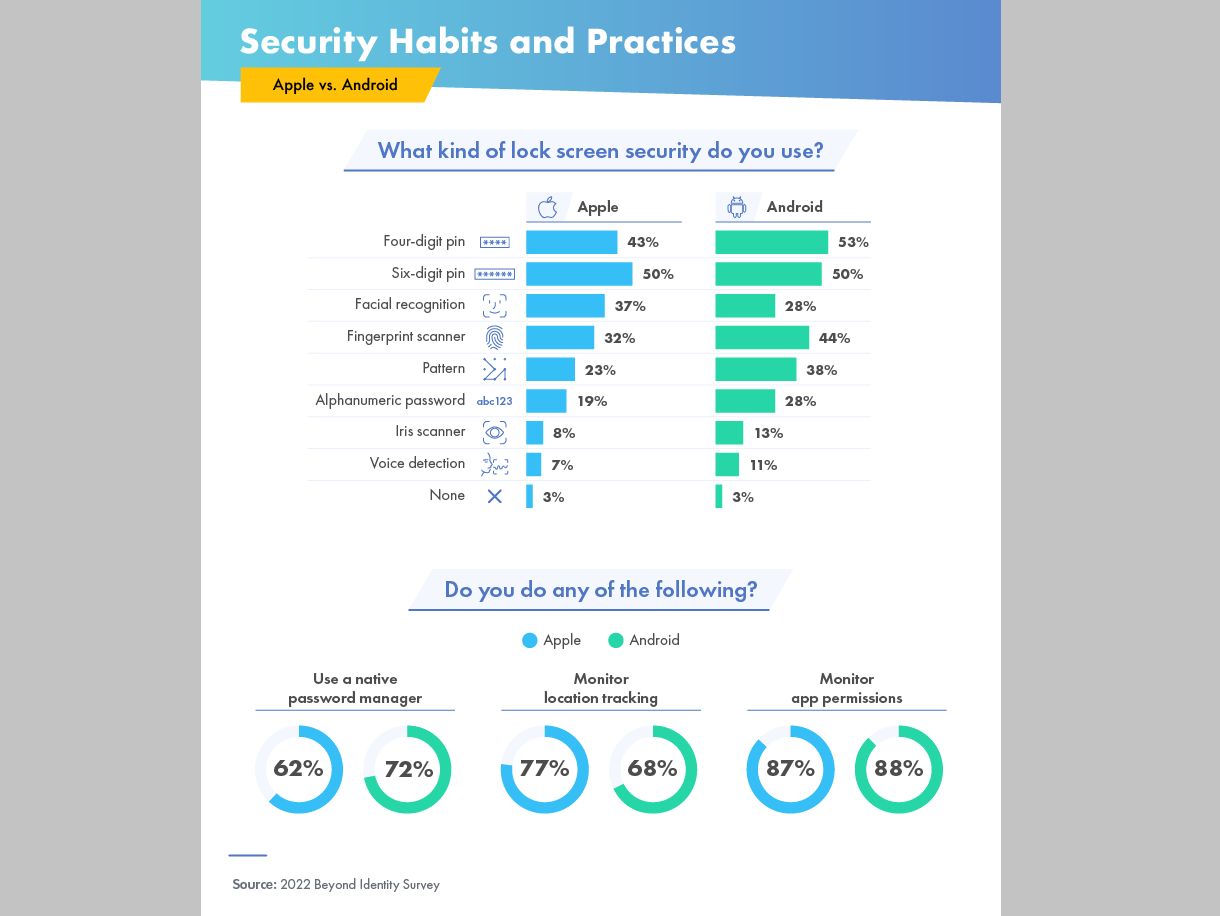
The study has also shed light on how iPhone users tend to be more updated and concerned about their privacy and security status than others. For instance, they’ll be busy choosing pins comprising six digits rather than the usual four.
These users are also part of the bunch who are continuously monitoring the tracking of their current locations. They are going to avail better enhancements related to security like facial recognition too. And yes, no Android devices are offering the benefits and technology as Apple yet.
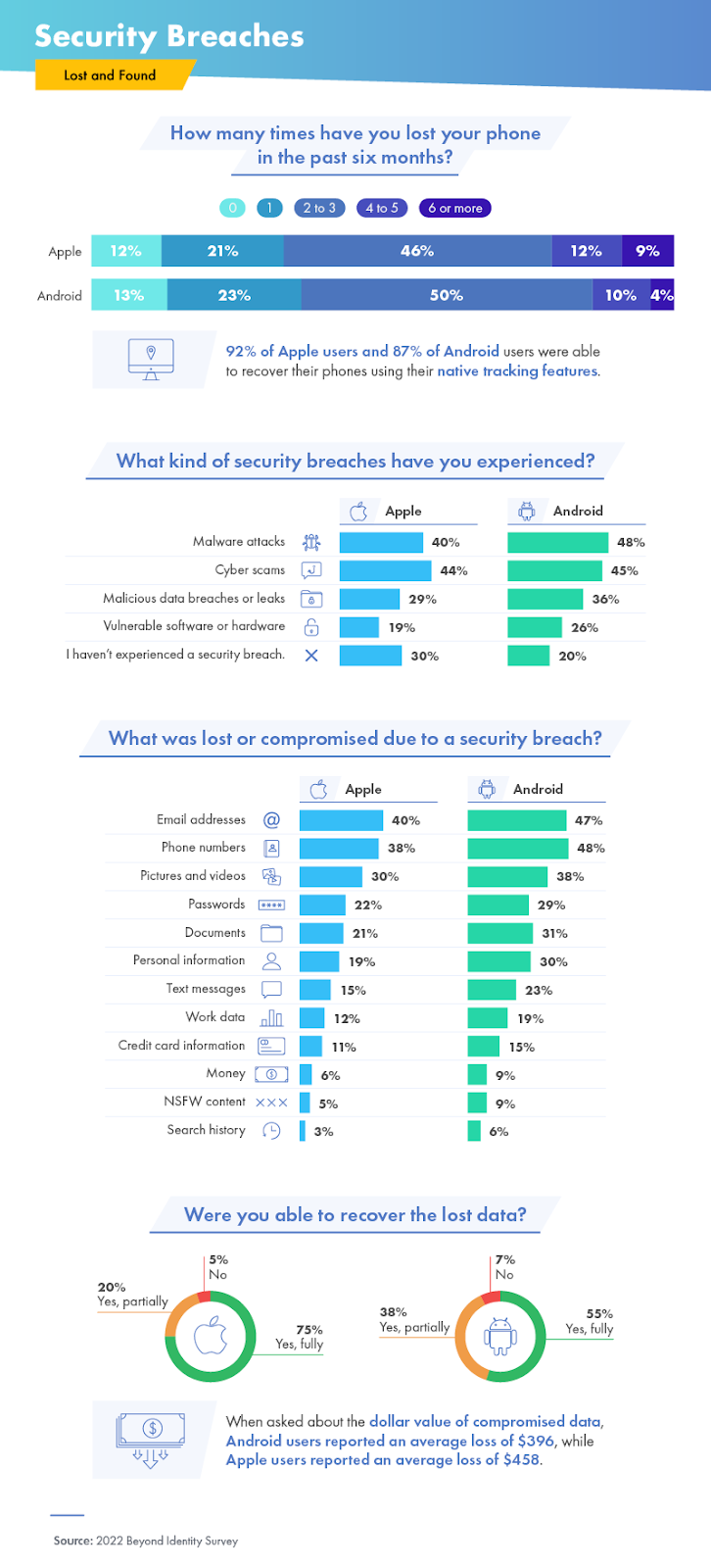
We also saw the research asking respondents who shed light on any security breach incidents that they were involved in. And neither of the two groups was strangers to hacking and malware incidents. But again, it was much less with iPhone users.
A greater majority of iPhone users were reported to have never been through any sort of security breach, in comparison to their Android counterparts.
In those situations where a security breach did manage to take place involving their iPhones, around 20% said they could completely recover the data that had been lost. But at the same time, some users may be thinking they’re too safe as a greater majority of Apple device owners reported devices getting lost.
Read next: What Do People Really Search For Online And Why? New Survey Highlights Top Ten Secret Search Topics
by Dr. Hura Anwar via Digital Information World
According to the research published, almost half of Android users wouldn’t mind making the switch to Apple smartphones. And the reason being is simple: they call it safer and more private as compared to Android.
The results of the survey aren’t a huge surprise for obvious reasons. Many can’t help but hold a clear superiority of iPhones over all others. And in addition to that fact, consumers definitely feel a little safer when using the latest version of the iPhone 13 when compared to the latest Samsung S22.
The news comes to us thanks to the report published by Beyond Infinity, which set out with the task to have nearly 1,000 Americans interviewed for this purpose of mobile security.
Regarding users’ habits and feelings, around 76% of iPhone users feel safe and satisfied with their devices. On the other hand, a good 74% of users of Android devices carried the same sentiments.
Both smartphone users say it’s a remarkable difference between both devices and they’d definitely prefer the iPhone maker over Samsung any day. Moreover, it was interesting to see iPhone users claim that they were more than twice as likely to trust their device than any other, especially Android.
In specific words, the iPhone happened to be the most secure device that they’ve come across in their lives.
Meanwhile, other key findings seen in the study were related to how cloud services really affect both Apple and Android users.
Around 20% of the users surveyed having iCloud keychain claim to feel so safe, while the rest can’t be said for Google users in regard to their Password Manager. Only 13% of the latter felt safe there.
On the other hand, let’s move on to Apple users, of which 27% feel so safe when using their iCloud. In comparison, around 22% of users from Google Drive felt the same.
Ever since we’ve come across newer versions of operating systems, there has been a straight upgrade in security advancements. That is why 33% of Android users are feeling the pressure to switch to Apple’s iPhone and avail the benefits like a new lockdown mode that would be launched soon.
The study has also shed light on how iPhone users tend to be more updated and concerned about their privacy and security status than others. For instance, they’ll be busy choosing pins comprising six digits rather than the usual four.
These users are also part of the bunch who are continuously monitoring the tracking of their current locations. They are going to avail better enhancements related to security like facial recognition too. And yes, no Android devices are offering the benefits and technology as Apple yet.
We also saw the research asking respondents who shed light on any security breach incidents that they were involved in. And neither of the two groups was strangers to hacking and malware incidents. But again, it was much less with iPhone users.
A greater majority of iPhone users were reported to have never been through any sort of security breach, in comparison to their Android counterparts.
In those situations where a security breach did manage to take place involving their iPhones, around 20% said they could completely recover the data that had been lost. But at the same time, some users may be thinking they’re too safe as a greater majority of Apple device owners reported devices getting lost.
Read next: What Do People Really Search For Online And Why? New Survey Highlights Top Ten Secret Search Topics
by Dr. Hura Anwar via Digital Information World
Subscribe to:
Comments (Atom)